





 Portuguese
  English
  Spanish
  4 min of reading
  0 comments


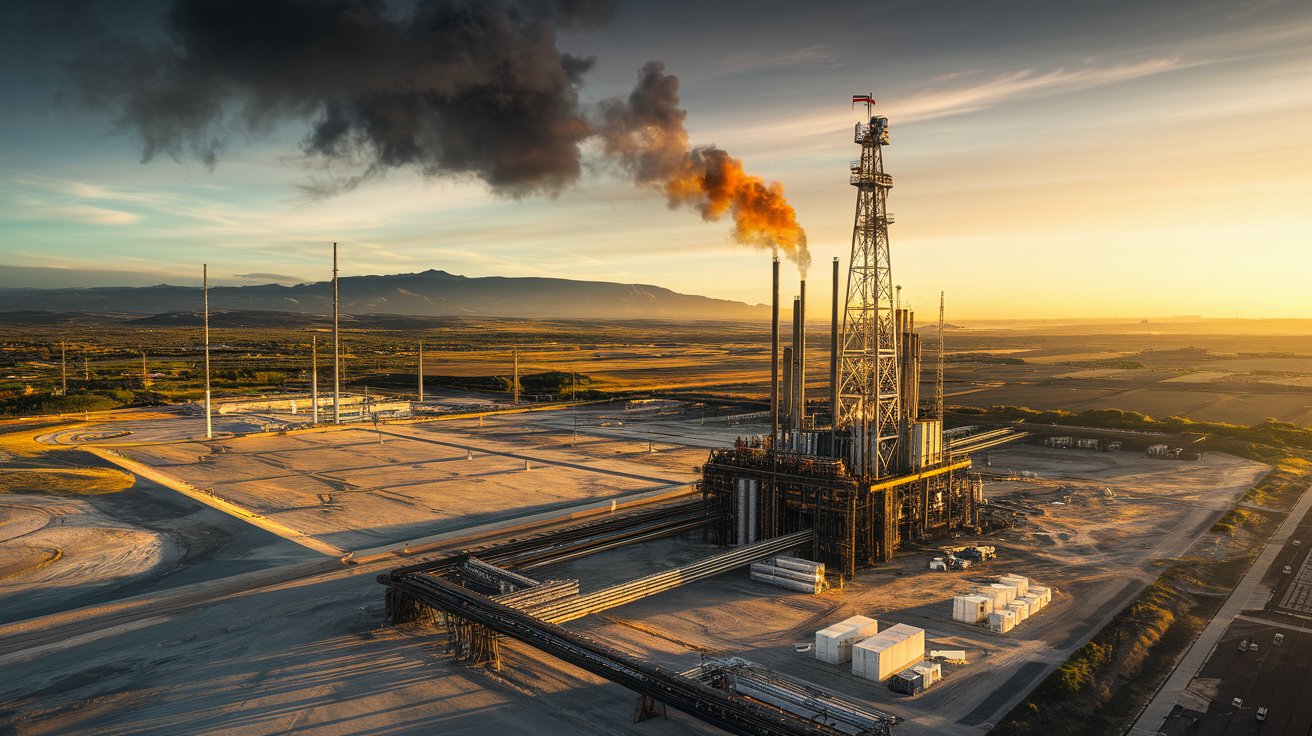
Argentina Discovered One of the Largest Oil Reserves in the World, but Economic and Environmental Challenges Are Putting Everything at Risk!
In 2011, Argentina experienced great anticipation when the oil company YPF, then controlled by the Spanish group Repsol, announced the discovery of one of the largest unconventional oil reserves in the world.
The area, located in the Neuquén region, was named Vaca Muerta and, with an initial estimate of 927 million barrels of oil, seemed promising.
The expectation was that the discovery would revolutionize the Argentine energy market and perhaps make the country more energy self-sufficient.
-
With over 14 million baskets of earth moved, an ancient North American metropolis built a monumental pyramid of 30 meters and established a city with 20,000 inhabitants nearly a thousand years ago.
-
A 1,900-year-old treasure emerges from a Roman house destroyed by fire and sealed since antiquity in Romania, with coins and metals fused among the ashes.
-
The Brazilian colonial city that stopped in time and shares territory with a rocket launch base.
-
79-year-old woman challenges limits, visits 193 countries in the world after 56 years of planning and reveals the behind-the-scenes of a global journey that few have managed to accomplish.


However, what seemed to be a major discovery turned into a complex economic and environmental challenge.
Vaca Muerta: A Major Energy Potential
The Vaca Muerta field mainly consists of shale oil and shale gas, resources that are extracted through the advanced technique of hydraulic fracturing, commonly known as “fracking.”
This technology, while effective in exploring hard-to-reach reserves, raises a series of environmental concerns.
Among the main risks are the contamination of water resources, the increase in greenhouse gas emissions, and the possibility of small earthquakes occurring near fracturing zones.
The issue of water contamination is one of the most concerning, as large volumes of water are used in the process, and there is a risk that toxic chemicals could be released and reach the aquifers.
Additionally, the exploration of shale oil could cause public health problems in nearby communities, given the environmental impact and air pollution.
The Shale Oil Market and Argentina’s Challenges
While Argentina sought to explore Vaca Muerta to become more energy independent, the reality of the unconventional oil market turned out to be more challenging than expected.
Shale oil is of lower commercial value than conventional oil, which complicates the financial return that the country envisioned from exploring these reserves.
Most of this oil is used to produce fuel oil, a product with lower profitability in the global market.
Moreover, the predictions that Argentina could become an exporter of shale oil proved to be more complicated.
The country faced a series of difficulties regarding infrastructure to transport the oil extracted from Vaca Muerta to international markets.
The lack of adequate pipelines and the need for heavy investments to modernize internal logistics made exploration more expensive than anticipated.
A Comparison with Brazil’s Pre-Sal
In a scenario where the unconventional oil from Vaca Muerta seemed promising, Argentina began to face a challenging reality.
While the country was trying to accelerate the exploration of its reserves, Brazil, with its famous pre-sal, had already reached the mark of 5.5 billion barrels of oil in 2023, after 26 years of production.
This number exceeded initial expectations and demonstrated Brazil’s capacity to explore oil reserves using more advanced technologies and greater profitability.
Brazil, with its exploitation model in the pre-sal, managed not only to increase its production but also to generate billion-dollar revenues from oil exports.
On the other hand, Argentina, with Vaca Muerta, saw its initial expectations of economic success dissipate due to high production costs and the difficulties in competing with international oil prices.
The Search for Alternatives and Economic Challenges
With the exploitation of Vaca Muerta not achieving the expected results, Argentina found itself facing an economic dilemma.
The country was already experiencing a severe economic crisis, with high inflation and an unstable labor market.
The energy sector, which should have been a solution to the country’s financial problems, ended up becoming yet another economic burden.
The exploration of shale oil, in addition to being costly, did not produce the economic impact that Argentines had hoped for, leading to frustration.
The Argentine government, aware of the challenges posed by Vaca Muerta, began to invest in alternatives, such as renewable energy, seeking to diversify its energy matrix and reduce dependence on fossil fuels.
However, the transition to cleaner energy sources also faces obstacles, such as the lack of investment in infrastructure and the difficulty of reconciling the modernization of the energy sector with the country’s economic challenges.
The Future of Vaca Muerta
Although Vaca Muerta has demonstrated large reserves of oil and gas, the future of exploitation remains uncertain.
The region’s potential cannot be ignored, but the exploration of these reserves faces challenges that go beyond the simple extraction of oil.
The environmental issue, high production costs, and the difficulty of finding a competitive market for shale oil raise doubts about the long-term viability of Vaca Muerta as a solution to Argentina’s energy problems.
Still, the region remains one of the largest unconventional oil reserves in the world, and Argentina continues to try to overcome economic and environmental obstacles.
It remains to be seen if the country will achieve the desired success or if, as many experts point out, Vaca Muerta will be yet another discovery without the capacity to sustainably and durably transform the national economy.






Seja o primeiro a reagir!