





 Portuguese
  English
  Spanish
  4 min of reading
  0 comments


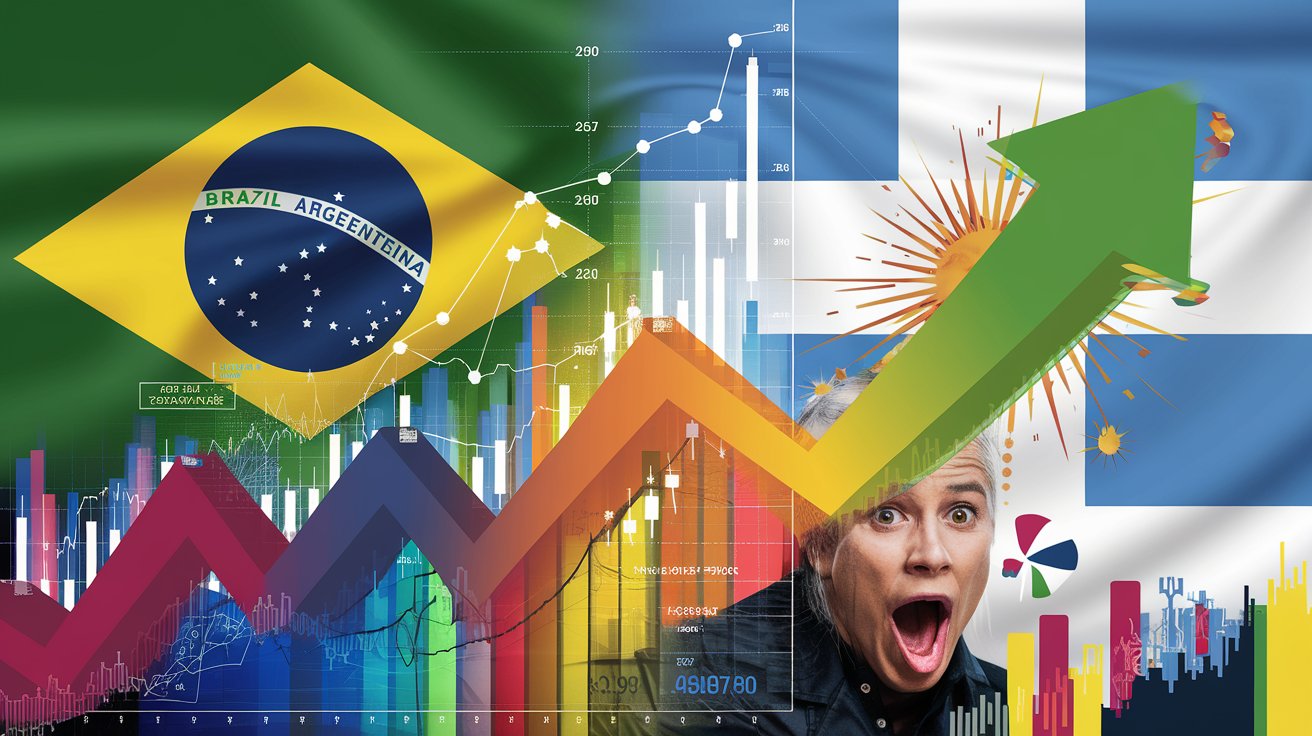
OECD Reveals A Stunning Forecast For The Argentine Economy, With Growth Of 5.7% In 2025! This Puts The Country Ahead Of Brazil, Which Saw Its Estimates Fall. What Is Behind This Impressive Increase?
The Argentine economy is standing out, and a recent study by the Organization for Economic Cooperation and Development (OECD) brought an unexpected projection: the neighboring country to Brazil is expected to grow more in 2025 than the South American giant.
With a projected growth of Gross Domestic Product (GDP) of 5.7% for the year 2025, Argentina is emerging as one of the most promising economies in Latin America for the upcoming period, surpassing previous expectations.
In early September 2024, the OECD had estimated growth of only 3.9%, but the revision points to a much more favorable scenario for the Argentines.
-
The largest food company on the planet, JBS, has just opened a 4,000 square meter laboratory in Florianópolis to develop customized proteins that modulate muscle mass gain, immune response, and metabolic performance.

-
After nearly 30 bids and competition among industry giants, a Spanish company purchases one of the largest airports in Brazil for almost R$ 3 billion and takes over the management of Galeão in a concession that will last until 2039.

-
The Federal Revenue Service now automatically cross-references everything you declare with data from banks, credit cards, brokerage firms, and insurance companies, and any discrepancy between your income and your expenses triggers an alert in seconds.

-
Amid global tensions, Brazil blocks the United States’ proposal at the WTO and paves the way for a trade crisis and possible retaliations.
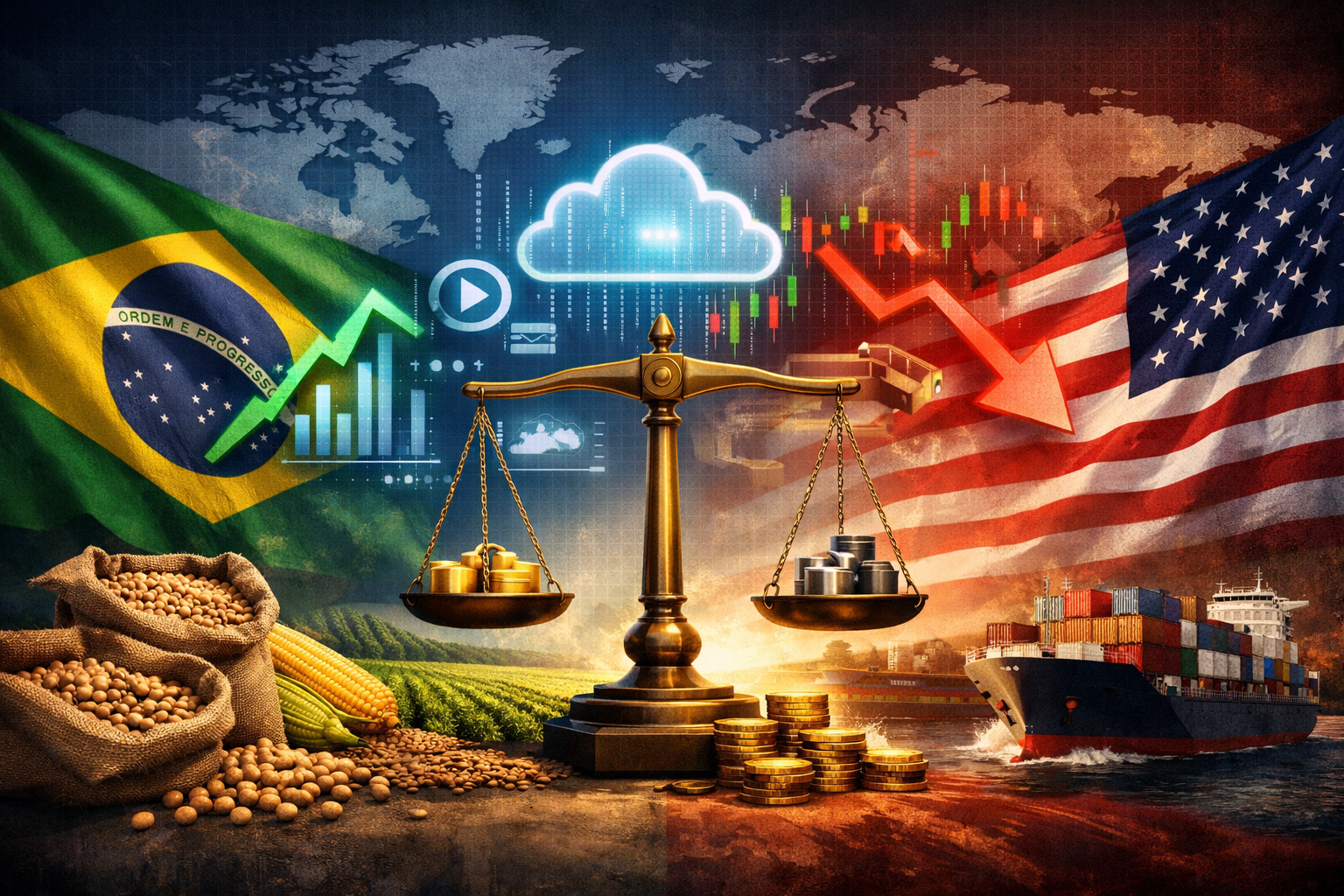

What Is Driving The Growth Of The Argentine Economy?
The surprising growth of Argentina is largely occurring after two consecutive years of recession, with the country’s economy facing serious difficulties.
However, 2025 promises to be a year of accelerated recovery, with key sectors of the economy demonstrating resilience.
This recovery scenario is being driven by a combination of internal and external factors, including a rise in commodity prices, an increase in exports, and a potential weakening of economic policies that limited the country’s competitiveness.
According to the OECD, Argentina’s GDP growth in 2026 is expected to continue on a positive trajectory, with an anticipated expansion of 4.8%.
This performance stands out in a global scenario of significant economic uncertainty, mainly due to trade tensions involving powers like the United States and China, in addition to the war in Ukraine, which impacts the global economy.
Lower Projections For Brazil
On the other hand, Brazil, traditionally one of the largest economies in Latin America, is not keeping pace with the same growth rhythm.
The OECD revised its forecasts for Brazil, lowering GDP growth expectations for both 2025 and 2026.
For the year 2025, the projection dropped from 2.3% to 2.1%, while the estimate for 2026 was reduced from 1.9% to 1.4%.
These more modest numbers indicate a slower growth scenario for Brazil, which still faces significant internal challenges such as high inflation, political uncertainties, and a persistent fiscal crisis.
The economic reforms necessary to ensure sustainable growth appear to be being implemented more slowly than desired.
Factors Affecting Projections For Brazil
The OECD points to several factors that directly impact Brazil’s growth projections.
Among them, tariff and protectionist policies implemented by the United States stand out, which have generated trade tensions in various parts of the world.
External instability, coupled with internal uncertainties, creates a challenging economic environment for Brazil.
Additionally, inflation remains high, which undermines the purchasing power of families and limits consumption growth, one of the main drivers of the economy.
Another important point is the need for structural reforms in Brazil.
The country needs to make progress in areas such as tax reform and administrative reform, as well as invest in improvements in the business environment.
A lack of confidence in the public sector and difficulties in attracting foreign investment are also issues that need to be addressed for Brazil to achieve a more consistent recovery of its growth.
The Impact Of Protectionist Policies From The U.S.
According to OECD experts, protectionist policies adopted by the United States have affected the global economy in complex ways, with a significant impact on emerging economies, including Brazil and Argentina.
American protectionism, characterized by high tariffs on imported products and a foreign policy focused on domestic interests, has hampered the competitiveness of Latin American economies in international trade.
Argentina, however, seems to be coping better with this environment due to a greater diversification of its trade partners, while Brazil still largely depends on trade relations with the United States.
Moreover, the trade war between the U.S. and China has altered global supply chains and affected commodity prices.
While Argentina benefits from rising prices for its agricultural exports, especially soybeans and wheat, Brazil has faced stiffer competition in international markets, which has limited its growth.
How Is Argentina Preparing For The Future?
Although the recovery of the Argentine economy is promising, the country still faces significant challenges, such as rampant inflation and a high level of external debt.
The fiscal and structural reforms needed to ensure sustainable recovery are underway, but the success of these measures remains uncertain.
However, the OECD’s growth projection for 2025 is a sign of optimism, and many analysts believe that if Argentina can consolidate its economic recovery, the country may achieve a healthier growth level in the coming years.
What To Expect In 2025?
Based on the OECD’s forecasts, 2025 will be a year of economic contrasts in Latin America.
Argentina, after a period of recession, is projecting robust growth, with a GDP expansion of 5.7%, surpassing Brazil’s growth expectations, which, in turn, has its growth projections reduced.
The Brazilian economy still needs to deal with a series of internal and external challenges that limit its growth, while Argentina, although far from a full recovery, seems to be on an upward path.
The economic dynamic between the two countries will continue with many ups and downs, but with a competitive scenario for economic leadership in the region.
The impact of domestic policies in both countries, as well as the effects of global tensions, will be crucial in determining whether these forecasts will materialize or if reality will be even more unpredictable in the coming years.






Seja o primeiro a reagir!