





 Portuguese
  English
  Spanish
  3 min of reading
  0 comments


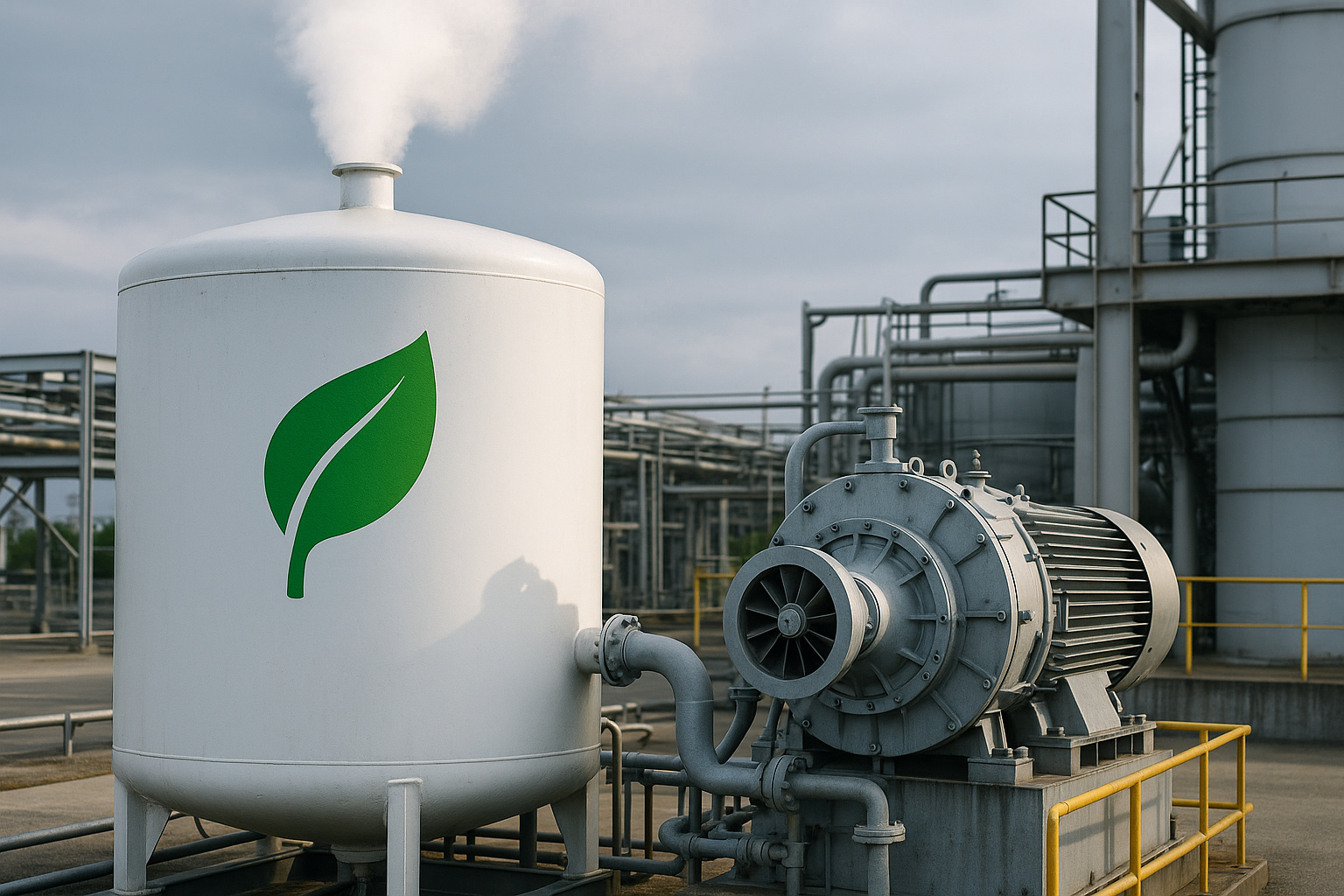
More Than 10 Tons of Liquid Air Produced Daily in South Korea Show Unprecedented Innovation, While Brazil Tries to Contain Tariffs with Temporary Measures.
A major technological innovation was revealed in August 2025. Thus, South Korea has become the center of attention in the energy sector.
Researchers from the Korean Institute of Machinery and Materials (KIMM) announced the first liquid air energy storage system in the country, capable of generating 10 tons per day.
This advancement positions South Korea as a leader in large-scale storage. Furthermore, the innovation is considered essential to consolidate the use of renewable energy.
-
Sustainable progress in the Southeast: ARSESP opens public consultation for biomethane and accelerates decarbonization projects of the energy matrix in São Paulo.
-
The end of an era? Brazil and global powers accelerate investments in technology and infrastructure to solidify the transition away from fossil fuels.
-
Brazilians paid R$ 18 billion more for energy from the Itaipu plant, reflecting a direct impact on tariffs and generating discussions about costs, transparency, and balance in the national electricity sector.

-
Equatorial adopts new national number for consumer units on electricity bills starting in April, following ANEEL standards and modernizing energy bills in several states.
Technical Investigation Reveals Unprecedented Innovation
The system, called LAES (Liquid Air Energy Storage), uses excess electricity to cool air to a liquid state. Then, the material is stored in insulated tanks and later returns as electricity.
In an official statement published by the South Korean press on August 20, 2025, KIMM reported that air, when heated, expands up to 700 times its liquid volume. Thus, this expansion drives turbines that generate electricity.
According to the lead researcher, Dr. Jun Young Park, “large-scale storage is the missing piece, and our work shows that LAES can provide it without geographic limitations.”
The process requires a high initial investment. However, it offers advantages compared to traditional alternatives, which depend on specific geographic conditions, such as valleys or underground caves.
Economic and Social Impacts of the Advancement
The new system allows for “bottling” electricity in a controlled manner, creating strategic reserves for times of greater demand. In addition, it ensures stability for distribution networks.
Experts claim that the technology guarantees greater integration of renewable energies. Thus, it also promotes the reduction of dependence on fossil fuels.
Moreover, the innovation is expected to attract foreign investments, strengthening South Korea’s position as a reference in energy solutions.
International reports indicate that the United Kingdom has been testing similar technologies since 2023. However, the South Korean model became the first in Asia at an industrial scale.
Brazil Tries to Avoid Higher Electricity Bills
Meanwhile, Brazil faces regulatory challenges. On September 18, 2025, President Luiz Inácio Lula da Silva signed Provisional Measure No. 1,304/2025.
The decision came after Congress overturned vetoes to the Law No. 15,097/2025, known as the Offshore Wind Law. If applied in full, the law would have caused a R$ 40 billion impact on electricity costs.
To prevent a direct increase for consumers, the PM established a ceiling for the Energy Development Account (CDE), a fund that finances public policies in the sector.
According to the Ministry of Mines and Energy, the ceiling corresponds to the CDE budget for 2026. Therefore, the government intends to prevent pass-throughs to electricity bills.
The provisional measure also established adjustments in the natural gas market, creating greater predictability and competitiveness for companies and consumers.
Immediate Challenges and Future Tensions
- In South Korea, the challenge will be to transform the storage system into commercial scale without compromising its economic viability.
- In Brazil, the pressure falls on the need to balance fair tariffs and investments to modernize the sector.
Despite the different contexts, both countries face the same global dilemma: how to ensure access to sustainable, reliable, and financially viable energy.
Energy in a Global Context
The South Korean innovation and Brazilian measures reinforce a global trend of seeking balanced solutions to address the challenges of the energy transition.
Between 2023 and 2025, several countries announced new storage technologies. Moreover, they approved specific legislation for the sector. These movements show the importance of combining technological innovation and clear regulatory frameworks.
What Does the Future Hold for Korea and Brazil?
Experts evaluate that South Korea may become a global reference in energy storage. Similarly, Brazil needs to advance in strong regulatory policies.
The balance between technology and regulation will define the energy future of both.
Thus, the question remains: Is it possible to bottle clean energy while also easing the burden on consumers?








Seja o primeiro a reagir!