





 Portuguese
  English
  Spanish
  3 min of reading
  7 comments


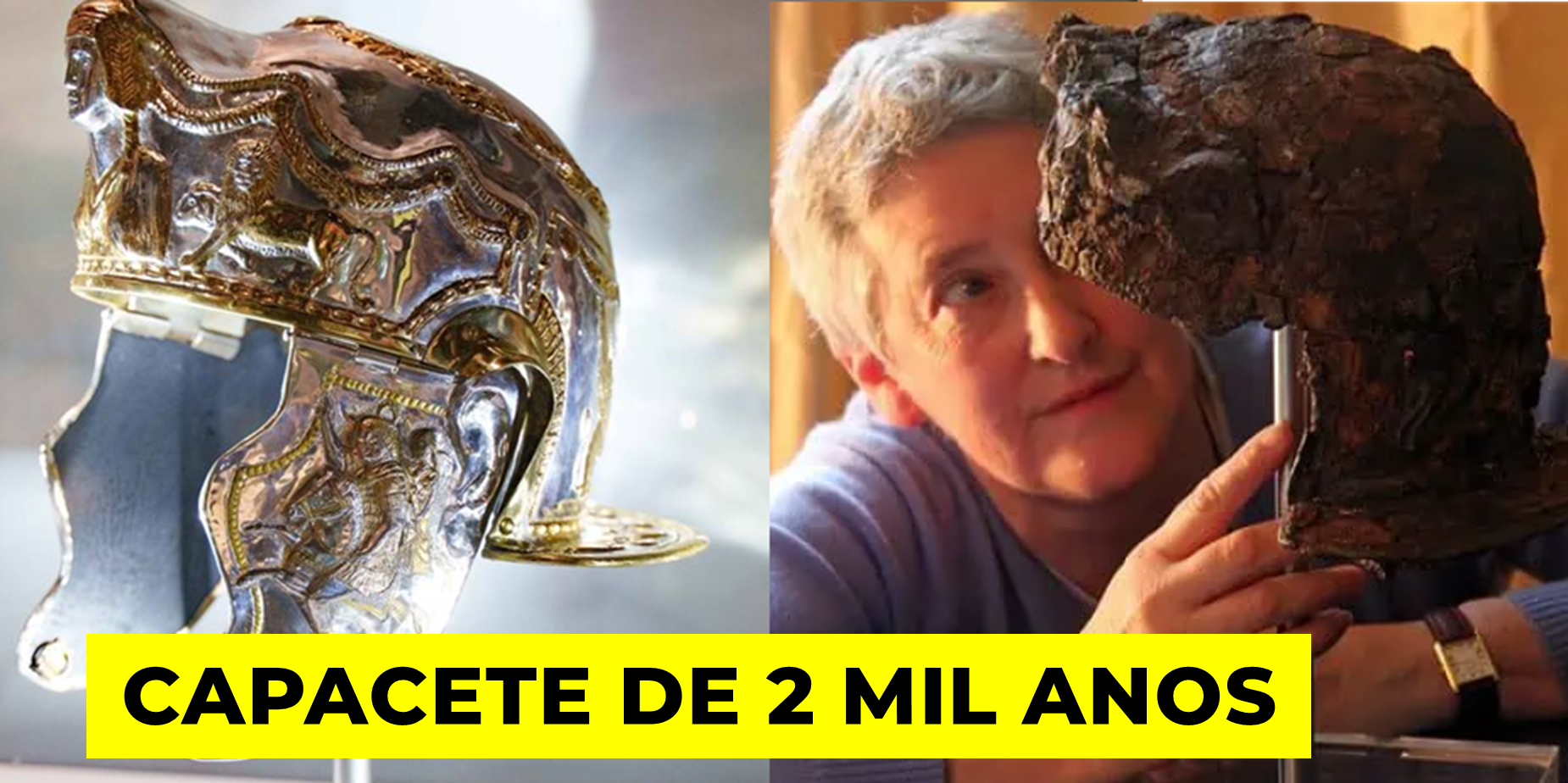


Object Found By Amateur Archaeologists, Initially Confused With An Old Bucket, Turned Out To Be A Roman Helmet About 2,000 Years Old, Impressing Experts.
In the early 2000s, a group of amateur archaeologists in The United Kingdom made an unexpected discovery in Leicestershire. They found a large, rusty metal object that appeared, at first glance, to be just an “old bucket”. But analysis revealed something much more significant: a Roman helmet about 2,000 years old.
This find, which was quickly recognized as one of the most important archaeological discoveries of the century in Britain, underwent meticulous restoration. Now, the so-called Hallaton Helmet is almost back to its former glory and will be exhibited to the public.
History Of The Research On The Roman Helmet
The piece was analyzed by experts at the British Museum. Upon carefully removing the layers of rust, they discovered that the object was not a simple soldier’s helmet but a Roman cavalry helmet, likely used by an officer.
-
Two years after the floods, Rio Grande do Sul still has ghost villages, uprooted houses, and families in containers with sewage; unfulfilled promises without official response and donations become the last chance to start over.

-
With around 6,000 residents on a single 9 km street, a village in Poland maintains a strong sense of community, cultivates strawberries and potatoes, and becomes the target of a false image created by artificial intelligence.

-
Sleeping at different times each day can be a bomb for your heart and even double your risk of having a heart attack.

-
Without help and without heavy machinery, a woman builds a house from scratch with stone, wood, and cement, erects a chimney, creates a complete leisure area, and transforms an empty lot into her dream home.


The accessory, known as the equites helmet, had intricate decorations in gold and silver, details that indicate its importance in the military hierarchy.
Helmets of this type were often used in ceremonies and tournaments, not just in combat. In the case of the Hallaton, the decorations revealed symbols of power and victory. The front displays a crown, representing military triumph.
The forehead guard features the bust of a woman surrounded by animals. On the cheeks, one can see the figure of an emperor on horseback, with the goddess Victory flying behind him. Beneath the horse’s hooves, there appears a crouching figure, possibly a native Briton, symbolizing the conquest of territory.

The Discovery
The discovery was made inside a sanctuary dated to approximately AD 43, a time when the Roman Empire was beginning its conquest of Britain.
In addition to the helmet, the site contained thousands of Roman and Iron Age coins, as well as pig bones, likely used in rituals. This context suggests that the helmet was not lost accidentally but placed there as part of an offering.
The restoration process was long and challenging. Conservators used advanced technology, such as 3D scanning, to understand the original structure of the helmet. The fragments were carefully cleaned and reassembled. It is estimated that about 80% of the original structure has been recovered.
Based on this information, a replica was created to bring the public closer to the original appearance of the helmet.
The jeweler Rajesh Gogna, a professor at De Montfort University, led the project. Utilizing the 3D scans, he created a digital model, which was then transformed into a resin replica. The piece was silvered and gilded to reproduce the shine and details of the original.

the-past.
The Hallaton Helmet, once seen as a worthless piece of metal, now stands out as a unique relic of Roman presence in ancient Britain.
The restoration has returned part of its splendor and, at the same time, revealed precious details about military strategy and rituals of the time. The artifact will be displayed soon, allowing the public to see closely the complexity of Roman work and modern preservation skill.
With information from ZM.








Impressionante fabuloso.
GENTE EU SOU DA UNIVERSAL E O PASTOR DISSE QUE ESSE ERA O CAPACETE DO SATAN NA EPOCA DE ROMA. O ANTICRISTO FAZIA ISSO NA CABECA DAS PESSOAS PORQUE ELAS ASSISTIAM A GLOBO
É interessante para se pensar que tudo passa nesta vida… De toda aquele poder e glória, restou um capacete!