





 Portuguese
  English
  Spanish
  4 min of reading
  0 comments


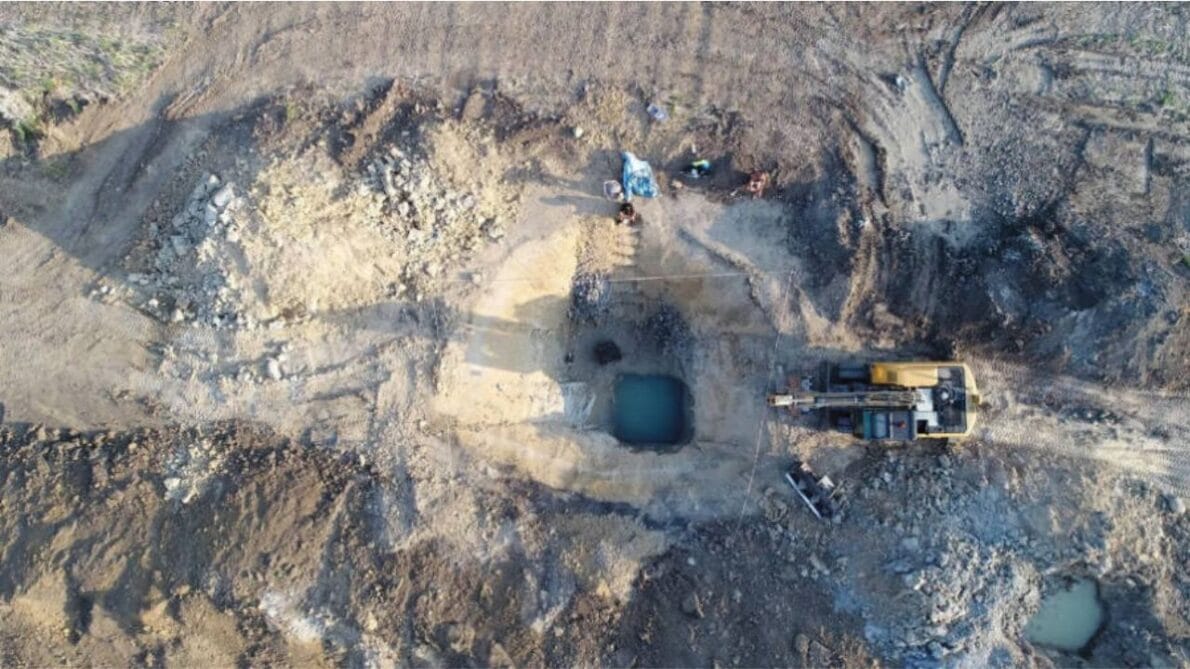
World’s Oldest Wooden Structure Is 7,275 Years Old and May Rewrite Part of Neolithic Engineering History.
An archaeological discovery in the Czech Republic may change what we know about the construction skills of prehistoric societies. During the construction of the D35 highway in the town of Ostrov, archaeologists found a 7,275-year-old well, built from oak wood, which may be the world’s oldest wooden structure with confirmed scientific dating.
The find was made in 2018, but it was only officially published in 2020 in the Journal of Archaeological Science, after rigorous dating tests. What surprised specialists the most was the level of technical precision used in the construction, especially considering that the tools available at the time were made only from stone, bones, horns, and wood.
Well Fitting Techniques Indicate Advanced Knowledge for a Neolithic Society
The well was constructed with four oak posts fixed at the corners, and between them were carefully fitted planks — a sophisticated method that resembles techniques used thousands of years later during the Bronze and Iron Ages. The structure has a square base of 80 centimeters by 80 centimeters and 1.40 meters in height.
-
With over 14 million baskets of earth moved, an ancient North American metropolis built a monumental pyramid of 30 meters and established a city with 20,000 inhabitants nearly a thousand years ago.

-
A 1,900-year-old treasure emerges from a Roman house destroyed by fire and sealed since antiquity in Romania, with coins and metals fused among the ashes.
-
The Brazilian colonial city that stopped in time and shares territory with a rocket launch base.
-
79-year-old woman challenges limits, visits 193 countries in the world after 56 years of planning and reveals the behind-the-scenes of a global journey that few have managed to accomplish.



Jaroslav Peška, head of the Archaeological Center in Olomouc, stated that the discovery challenges current knowledge about Neolithic societies. “It shows marks of construction techniques used even in the Roman period. We did not imagine that early farmers could process wood with such precision,” he declared to the portal All That’s Interesting.
Dendrochronological Analysis Confirmed That the Wood Was Cut Between 5,266 and 5,255 B.C.
To determine the age of the well, researchers used dendrochronology, a method that studies tree growth rings. The analysis indicated that the trunks were cut between 5,266 and 5,255 B.C., which corresponds to approximately 7,275 years ago. One of the most interesting details is that two of the woods used were cut a few years before the others, suggesting reuse of materials from previous constructions.
Moreover, one of the planks was even older — between 7,261 and 7,244 years — indicating that the well may have undergone subsequent repairs, an uncommon practice for the time and yet another demonstration of the organization level of these communities.
Structure Was Positioned to Reach the Water Table, Suggesting Hydrological Knowledge
Another point that caught the attention of archaeologists was how the structure was installed. The oak posts projected downward, indicating a plan to directly reach the water table, which reveals a rudimentary but effective understanding of subterranean water sources.
Despite the technical sophistication of the well, no evidence of permanent dwellings was found around it. Only fragments of pottery were present on site, leading specialists to believe that the well was used by various communities in the region during the transition from hunter-gatherers to a fixed agricultural society — the so-called Neolithic Revolution.
Well Served Neolithic Communities and Was Essential for Water Supply to Settlements
According to archaeologists, the well may have been built and used by Neolithic settlers who lived in small simple structures, still in the process of transitioning from nomadism to life in agricultural settlements. “These people probably already domesticated animals and lived in a semi-sedentary manner, but did not yet have sophisticated permanent buildings,” explained Peška.
Neolithic archaeology has been revealing that, even with simple tools, these communities already mastered excavation, construction, and resource reuse techniques. This reinforces the idea that the evolution of human engineering may have occurred earlier than previously thought.
The Condition of the Well Was Possible Thanks to the Moist Subsoil and Conservation with Sucrose
The excellent state of preservation of the 7,275-year-old well is due to the fact that the structure remained submerged for centuries, in an environment with low oxygenation and stable temperature, preventing the decomposition of the wood.
To maintain its integrity, specialists adopted a delicate process of conservation in sucrose. The wooden planks were immersed in a concentrated sugar solution, which penetrates the cells and gradually replaces the water. The technique allows the original shape of the wood to be maintained and prevents it from warping when exposed to air.
This measure is similar to that used in the preservation of ancient vessels, such as the Viking ship found in Norway and other archaeological wooden pieces dated from Antiquity.
Archaeological Discovery in the Czech Republic May Be a Milestone in the History of Ancient Engineering
The discovery of the 7,275-year-old well in the Czech Republic represents a milestone for Neolithic archaeology and the history of engineering. The structure, besides being well preserved, reveals advanced construction techniques, social organization, and surprising hydrological knowledge for the period.
If confirmed as the world’s oldest wooden structure, the Ostrov well could significantly alter the current understanding of the capabilities of the earliest European agricultural societies. With proper conservation underway, the find may eventually be displayed to the public, becoming one of the most important relics of European prehistory.








Seja o primeiro a reagir!