





 Português
  Inglês
  Espanhol
  4 min de leitura
  0 comentários


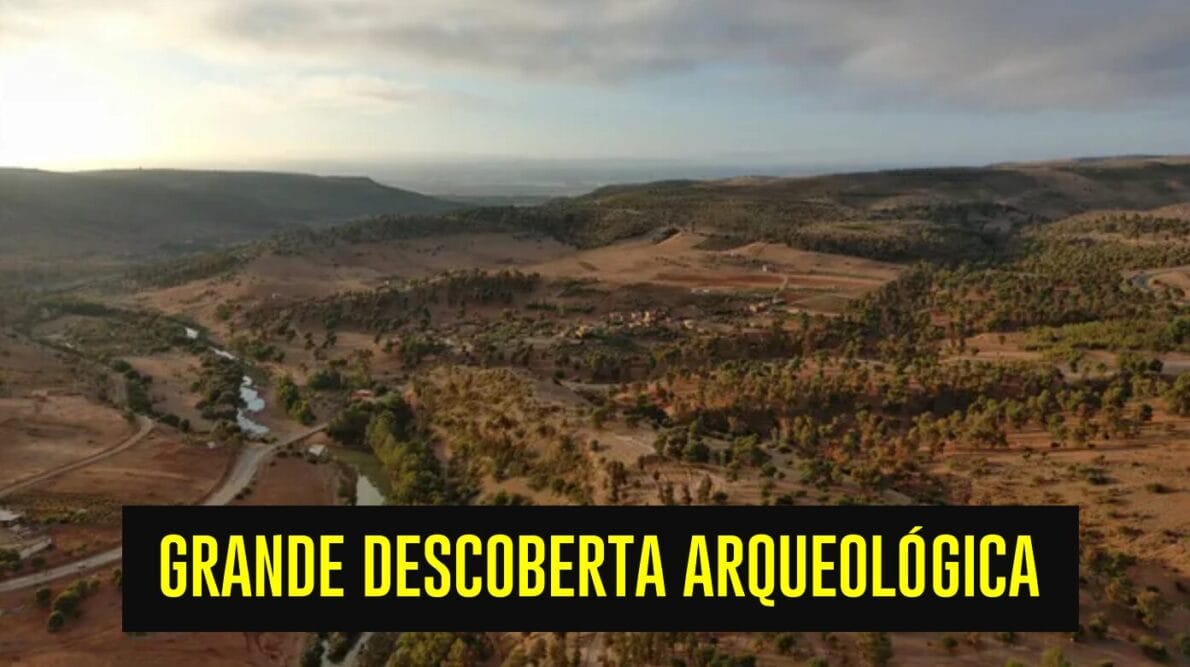
The Discovery of a 5,000-Year-Old Agricultural Society in Morocco, With an Area Comparable to That of Ancient Troy, May Bring New Revelations About the Ancient Civilizations That Inhabited North Africa.
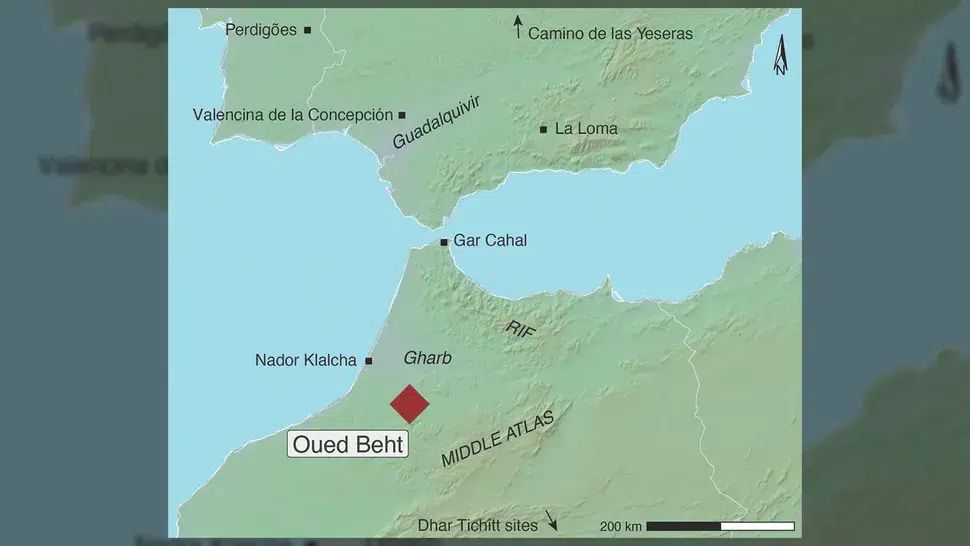
Archaeologists made a fascinating discovery: the remains of a 5,000-year-old agricultural society that may change how we understand the history of the North Africa. The archaeological site of Oued Beht, located in northern Morocco, reveals a society as large as ancient Bronze Age Troy, being the oldest of its kind discovered outside the Nile Valley.
This civilization, previously unknown, demonstrates that the North Africa was more than a territory of hunter-gatherers and nomadic herders, as previously believed.
The Re-Discovery of Oued Beht
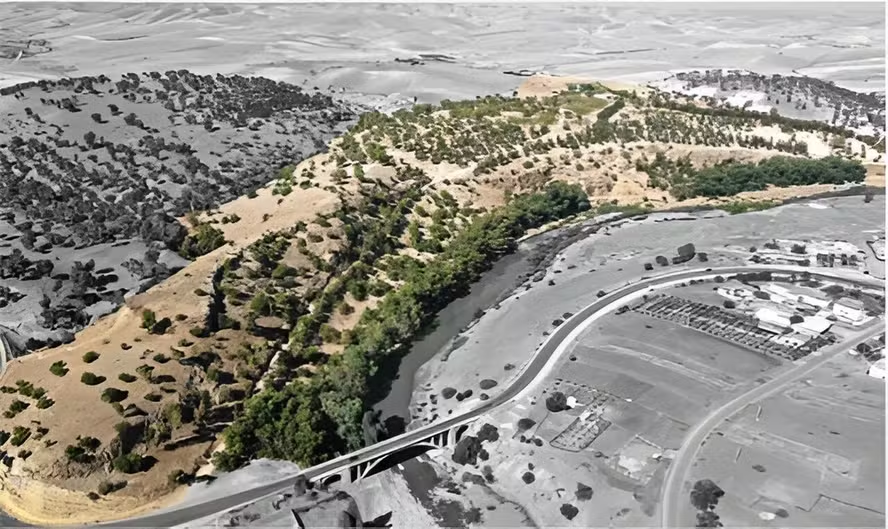
The site of Oued Beht was initially discovered by French colonists in the 1930s but remained ignored for almost 90 years.
-
The world’s first octopus farm wants to open in the Canary Islands and is already provoking an international reaction: the plan aims to produce 3,000 tons per year.

-
Drought may be creating stronger superbugs in the soil and helping antibiotic resistance reach hospitals, warns a study highlighting a problem that could grow alongside extreme weather.

-
The biggest scam in history: Napoleon’s France deceived the United States by selling them a territory that was Spanish.

-
Why is the Danakil Desert so dangerous? It has unstable terrain and how extreme temperatures and toxic gases turn the region into one of the most hostile environments on Earth.


In 2023, Moroccan archaeologist Youssef Bokbot, with the help of an international team, decided to investigate the site again.
Bokbot’s intuition proved correct, resulting in a significant discovery: a large number of fragments of painted pottery and polished axe heads.
These artifacts, along with evidence of agriculture, suggest that the site was inhabited by hundreds of people living in an organized society, possibly interacting with other cultures around the Mediterranean.
Radiocarbon dating of seeds and charcoal found at the site indicates that it was inhabited between 3400 and 2900 B.C.
Additionally, genetic analyses indicate that the inhabitants had a diverse origin, including Saharan herders and migrants from the Iberian Peninsula and the Middle East.
This mixture of peoples contributed to what archaeologist Cyprian Broodbank from the University of Cambridge called a “cultural melting pot”.
Agriculture and Commerce in the African Neolithic
The inhabitants of Oued Beht were farmers who cultivated barley, wheat, peas, olives, and pistachios in an arid land.
The site also contained remains of sheep, goats, pigs, and cattle, suggesting that animal husbandry was a common practice.
These Neolithic groups not only produced food for themselves but also manufactured valuable goods such as pottery and axe heads, which were possibly used for trade with other Bronze Age and Copper Age societies.
Although it was previously believed that agricultural societies of the time were limited to the Mediterranean and the Nile Valley, the discovery of Oued Beht suggests that North Africa was also part of this agricultural production and trade.
Archaeologists believe that communities in the region exchanged goods with peoples from the Iberian Peninsula, Egypt, and even Mesopotamia.
This hypothesis is strengthened by other studies that have already identified African items, such as ivory and ostrich eggs, in European sites during this period, but it was previously unknown which African societies could have supplied these goods.
Change of Perspective on North Africa
Until recently, many archaeologists assumed that North Africa, like sub-Saharan Africa, was primarily occupied by hunter-gatherers and nomadic herders during the Neolithic period.
The idea of a stationary agricultural society in the northern continent was almost nonexistent. However, the discovery at Oued Beht challenges this view and positions the region as part of a larger agricultural world that extended across the Mediterranean.
According to Giulio Lucarini, an archaeologist at the Institute of Heritage Sciences of the National Research Council of Italy and co-author of the study, “Before this discovery, there was no evidence of agriculture in North Africa outside the Nile Valley“.
Archaeologist Cyprian Broodbank adds: “What we are showing here is that this part of the world was already part of the Neolithic agricultural world. This is just the tip of the iceberg.“
The Impact of the Discovery
This discovery represents a significant advancement in the understanding of African prehistory and suggests that North Africa was a meeting point of different cultures and agricultural practices much earlier than previously thought.
The archaeological site of Oued Beht reveals that the peoples of the region were closely connected to global agricultural development and participated in cultural and commercial exchanges with other societies around the Mediterranean.
As more excavations are carried out at the site, new evidence is expected to reveal more details about this agricultural society and its connections with other Bronze Age and Copper Age civilizations.
The discovery at Oued Beht may be just the beginning of a new era of archaeological discoveries that will rewrite the history of North Africa and its contribution to the ancient world.









Seja o primeiro a reagir!