





 Portuguese
  English
  Spanish
  5 min of reading
  0 comments


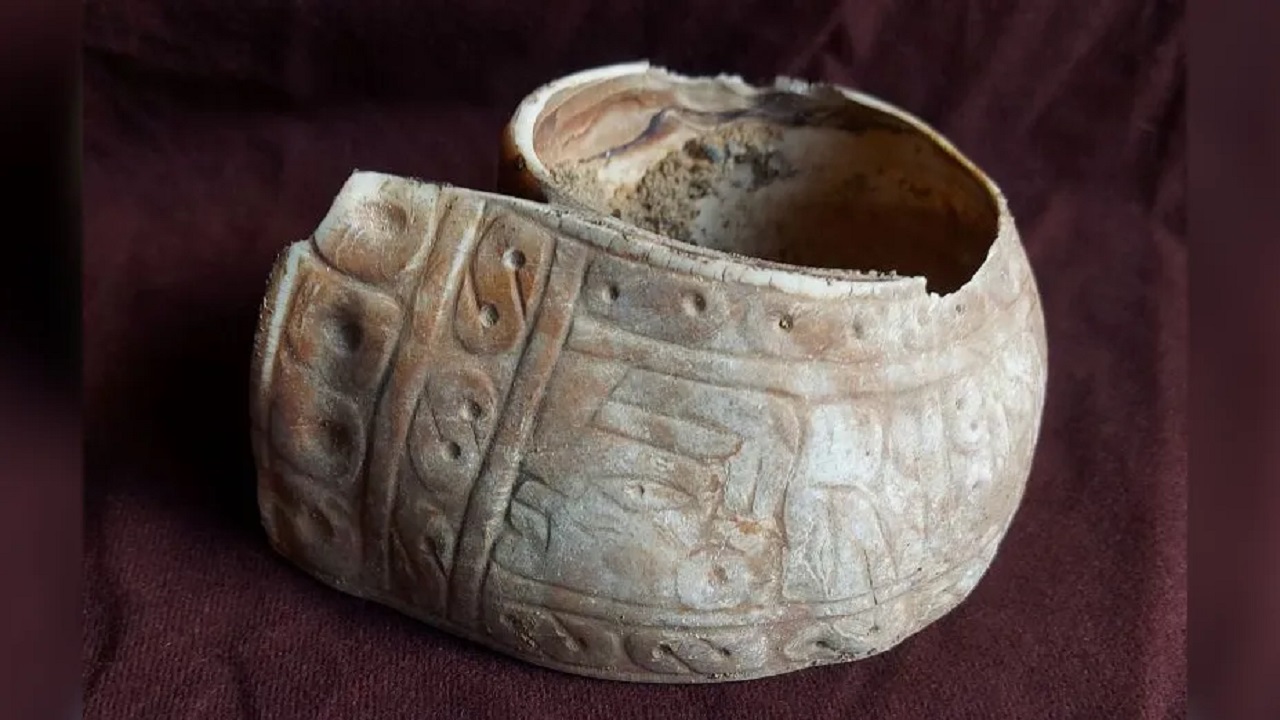
Archeologists Make Discovery in Flooded Cave in Mexico. 14 Artifacts 500 Years Old Are Found and May Reveal Mysteries and Curiosities About the Past.
In May 2025, a team of archeologists from the National Institute of Anthropology and History (INAH), in Mexico, revealed one of the most significant discoveries in recent years. Inside the Tlayócoc cave, located in the mountainous region of the state of Guerrero, researchers found 14 artifacts that are 500 years old in a surprisingly good state of preservation. The site, partially submerged by groundwater, provided ideal conditions for the preservation of historical pieces dating from the Mesoamerican Post-Classical period (950–1521 AD).
The find generated not only academic interest but also reignited debates about little-documented civilizations, especially the Tlacotepehua culture — an extinct ethnic group shortly after the arrival of Spanish colonizers that until then was known only through scattered references in 16th-century documents.
What Was Found by the Archeologists in the Flooded Cave in Mexico?
Among the items recovered from the flooded cave in Mexico, four shell bracelets, two complete stone disks, six fragments of those disks, a shell of the Strombus genus decorated with symbolic engravings, and a piece of charred wood stand out.
-
These living root bridges and ladders are over 700 years old and help indigenous people survive in one of the rainiest regions in the world.

-
From sertanejo star to international investor: Ana Castela invests millions in a mansion in the USA, creates a themed accommodation in Orlando, and shows that the “boiadeira” also wants to grow away from the stage.

-
The 10 most stunning motorhomes in the world: a $3 million trailer with a rooftop nightclub and garage for a Ferrari, “palaces on wheels” with Italian marble, private cinema, and five-star hotel luxury for billionaires.

-
Trump wanted to spend $400 million on the White House, but the courts prohibited the million-dollar construction.


These 500-year-old artifacts were not merely deposited at random: two of them were carefully placed on stalagmites with phallic shapes, leading archeologists to hypothesize that the cave served as a ceremonial space, possibly dedicated to fertility rituals.
The shells used in the bracelets are typical of coastal regions, suggesting that the culture inhabiting the interior of the current state of Guerrero had a well-established trade network. The stone disks may have been used in religious practices or as instruments for astronomical measurements, given the symbolism present in the inscriptions found.
Symbolism and Possible Rituals, According to Archeologists
The engravings on the objects found reveal characteristic elements of the Mesoamerican worldview. One of the most recurring symbols is the “xonecuilli,” a drawing in the shape of an “S” that appears in various pre-Hispanic indigenous cultures and is associated with the planet Venus, cosmic duality, and the passage of time.
The representation of a possible human figure with stylized features may be a reference to the god Quetzalcoatl — a deity associated with creation, knowledge, and rebirth.
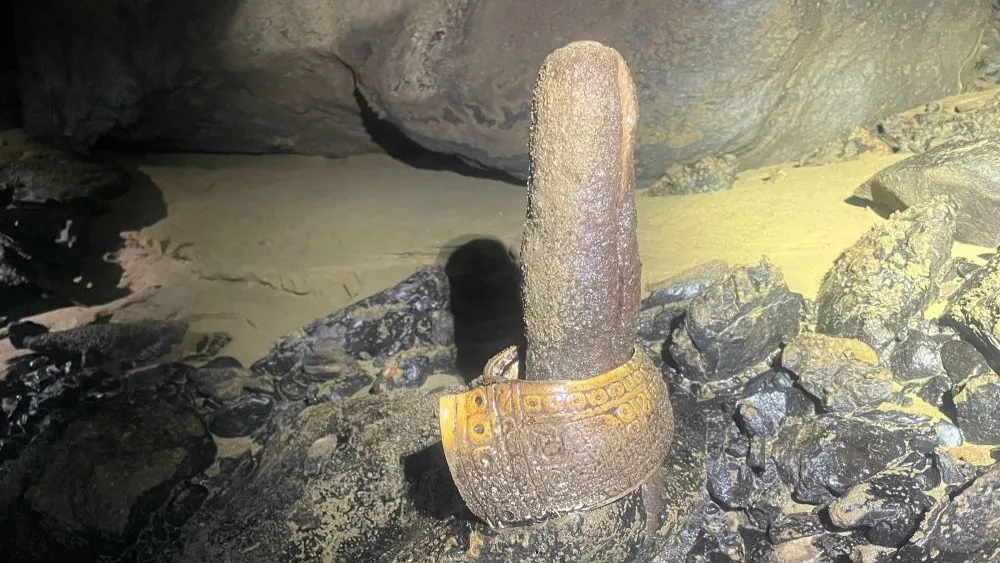
The presence of phallic elements along with these 500-year-old artifacts suggests that the cave was used in ceremonies related to land fertility and life renewal. Such rituals were common in various indigenous cultures, which attributed sacred properties to nature. The water present in the cave, for example, could symbolize the uterus of the earth, a fertile and sacred element.
Who Were the Tlacotepehua?
The civilization to which the archeologists attribute these artifacts is known as Tlacotepehua, a little-documented group that inhabited the region of Tlacotepec — a name that still denotes a municipality in the current state of Guerrero. 16th-century historical accounts briefly mention the Tlacotepehua, but there are no substantial records about their language, customs, or social structure.
The absence of concrete data about the Tlacotepehua makes this discovery even more relevant. The rescued artifacts provide clues about their religiosity, daily practices, and possible interactions with other Mesoamerican cultures like the Mexicas and the Mixtecs.
The most accepted hypothesis among archeologists is that this culture was either assimilated or exterminated in the early years of the colonial period, disappearing without leaving written records.
Challenges of Archeology in Flooded Caves
Studying archaeological sites in subterranean and moist environments is a technical and logistical challenge. The Tlayócoc cave is located over 2,300 meters above sea level, which alone makes access difficult. Moreover, the narrow and partially flooded space requires specialized diving equipment and specific excavation techniques to avoid damaging the artifacts.
Paradoxically, these extreme conditions also contributed to the excellent preservation of the objects. The absence of sunlight and low oxygen presence prevented the deterioration of organic and mineral materials. This allowed specialists to obtain valuable information not only about the materials used but also about the ritual and symbolic context of the artifacts.
The Importance of the Discovery of 500-Year-Old Artifacts for the History of Mexico
This find is considered a milestone in the study of undocumented Mesoamerican cultures. Unlike civilizations like the Maya or the Aztecs, which left abundant archaeological and written records, the Tlacotepehua were virtually unknown. The recovery of these 500-year-old artifacts, especially in a clear ritual context, could rewrite part of the indigenous history of Mesoamerica.
The lead archeologist of the team, Dr. Marisol Rodríguez, emphasizes that “this is one of the rare occasions when we managed to link symbolic, material, and contextual elements to a culture about which we knew little. The data obtained will allow comparisons with other indigenous traditions and help fill gaps in the regional chronology.”
In addition to its academic value, the discovery has potential tourism and educational benefits. The local government is studying the possibility of creating a permanent exhibition with replicas of the artifacts, respecting the preservation of the original site, which will remain closed to the public due to its fragile characteristics.
Forgotten Civilizations: An Open Field for Research
The discovery in the flooded cave in Mexico is a reminder that much of the knowledge about pre-Hispanic civilizations is yet to be uncovered. This is due to budget constraints, geographical difficulties, and, in some cases, the absence of political interest in promoting such research.
The case of the Tlacotepehua raises the hypothesis that other equally important cultures may have existed without leaving clear records — or that those records might be buried, hidden, or scattered in private collections and uncataloged archives.
Preservation, Research, and Cultural Recognition
The discovery made by the archeologists in the flooded cave in Mexico is much more than an isolated find of 500-year-old artifacts. It represents an important chapter in the reconstitution of the indigenous history of the American continent.
By revealing traces of Tlacotepehua culture, researchers not only contribute to scientific knowledge but also strengthen the recognition of the cultural diversity that existed before European colonization.
With the advancement of dating technologies, ancient DNA analysis, and digital archaeology, it is hoped that more discoveries of this type will come to light in the coming years. Investing in archaeological research is, therefore, investing in the recovery of the identity of peoples that, although little documented, played a fundamental role in shaping the history of Mexico and Latin America.








-

Uma pessoa reagiu a isso.