





 Portuguese
  English
  Spanish
  3 min of reading
  0 comments


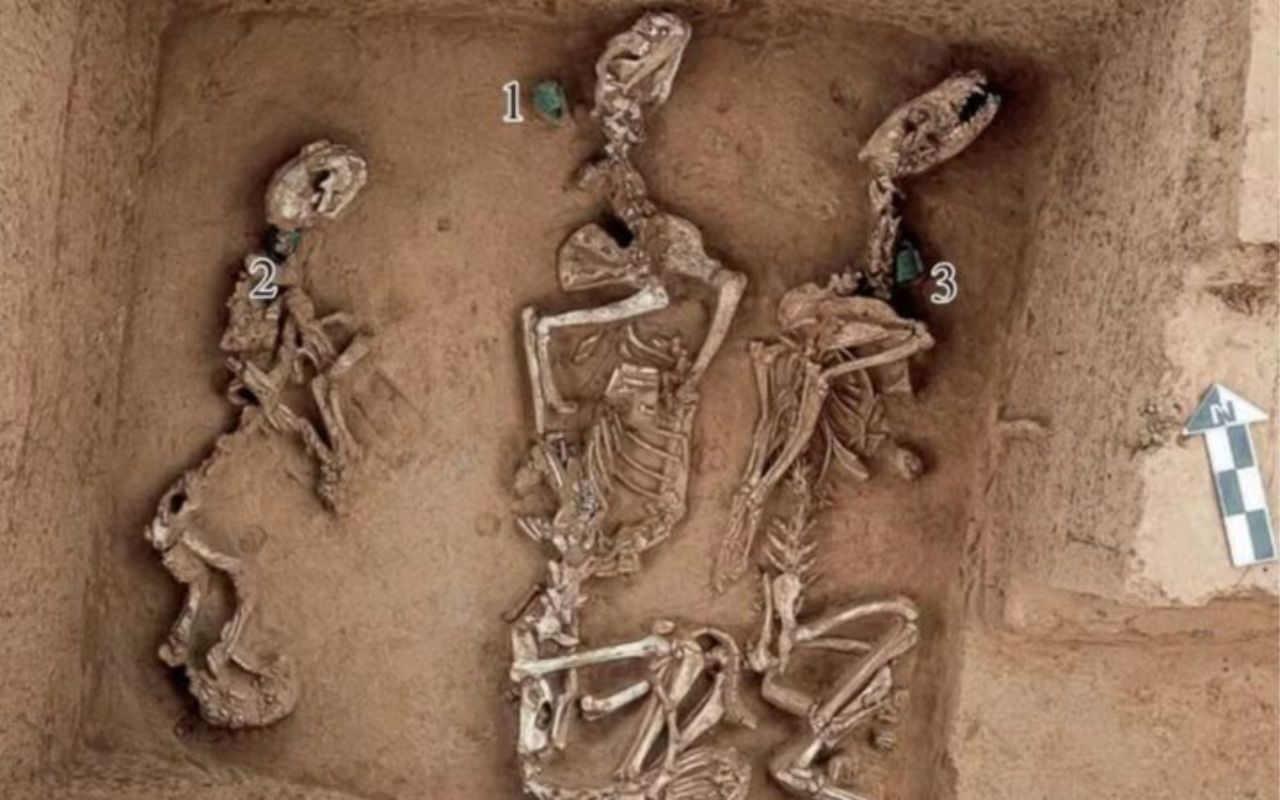
Ancient “Zoo” Over 3,000 Years Old Found in China Reveals Elites Kept Wild Animals Alive for Rituals.
What appeared to be just a collection of ancient bones is helping archaeologists understand how wild animals were used as symbols of power in ancient China.
Researchers identified remnants of what can be classified as an ancient “zoo” around 3,000 years old, where different species were kept alive before being used in rituals.
The discovery was made by scientists from the Chinese Academy of Social Sciences (CASS) and announced in January 2026.
-
With a cost per shot close to zero, the DragonFire laser could change naval warfare in 2027 and provide British ships with nearly unlimited defense against drones.

-
A British startup creates tires that generate electricity in electric vehicles when passing over potholes, speed bumps, and cracks.

-
Scientists have created robots made with living cells that have their own nervous system, swim on their own, explore the environment, and self-organize without any genetic engineering, and now they want to do the same with human cells.

-
Students create a solar-powered ambulance that operates without a plug, without fuel, and still keeps medical equipment running in remote areas.


Wild Animals as Instruments of Prestige and Control
According to the researchers, keeping wild animals in captivity required knowledge, labor, and resources.
Thus, the practice was restricted to the elites of China. The control of these species served not only a practical purpose but also a symbolic one, reinforcing social hierarchies and political authority.
This interpretation arises from the organization of the site and the objects found alongside the remains.
One of the main signs of captivity is the presence of 29 bronze bells found within the pits.
Some of them were positioned close to the animals’ necks, indicating they were used while the animals were still alive.
These bells likely served to monitor the movements of the animals, functioning as management tools.
Archaeologist Niu Shishan from CASS told local media that the remnants do not indicate immediate hunting.
“These animals were not hunted. They were kept alive as ‘exotic creatures,’ controlled by the elites,” she explained.
According to the researcher, this practice reinforces the idea of a space resembling a primitive zoo.
Varied Species Support Captivity Hypothesis
The recovered fossils belong to large and medium-sized mammals, as well as birds. Among the identified species are tigers, leopards, wolves, foxes, deer, wild boars, and Asian water buffalo.
Remains of birds such as swans, herons, and geese were also found. The variety suggests capture in different environments, which would hardly occur in a single hunt.
After being kept in captivity, the animals were likely used in ceremonial sacrifices, a common practice among the elites of ancient China.
These rituals held strong religious and political value, in addition to reinforcing the social status of those who performed them.
Researchers believe the pits found were intended for this type of use.

Where and How the Discovery Was Made
The archaeological site was found in Yin Xu, an important historical site located in the province of Henan, in central China.
The site was excavated between 2023 and 2024, in an area of approximately 1,240 square meters.
During the work, 19 small to medium-sized sacrificial pits were identified, according to information from the Chinese magazine Sixth Tone.
Connection with the Shang Dynasty
Yin Xu was an ancient capital of the Shang Dynasty, which ruled parts of China between 1600 B.C. and 1046 B.C..
This period is known for its complex rituals and intensive use of bronze, which helps to contextualize the presence of the bells found in the pits. In addition to the cultural aspect, the animal remains also have scientific value.
According to Niu Shishan, the diversity of species can provide data on the climate and ecosystems of the region about three thousand years ago.
This information helps to reconstruct the natural environment at the end of the Shang period.
The discovery of the ancient “zoo” over 3,000 years old demonstrates that ancient societies already had sophisticated ways to control wild animals.
The find enhances the understanding of power, religion, and the environment in ancient China and paves the way for further archaeological research.








-

-

3 pessoas reagiram a isso.