





 Portuguese
  English
  Spanish
  3 min of reading
  0 comments


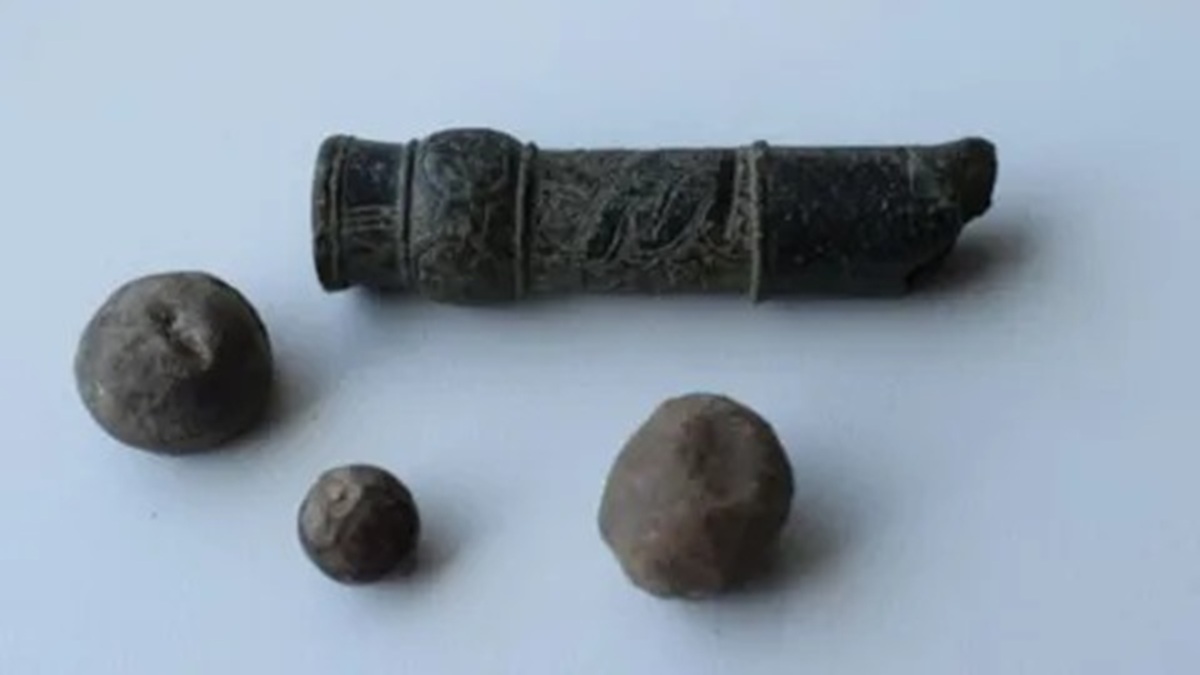
Fragments Of A Pistol About 6 Centimeters Found Near Kletzke Castle In Brandenburg May Date Back To 1390 And Indicate The Use Of Firearms During A Medieval Siege Involving Around 1,100 Fighters, Nine Years Before The Tannenberg Rifle
Fragments of a pistol discovered in Brandenburg, Germany, may represent the oldest known portable gun in Europe. The artifact, possibly dated to 1390, was found in 2023 during an archaeological survey near Kletzke Castle.
Discovery Of Pistol Fragments During Archaeological Survey In Brandenburg
The fragments of the pistol were found by Matthias Dasse, a volunteer in the historical heritage conservation area, during a field survey conducted near Kletzke Castle in the Brandenburg region, Germany.
After the discovery, Dasse forwarded the pieces to Gordon Thalmann, head of the Lower Monument Protection Authority of Prignitz. The expert identified that the melted bronze fragment corresponded to the barrel of an ancient firearm.
-
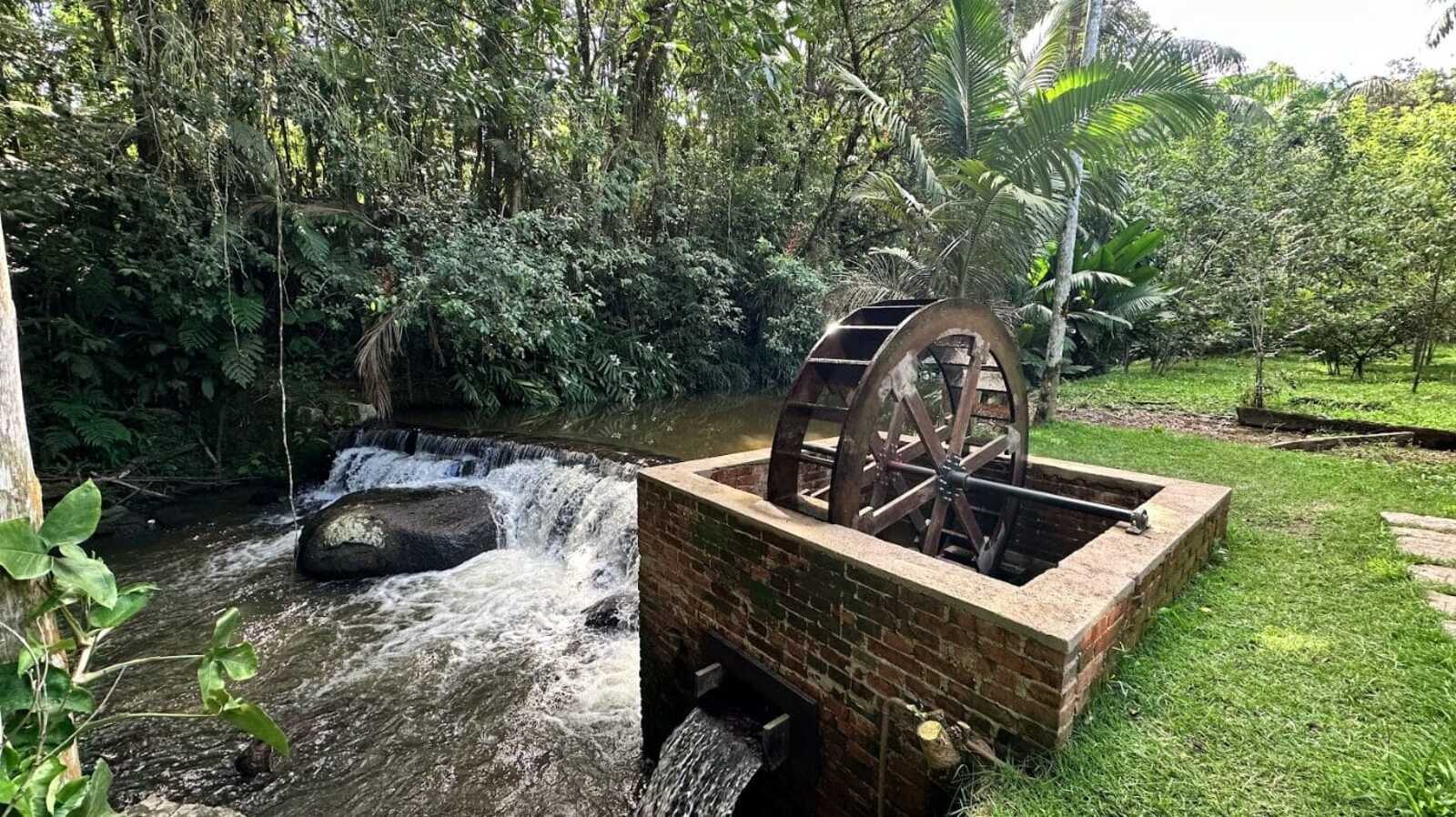
While restoring a historic mansion from 1910, a brick structure with an old turbine that generated energy from the Rio do Testo emerged, along with a hidden door and a rare floor concealed under layers of wax.
-
Italian researchers have detected what appears to be a second Sphinx buried under the sands of Egypt, and satellite scans reveal a gigantic underground megastructure hidden beneath the Giza Plateau for over 3,000 years.

-
There are 4,223 drums and 1,343 metal boxes concreted with 50-centimeter walls that store the radioactive waste from Cesium-137 in the worst radiological accident in Brazil, just 23 kilometers from Goiânia, with environmental monitoring every three months.

-
Giant Roman treasure found at the bottom of Lake Neuchâtel in Switzerland reveals an advanced trade system, circulation of goods, and armed escort in the Roman Empire about two thousand years ago.


Researchers believe the object may represent an early type of portable gunpowder weapon. The artifact measures about 6 centimeters in length and could be one of the oldest examples of this type of military technology in Europe.
Pistol May Be Nine Years Older Than The Tannenberg Rifle
If the estimated dating is correct, the pistol may have been produced around 1390. This would make it nine years older than the Tannenberg rifle, an artifact dated to 1399 and often regarded as the oldest portable firearm in Europe.
According to Christof Krauskopf, head of the State Office for Heritage Management and Archaeological Museum of Brandenburg, there had been no written or archaeological evidence until now regarding the use of firearms during this specific period in the region.
Krauskopf stated that, until now, only general assumptions indicated the possible presence of such weaponry. The discovery may represent a rare physical evidence of the early firearms used at the end of the Middle Ages.
Connection Of The Pistol With The Siege Of Kletzke Castle In 1390
Researchers have dubbed the artifact the “Kletzker Handrohr,” a term that can be translated as “Kletzke Hand Cannon.” The name was chosen because there is a hypothesis that the pistol is related to the siege of Kletzke Castle that occurred in 1390.
Historical accounts by the Franciscan monk Detmar of Lübeck describe how two dukes led a march with around 1,100 men against the castle, which was controlled by the influential von Quitzow family.
Despite the attack, defenders were able to maintain control of the fortress and repelled the invaders. Over the following centuries, the castle underwent renovations and structural changes.
Artifact May Indicate The Presence Of Firearms In Medieval Wars
If the connection between the 1390 siege and the found artifact is confirmed, the pistol could represent one of the earliest physical evidences of the use of firearms in conflicts of medieval Europe.
Krauskopf emphasized, however, that it is likely that the so-called Kletzke hand cannon was not manufactured in the region itself. The hypothesis put forth by researchers is that the weapon may have been brought by external forces involved in the confrontation.
The discoveries regarding the pistol were presented on February 27 during the annual conference of the State Archaeology Department. Krauskopf plans to continue analyzing the fragments while Brandenburg authorities work to develop Kletzke as a destination for archaeological tourism.









-

Uma pessoa reagiu a isso.