





 Portuguese
  English
  Spanish
  5 min of reading
  0 comments


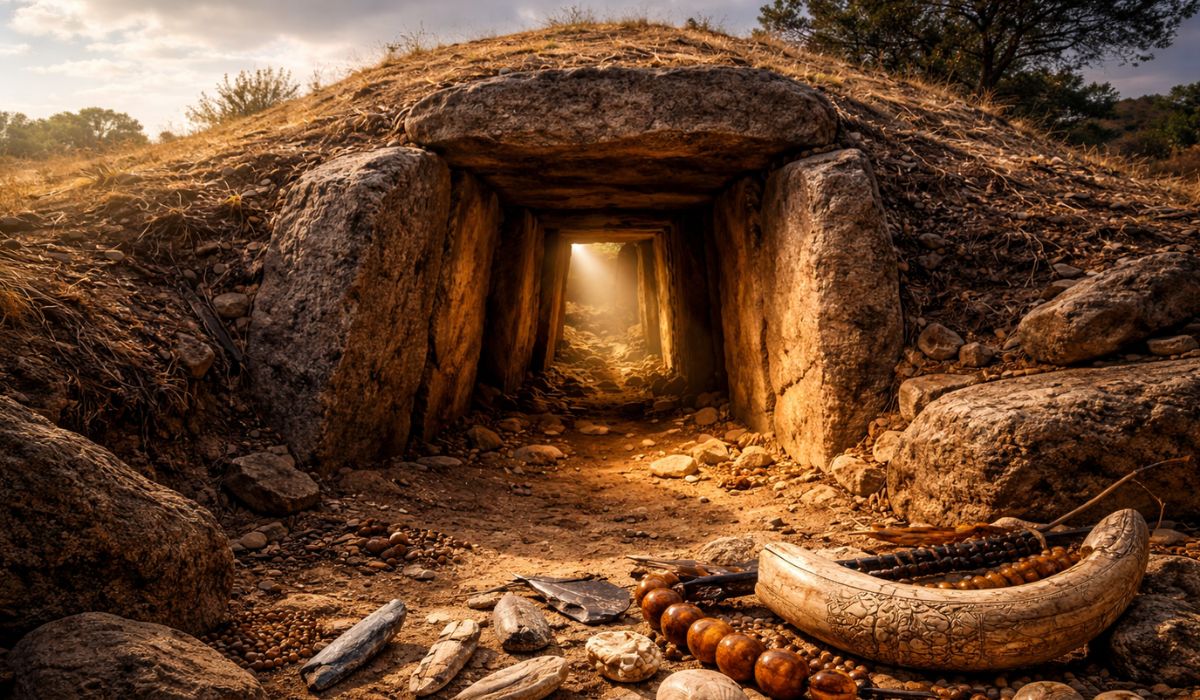
Discovery Inland of Málaga Exposes a Rare Megalithic Structure, with Prestige Objects and Funeral Vestiges that Help to Expand the Understanding of Exchange Networks, Collective Rituals and the Prehistoric Occupation in Southern Spain.
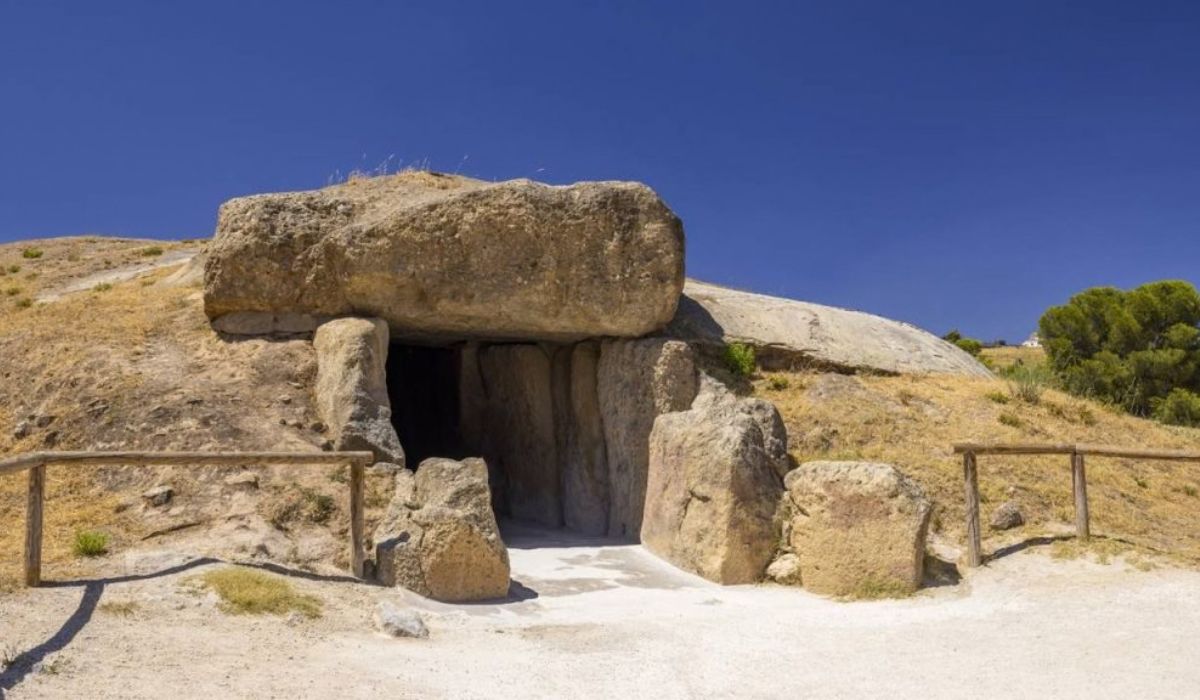
A team from University of Cádiz revealed in Teba, in the inland province of Málaga, a megalithic tomb over 5,000 years old considered one of the most relevant recent archaeological finds in Andalusia.
The monument, identified as Dolmen I of the La Lentejuela Necropolis, is 13 meters long, preserves a complex internal organization and housed ossuaries and objects made from raw materials such as ivory, amber, flint and seashells.
The discovery was announced on September 22, 2025, after four excavation campaigns.
-
How 5,000 Indian dabbawalas manage to deliver around 200,000 lunchboxes a day in Mumbai for over 130 years using bicycles, crowded trains, and a manual system that continues to operate with impressive accuracy.

-
While restoring a historic mansion from 1910, a brick structure with an old turbine that generated energy from the Rio do Testo emerged, along with a hidden door and a rare floor concealed under layers of wax.
-
Italian researchers have detected what appears to be a second Sphinx buried under the sands of Egypt, and satellite scans reveal a gigantic underground megastructure hidden beneath the Giza Plateau for over 3,000 years.

-
There are 4,223 drums and 1,343 metal boxes concreted with 50-centimeter walls that store the radioactive waste from Cesium-137 in the worst radiological accident in Brazil, just 23 kilometers from Goiânia, with environmental monitoring every three months.

Archaeological Discovery in Málaga and What the Find Indicates
According to the researchers, the importance of the dolmen lies in the set formed by the structure and the materials found, and not just in the antiquity of the monument.
The team describes the construction as one of the most monumental and best-preserved funeral structures in the region, which expands the possibilities for studying funeral practices and aspects of social organization in southern Iberian Peninsula during the 3rd millennium BC.
On-site, archaeologists identified several ossuaries and a set of items associated with the burial, including arrowheads, large flint blades, and a halberd highlighted by the research team.
Objects made from unusual raw materials for an inland site, such as ivory, amber and seashells, were also found.
For the specialists involved in the project, these elements reinforce the importance of the set for studies on the circulation of goods and contacts between prehistoric communities.
The discovery was conducted by researchers Eduardo Vijande and Serafín Becerra, members of the Thalassa group from the University of Cádiz, under a project authorized by the Junta of Andalusia.
When presenting the results, Becerra stated that the find could be “one of the most monumental and complete dolmens in all of Andalusia”.
What Was the Funeral Structure Discovered in Teba Like
Dolmens are megalithic structures built with large stone blocks and, in many cases, associated with collective funeral uses.
In La Lentejuela, the monument draws attention due to its scale and internal compartmentalization.
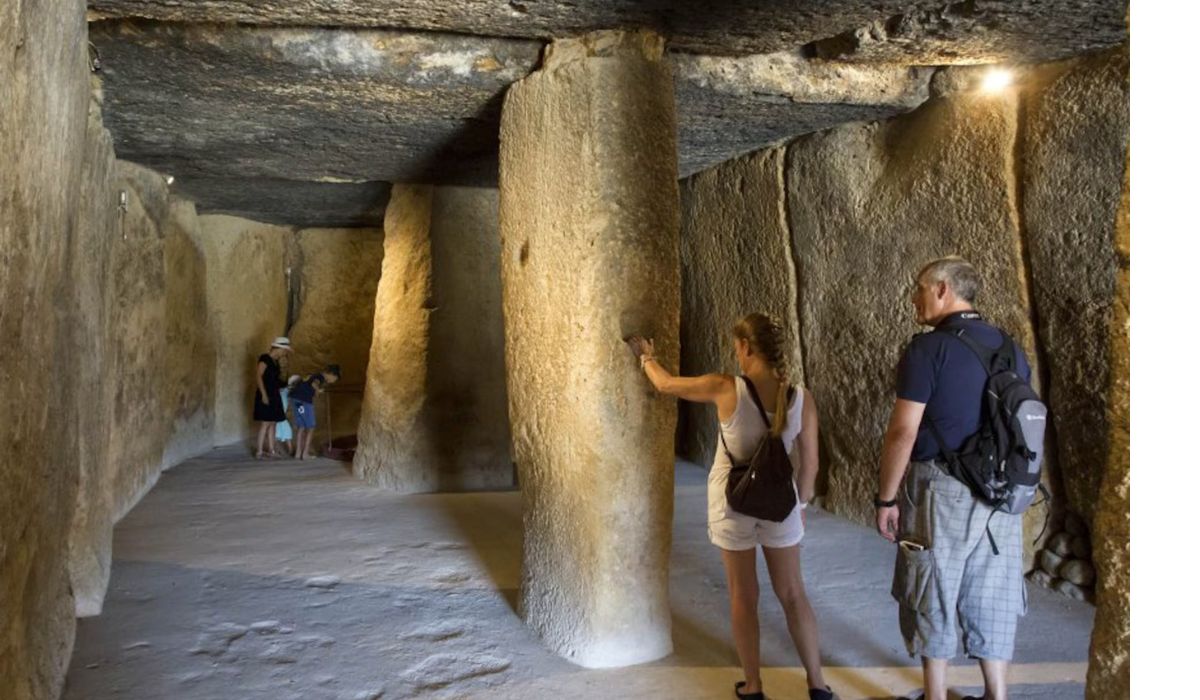
The tomb measures 13 meters and has divisions made with large slabs, indicating a more elaborate architecture than the simpler form usually associated with this type of prehistoric site.
Besides the size, the state of preservation was pointed out by the team as one of the main factors for the relevance of the find.
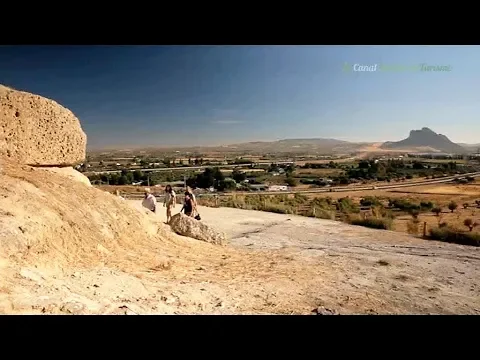

The excavation campaigns allowed for documenting the monumentality of the space and the permanence of internal elements that help to understand how the structure was organized and used over time.
Instead of pointing to an isolated burial, the documented material indicates a collective funeral space, with different human deposits and associated objects.
This picture, according to the researchers, expands the analytical potential of the site and favors comparisons with other megalithic contexts in the region.
Ivory, Amber and Seashells in the Prehistoric Dolmen
Among the recovered materials, the presence of exotic raw materials appears as one of the central points of the research.
Ivory, amber and seashells are part of the funeral goods identified on-site and help to situate this community within broader object circulation circuits, according to the team from the University of Cádiz.
The university itself highlighted that these elements provide relevant information about exchange networks in the southern peninsula during the 3rd millennium BC.
Juan Jesús Cantillo, also linked to the project, stated that the presence of seashells in an inland area suggests the symbolic importance of the sea and the existence of long-distance exchanges.
Thus, the dolmen is now analyzed not just as an ancient tomb with rare objects, but as an archaeological context capable of providing evidence of wider connections between prehistoric communities.
For the researchers, the incorporation of these materials into funeral practices helps to understand social and economic relations that were not limited to the immediate surroundings of Teba.
Why the Dolmen of La Lentejuela Gained Highlight in Andalusia
The site was presented by the team as one of the most complete examples in Andalusia, an evaluation associated with the monument’s size and the level of preservation observed in the excavations.
The relevance of the set, according to the researchers, increases because the site allows for examining, in the same context, architecture, human deposits and objects associated with the funeral ritual.
This combination is treated by specialists as an important element for understanding how these communities organized death, memory, and the use of valued goods in funeral contexts.
In this sense, the site offers an analytical basis that goes beyond the architectural record and also includes the distribution of materials and how they were deposited.
The project also envisions a stage of scientific deepening.
The University of Cádiz reported that the work has institutional support and archaeometric analyses in collaboration with the Palarq Foundation, indicating that the interpretation of the material should advance from specialized examinations.
Eduardo Vijande stated that the main potential of the structure lies in its state of preservation, capable of providing detailed information on the ways of life and beliefs of these communities.
By incorporating the La Lentejuela Megalithic Necropolis, the dolmen enhances the archaeological importance of Teba in the Andalusian context.
For the responsible team, the recently revealed monument is expected to contribute to the study of European megalithism from southern Spain, gathering evidence of funeral practices and material circulation in a period prior to the great civilizations of Antiquity.







-

2 pessoas reagiram a isso.