





 Portuguese
  English
  Spanish
  6 min of reading
  2 comments


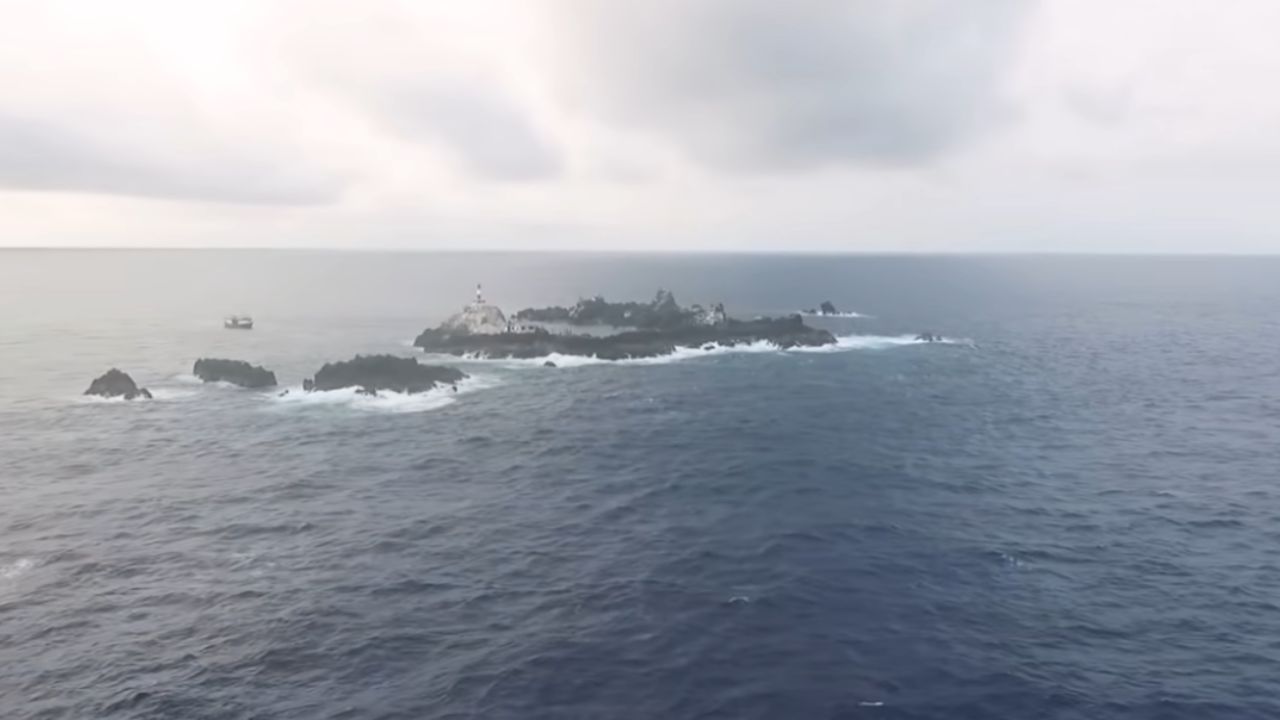


In The Archipelago of São Pedro and São Paulo, The Scientific Station Sustains Brazil’s Presence In Extreme Rocks Of The Atlantic, Where The Earth’s Mantle And Constant Tremors Are Routine And Even The Rescue Of An Italian Has Already Happened
The Archipelago of São Pedro and São Paulo seems, at first glance, just a handful of jagged rocks in the middle of the Atlantic, about a thousand kilometers from the mainland. But this “almost nothing” concentrates rare extremes: the highest point reaches only 18 meters, the surrounding depth hits 4,000 meters and the place shakes frequently, because it is exactly over a major geological fault.
The Archipelago of São Pedro and São Paulo is also a strategic and symbolic point. Brazil has maintained continuous human presence since 1998, in rotating teams and researchers, to sustain science, sovereignty, and survival in an environment without vegetation, without sources of fresh water, and with waves capable of putting a station at risk.
Why The Archipelago of São Pedro and São Paulo Is So Extreme

The Archipelago of São Pedro and São Paulo is located in the middle of the Atlantic, near the boundary between the South American plate and the African plate. It is an area associated with frequent earthquakes, with tremors that, in some episodes, can even be felt on the surface. The logic is simple and frightening: when the ocean structure shakes, everything shakes along with it, from the rock to the shelter.
-
He started running at 66 years old, broke records at 82, and is now a subject of study for having a metabolic age comparable to that of a 20-year-old, in a case that is intriguing scientists and inspiring the world.

-
Oldest tree on the planet reappears after 130 years of searches: Wattieza, 385 million years old, was 10 meters tall and had no leaves or seeds; Gilboa fossils in New York solved the mystery in 2007.

-
A 48-square-meter house assembled in hours with 4,000 bricks made of recycled plastic that does not absorb moisture, has natural thermal insulation, and costs less than 90,000 reais in a complete kit.

-
Luciano Hang revealed that Havan’s air fleet has already accumulated more than 20,000 landings, 10,000 flight hours, and 6 million kilometers traveled, and he says that without the planes, the company would never have grown so quickly.

The size also matters. The emerged area is small, described as being smaller than two football fields. There is no vegetation and no natural sources of fresh water. This turns any stay into pure logistics: food, water, energy, communication, maintenance, and security need to be planned in advance, because there is no “market,” “post,” or “quick help” available.
The Oceanic Island Born From The Earth’s Mantle
The Archipelago of São Pedro and São Paulo does not draw attention just for being isolated. It enters the global geological radar for a rare reason: it is described as the only oceanic island formed by mantle rocks, a type of material that normally stays hidden beneath more superficial layers.
For researchers, this changes everything. On many oceanic islands, what appears is material linked to the crust or volcanic processes. There, the composition offers a window into the Earth’s deep layers, which explains why geologists and oceanographers treat the Archipelago of São Pedro and São Paulo as a natural laboratory, permanently anchored in the ocean.
Constant Tremors And The Challenge Of Building Where The Sea Commands
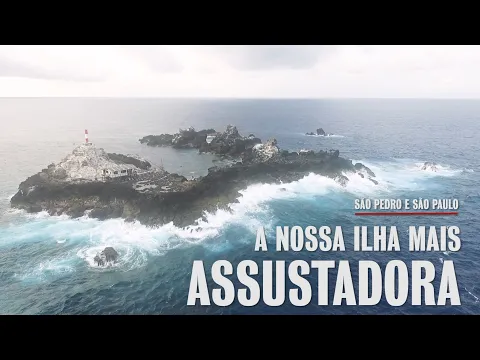

Living or working in the Archipelago of São Pedro and São Paulo is not just about facing isolation. It is facing a set of forces that cannot be negotiated: sea, wind, salt, waves, and tremors. The sea can change its mood within hours, and the waves have already caused significant damage to the installed infrastructure.
Continuous occupation requires constant maintenance. The base describes that teams rotate in cycles, with regular expeditions and logistical support, including smaller boats on some trips and larger ships for scheduled maintenance actions. In extreme situations, there is an emergency shelter with water and rations for a few days, precisely because rescue may depend on the sea allowing for approach.
The Scientific Station And The Rotation That Keeps Brazil Present
The human presence in the Archipelago of São Pedro and São Paulo is sustained by a rotation system. In general, every 15 days a group arrives and another returns to the continent, ensuring continuity of research and occupation.
This routine is not a whim. The Archipelago of São Pedro and São Paulo integrates a strategy to keep the area inhabited and operational, with research in geology, oceanography, and marine biology. It also involves coordination of agencies and maintenance missions, because the environment corrodes and wears out everything very quickly.
The Strategic Reason Behind The Occupation Since 1998
The Archipelago of São Pedro and São Paulo is not open to tourism, according to the base, and access is restricted to researchers and specific projects. This reinforces that the central objective is not visitation, but qualified permanence.
The base also points to a decisive point: islands that are not suitable for habitability may not guarantee certain maritime rights. Therefore, on June 25, 1998, the first scientific station in the Archipelago of São Pedro and São Paulo was inaugurated, ensuring habitability and, with that, strengthening the legitimacy of an exclusive economic zone around the archipelago, described as equivalent to approximately 450,000 square kilometers, in a circle with a radius of 200 nautical miles. It is science and sovereignty tied to the same cable.
The Place That Made It To Global News With Flight 447

Even if it is little remembered in daily life, the Archipelago of São Pedro and São Paulo is linked to a tragic international episode. The base describes that, after the night of May 31, 2009, the rocks deserved mention even in global news: flight 447 of Air France crashed into the Atlantic during a storm, with 228 people on board, and the fall occurred in deep waters about 300 kilometers from the archipelago.
This case reinforces a characteristic of the region: it is an operational “middle of nowhere,” between control areas and with great depths. When something goes wrong there, distance becomes an immediate obstacle, and the presence of a station and teams helps to provide a support point in the Atlantic.
The Rescue Of The Italian Adrift And The Coincidence That Becomes Survival

The Archipelago of São Pedro and São Paulo is also the setting for human stories that seem like a script. The base reports the case of the Italian Alex Bellini, who was lost for days in the Atlantic, hungry and thirsty, after problems with his vessel. The low relief of the islets and the waves made it difficult to even see the rocks.
The rescue happened when a fisherman, aboard the support boat for research, noticed something orange floating on the horizon: it was the adrift vessel with the exhausted Italian. In a place where there is almost nothing, being seen is already an event. This type of episode explains why human presence and continuous operation are also important for emergencies.
Minimal Life, Intense Ecosystem, And The “Natural Laboratory” Of The Atlantic
Despite lacking vegetation, the Archipelago of São Pedro and São Paulo sustains life in specific forms. The base describes a food chain observed by researchers: birds, droppings that accumulate on the rocks, microorganisms attracted, small fish, larger fish, and finally, large species. In open sea, this may include encounters with whale sharks, in addition to other species of sharks that are cited as more problematic.
Daily life there mixes science and adaptation. There are circulation rules, care for irregular terrain, intense sun and sea spray exposure, and coexistence with large numbers of birds. The feeling is of living in an outpost, where the environment does not forgive distraction.
What The Archipelago of São Pedro and São Paulo Reveals About Brazil In The Atlantic
In the end, the Archipelago of São Pedro and São Paulo brings together three layers that rarely appear together in the same spot on the map. The first is geological: constant tremors and a rare window into the Earth’s mantle. The second is human: rotation, shelter, risk, and stories like the rescue of the Italian adrift. The third is strategic: continuous presence since 1998 and the weight of this for the country in the Atlantic.
Maintaining life there is not comfort; it is a decision. And this decision has a cost, requires logistics, and demands constant attention, but delivers knowledge and presence in one of the most extreme places under Brazilian responsibility.
Quick question for you to comment: if you could choose, should the Archipelago of São Pedro and São Paulo receive even more investment in security and structure, or should the focus be to reduce human presence and operate with the minimum possible?






Receber muito mais investimento, com certeza!
Certamente deveria receber ainda mais investimento em segurança e estrutura para mais pesquisas.