





 Portuguese
  English
  Spanish
  4 min of reading
  0 comments


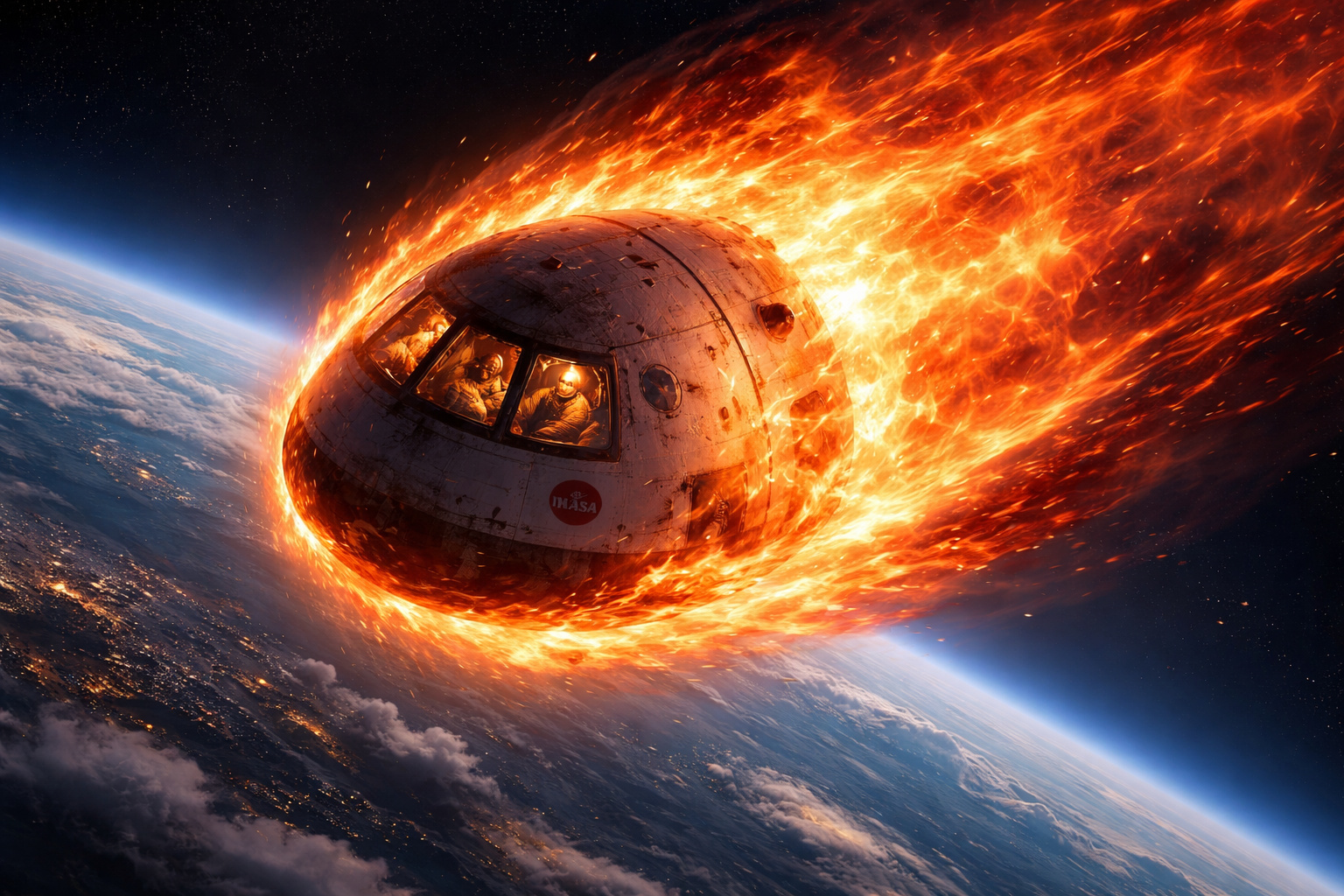
Historical NASA mission reveals impressive details of the return to Earth and the extreme challenges faced by the crew during descent
The Artemis 2 mission has already made history in space exploration by featuring one of the most intense reentries ever recorded by modern science. This information was disclosed by the “BBC”, based on official NASA data and interviews with experts, revealing how four astronauts faced temperatures of up to 2,700 °C while returning to Earth inside a true “fireball”.
The four crew members of the Orion spacecraft were scheduled to land in the Pacific Ocean, near the coast of San Diego, California, around 9 PM Brasília time this Friday (10/4). However, what stands out is not just the landing time, but the complexity and risk involved in every second of the reentry.
According to the mission pilot, Victor Glover, the experience goes beyond common understanding. He stated that piloting a capsule amid the extreme heat of the atmosphere is something profoundly striking, emphasizing that this stage of the mission is one of the most anticipated since the team’s designation on April 3, 2023.
-
At over 2,000 meters above sea level, archaeologists have found a medieval city spanning 120 hectares with four citadels hidden in the mountains of Uzbekistan. This discovery dismantles the idea that the Silk Road was merely a passage and reveals a colossal urban center where no one imagined.

-
The humanoid robot from China that runs, does flips, and costs less than an economy car has just launched a global version, and the R1 from Unitree will be sold for $4,900 in the United States, Europe, and Asia, making a machine with 26 joints accessible to any small laboratory or enthusiast with the budget of a high-end iPhone.

-
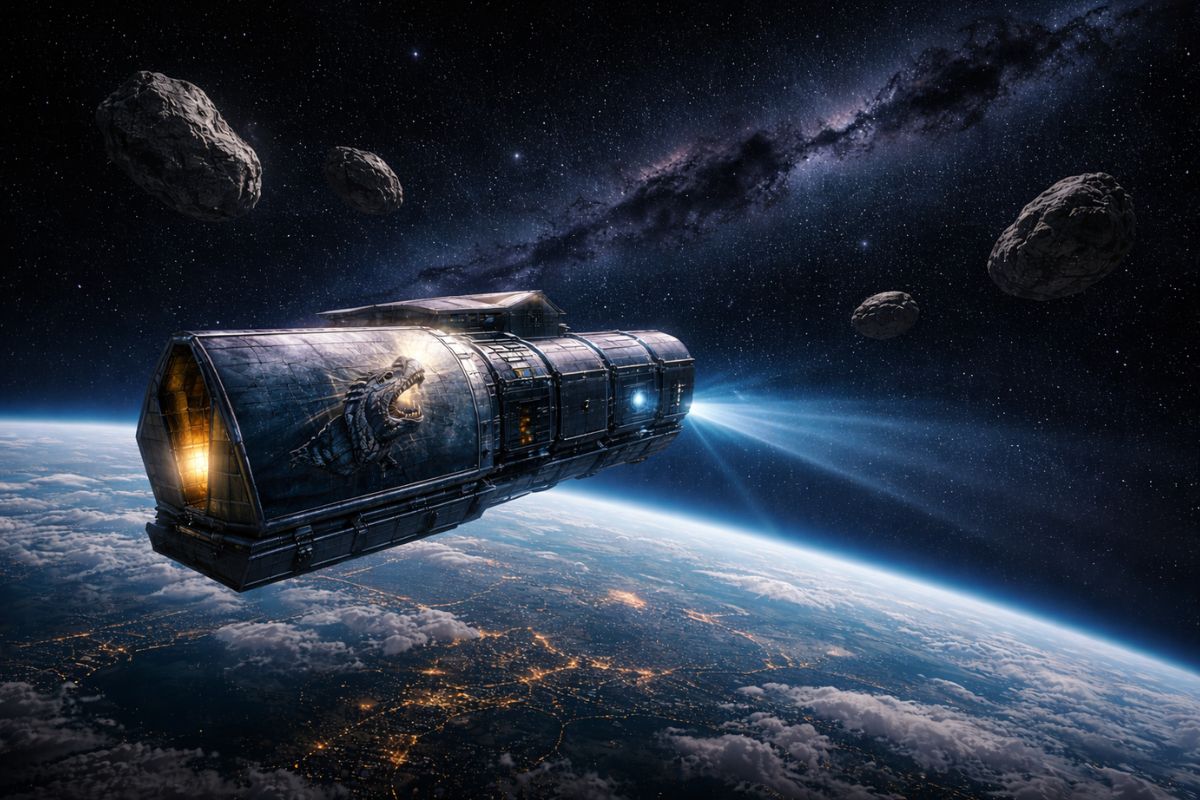
NASA is building a space telescope to find killer asteroids before they hit us, and the unofficial mission emblem features a T-Rex screaming at the sky with two words: never again.
-
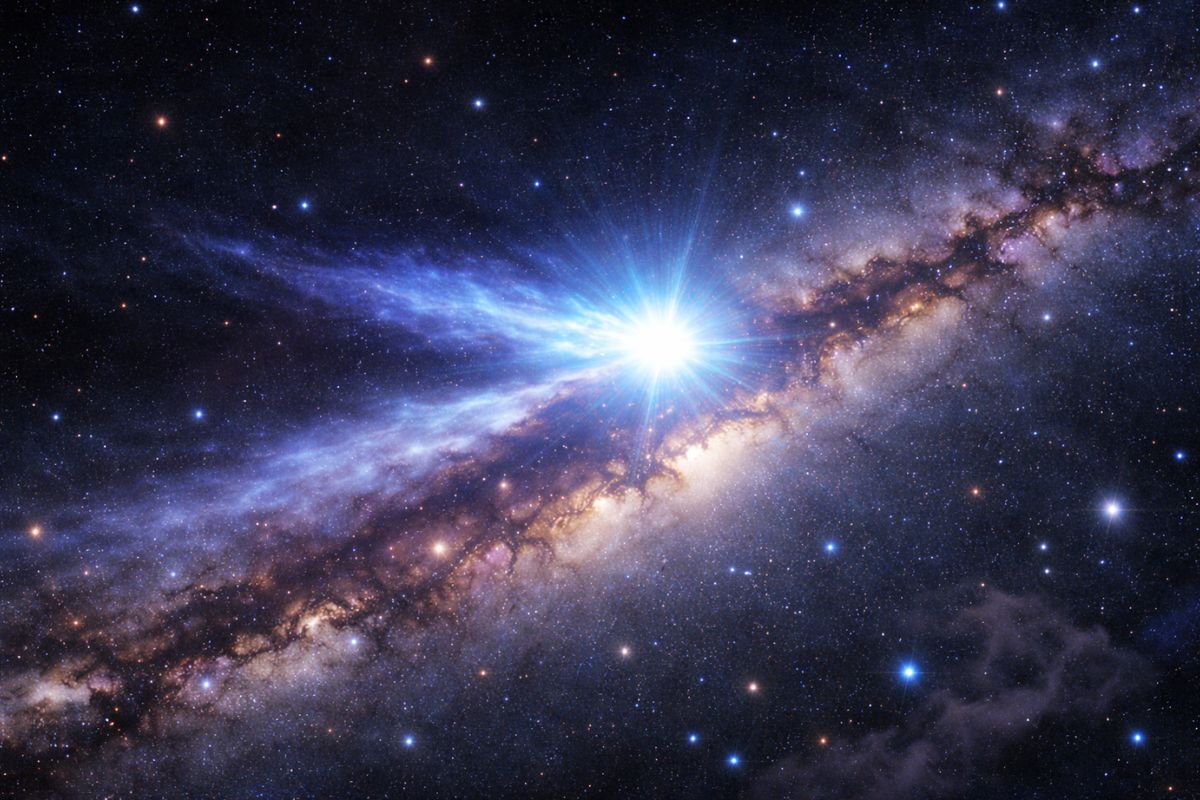
Ten undergraduate students received an astronomy homework assignment, began sifting through data on the university’s computer, and ended up discovering the oldest star ever recorded in the universe, a cosmic immigrant that formed shortly after the Big Bang and was wandering alone towards the Milky Way.
Controlled reentry requires millimeter precision to avoid tragedy in the Earth’s atmosphere
Before beginning the descent, the crew underwent a series of fundamental preparations. On the last full day in space, the astronauts reviewed all reentry procedures and tested compression suits, essential to avoid dizziness upon returning to Earth’s gravity. Additionally, the service module separated from the crew module about 20 minutes before contact with the atmosphere.
Next, the Orion capsule performed a crucial maneuver: it positioned its heat shield in the correct direction to withstand the extreme temperatures generated by friction with the air. This detail is vital, as any mistake can be fatal.
According to experts, the spacecraft must enter the atmosphere at an extremely specific angle, with a margin of error of only 1 degree. If the angle is too steep, the capsule may simply burn up. On the other hand, if it is too shallow, there is a risk of it being “bounced” back into space.
The so-called entry interface occurs at about 122 km altitude — a moment described by flight director Rick Henfling as the point where “the fun begins.” From there, the Orion is enveloped by an intense layer of plasma, caused by the heating of the air, which completely blocks communication signals with Earth for about six minutes.
This blackout occurs just 24 seconds after the reentry begins, leaving the control team without contact until the capsule reaches approximately 46 km altitude.
Speed of 40,000 km/h, impact in the ocean, and rescue within 2 hours mark the end of the mission


During the descent, the Orion reaches speeds exceeding 40,000 km/h. To reduce this extreme pace, the capsule uses the atmosphere as a natural brake. Interestingly, its shape is not aerodynamic — on the contrary, it was designed to increase drag and efficiently slow down.
This process, while effective, is extremely intense. The astronauts face strong vibrations and considerable G-forces. Unlike uncrewed vehicles, which can withstand up to 100 Gs, the Artemis 2 mission was carefully planned to maintain levels tolerable for the human body, extending the deceleration to about five minutes.
In the final phase, parachutes come into play. First, two deceleration parachutes are deployed at about 6.7 km altitude, reducing the speed to approximately 322 km/h. Shortly after, at 1.8 km above the ground, the main parachutes are activated, slowing the speed to around 32 km/h — enough for a safe landing in the Pacific Ocean.
After impact with the water, inflatable airbags are activated to stabilize the capsule, which can land in different positions. Rescue teams already positioned in the area immediately begin the recovery process.
According to Debbie Korth, deputy manager of the Orion program, the expectation is that the astronauts will receive medical attention within two hours after landing and return to the Naval Base in San Diego within 24 hours.
Thus, the Artemis 2 mission not only marks a significant technological advancement but also places its crew in an extremely select group: only 24 human beings in history have traveled around the Moon.
Furthermore, experts highlight that this was the fastest reentry of a human in the last 50 years, reinforcing the importance of the mission and the level of precision required to ensure the crew’s safety.
Live return of the Artemis II mission to Earth







Seja o primeiro a reagir!