





 Portuguese
  English
  Spanish
  8 min of reading
  0 comments


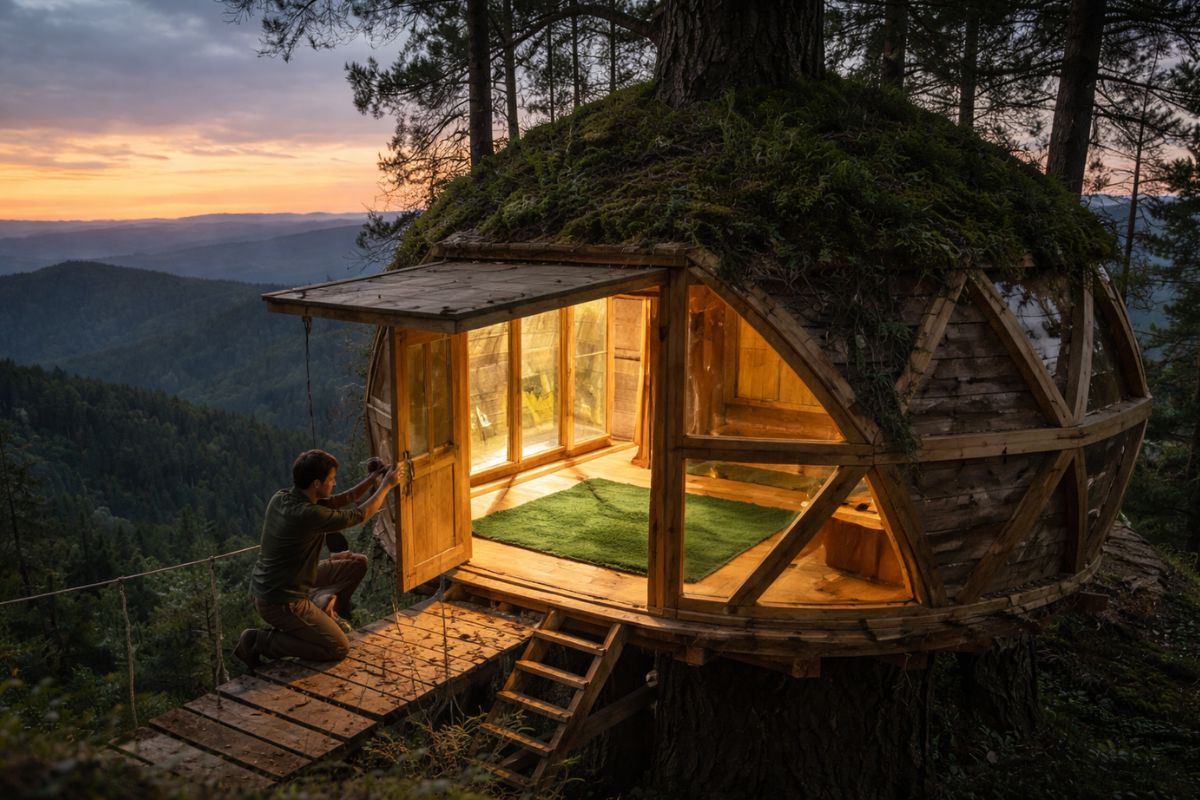
Using Reclaimed Wooden Pallets, An Artisan Builds A Hobbit Hole In A Wooden Sphere With A Moss Roof, Creating A Treehouse Fully Integrated Into The Forest.
In a hidden clearing, an artisan picks up discarded pallets and transforms scrap into a suspended spherical hobbit hole, with wood joints and no glue, a shingle roof, and a door that functions like a drawbridge. All topped with a green moss roof that makes the little house practically disappear among the trees.
Far from heavy machinery and industrial materials shining again, he chooses the harder path. Each board from a disassembled pallet, each nail pulled, and each handmade joint is part of a silent pact with the forest, where the shelter is not only built upon nature but designed to blend into it. In the end, what is born there is more than just a treehouse: it is a hobbit hole that looks like it sprouted from the very ground.
From Industrial Waste To The Suspended Hobbit Hole

The story of this hobbit hole doesn’t start in a hardware store, but in a much less glamorous place: the dump. The artisan searches for used wooden pallets, forgotten after carrying loads and goods, treated only as the dry bones of modern logistics.
-
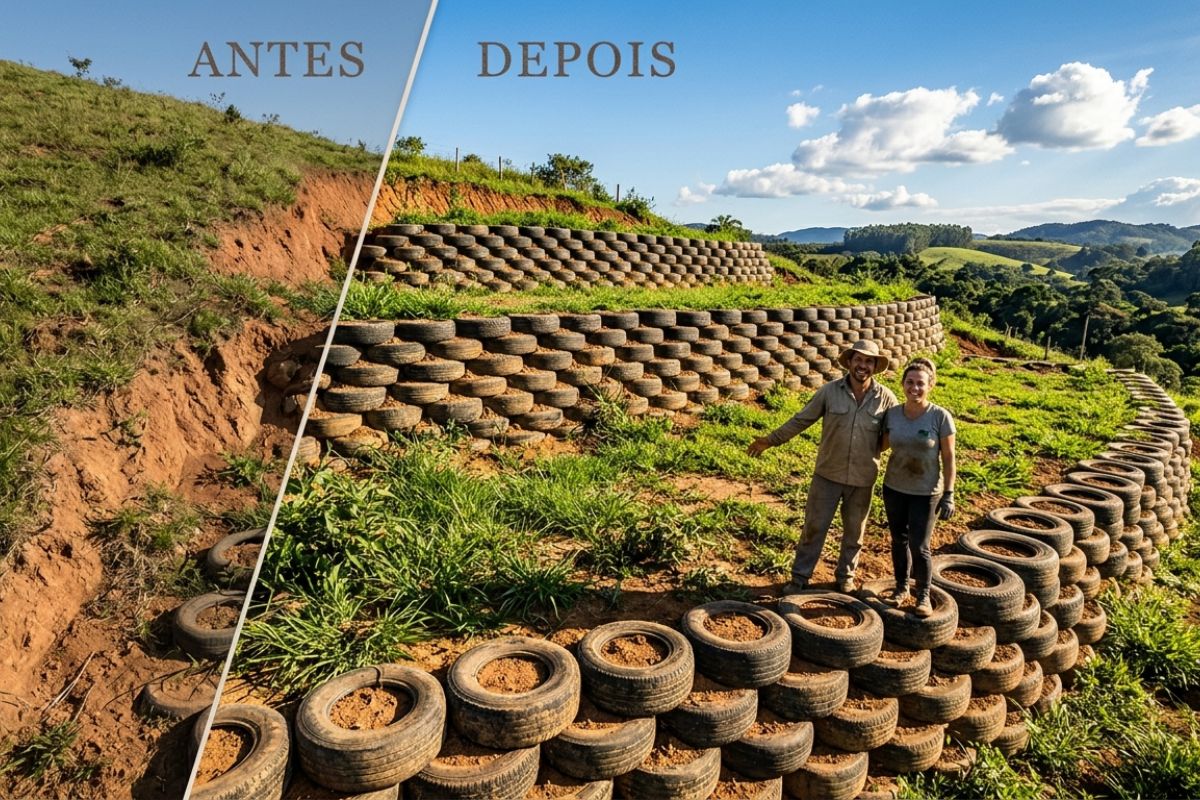
Couple shows how they built a retaining wall on their property using 400 old tires: sloped land turned into plateaus, tires are aligned, filled, and compacted with layers of soil, with grass helping in support and at almost zero cost.
-
Engineer explains drainage during the rainy season: the difference between surface water and deep water, ditches, gutters, and water outlets on the road, as well as drains and drainage mattresses, to prevent erosion, aquaplaning, and flooding at the construction site today.

-
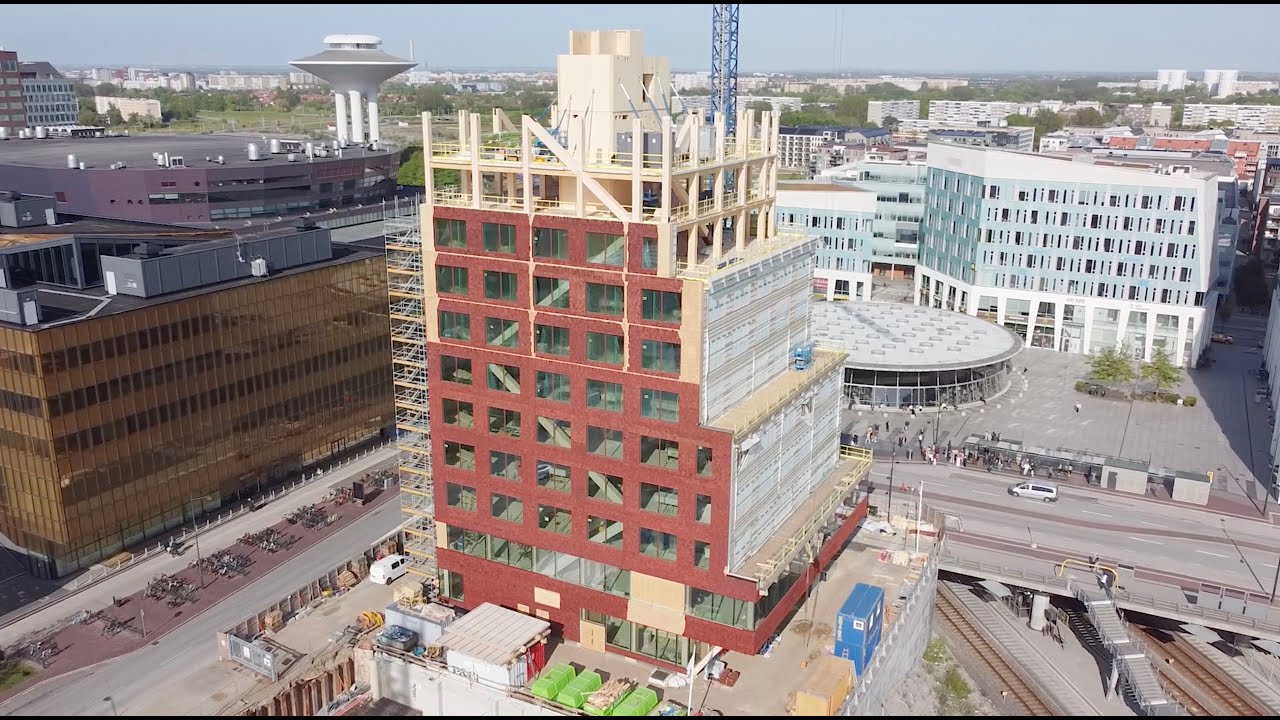
With 55 floors, 177 meters in height, a 15-meter walkway between the twin towers, ventilated facade, and 6,300 m² of leisure space, Ápice Towers already has one tower completed and another nearly at the top.

-
After nearly 50 years of neglect, BR-319 receives R$ 678 million to pave 340 km, gain a 320-meter bridge, and try to lift Amazonas out of the mud, the quagmire, and road isolation.


Instead of demolishing everything violently, he works against the hurry. With a lever and a hammer, he disassembles pallet by pallet, pulling each nail as if saving a piece of wood from the fire, sorting boards, choosing the best ones, cleaning the surfaces. It is a harvest, not a demolition.
With the material prepared, he chooses the stage of the hobbit hole: two sturdy trees rising like sentinels in the forest, firm enough to support the suspended structure. Between them, the horizontal base is carefully leveled with millimeter precision.
The first hammer blows drive long nails into the trunk, locking the initial crossbeams as if they were artificial roots embracing the living wood.
Down there on the ground, he clears the terrain, digs holes for posts, and stakes new “legs” for support. The hobbit hole may seem light and magical when seen completed, but behind the fantasy image lies engineering of balance, anchoring, and stability that begins long before the first wall is raised.
The Invisible Base That Supports The Sphere


Before the hobbit hole looks like a house, it needs something that few people see: the structure. For this, the artisan invents a simple jig from one of the pallets, which serves as a template to repeat identical cuts on the beams.
It is a clever workaround raised to the level of a precision tool, made only with wood, a hand saw, and patience.
Each beam is cut, sanded, adjusted, and then lifted to the level of the future platform. The floor structure is not a common square, but an articulated composition, with multiple supports, designed to withstand the weight of the sphere that will come later.
It is at this phase that high-level carpentry appears. Instead of screws and metal plates everywhere, he bets on complex joints, notches, joints that recall ancestral carpentry techniques.
He marks the wood, saws at the exact points, chisels with an axe and chisel, removes slivers until the joint fits perfectly.
When one beam lies over the other and locks only by friction and geometry, without glue and without screws, the structure gains another identity.
It is no longer just a floor: it is the invisible skeleton of the hobbit hole, a mesh of fibers and distributed forces holding everything that will come on top.
With the beams ready, the floorboards arrive. The reclaimed wood from the pallets is placed crosswise, cut to follow the contour of the platform, fitted without leaving gaps.
That flat, firm, and silent floor is the first habitable space of the hobbit hole, the stage where the rest of the magic will happen.
How The Hobbit Hole Gains Shape Inside
With the floor ready, it’s time to make the sphere grow. The first vertical posts rise like ribs, marking the volume of the future hobbit hole.
They define the internal perimeter, the height, the arc of curvature that will transform that base into a wooden cocoon.
Next come the horizontal boards. One by one, they will cover the “ribs”, rising in a spiral. Each piece needs to be slightly angled to follow the gentle curve of the sphere, and this is what transforms the work into an almost meditative process of measuring, cutting, adjusting, and nailing.
From the outside, the structure begins to resemble a ship hull, a wooden capsule, a large seed about to germinate.
Inside, the space transforms into a kind of cozy cave. With each new row of boards, the interior becomes more closed, more protected, more intimate.
Two strategic cutouts open windows in the curved walls, placed on opposite sides to ensure cross ventilation and frame the forest as if they were living pictures.
The light enters at unexpected angles, drawing stripes on the inner boards, changing the mood of the hobbit hole throughout the day.
When the last piece of wood closes the top and the rough roof is completed, the geometry appears in all its strength.
The spiral pattern of the boards converging at the center creates an almost hypnotic effect, as if the ceiling had been sculpted from the inside and outside at the same time.
Shingle Roof And Drawbridge Door

Wood isn’t just about beauty: it needs to survive rain, wind, snow, and sun. Therefore, before looking beautiful, the hobbit hole needs to be protected. Over the sphere of boards, the artisan applies a dark waterproof membrane, stapling and stretching it carefully.
In the overlaps, he uses fire: a torch melts the material at the seams, creating a continuous and waterproof skin.
Only then does he begin the work that gives personality to the little house: the wooden shingles. He cuts dozens, then hundreds of small “tiles” of wood, all of similar size, and begins to cover the exterior as if wrapping a living being.
From bottom to top, each piece is overlapped in a fish scale pattern, creating texture, volume, and movement on the surface.
The dark sphere begins to gain reflections, lines, and shadow, until it resembles a fantastic creature crouched in the forest, ready to awaken.
At the entrance, he makes another decision that defines the hobbit hole’s identity: instead of a common door, he creates a drawbridge that is both a staircase and a giant lock.
He builds the heavy panel, fixes steps that function as a staircase when lowered, and installs everything in the main opening.
When the bridge is down, a person climbs up the stairs as in any treehouse. When they pull the rope from the inside, the entire panel rises, closing the opening, isolating the interior, and transforming the hobbit hole into a small suspended fortress.
It is a clever design solution that saves space, enhances security, and reinforces the feeling of a secret refuge.
To protect this special door, he resorts to the Japanese technique of charring wood, the famous Shou Sugi Ban. He passes the torch until the surface becomes charred, scrapes off the excess, revealing a dark, textured finish that resists insects and moisture.
The contrast between the black door and the light wooden shingles around it makes the entrance even more striking.
Windows, Interior, And The Unexpected Comfort Of The Hobbit Hole
From the outside, the structure already seems ready, but it still needs to transform the hobbit hole into a true resting place. He cuts custom glass, fits it into the windows, securing it with thin wooden strips. Inside, the forest is seen as a framed picture, always in motion, always alive.
Then, he covers the interior walls with panels, creating a second skin of wood. This extra layer improves thermal insulation, makes the interior quieter, and provides a smooth finish to the touch, without visible nails or overly rustic surfaces.
On the floor, instead of leaving the wood raw, he rolls out a soft green carpet, almost like an artificial lawn, that transforms the space into a kind of capsule room.
When he lies down there for the first time, he tests not only the physical comfort but the feeling of being truly protected. The hobbit hole ceases to be just a carpentry experiment and becomes a place where the body relaxes and the mind slows down.
Green Roof: When The Hobbit Hole Becomes Part Of The Forest

The final gesture is the most symbolic of all. The artisan doesn’t want the house to just “sit” in the forest, he wants it to be part of the forest.
To do this, he goes to a damp and shady area, where moss forms a dense carpet on the ground. With a spatula, he lifts whole blocks of living moss, taking care to preserve the natural structure of that “plant carpet.”
Back at the construction site, he climbs one last time to the top of the sphere. Over the shingle tiles, he begins to position the moss piece by piece, as if covering the hobbit hole with a green cloak. He fills the gaps, adjusts it on the curves, gently pushing it up to the highest point.
Little by little, the wooden shell disappears and gives way to a dome of vegetation, which thermally insulates, retains moisture, muffles the sound of rain, and makes the house practically vanish from a certain distance.
From below, what is seen is just a rounded mound covered in green, sprinkled with windows that look like discreet eyes watching the forest.
In the end, he sits in front of his creation. What was once a pile of discarded pallets, crooked nails, and tired wood is now a suspended hobbit hole, with a curved floor and walls, shingle roof, drawbridge door, and green moss roof perfectly integrated into the forest. It is no longer just a construction, but a new form of relief in that piece of the world.
And you, would you dare to spend a night or even live in a hobbit hole like this, made of reclaimed wood and hidden in the middle of the forest?







-

-

-

-

-

28 pessoas reagiram a isso.