





 Portuguese
  English
  Spanish
  4 min of reading
  0 comments


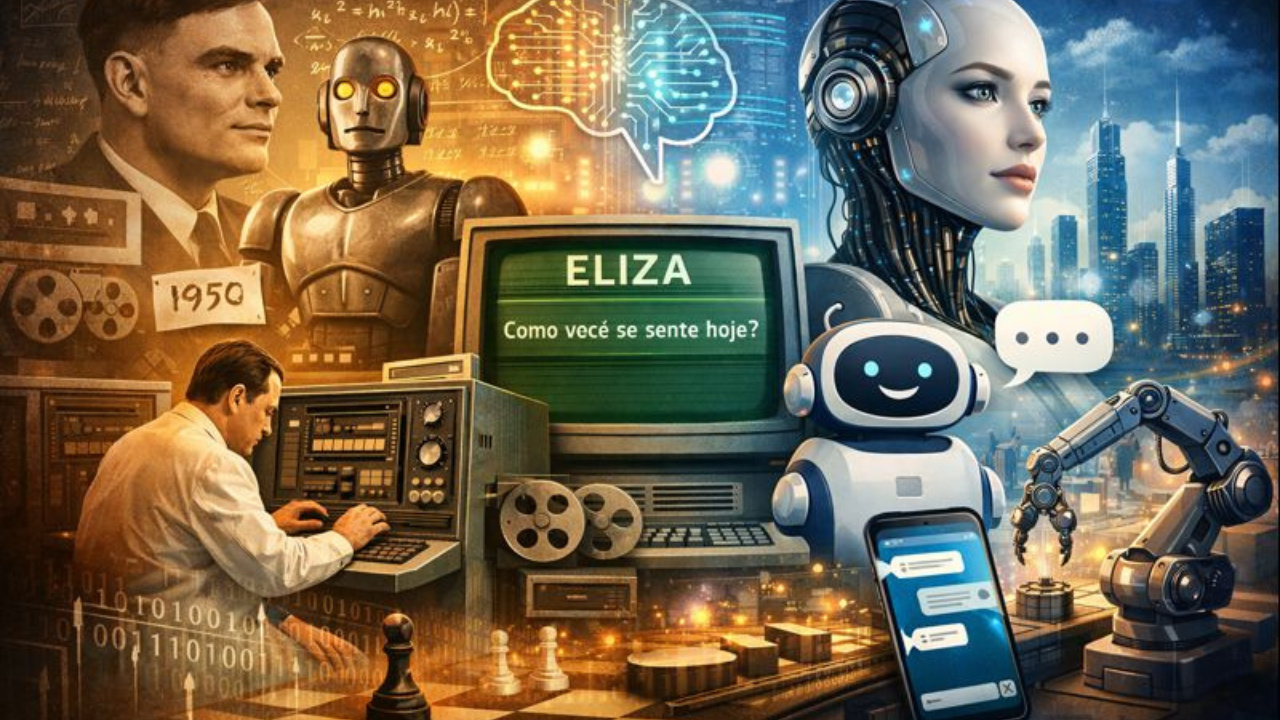
Predictions Made 70 Years Ago About Artificial Intelligence Help Understand Chatbots, Automation, and Current Technological Anthropomorphism.
Artificial intelligence has returned to the center of global debate as it increasingly enters people’s daily lives, whether through chatbots used at work, in studies, or even as emotional support.
The phenomenon involves technology companies, governments, and ordinary users, gained momentum starting in 2022, and spread rapidly around the world.
However, despite its novelty, many of these debates began back in the 1950s.
-
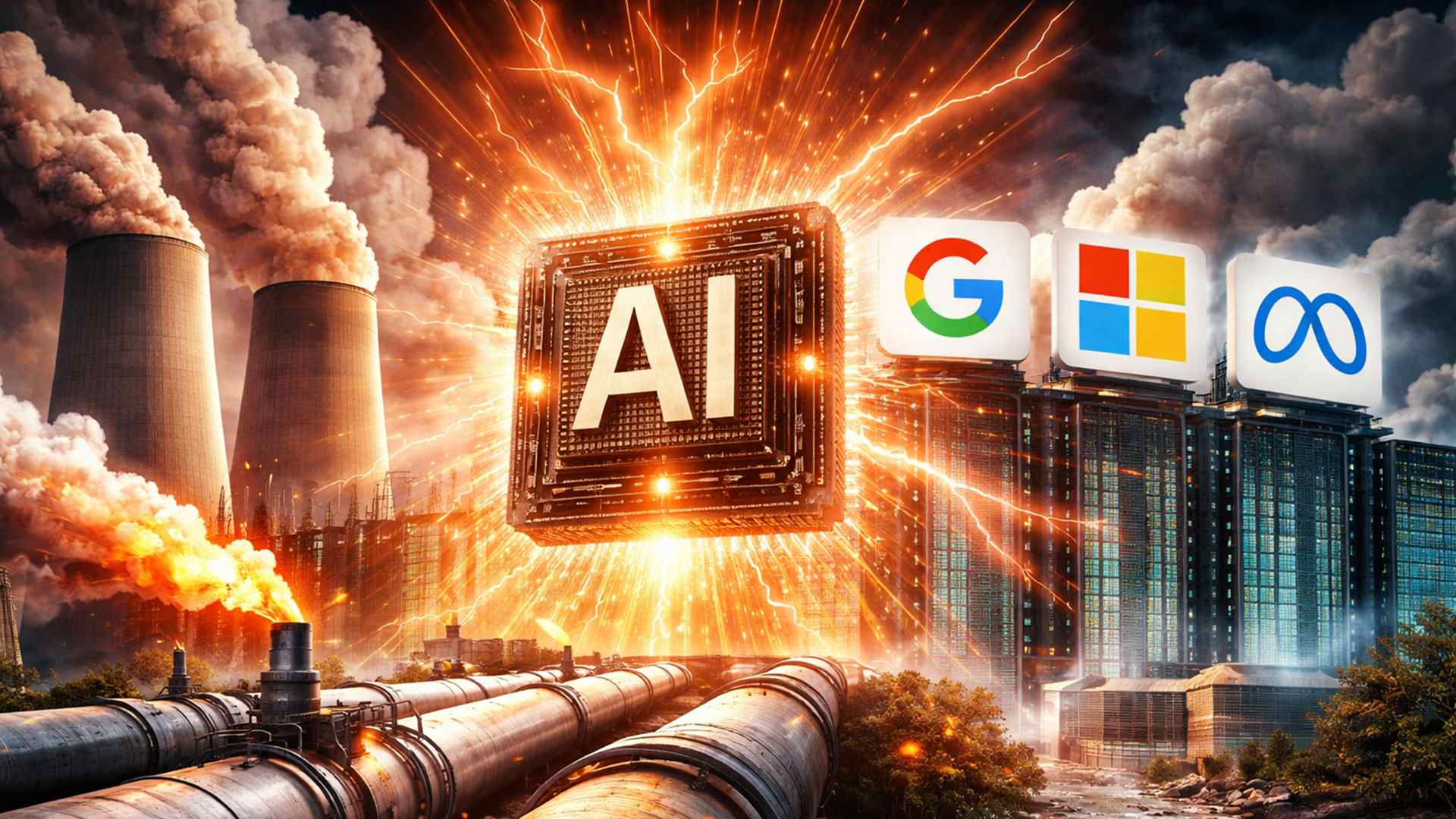
Artificial intelligence is skyrocketing energy consumption, raising emissions from tech giants and pushing Google, Microsoft, and Meta closer to natural gas.
-
Mercor paid $1.5 million per day for doctors, lawyers, and former Goldman Sachs bankers to teach artificial intelligence to do their jobs, and in 17 months, it went from zero to $500 million in annual revenue while its own contractors accelerated the replacement of their own work.

-
Casio Unveils Moflin, Robotic Pet With Artificial Intelligence Designed To Provide Emotional Comfort And Simulate A Permanent Affectionate Bond

-
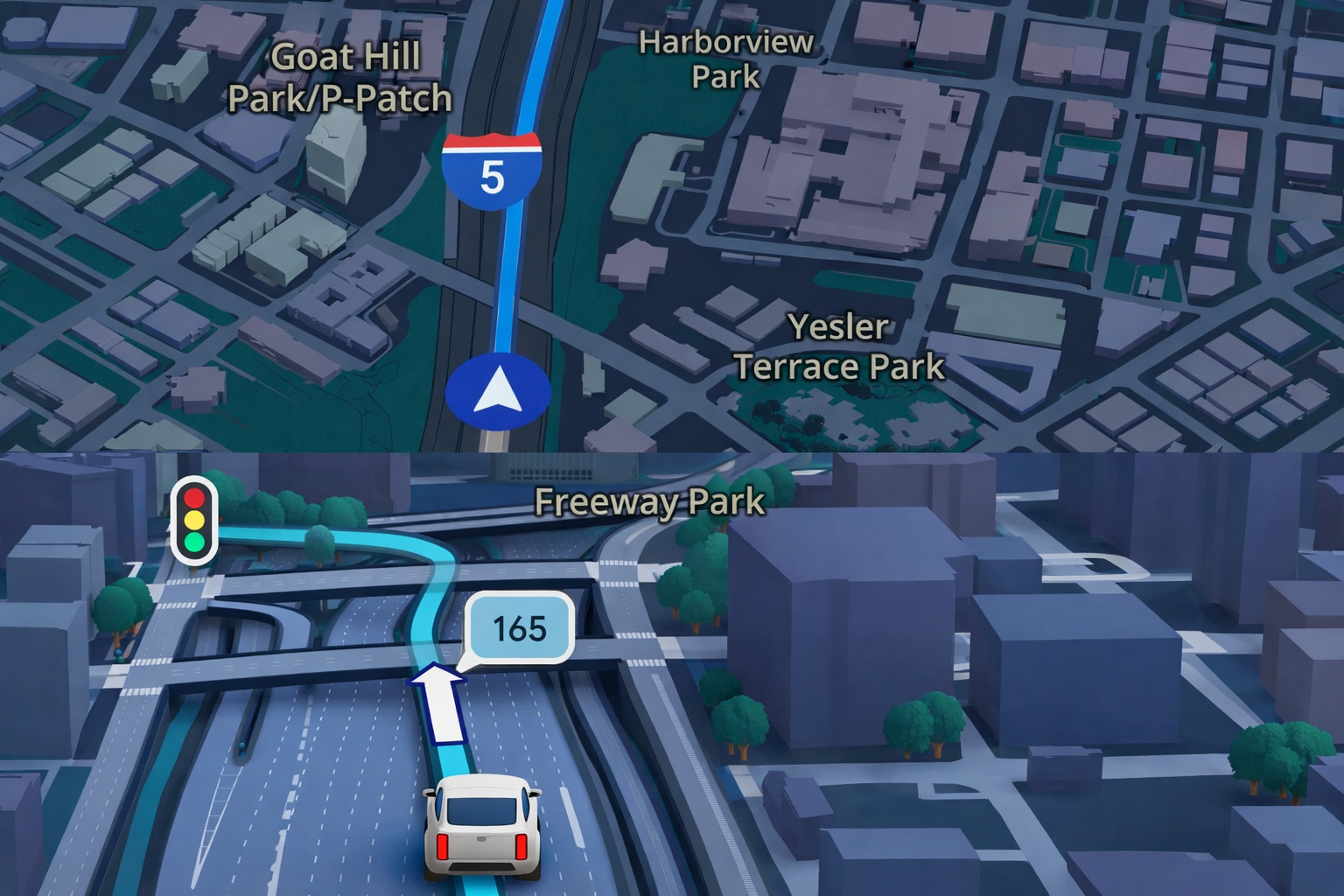
Google Maps Revolutionizes GPS Navigation With Gemini Artificial Intelligence, Ask Maps Feature, and Advanced 3D Visualization for Route and Travel Planning

Since then, scientists have questioned how these technologies work, what risks they pose, and why humans tend to treat them as if they were people.
In early studies on artificial intelligence, researchers were already raising questions that remain relevant today: Can machines think?
Will they replace people?
And to what extent is it safe to attribute human characteristics to automated systems?
The main difference between yesterday and today lies in the volume of financial, political, and symbolic resources that these technologies attract.
“There is a difference in that today we are in a context of financial capital and the investments that these companies attract, the space they manage to gain with governments,” Bernardo Gonçalves told BBC News Brazil.
Chatbots and Emotional Attachment to Machines
Long before ChatGPT, artificial intelligence already sparked curiosity and emotional connections.
In the 1960s, scientist Joseph Weizenbaum created Eliza, one of the first chatbots to gain notoriety.
The program simulated dialogues based on simple rules, without truly understanding the content of the conversations.
Even so, Eliza surprised users by taking on the role of a therapist, reframing users’ statements into questions.
The psychological impact emerged quickly.
Many people began to treat the software as someone capable of listening and understanding emotions.
Weizenbaum himself was alarmed by this reaction.
“There are certainly techniques to facilitate the projection of the therapist in the life of the patient.
But that it would be possible for a psychiatrist to argue that this crucial component of the therapeutic process could be replaced, I could not have imagined,” he wrote.
Later, he reinforced his criticism: “No matter how intelligent machines may become, there are certain acts of thought that should be attempted only by human beings.”
This episode became a landmark of technological anthropomorphism, the tendency to attribute emotions, intentions, and consciousness to systems that only execute commands.
History of AI and the Origin of the Central Question
In the history of artificial intelligence, few questions have had as much impact as the one posed in 1950 by mathematician Alan Turing: “Can machines think?”
In the article Computing Machinery and Intelligence, he anticipated religious and philosophical objections, including the idea that only humans could create something genuinely new.
Part of these criticisms, according to Bernardo Gonçalves, was directly related to the vocabulary used to describe machines.
In 1956, researchers officially adopted the term “artificial intelligence” during an academic conference.
The definition sought to avoid direct comparisons with the human mind and described systems that would behave as if they were intelligent if they were people.
Technological Anthropomorphism and Narrative Disputes
Thus, despite this conceptual care, technological anthropomorphism has persisted for decades.
Journalist Karen Hao, author of the book AI Empire, states that this language persists to this day.
<p“AI developers frequently talk about how their software learns, reads, or creates like humans.
This not only fueled the perception that current AI technologies are far more capable than they truly are, but also became a rhetorical tool for companies to evade legal responsibility,” she argues.
For Gonçalves, this type of critique rehashes debates that were already present in the 1940s, when scientists warned that human metaphors could distort the real role of technology.
Automation, Power, and Social Impact
The discussion about automation has always been linked to the redistribution of power.
In the early days of computing, the term “computer” referred to people — mostly women — responsible for complex calculations.
With the advancement of automation, systems began to perform tasks previously carried out by humans, altering the labor market and social organization.
“These are automation technologies that shift power and have a direct impact on people’s lives and the economy,” he says.
Promises, Frustrations, and the Future of Artificial Intelligence
Thus, artificial intelligence has already gone through cycles of enthusiasm and frustration.
In the 1970s, the so-called “AI winter” emerged after criticisms that the field promised more than it could deliver.
Today, a new cycle of expectations appears, driven by large companies and billion-dollar investments.
Still, Gonçalves makes a point: “Since 2022, when ChatGPT emerged, these systems have been improving.
And here I’m not talking about what is promised, but what is actually being observed.”
Thus, revisiting the history of artificial intelligence makes it clear that current dilemmas did not arise now.
What has changed is the scale. And, as in the past, understanding the boundaries between machines, chatbots, automation, and technological anthropomorphism may define how society will deal with this technology in the future.
Learn more at: The Predictions About Artificial Intelligence From 70 Years Ago That Are Reality Today – BBC News Brazil







Seja o primeiro a reagir!