





 Portuguese
  English
  Spanish
 3 min of reading
  0 comments


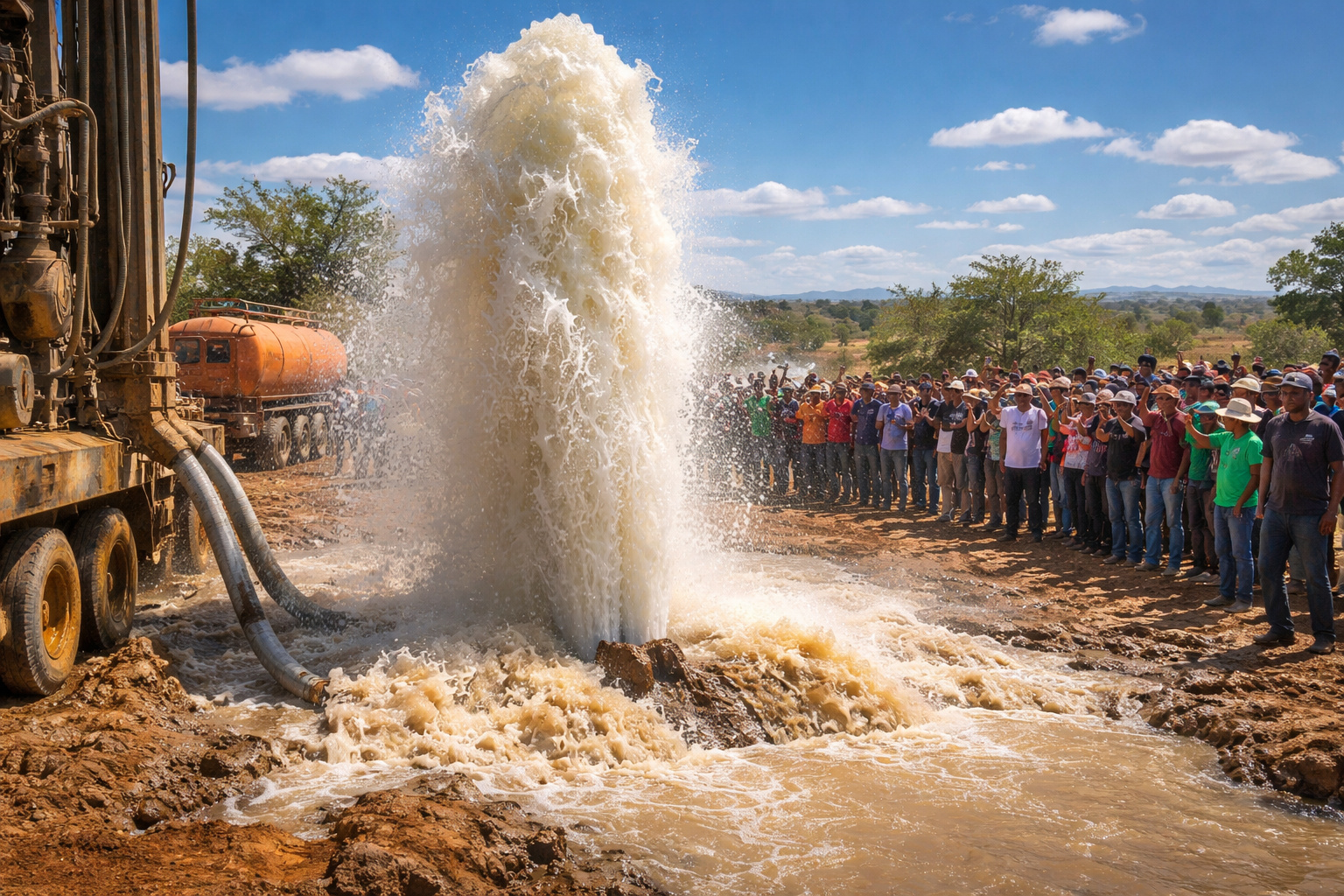
The discovery at the Serrotinho farm shows how technique, depth, and geological conditions can alter the reality of regions marked by drought
A drilling carried out on August 24 in the rural area of Curaçá, Bahia, drew attention due to the flow recorded during the process.
At the Serrotinho farm, according to a report by Rogério Oliveira from the Canal Coisas do Nordeste, a well revealed fresh water in large volume, rapidly altering the surrounding environment.
The dry soil, initially cracked by the drought, was transformed into mud and flowing water in just a few minutes.
The video recording showed the reactions of those present, highlighting the significance of the moment for the local community.
Technical drilling and initial expectations
The drilling began around 8 a.m., after a prior marking indicated the possibility of water at greater depth.
The team started the work with confidence, although they did not foresee the observed result.
-
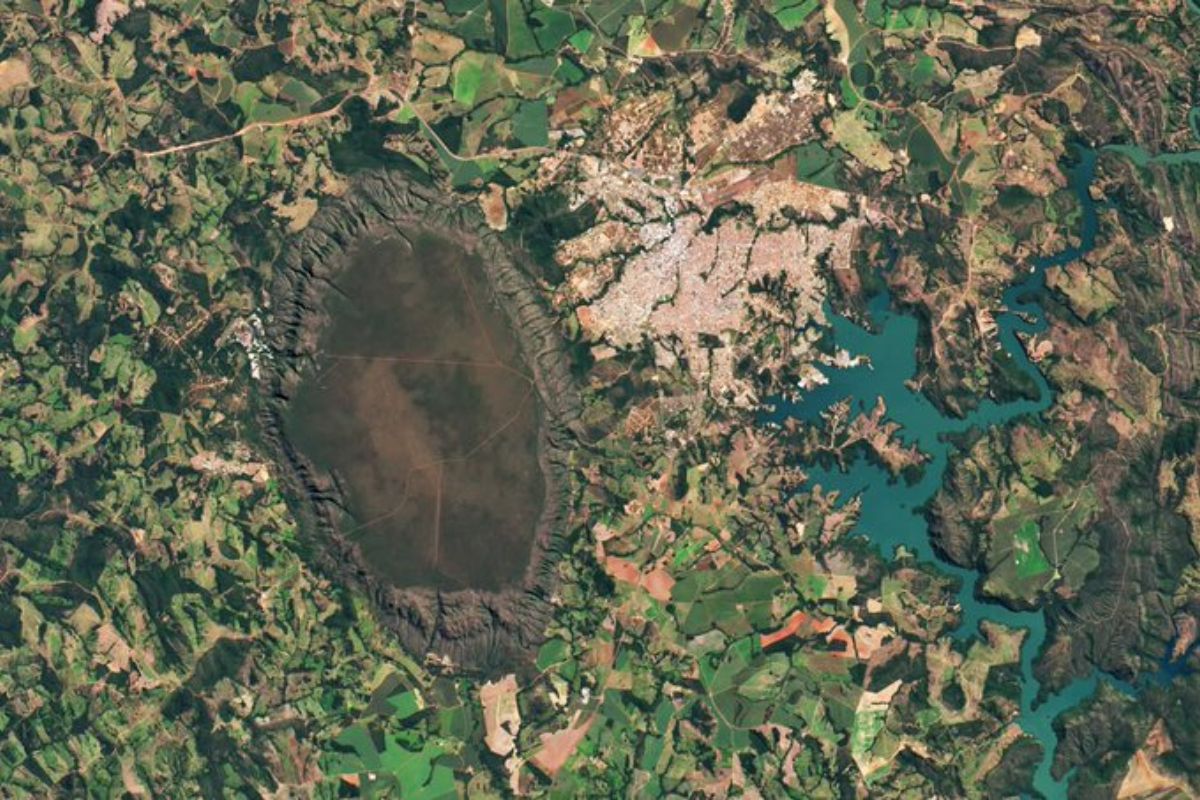
NASA published a photo taken from space of a mountain range in the interior of Goiás, and the whole world wanted to know what it was: beneath it lies the largest hot water spring on the planet, with temperatures reaching 70 degrees in the middle of the Cerrado.
-
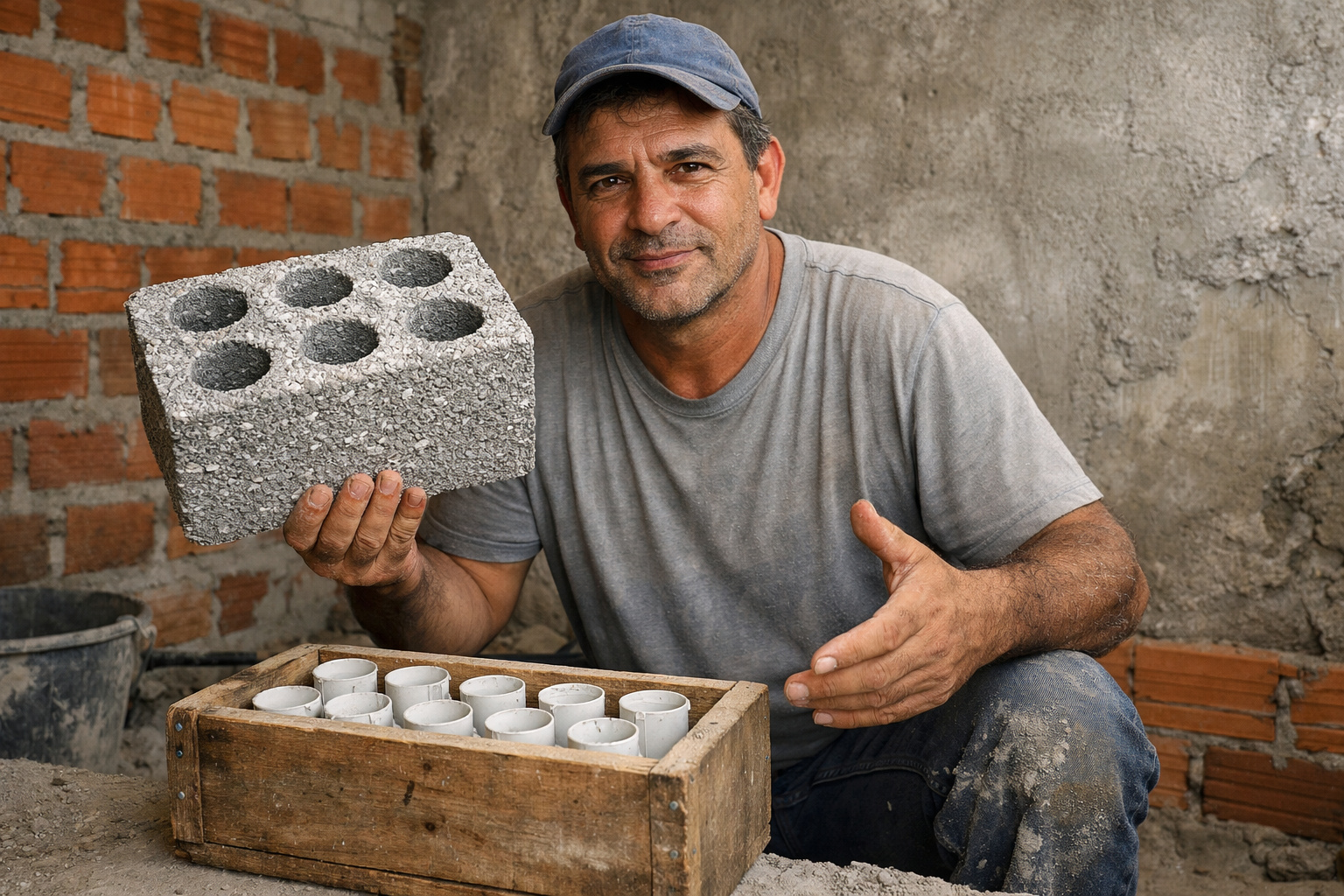
A thermal block costing only R$ 0.40 catches attention by reducing heat by up to 80% using recycled styrofoam, a common kitchen ingredient, and a manual technique capable of producing 50 blocks from a single bag of cement.
-
The item in the house that consumes the most water is not in the kitchen; it is in the smallest room of the house and can account for up to 30% of the expenditure on its own.

-
While Argentina relies on the USA to provide communications, data transmission, and electronic warfare for the F-16, Brazil is accelerating with the Gripen and integrating the Link-BR2, a national technology that strengthens air defense.


Unlike other regions of the Northeast, where rock appears right at the surface, it was found only at seven meters in that location.
Therefore, it was necessary to use casing to ensure the stability of the well walls.
Meanwhile, the process continued under constant attention, as there was an expectation of finding water in the deeper layers.
Thus, the applied technique allowed for safe advancement of the drilling.

Geological indications and emergence of water
As the drilling advanced to about 28 meters, the material extracted showed a grayish color.
This factor indicated the presence of fractures and fissures in the rock.
Shortly after, at 32 meters deep, one of these fissures opened.
Consequently, water gushed forcefully, quickly flooding the dry land.
The dusty soil turned into mud, while reactions of surprise emerged among those present.
Additionally, new fissures appeared subsequently, which increased the flow of the well.
High flow rate and impact on the site
With the advancement of the drilling, six active fissures were identified underground.
Thus, each contributed directly to the increase in water flow.
The estimate recorded during the process indicated about 30 thousand liters per hour, potentially reaching even higher levels.
Therefore, this volume is considered high for the context of the northeastern semi-arid region.
The force of the water formed extensive puddles and generated enough mud to hinder vehicle circulation.
Thus, the well became a significant alternative for water supply.
Lessons learned about drilling in the semi-arid region
The case of the Serrotinho farm highlights important factors for well drilling.
The combination of precise marking, appropriate technique, and favorable geological conditions was decisive.
Moreover, the experience reinforces the importance of planning in the search for water resources in dry regions.
Thus, the result obtained contributes to expanding the understanding of the potential of the underground in the semi-arid region.
Celebration and significance for the community
After the emergence of water, the site transformed into a scene of celebration.
The machine operator and the well marker narrated the moment, while Rogério Oliveira showed emotion.
Additionally, residents recorded the event with hugs, prayers, and images.
Thus, the contrast between the previous drought and the new reality became evident.
The episode symbolized a significant change for the farm and the local community.
Thus, the discovery came to represent a new perspective in light of the water scarcity.
To what extent can new drillings expand access to water in regions historically affected by drought?








Seja o primeiro a reagir!