Portuguese
  Spanish



Amid Fog, Twisted Oaks and Ancient Legends, a Rare Woodland Fragment Fights to Survive the Pressures of Tourism and Global Warming and Increasing Conservation Challenges in the United Kingdom
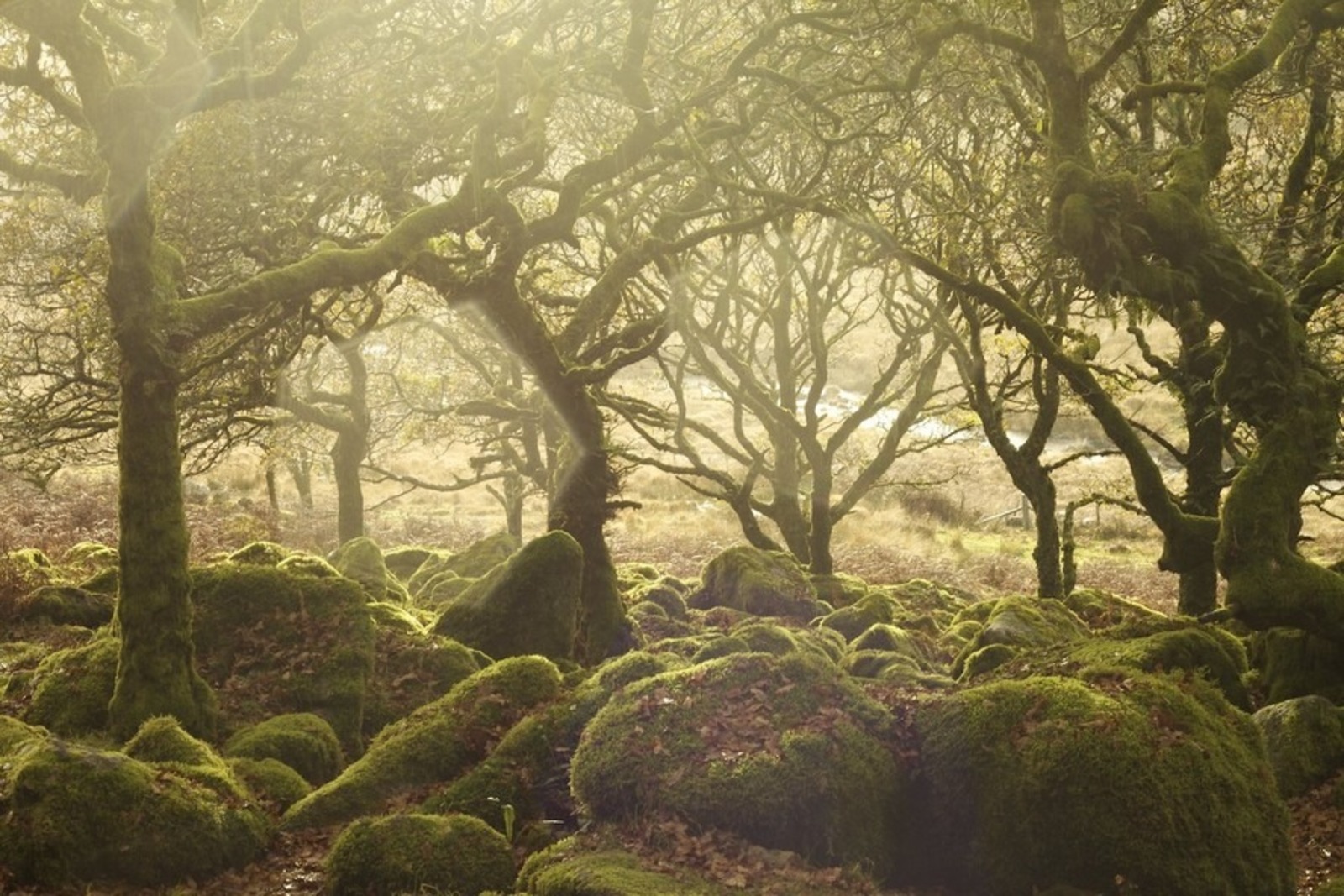
Amid twisted oaks, moss-covered rocks, and a nearly permanent fog, Wistman’s Wood seems to exist outside of time. This small woodland fragment, located in the high parts of Dartmoor National Park in southwest England, holds one of the last examples of temperate rainforest in the United Kingdom.
This type of ecosystem once spread over large areas of Great Britain in prehistoric times but now survives only in isolated patches.
A Refuge in the Heights of Dartmoor
Wistman’s Wood is located between 380 and 410 meters in altitude, in a region characterized by constant winds and lower temperatures.
-
Antarctic Sea Creature Yields Promising Compound Against Melanoma, Captivating U.S. Researchers

-
Underwater Guardian: The Autonomous Robot Monitoring Submarine Cables, Self-Returning, Wirelessly Charging, and Transmitting Data Without Onboard Crew

-
Robots Clean Solar Panels in Desert Power Plants Without Water, Preventing Energy Losses
-
AI Radar Built with Old Camera and $20 Gains Attention After Alleged $317,000 Sale to Chinese Government, But Lack of Documentation and Official Confirmation Raises Questions




The proximity to the Atlantic Ocean keeps humidity high throughout most of the year, creating the ideal conditions for the existence of what is known as Atlantic or Celtic rainforest.
This combination of factors shapes a cold and extremely humid environment, essential for maintaining the biome.
Despite its ancient appearance, the oaks that dominate the landscape are mostly not millennia old. Research indicates that many of the trees are between 400 and 500 years old.
Nevertheless, the low growth and twisted trunks reinforce the sense of antiquity, a result of the combined action of the wind, low temperatures, and shallow soil.
Trees That Sprout from Rock
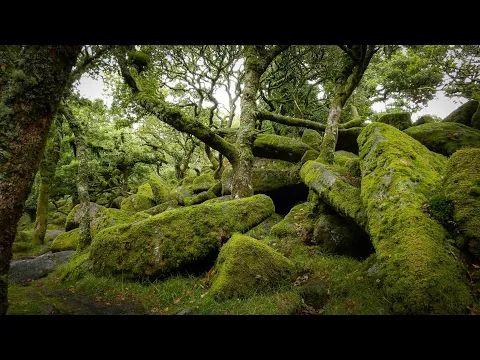
In many parts of the forest, there is virtually no formed soil. The trees grow directly on large blocks of granite, with exposed roots that infiltrate the crevices of the stones.
The thin layer of organic matter accumulated over the centuries mainly supports mosses, lichens, and highly specialized plants in this extreme environment.
The constant microclimate favors a dense covering of these organisms on trunks, branches, and rocks.
The result is a landscape shrouded in shades of green, frequently immersed in fog, which also alters the local acoustics. Sounds seem muffled, reinforcing the feeling of isolation and silence.
Rare Botanical Richness
The vegetation of Wistman’s Wood is dominated by English oak (Quercus robur), accompanied by ashes, beeches, and fewer rowans, hazels, and hollies.
One of the notable highlights is the lichen known as horsehair lichen (Bryoria smithii), considered extremely rare and recorded in only two places in the United Kingdom.
This diversity, although discreet, reveals the scientific importance of the area, which serves as a true natural laboratory for the study of ancient ecosystems.

Myths, Legends and Inspirations
The persistent fog and unusual shapes of the trees have helped build a popular imagination around the forest. Local legends associate the area with ancient Celtic priests and ghost stories.
There is also the unconfirmed hypothesis that Wistman’s Wood may have inspired Fangorn Forest, created by J. R. R. Tolkien in the world of The Lord of the Rings.
Modern Pressures and Forest Conservation
Currently, less than 1% of British territory is classified as temperate forest, mainly concentrated in areas near the Atlantic coast, such as Devon, Cornwall, western Scotland, Wales, and parts of Northern Ireland.
In recent years, the popularity of Wistman’s Wood has grown, driven by social media and audiovisual productions.
The increase in visitors has intensified pressure on mosses and extremely slow-growing lichens.
The removal of these species is illegal, and trampling off official trails has already caused irreversible damage in some areas.
Moreover, a study published in 2024 indicates that up to 68% of the world’s temperate forests may disappear in the coming decades if global warming continues at the current pace.
In response, in March 2025, the Duke of Cornwall – William, the Prince of Wales – announced a regeneration project, with the planting of 450 young trees and the creation of fenced areas.
The initiative aims to expand the forest and reproduce, on a controlled scale, the ancestral ecosystem that still resists in Wistman’s Wood, reinforcing the importance of preserving this rare natural remnant for future generations.
With information from Casa e Jardim.