





 Portuguese
  English
  Spanish
  4 min of reading
  0 comments


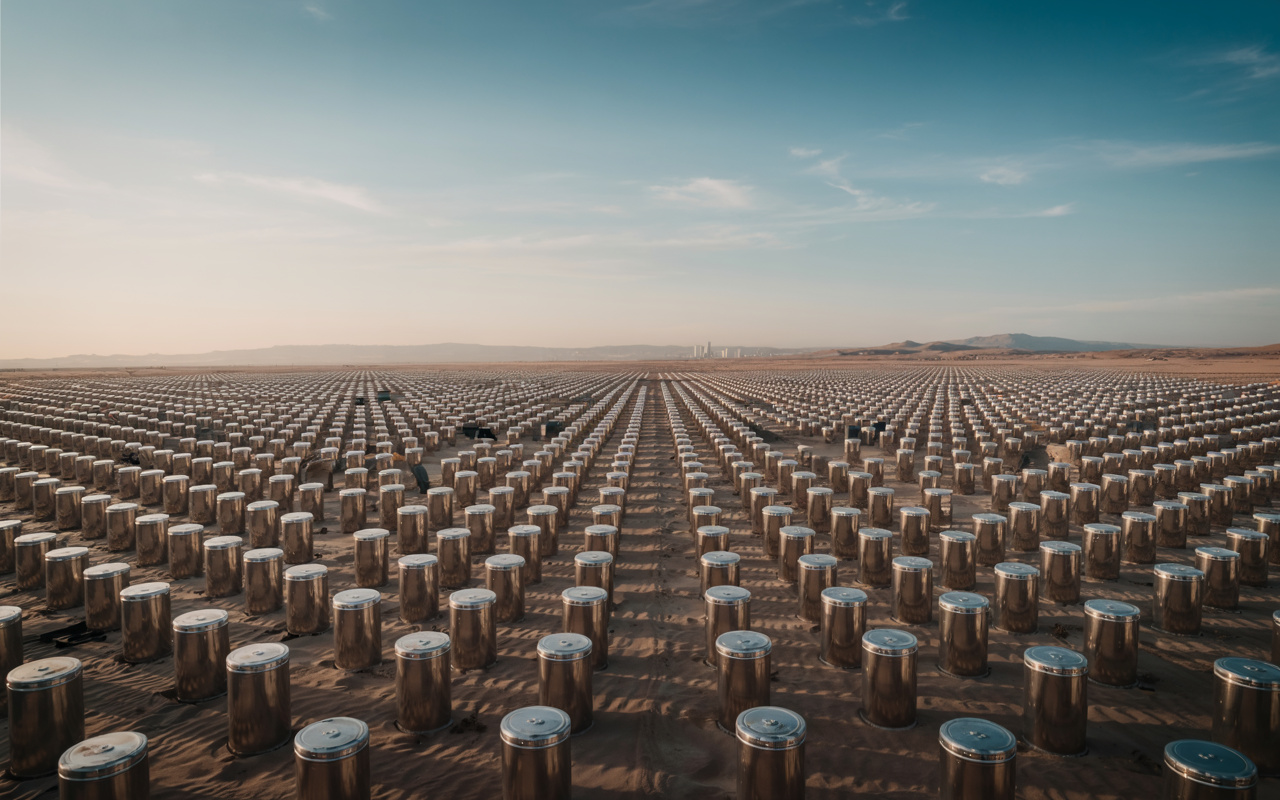


In The Desert, Megapprojects With Buried Lithium Batteries Are Transforming Solar Energy Into Continuous Source, Day and Night. Understand How This Technology Supplies Hundreds of Thousands of Homes and Can Revolutionize The Energy Future.
Imagine a place where the Sun shines intensely for up to 14 hours a day, but where energy consumption doesn’t stop at night. How to ensure stable and clean electricity even after sunset, without resorting to fossil fuels? The answer is buried — literally. In remote and desert areas of the United States and Australia, hundreds of thousands of lithium-ion batteries are being installed underground or in thermally protected structures, forming one of the largest clean energy storage systems on the planet.
These projects are not science fiction: they already exist and are operational, capable of supplying hundreds of thousands of homes at night with energy captured from the Sun during the day.
Buried Lithium Batteries in The Desert: How Does It Work?
The logic is simple, yet powerful. During the day, solar farms scattered throughout the desert capture an enormous amount of sunlight and convert it into electricity. Part of this energy goes directly to the power grid. But what to do with the surplus?
-
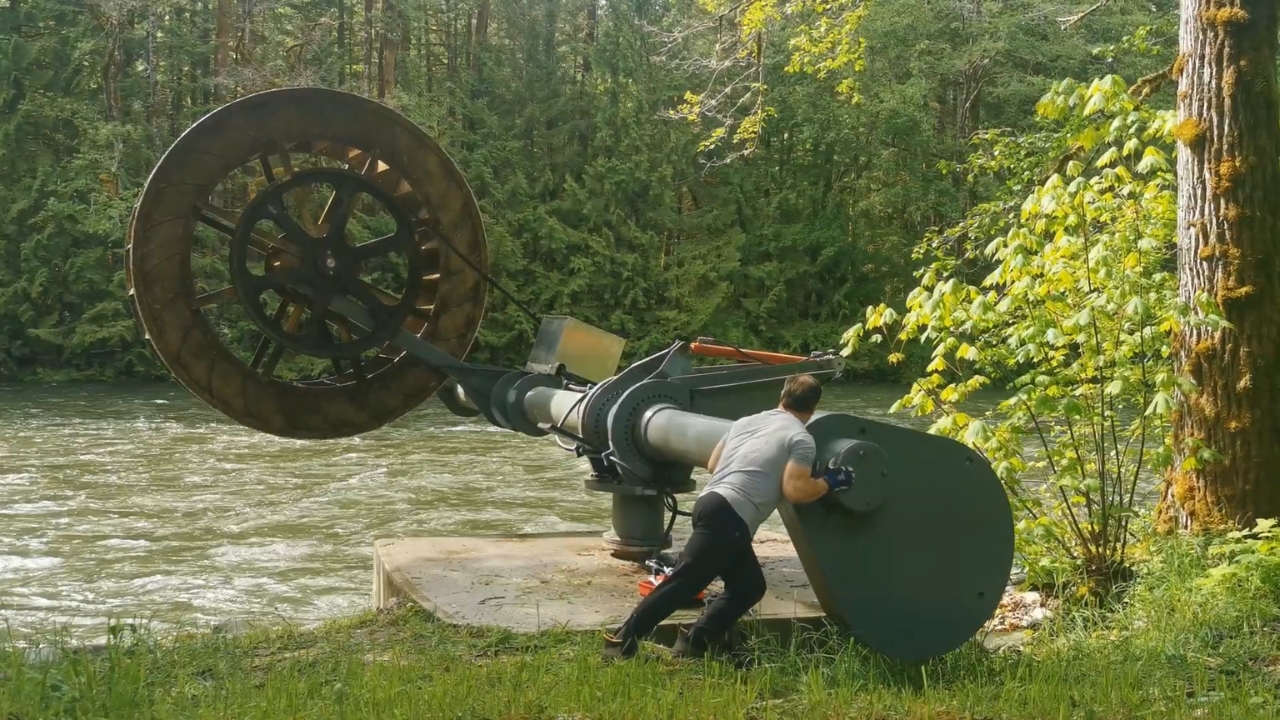
A Canadian retiree creates a hydroelectric system on a real river, generating energy continuously throughout the day and demonstrating how the power of water can supply a house with stability even in a simple structure.
-
Petrobras reaffirms its commitment to the market and ensures that it will carry out the energy transition safely to maintain national sovereignty.

-
Researchers discover a possible hydrogen deposit of up to 46 million tons beneath an ancient coal basin, and the volume could exceed half of the entire global production.

-
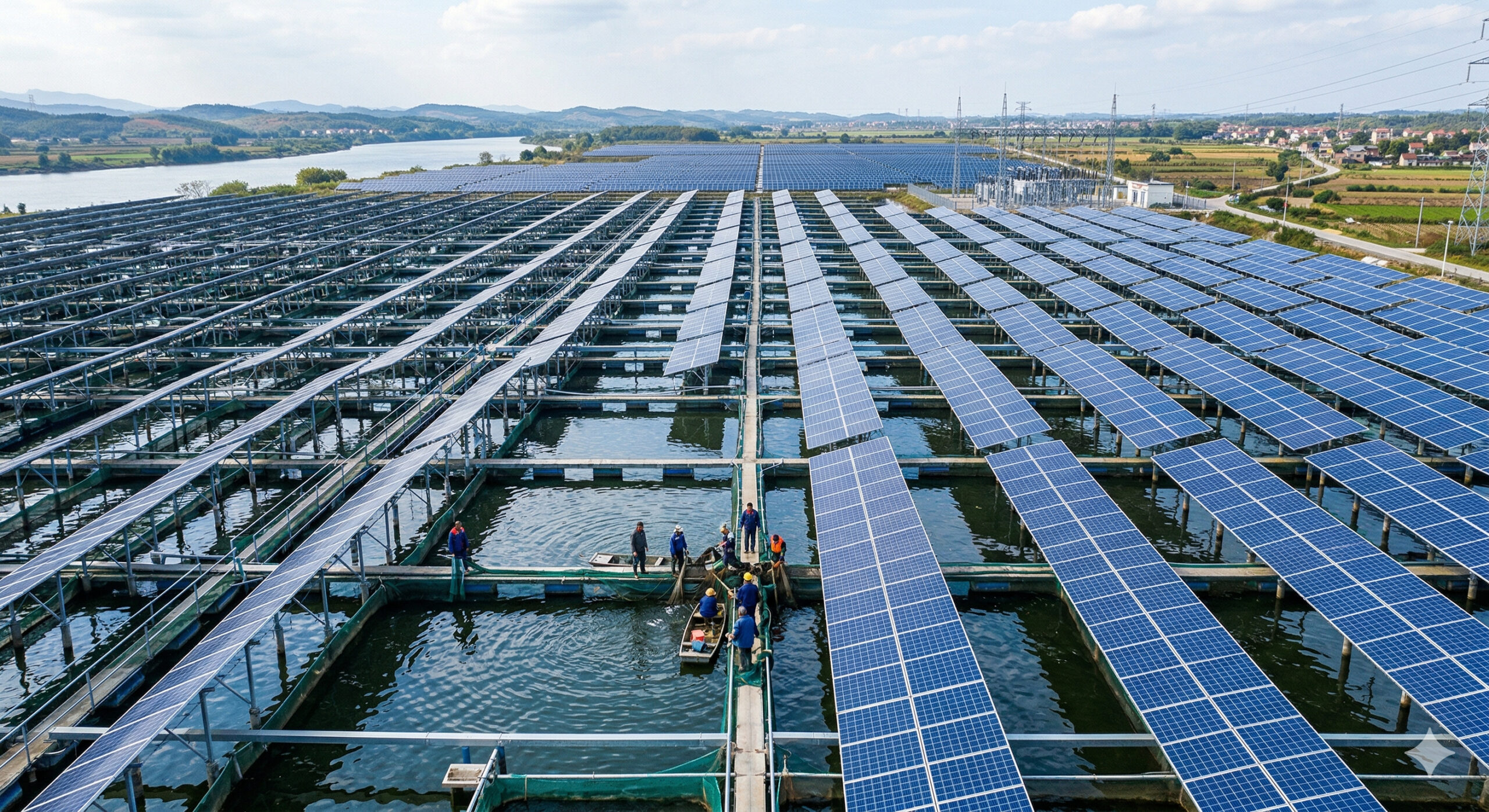
China bets on the Fishery-PV model and transforms fish farms into giant solar plants, covering ponds with panels that generate energy while utilizing the same space for large-scale aquaculture production.

The answer is: store.
Large industrial-scale lithium batteries, many of them partially buried to improve thermal performance and save space, accumulate this surplus energy. At night, when residential and commercial consumption continues but the Sun has already set, these batteries feed electricity back into the grid, ensuring continuous, stable, and 100% renewable supply.


This model is already supplying entire neighborhoods, industrial districts, and even complete cities without the need to resort to thermal power plants, diesel generators, or burning natural gas.
Moss Landing, California — A 3 GWh Milestone
On the coast of California, the Moss Landing project is one of the largest examples of how lithium storage technology is changing the global energy matrix.
- Capacity: over 3 GWh (gigawatt-hours)
- Technology: Tesla Megapacks
- Supply Capacity: over 300 thousand residences for up to 4 hours
- Main Function: stabilize the grid during peak demand and release stored solar energy at night
Although located near the coast, Moss Landing has inspired various similar projects in desert regions, where solar potential is even greater — and thermal challenges are more critical.
Mojave: Buried Energy in The Desert
In the iconic Mojave Desert in California, one of the largest combinations of solar plant + storage system in the world is taking shape: the Edwards Sanborn Solar + Storage project.
- Expected Capacity: 1.3 GWh in batteries
- Infrastructure: over 2 million solar panels and hundreds of thousands of battery cells
- Location: arid desert, ideal for solar production during the day
- Objective: supply a significant portion of energy demand in Southern California, including at night
The batteries, installed in thermal containers and semi-buried structures, take advantage of the thermal inertia of the soil to maintain stable temperature and prolong the lifespan of lithium modules, which are highly sensitive to overheating.
Hornsdale, Australia: The Project That Became a Global Reference
On the other side of the world, in a semi-arid region of South Australia, another project has caught global attention: the Hornsdale Power Reserve.
- Installed By: Tesla and Neoen
- Current Capacity: 150 MW / 194 MWh
- Function: stabilize the grid, prevent blackouts and respond quickly to consumption peaks
- Result: multimillion-dollar savings in energy emergencies and unprecedented stability in the Australian grid
Initially seen as an audacious experiment, Hornsdale has proven that storing solar energy on a large scale using lithium is viable, profitable, and safe.
Why Bury The Batteries?
In many projects, batteries are installed partially buried — not for aesthetics, but for functionality:
- Thermal Insulation: the ground maintains a more stable temperature than the outside air, preventing overheating
- Safety: buried systems are more protected against fires, vandalism, and weather extremes
- Space Efficiency: allows stacking or positioning multiple modules in a smaller area
Furthermore, this configuration facilitates maintenance and provides environmental camouflage, which is useful in natural reserves or areas near protected solar parks.
Why Does It Matter? The New Frontier of Solar Energy
The main challenge of solar energy has always been its intermittency: it produces a lot during the day, but nothing at night. The reliance on dirty sources to cover this “nighttime solar blackout” has always been a weakness of the model.
With the advancement of lithium batteries for nighttime storage, this problem is being solved — silently and with surprising efficiency.
These “buried batteries in the desert” are, in practice, invisible power plants, operating when the Sun sets, without emitting noise or pollution. They represent one of the greatest advances in the race for decarbonization of power grids.
What started as a technical experiment with batteries in containers has become a subterranean revolution of clean energy. Projects like Mojave, Moss Landing, and Hornsdale are proving that it is possible to transform deserts into energy reserves, ensuring supply even when there is no sunlight.
And it’s not a futuristic dream. There are already over 500 thousand lithium batteries operating in installations like these around the world, storing solar energy during the day to release it at night — quietly changing the way we live, consume, and connect.









Essa turma da energia limpa esquece que essas baterias tem vida útil, e quando virarem lixo deixa se ser limpo, pois essas baterias são altamente contaminantes então onde descartá-las? Isso também se aplica aos milhões de carros elétricos