





 Portuguese
  English
  Spanish
  3 min of reading
  0 comments


Equipment, Footprints, and Other Evidence of the Apollo Missions Remain on the Moon as a Lasting Testament to Space Exploration
On July 20, 1969, astronaut Neil Armstrong, on the moon, took a small step for man, but a giant leap for mankind. His words echoed around the world, marking the moment when humankind touched another celestial body for the first time.
However, despite overwhelming evidence, there are still those who question the veracity of the moon landings. For skeptics, the moon holds silent testimonies that reinforce the authenticity of this achievement.
The Legacy of the Apollo Missions
Between 1969 and 1972, the six Apollo missions left behind a true museum on the lunar surface. Scientific equipment, abandoned lunar modules, tools, and even footprints remain untouched, preserved by the moon’s inhospitable environment, which has no wind or water to wear down the artifacts.
-
With a cost per shot close to zero, the DragonFire laser could change naval warfare in 2027 and provide British ships with nearly unlimited defense against drones.

-
A British startup creates tires that generate electricity in electric vehicles when passing over potholes, speed bumps, and cracks.

-
Scientists have created robots made with living cells that have their own nervous system, swim on their own, explore the environment, and self-organize without any genetic engineering, and now they want to do the same with human cells.

-
Students create a solar-powered ambulance that operates without a plug, without fuel, and still keeps medical equipment running in remote areas.


What makes these artifacts unique is that their location and condition can be observed by third parties. International missions and space observatories have captured detailed images that reinforce the authenticity of the Apollo missions.
Photographic Evidence: An Outside Look
The moon has been the target of various missions that go far beyond NASA, whose discoveries corroborate the evidence left by the astronauts.
In 2021, the Indian mission Chandrayaan-2 released high-resolution images of the Apollo 11 landing site. The descent stage of the Eagle spacecraft, left on the Tranquility Base, was clearly identified.
Missions like the Japanese SELENE (2008) also confirmed changes in the lunar soil caused by the Apollo landings, recording areas of lighter regolith due to the impact of the lander engines.
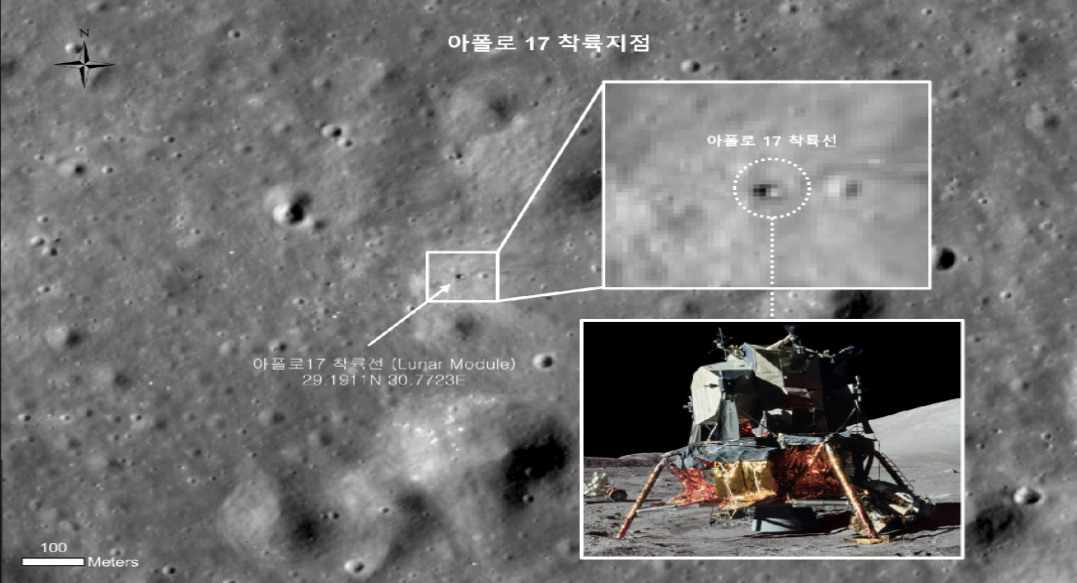
In 2023, South Korea’s Danuri orbiter captured images of the Apollo 11 and 17 sites, again highlighting the presence of artificial structures. Even with lower resolutions than modern cameras, the images are sufficient to identify the artifacts.
Photos from the Lunar Reconnaissance Orbiter
Since 2009, NASA has also documented the remnants of the Apollo missions through the Lunar Reconnaissance Orbiter (LRO). The images captured by the LRO clearly show the descent stages of the lunar modules, the trails left by the astronauts, and tire marks from the lunar vehicle.
These evidences are reviewed by independent groups, such as the LROC Science Operations Center at Arizona State University, ensuring that the data is analyzed by different academic institutions. Even if you distrust NASA, this evidence is examined by scientists around the world.
Retroreflectors: Mirrors in Space
One of the most impressive pieces of evidence left by the Apollo missions is the laser retroreflectors. These devices, installed by Apollo 11, 14, and 15, are still used by scientists to measure the distance between the Earth and the Moon with precision.
These experiments are conducted regularly by observatories around the world, including in France, Germany, and the USA.
The retroreflectors allow for consistent and independent analyses, debunking any claim of fraud. After all, no space program before or after Apollo has installed similar equipment on the Moon.
The Moon Rocks
Another compelling piece of evidence is the 382 kilograms of lunar rocks brought back by the Apollo missions. These samples have been analyzed by laboratories in various countries and possess unique characteristics, such as a distinct mineral composition and the absence of water, which completely differentiates them from terrestrial rocks.
Independent researchers from Europe, Asia, and Australia have validated the authenticity of these samples by comparing them with materials brought back by the Soviet Luna program. A rock from Apollo 17, for example, was dated at 4.4 billion years, making it one of the oldest ever studied.
The Lunar Silence and the Future of Exploration
The artifacts left on the Moon are not just historical remnants; they represent a milestone in the human journey. Every abandoned tool and preserved footprint is a symbol of the bold spirit that took humanity beyond its home planet.
In times of misinformation and conspiracy theories, these physical remnants are concrete proof of the authenticity of the Apollo missions. Additionally, they remind us of what we can achieve when science, technology, and determination work together.








-

Uma pessoa reagiu a isso.