





 Portuguese
  English
  Spanish
  4 min of reading
  0 comments


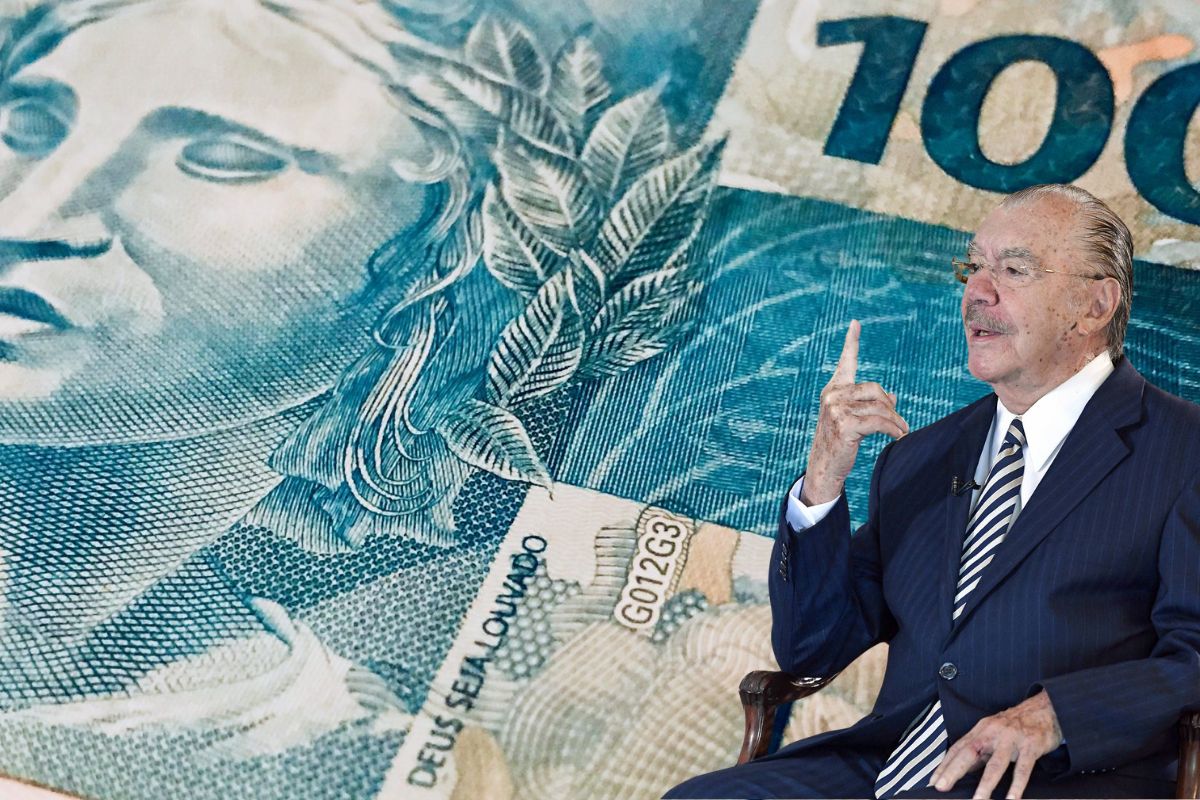
The Banknotes of the Real Carry the Phrase “God Be Praised” Since the 1980s by Presidential Decision, and Not by Legal Requirement, Maintaining a Cultural Tradition That Spanned Different Currencies and Governments Without Mandatory Character.
The inscription “God Be Praised” is present on the banknotes of the Real due to an administrative decision made during José Sarney’s government in the 1980s, and is not provided for in any Brazilian legislation. The Central Bank and the Mint only maintain the practice as a continuation of a tradition that originated with the cruzado, the currency prior to the Real.
Although the topic may seem simple, the presence of the phrase generates debates about secularism, religious symbolism, and national identity, with divided opinions between those who defend the tradition and those who consider the mention incompatible with the secular state guaranteed by the Constitution.
How the Phrase Emerged on the Banknotes of the Real
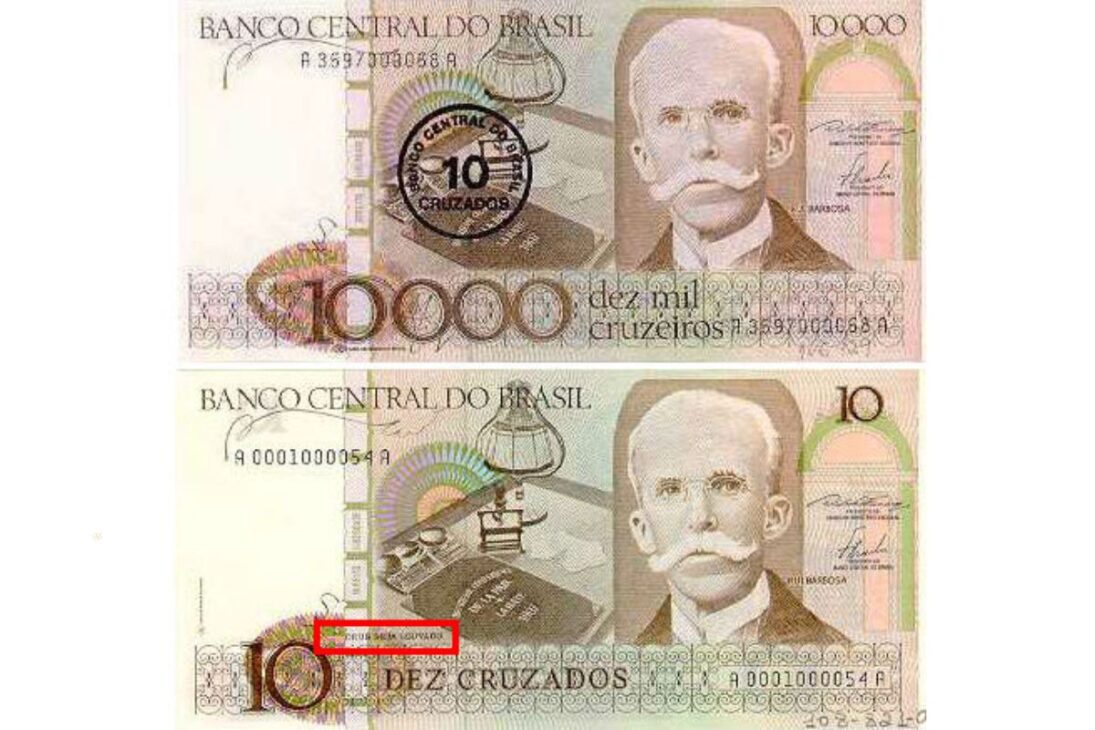
The origin of the phrase dates back to 1986, when then-President José Sarney determined the inclusion of “God Be Praised” on the cruzado banknotes.
-
For years, no one could cross a neighborhood in Tokyo because of the tracks, but an impressive solution changed mobility and completely transformed the local routine.

-
With 15 floors, an unusual building in Curitiba uses concrete, pilasters, and exposed roofs to create the effect of stacked houses.

-
Archaeologists opened a secret chamber that had been sealed by sand for 40,000 years inside a cave in Gibraltar and found what may be the last place where Neanderthals lived before disappearing from Europe forever.

-
The water that may have gone to the Moon with NASA during the Apollo 11 mission and been consumed by the astronauts springs in a Brazilian city at an altitude of 945 meters, famous for its thermal springs, above-average quality of life, and a natural radioactivity so unusual that it attracted Marie Curie.


The measure was inspired by the American expression “In God We Trust,” present on dollar bills, and reflected the symbolic intention to highlight the religiosity of the Brazilian people.
When the Real was launched in 1994, during Itamar Franco’s government, the first banknotes circulated without the phrase, but the inscription was reintroduced months later and has remained in subsequent issues.
Since then, the banknotes of the Real carry the expression as a stable graphic element, without legal provision or formal obligation for permanence.
The decision to include or remove the phrase depends exclusively on the Executive and the Central Bank, with no regulation requiring or prohibiting its presence.
It is an administrative and cultural choice, not a legal one.
The Role of the Central Bank and the Mint
In practice, the maintenance of the phrase on the banknotes of the Real is a technical and administrative decision.
The Central Bank defines the specifications of each banknote — such as design, color, security features, and inscriptions — and sends these guidelines to the Mint, responsible for production.
Thus, the presence of the phrase does not result from a specific decree, but from the continuity of an informal policy adopted since the 1980s.
The Central Bank has confirmed on different occasions that the expression does not have normative force, but is part of the traditional visual composition of Brazilian money.
For those who support its permanence, the phrase does not violate the principle of the secular state because it merely represents a historical and cultural trait without direct association to a specific religion.
Critics argue that the presence of any religious expression in official state symbols contravenes the neutrality required by the Constitution.
Debates and Questions About Secularism
Brazil has been a secular state since the Constitution of 1891, meaning that the government cannot adopt or promote religious beliefs.
Therefore, the presence of the phrase “God Be Praised” in an official circulation medium — money — is frequently questioned in court and in public debate.
In 2010, the Federal Public Ministry requested the removal of the expression from the banknotes, arguing that it violated the principle of secularism.
However, the Federal Justice rejected the request, understanding that the phrase has cultural and historical character, and that there is no obligation for removal, as its inclusion is an administrative decision by the Executive.
Subsequent legislative proposals attempted to turn the phrase into a legal requirement, but all were shelved or rejected, reinforcing that the permanence of the inscription depends exclusively on political will and not on a legal imposition.
The Symbolic Meaning and Social Debate
For part of society, the presence of the phrase reflects a cultural and spiritual heritage that should not be erased.
For others, it represents a contradiction to the religious neutrality that the state must preserve.
The discussion has become a mirror of Brazilian diversity, where faith, culture, and politics intertwine in everyday symbols.
The banknotes of the Real, therefore, are more than a means of payment: they carry a symbolic value about how the country balances tradition and secularism.
The fact that the phrase is not mandatory shows that the state recognizes religious and cultural freedom, but also preserves the administrative autonomy to maintain historical elements of national representation.









-

-

4 pessoas reagiram a isso.