





 Portuguese
  English
  Spanish
  4 min of reading
  1 comment


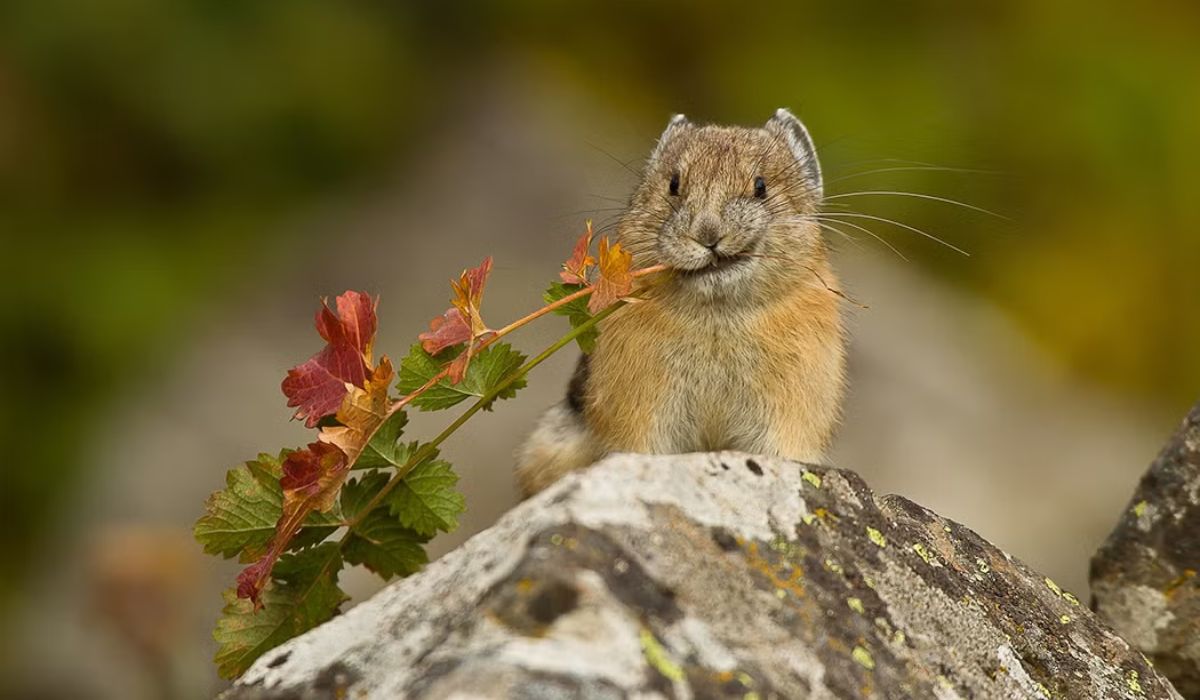


Rare Mammal Lives In Mountainous Areas Of Northwest China And Faces Challenges To Survive In An Increasingly Restricted Habitat, According To Researchers Who Point To Challenges For Monitoring The Species And Producing Consistent Data About Its Population.
With an estimated population of less than one thousand individuals and an increasingly restricted distribution to the mountainous areas of northwest China, the ili pika (Ochotona iliensis) is considered one of the rarest mammals in the country.
The species, described scientifically since the 1980s, lives in cold, rocky environments of the Tian Shan mountain range and faces difficulties associated with the alteration of its natural habitat.
Small in size, the ili pika measures about 20 centimeters and has large ears and a short snout.
-
How an innovative city combines high technology, well-being, and sustainability to become the largest reference in clean energy on the planet.

-
Couple buys 1846 church in ruins for R$ 660,000, invests R$ 3.2 million in renovations, transforms it into a millionaire mansion, and even preserved a historic cemetery with over 300 graves.

-
He started running at 66 years old, broke records at 82, and is now a subject of study for having a metabolic age comparable to that of a 20-year-old, in a case that is intriguing scientists and inspiring the world.

-
Oldest tree on the planet reappears after 130 years of searches: Wattieza, 385 million years old, was 10 meters tall and had no leaves or seeds; Gilboa fossils in New York solved the mystery in 2007.


Despite these characteristics, the animal is rarely observed in the field.
Researchers explain that its discreet behavior and remote location contribute to the scarcity of records, making systematic monitoring of the species and obtaining more accurate data about its population difficult.
Scientific Discovery Of The Ili Pika In China
According to the portal Metrópoles, the first record of the ili pika occurred in 1983, when Chinese researcher Li Weidong identified the animal among rocks in the Xinjiang region, in the far northwest of China.
The observation initiated analyses conducted by scientific institutions in the country, which confirmed that it was a previously unknown species.
After the formal description, the name was associated with the Ili region, related to the location of the find.
Since then, the number of confirmed records has remained low.
Scientific documents and conservation reports mention that over the decades, the ili pika has been sighted only a few dozen times, reinforcing the assessment that it is a naturally rare and difficult-to-detect species.
Habitat At Great Altitudes And Extreme Climate

The presence of the ili pika is associated with high mountain environments, characterized by rocky slopes, natural crevices, and low temperatures.
Studies on the species indicate that it occurs in elevated ranges of the Tian Shan mountain chain, at altitudes where human access is limited and climate conditions are severe.
Its diet mainly consists of plants, herbs, and grasses available in these areas.
The availability of these resources, however, depends on the snow regime and temperature variations throughout the year.
Researchers point out that changes in these patterns may interfere with both food availability and suitable areas for shelter.
Additionally, the fragmented distribution of the habitat presents further challenges.
Isolated populations on different slopes may have reduced contact with each other, which, according to experts, tends to limit genetic exchange and increase vulnerability to localized environmental changes.
Environmental Changes And Pressures On The Species
Researchers monitoring the ili pika associate the population decline with the transformation of the mountainous environment.
Factors cited in studies and international reports include the increase in temperatures in high-altitude regions and changes in snow and ice patterns, which directly affect the cold micro-habitats used by the species.
Indirect impacts from human activity are also mentioned, such as the expansion of grazing in mountainous areas, which can alter vegetation and soil structure.
Experts emphasize that there is not a single factor responsible for the decline, but rather the combination of environmental pressures in an already limited geographic space.
In mountain environments, the possibility of displacement is also restricted.
When conditions become unfavorable at lower altitudes, fauna tends to occupy higher areas.
Researchers observe, however, that this strategy has physical limits, as the extent of available areas decreases progressively.
Estimated Population And Risk Classification
Estimates released by researchers involved in studying the species indicate that the number of individuals in the wild may be fewer than one thousand.
This figure is used as a reference in risk assessments, although the exact count is considered difficult due to the low sighting rate and terrain conditions.
The International Union for Conservation of Nature (IUCN) includes the ili pika on its Red List as a “vulnerable” species, a category indicating a high risk of extinction.
Previous classifications pointed to lower levels of threat, reflecting updates in data and the re-evaluation of population trends over time.
Chinese authorities and institutions officially recognize the possibility of the species disappearing.
Researchers report that field expeditions often require long periods of searching, frequently with few visual records, reinforcing the need for more consistent monitoring methods.
Research, Conservation, And Ongoing Efforts
Actions discussed by scientists and conservationists involve expanding knowledge about the distribution of the species and protecting areas deemed strategic.
The creation of specific natural reserves, funding for field research, and the use of camera traps are among the measures mentioned in reports and interviews.
At the same time, outreach initiatives aim to increase public awareness about the ili pika.
Researchers state, however, that visibility needs to be accompanied by conservation policies and continuous data production, so that decisions are based on verifiable information.
In statements reported by media outlets, Li Weidong stated that the discovery of the species was just the first step and that its preservation depends on prolonged efforts.
This assessment reflects the understanding of part of the scientific community that protecting the ili pika requires long-term actions, compatible with the complexity of the environment in which it lives.








As pikas tão acabando mesmo