





 Portuguese
  English
  Spanish
  3 min of reading
  0 comments


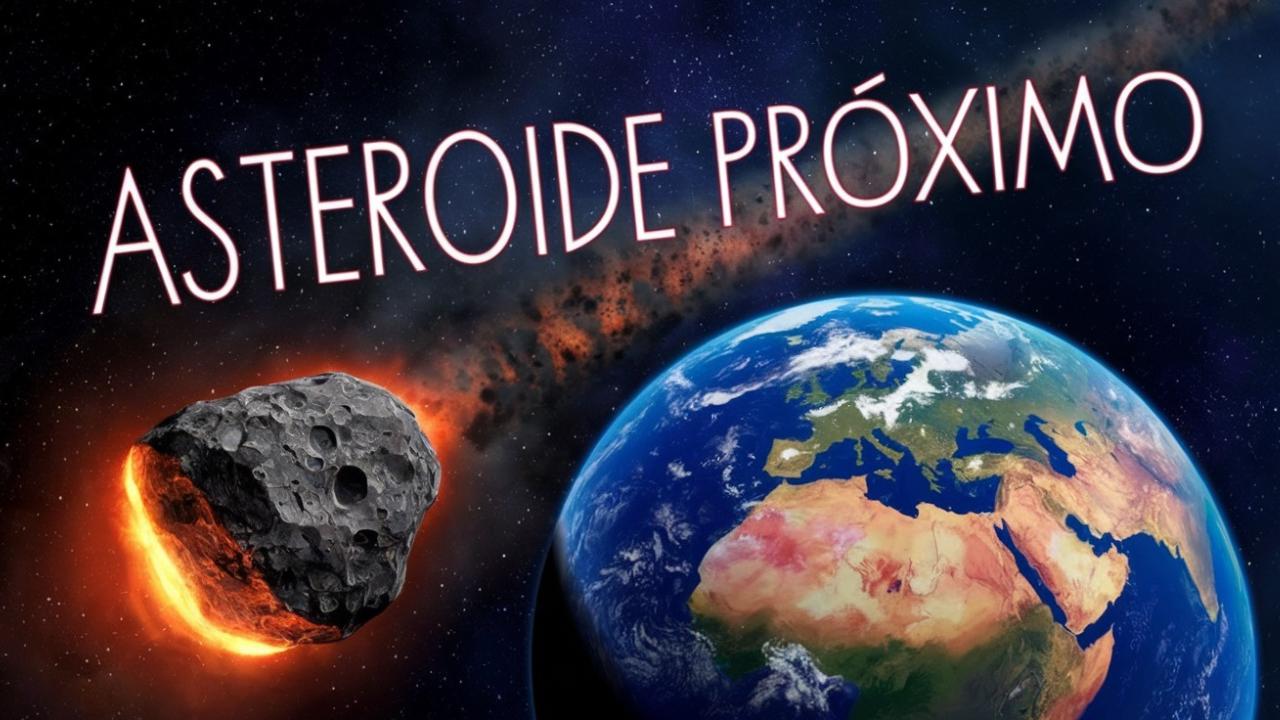
With Up To 100 Meters In Width, Asteroid 2024YR4 Has A 1 In 88 Chance Of Hitting Earth In December 2032! It Is Already At The Top Of The List Of Most Dangerous Ones And Will Be Closely Monitored In The Coming Years!
Have you ever thought about looking up at the sky and knowing that, somewhere in space, an asteroid is on a collision course with Earth? It sounds like a movie scene, right? But asteroid 2024YR4 is real. Discovered in December 2024, it already occupies the top spot on the list of space objects that require special attention. With an estimated diameter of 40 to 100 meters, it has a 1.136% chance of hitting us on December 22, 2032. To put it into more relatable numbers: 1 chance in 88 of impact.
The Discovery Of Asteroid 2024YR4
On the night of December 27, 2034, telescopes from the ATLAS project in Chile captured an unusual object crossing the sky. After detailed analysis, astronomers confirmed: it was a new asteroid, now named 2024YR4.
What caught the attention of the scientific community was not just the size of the asteroid, but its concerning orbital trajectory. According to current calculations, there is a small but real possibility of impact with Earth in 2032. This was enough to place it at the top of the list of “bad asteroids,” meaning those that need to be closely monitored.
-
In a flooded well, archaeologists found a 1,700-year-old Roman egg that still contains clear and yolk intact inside the very thin shell.

-
Something is happening around the Earth: Inside the huge explosion of fireballs in 2026

-
A hot air bubble coming from Argentina expands over Brazil, causing thermometers to exceed 38 degrees with a thermal sensation of 40 degrees in late March, affecting 6 states at once.

-
The radish leaf that almost everyone throws away has more polyphenols, flavonoids, and fiber than the consumed root, and a 2025 study showed that the leaf contains compounds that protect the intestine, combat inflammation, and may inhibit the growth of cancer cells.

Real Risk Or Unnecessary Alarm?
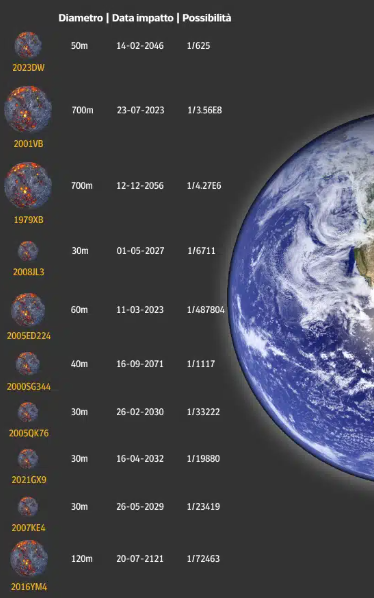
A 1.136% chance may seem small, but in the world of astronomy, it is a significant number. To put it into perspective, this means almost 99% chance that the asteroid will pass without causing damage. However, as the trajectory can vary over time, scientists need to closely monitor every new piece of data.
According to Futuro Prossimo, in the Torino Scale, a system that classifies the danger of asteroids, 2024YR4 received a level 3 rating, meaning it is an object that deserves attention but does not warrant panic. It is worth remembering that a few years ago, asteroid Apophis also generated concern before calculations confirmed that it did not pose an immediate risk.
Another Important Factor: before 2032, the asteroid will make a closer pass to Earth on December 17, 2028, with no risk of impact. This event will be crucial to refine calculations and better understand whether we should be worried or not.
The Science Of Planetary Defense
If the risk is confirmed, do we have any chance against an asteroid of this size? The Good News Is that, unlike what happened with the dinosaurs, we have science on our side.
In 2022, NASA conducted an unprecedented experiment: the DART Mission, which intentionally collided with an asteroid to change its trajectory. The test was successful and proved that if we detect an asteroid with enough time, we can use technology to prevent impact.
If necessary, techniques like this could be applied to 2024YR4, redirecting its path away from Earth. It is important to remember that even if it were to hit our planet, it would not be a global threat – the impact would cause regional damage, but nothing comparable to the asteroid that exterminated the dinosaurs, which was over 10 kilometers in diameter.
The Future Of Observation And The Importance Of Space Vigilance
The detection of 2024YR4 reinforces An Essential Point: we need to continue investing in technology for asteroid monitoring. The fact that we identified this object nearly a decade in advance shows that space surveillance systems are working.
This extra time allows us to:
- Study its trajectory accurately;
- Develop strategies if an impact is confirmed;
- Refine planetary defense techniques.
The coming years will be crucial to understand whether 2024YR4 will be just another visitor from space or a real problem.
Do you think we should be worried or trust science to protect us?






-

-

-

-

8 pessoas reagiram a isso.