





 Portuguese
  English
  Spanish
  4 min of reading
  22 comments


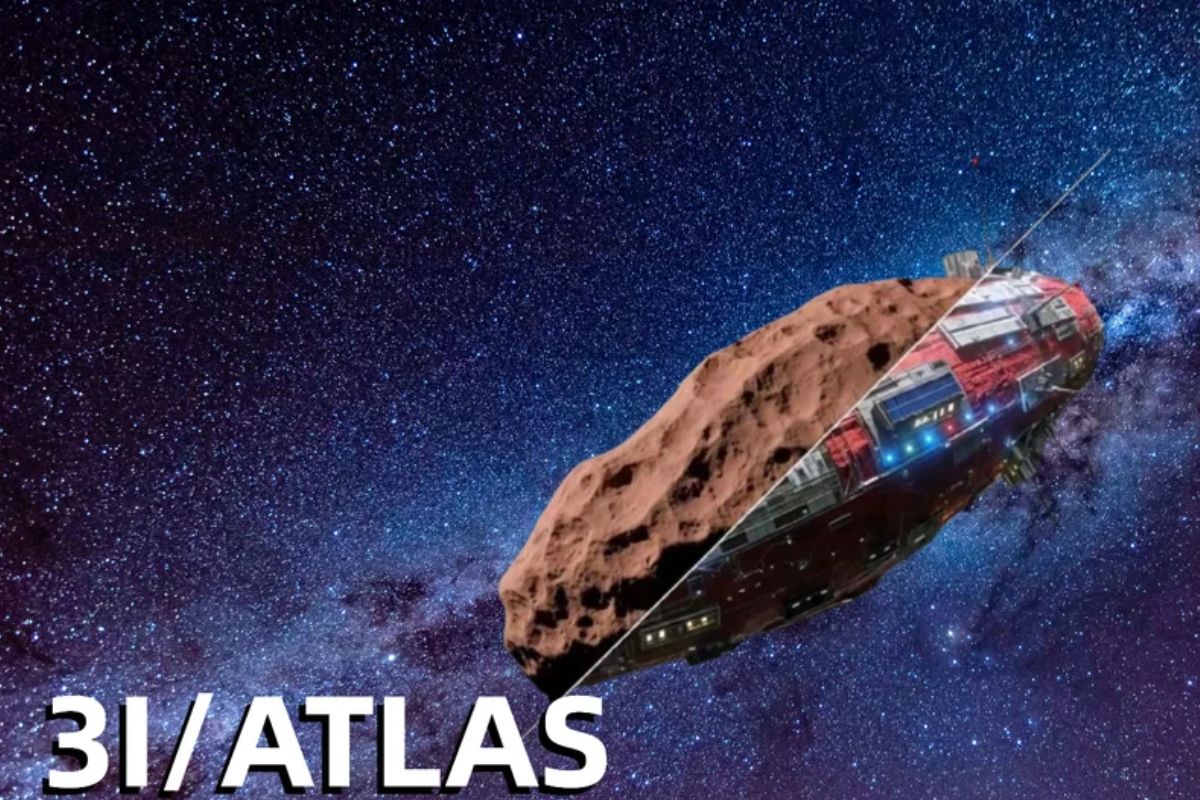


The Mysterious Interstellar Object 3I/ATLAS, Detected in July, Intrigues Scientists with Its Unprecedented Speed, Anomalous Chemical Composition, and Possible Artificial Indications, Leading Astrophysicist Avi Loeb to Suggest That NASA Has Not Revealed All Available Data
An unusual alert from a renowned astrophysicist from Harvard garnered global attention when he recommended that people “take a vacation before October 29.” The phrase refers to 3I/ATLAS, an enigmatic interstellar object whose trajectory and chemical composition have challenged known physics and sparked hypotheses about a possible artificial origin.
3I/ATLAS is considered the third interstellar visitor ever detected in the Solar System, and its characteristics completely differentiate it from bodies like ‘Oumuamua and Borisov. With a diameter of about 5.6 kilometers and a speed nearly twice that of previous objects, it has been observed by telescopes around the world, including by NASA, which assures that there is no risk of impact with Earth.
3I/ATLAS: The Visitor That Challenges Cosmic Laws
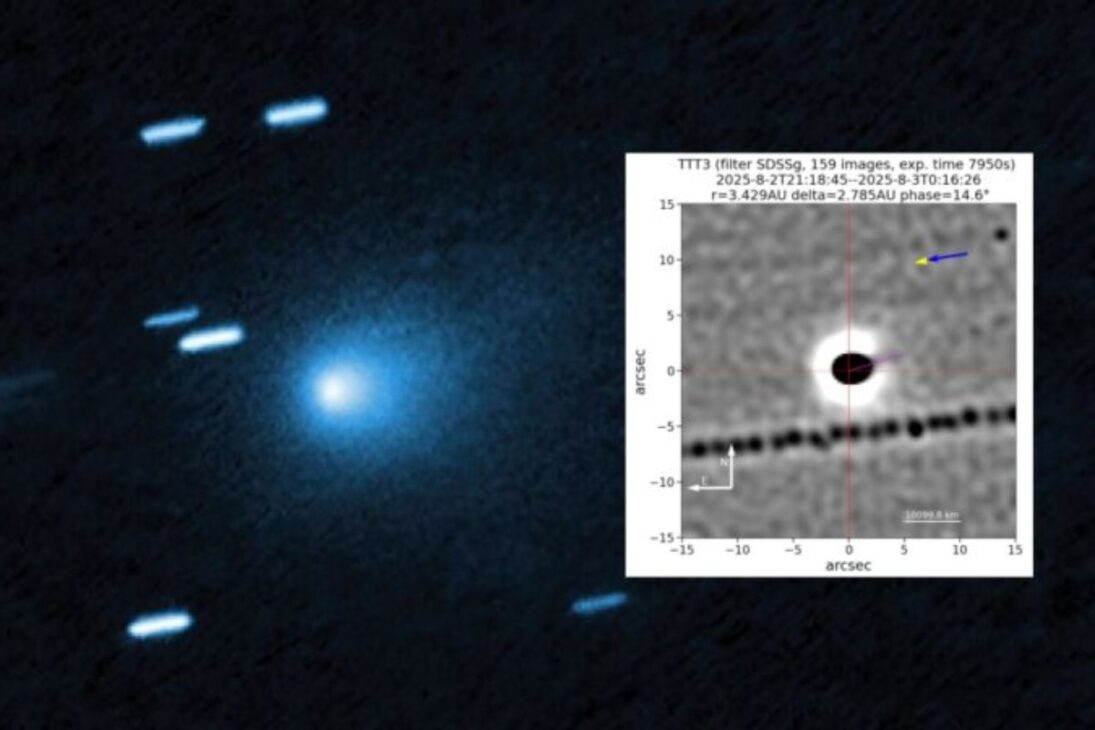
3I/ATLAS was detected in July and quickly became one of the most studied celestial bodies of the year.
-
A Japanese mason transforms raw granite into small cups and handcrafted utensils, collects giant stones, cuts with precision, and impresses with detailed manufacturing and finishing.

-
With 1,066 acrylic panels, the building known as the friendly alien is supported by a steel skeleton, has a façade that functions as a giant screen, and impresses the world without any internal columns.

-
Scientists warn that a comet about 1 km in size that has started to release gases may actually change direction in space. It was spotted by NASA and surprises with potential impacts near Earth.
-
These living root bridges and ladders are over 700 years old and help indigenous people survive in one of the rainiest regions in the world.


It is estimated to weigh over 33 billion tons, equivalent to a small city, and its speed exceeds the expected limits for objects of this type.
Recent simulations indicate fluctuations in brightness that suggest irregular rotation and asymmetric composition, something unusual for natural bodies.
Another intriguing factor is its orbit: the object travels with a precision of only five degrees in relation to the plane of the planetary orbits, a rarity for objects coming from outside the Solar System.
This alignment, coupled with the behavior of its gas jets that point toward the Sun and not away from it as would be expected, reinforces the hypothesis that 3I/ATLAS may have a non-natural origin.
Chemical Composition Outside Known Standards
Observations made with the Keck II telescope in Hawaii revealed that 3I/ATLAS emits nickel tetracarbonyl, a substance that until now was only known to be produced in industrial processes on Earth.
The object releases about four grams of nickel per second and shows no traces of iron, a unique combination in celestial bodies.
According to Avi Loeb, the same astrophysicist who led studies on ‘Oumuamua, this chemical signature would be one of the “strongest signs that 3I/ATLAS may have an artificial origin”.
Loeb argues that to date, no natural explanation has accounted for these elements simultaneously, leading him to propose a hypothesis of intelligent design.
The Debate Between Mystery and Scientific Caution
While part of the scientific community considers it legitimate to explore the hypothesis of an artificial origin, other astronomers call for caution and warn of the risk of hasty interpretations.
Researchers from the University of A Coruña in Spain published simulations indicating that 3I/ATLAS may have formed up to 10 billion years ago in the so-called “thin disk” region of the galaxy, without any external interference.
For Spanish astrophysicist Pérez Couto, “each observation is a window to the past of the Universe,” and studying objects like 3I/ATLAS helps understand materials formed around other stars.
According to him, none of the 93 simulated stellar interactions showed signs of artificial manipulation.
NASA Responds and Promises New Data on 3I/ATLAS
The reverberation of Loeb’s statements led NASA to issue statements reassuring the public.
The space agency stated that 3I/ATLAS poses no threat whatsoever and will safely pass through the inner Solar System.
Still, independent researchers have called for more transparency regarding the images captured by probes and orbital telescopes, including the Mars Orbiter.
Loeb, in recent interviews, emphasized that public interest demands total clarity regarding the collected data.
“We want to see the raw results from scientists, not just institutional statements,” he said, advocating for open science on the phenomenon.
What to Expect After October 29


The date mentioned by Loeb, October 29, coincides with a new observation window for 3I/ATLAS, when it will reach the point of greatest visibility for ground-based telescopes.
Although the “take a vacation” alert may seem provocative, the scientist states that the intention was to draw attention to a decisive moment in astronomical data collection.
Regardless of the origin of 3I/ATLAS, its passage offers a unique opportunity to study the boundary between the natural and the unknown in the cosmos. The debate over this object promises to redefine concepts about what it means to be an interstellar visitor.
And you, do you believe that 3I/ATLAS is just a natural body or could it really have an artificial origin? Tell us in the comments what you think about this cosmic mystery.







… [Trackback]
[…] Here you can find 74839 more Info to that Topic: en.en.clickpetroleoegas.com.br/Harvard-astrophysicist-says-to-take-vacation-before-October-29th.-Atlas-object-3i-intrigues-NASA-with-absurd-speed-and-possibly-artificial-signals.-btl96/ […]
… [Trackback]
[…] There you can find 14255 more Information on that Topic: en.en.clickpetroleoegas.com.br/Harvard-astrophysicist-says-to-take-vacation-before-October-29th.-Atlas-object-3i-intrigues-NASA-with-absurd-speed-and-possibly-artificial-signals.-btl96/ […]
… [Trackback]
[…] Read More here on that Topic: en.en.clickpetroleoegas.com.br/Harvard-astrophysicist-says-to-take-vacation-before-October-29th.-Atlas-object-3i-intrigues-NASA-with-absurd-speed-and-possibly-artificial-signals.-btl96/ […]