






 Portuguese
  Spanish


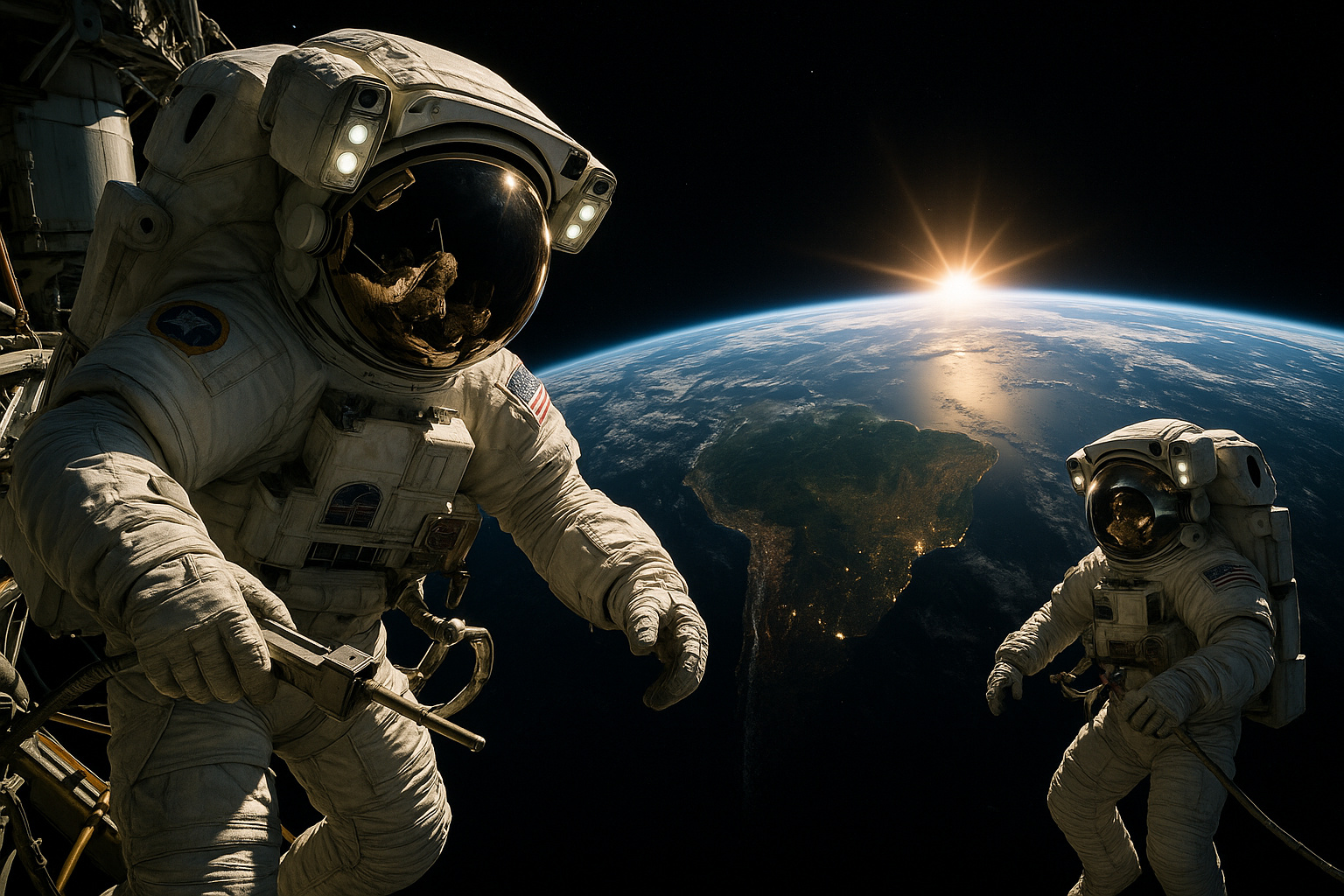

Lost Bag During External Maintenance Drew Attention From Observers and Experts, Intensifying Debates About Space Security, Orbital Debris, and the Future of Human Exploration Beyond Earth
Among the many objects currently orbiting the Earth, an unusual episode that occurred in 2023 became a symbol of alert and fascination. During a spacewalk at the International Space Station (ISS), astronauts lost a tool bag, which accidentally detached and began to orbit the planet autonomously. Although it may seem simple or even trivial, the fact quickly sparked important discussions about the growing issue of space junk and its direct influence on the safety of crewed missions and satellites responsible for communications, navigation, and scientific observations. The information was reported by various specialized outlets, highlighting the interest of astronomers and sky watchers around the world.
While strict protocols aim to prevent any risk of detachment, the microgravity environment presents constant challenges. During the extravehicular activity conducted for the maintenance of the ISS’s external structure, operational failures or small oversights can become irreversible in fractions of a second. As soon as the bag detached, it took on an orbit very close to that of the station, with an altitude varying between 415 and 416 kilometers, even remaining slightly ahead of the ISS in its trajectory, which surprised experts and enthusiasts.
Because of this, it became almost inevitable to raise questions about the risks of this occurrence. At orbital speed — which exceeds 7 kilometers per second — any object, even seemingly small, can pose a significant threat.
-
Crab Trapped in Plastic Bottle for 62 Days Near Okinawa Highlights Little-Known Impact of Marine Pollution on Small Animals

-
Esperanza’s Bamboo Barrier in Oaxaca Redirects River and Reduces Erosion by 85% in Five Years

-
Family Builds Homemade Wind Turbine to Power Off-Grid Home, Video Reaches 555,000 Views on Ngô Thị Huyền’s Channel
-
Indian Brand Creates Sneakers from Recycled PET Bottles and Discarded Tires, Repurposing Over 1 Million Bottles and Raising $4 Million for Expansion





How the Tool Bag Became a Monitored Object in Space

After moving away from the International Space Station (ISS), the item was officially included in debris monitoring catalogs. Astronomers and orbital surveillance systems began to constantly observe it, identifying its trajectory and re-entry predictions. It is estimated that the bag will be completely destroyed upon reaching denser layers of the atmosphere, approximately at 113 kilometers altitude, which prevents any risk to surface inhabitants.
However, despite its short stay in orbit, the object quickly became a topic among astronomy enthusiasts. This is because its approximate visual magnitude of 6 made it possible to observe with binoculars, provided the skies were very dark and conditions were ideal. Many curious individuals took advantage of the similar orbit to the ISS to use it as a reference in an attempt to locate the strange space visitor.
According to observation guides, enthusiasts turned to websites and apps to check the exact time of the station’s passage. The procedure included locating the ISS in the sky — extremely visible and moving quickly — and searching, a few minutes ahead, for a fainter point of light corresponding to the lost bag.


What the Episode Revealed About Space Junk and Future Crewed Missions
Although it may seem just a momentary astronomical curiosity, the episode serves as a valuable reminder of the growing challenges of continuous human presence in orbit. After all, once the bag lost its utility and began to drift uncontrollably, it was automatically classified as space junk — a category that includes fragments of rockets, deactivated satellites, screws, tools, and various other objects left behind from space missions since the dawn of the space race.
The risk associated with orbital debris increases year after year, as collisions can generate new fragments, creating a cascading effect that threatens active satellites, probes, telescopes, and the ISS itself. Thus, space agencies maintain complex tracking systems and develop mitigation strategies, ranging from debris capture to stricter protocols for handling equipment in space.
According to articles and analyses from specialized outlets, events like this drive operational improvements, revisions of standards, and increased training for astronauts, precisely to reduce the risk of lost tools and avoid damage to the crew and the functioning of orbital structures.
What the Lost Object Taught Us About Observing the Sky and the Era of Human Exploration
In addition to its technical importance, the tool bag also had an interesting effect on the public: it turned an everyday object into an experimental astronomical target. Amid natural points of light, such as stars, planets, and meteors, artificial artifacts began to compose the scene. This demonstrates how space technology is reshaping the way we observe the sky.
Even after disintegrating due to friction with the atmosphere, the episode will continue to be referenced in debris catalogs and specialized studies, serving as a striking example of the operational challenges in the orbital environment and the constant impact of human presence in space.


