





 Portuguese
  English
  Spanish
  5 min of reading
  0 comments


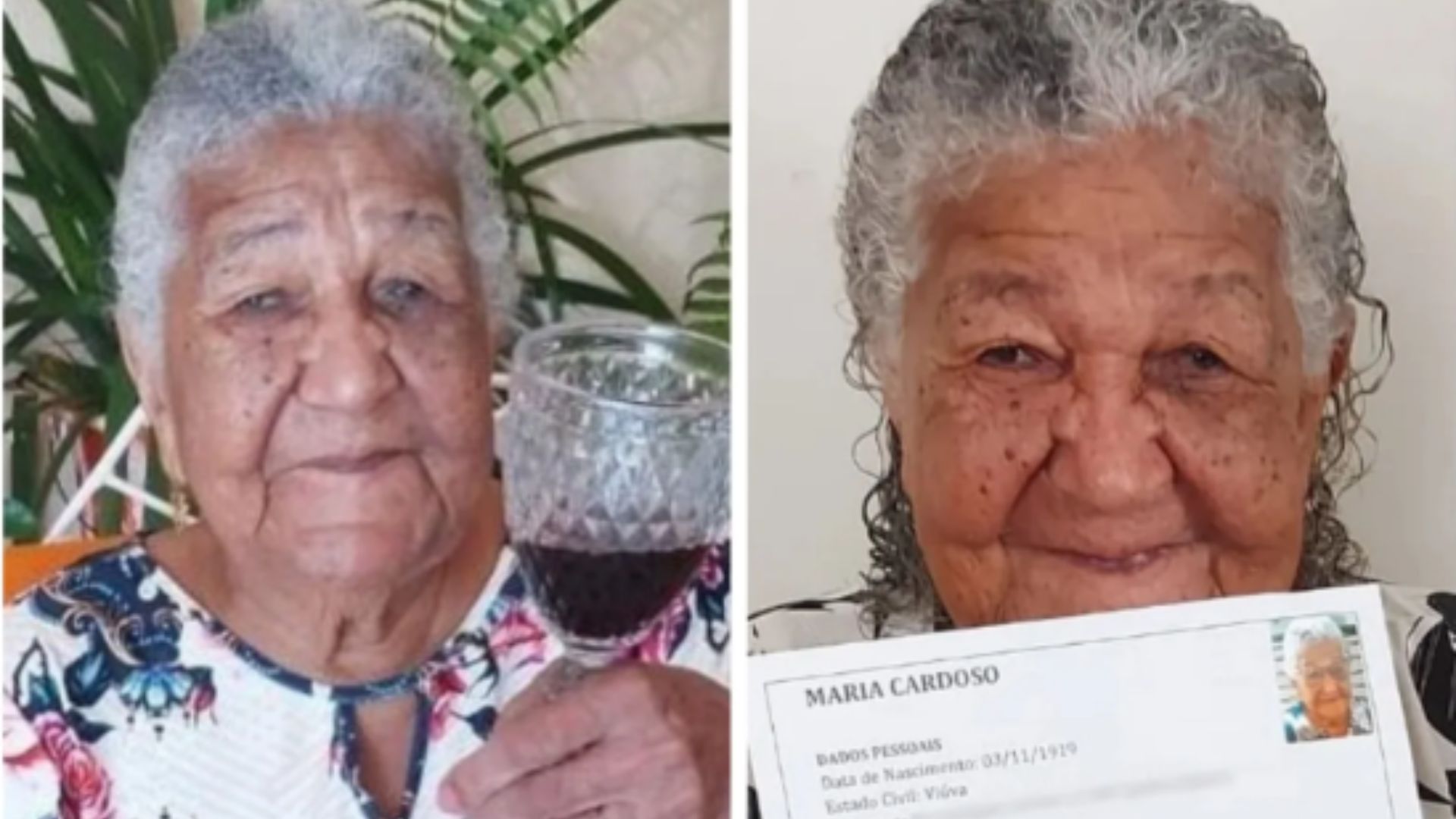
Real story of an elderly woman seeking employment for financial autonomy gains national repercussion and attracts interest from a wine brand, transforming a simple routine into a case of great visibility on social media.
Mrs. Maria Cardoso, a resident of Promissão, in the interior of São Paulo, began to gain national prominence after expressing to her family the desire to return to work to maintain daily habits, such as buying wine and food of her preference, without being entirely dependent on others.
The initiative, initially restricted to the family environment and without any planning for exposure, quickly expanded on social media and sparked the interest of a brand in the sector, which identified the potential for direct connection with the audience.
Driven by a practical need, Maria’s decision reflected more than a simple request, revealing a concrete attempt to preserve financial autonomy even in old age, without giving up on personal choices built over a lifetime.
-
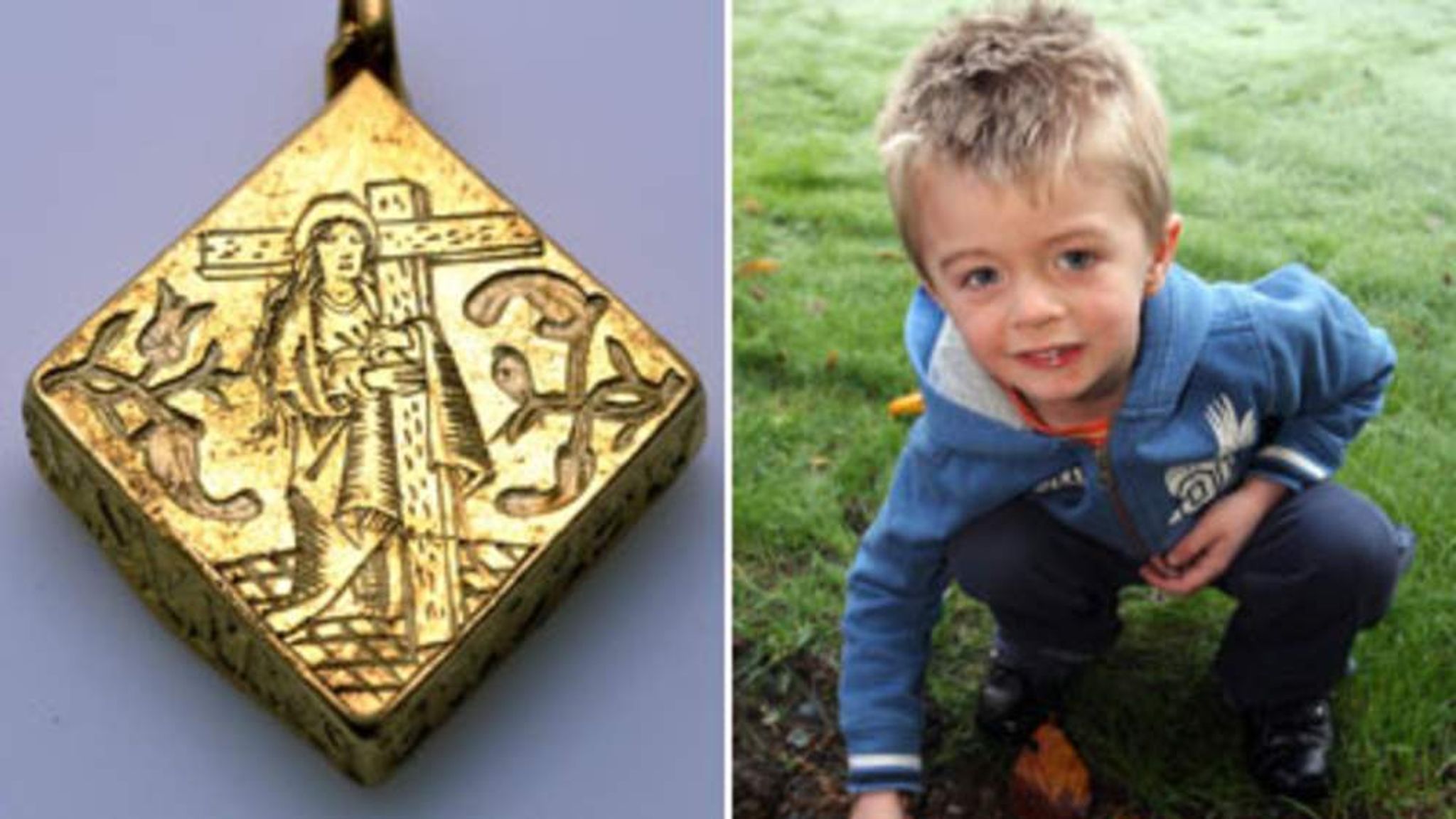
A 3-year-old child was playing with their father’s metal detector and found a gold pendant over 500 years old, valued at $4 million, a piece with a secret compartment linked to the era of Henry VIII, found by James Hyatt.
-
Brazil feels the record heat: 2025, the 3rd hottest year on the planet, brought 1,493 hydrological disasters, affected 336,656 people, and caused losses of R$ 3.9 billion, according to Cemaden in the country.

-
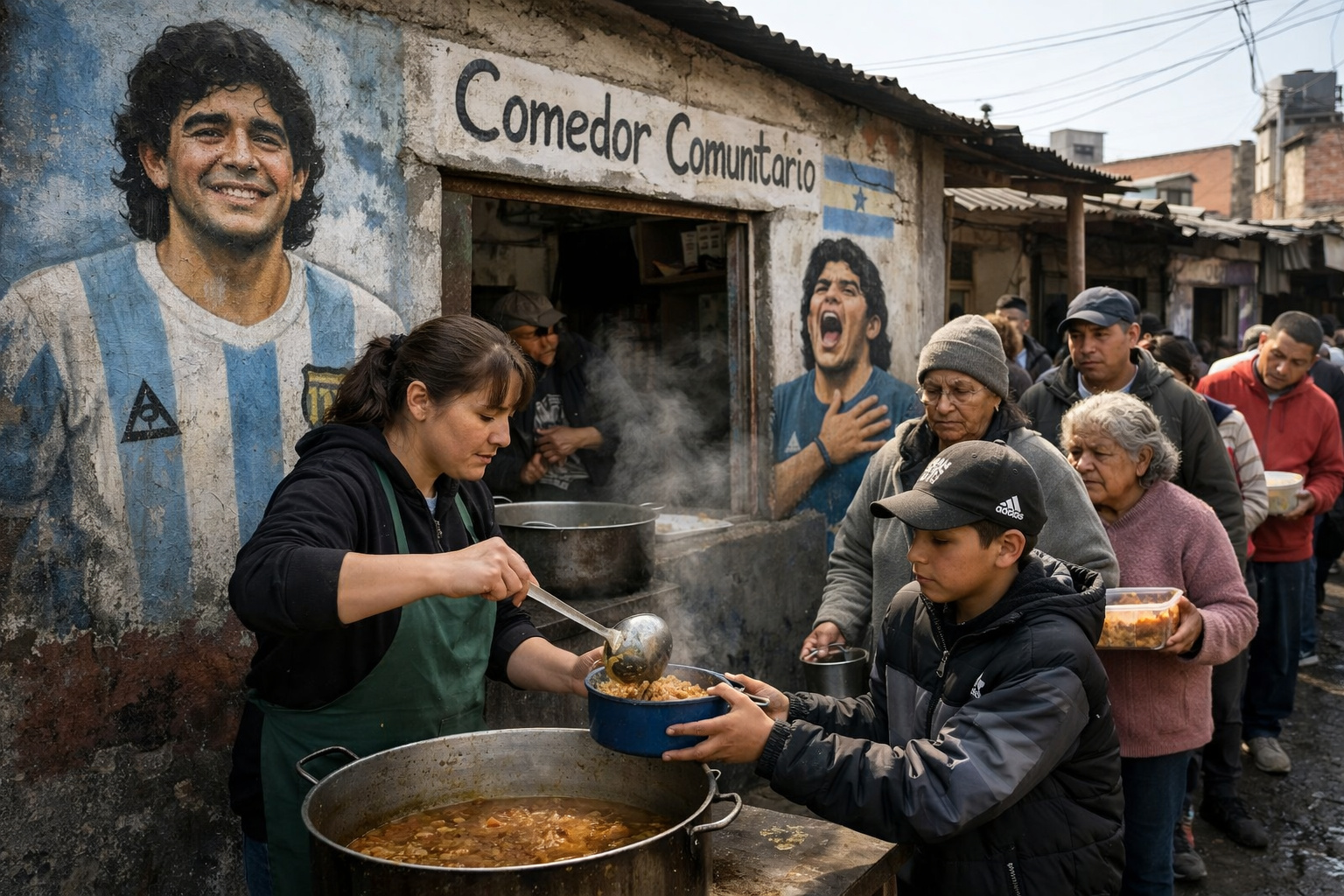
From a childhood marked by hunger to a symbol of hope: the house where Maradona was born becomes a cafeteria that feeds hundreds every day amidst the economic and social crisis in Argentina.
-
Few people know about this Greek island with 6 ideal months for visiting, perfect winds for kitesurfing, a medieval village on a cliff, almost untouched beaches, and a cuisine featuring fresh fish that surprises travelers.

In light of this scenario, the family decided to organize a resume based on the elderly woman’s experiences and share the material, not imagining that the gesture would transcend the close circle and gain much larger proportions in the digital environment.
Viral resume and repercussion on social media
As soon as it started circulating, the content provoked an immediate reaction among internet users, who began sharing the story highlighting both the clarity of the objective and the direct tone adopted by Maria in expressing her desire to work.
Quickly, the narrative ceased to be just a family account and began to occupy space among the most commented content on social media, driven by the audience’s identification with the simplicity and authenticity of the presented situation.
Unlike planned productions for engagement, the case drew attention precisely because of the absence of elaborate strategies, as there was no prior preparation or artificial image construction to attract an audience.
Still, the combination of spontaneity and collective identification expanded the reach of the story, consolidating its visibility organically and reinforcing the audience’s ongoing interest.
In this context, Maria’s motivation stood out for being linked to everyday and concrete choices, distancing itself from abstract discourses and bringing the narrative closer to the reality experienced by many people.
As a result, the episode began to be interpreted as a portrait of independence in a phase of life often associated with the loss of autonomy.
Wine brand bets on the story and hires Maria
As exposure increased, companies began to show interest in the story, recognizing the potential for engagement generated spontaneously and the possibility of association with positive values.
Among these companies, a wine brand identified a direct alignment between Maria’s profile and the product mentioned in her work objective, which facilitated the approach and resulted in an invitation to participate in promotional actions.

Instead of taking on a traditional role in the job market, Maria began to act as a influencer linked to the wine universe, maintaining coherence with the narrative that had won over the audience.
The partnership involved sending products and participating in content directed at an audience already familiar with her story, consolidating a rapid transition driven by digital repercussion.
Without the need for forced adaptation, the construction of this new role preserved naturalness as the main element of communication, avoiding distortions in the image that had become known.
Thus, Maria continued to be presented as someone who enjoys wine and values her independence, characteristics that remained central since the beginning of the narrative.
Life trajectory and public identification
Disclosed information indicates that Mrs. Maria worked from an early age, mainly in rural activities, and did not have access to formal education, which helps to contextualize her trajectory and the conditions in which she lived over the years.
This background amplifies the meaning of the resume shared by the family, which goes beyond its practical function and comes to represent a symbolic gesture of active permanence in society.
With the repercussion, the image of the elderly woman was repositioned in the digital environment, no longer seen merely as a curiosity linked to advanced age and beginning to incorporate broader discussions.
In this scenario, Maria began to be associated with themes such as autonomy, income in old age, and active participation in society, expanding the reach of the debate generated by her story.
The audience’s interest, therefore, was not limited to the unusual aspect, but connected to structural issues related to aging and social participation.
Moreover, the narrative differentiated itself by not following traditional patterns of digital influence construction, as there was no prior planning or ongoing audience growth strategy.
Spontaneity transforms personal story into visibility

Maria’s trajectory highlights how personal stories can gain scale when they find collective identification, especially in a digital environment marked by the rapid circulation of content.
Initially distant from any commercial intention, the case was incorporated into this universe only after the audience’s response, which spontaneously boosted its visibility.
In this process, the relationship with the brand emerged as a direct consequence of the repercussion, and not as a structured starting point, which reinforces the authenticity perceived in the narrative.
At the same time, the situation reveals changes in how companies select representatives, opening space for profiles that carry real experiences and direct connection with the audience.
In Maria’s case, the bond with the product did not need to be artificially constructed, as it was already present from the initial motivation that originated the entire story.
Although the continuous circulation of the case has generated variations in how it is presented, the central elements remain consistent and recognizable.
Without resorting to complex strategies, Mrs. Maria began to occupy a visibility space that unites everyday life and the market, transforming a simple request into a journey followed by thousands of people.






Seja o primeiro a reagir!