





 Portuguese
  English
  Spanish
  6 min of reading
  0 comments


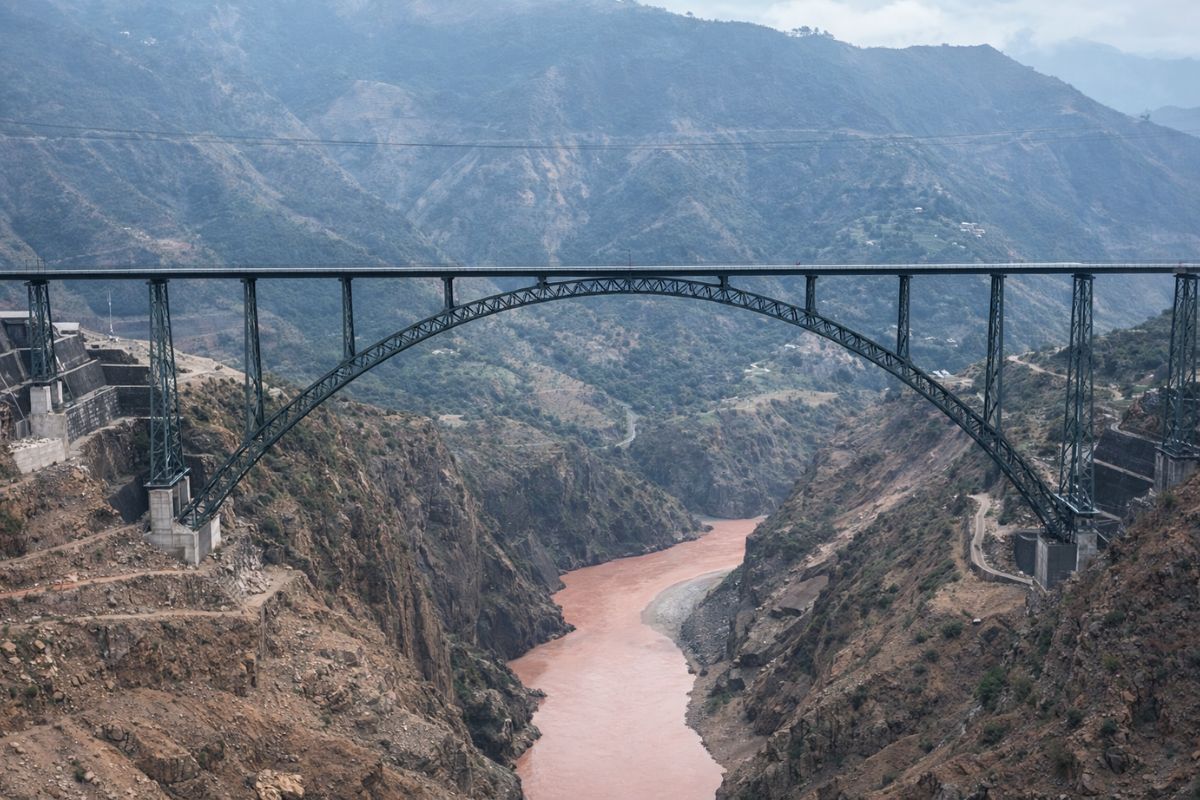
In Kashmir, the Xenab Bridge is a railway bridge built after two decades, with modular steel, a filled steel arch, and sliding tracks to withstand extreme wind, earthquakes, and temperature variations
The railway bridge of Xenab emerges in a scenario that seems impossible: a deep gorge, unstable rock, precarious access, and wind that does not “blow,” roars. Still, engineers worked for about two decades to raise the structure that is now described as the highest railway bridge in history, suspended 359 m above the river.
The goal goes beyond the record. The railway bridge appears as the most critical piece to connect the Kashmir Valley to a railway that crosses the Himalayas, reducing an isolation that for centuries has been imposed by severe winters and roads that became obstacles in rainy seasons.
Why this railway bridge needed to exist
The text describes Kashmir as a region surrounded by imposing mountains, where winter and rain often cut off land connections. While other areas connected by trains and highways, the valley remained dependent on vulnerable routes and blockages.
-
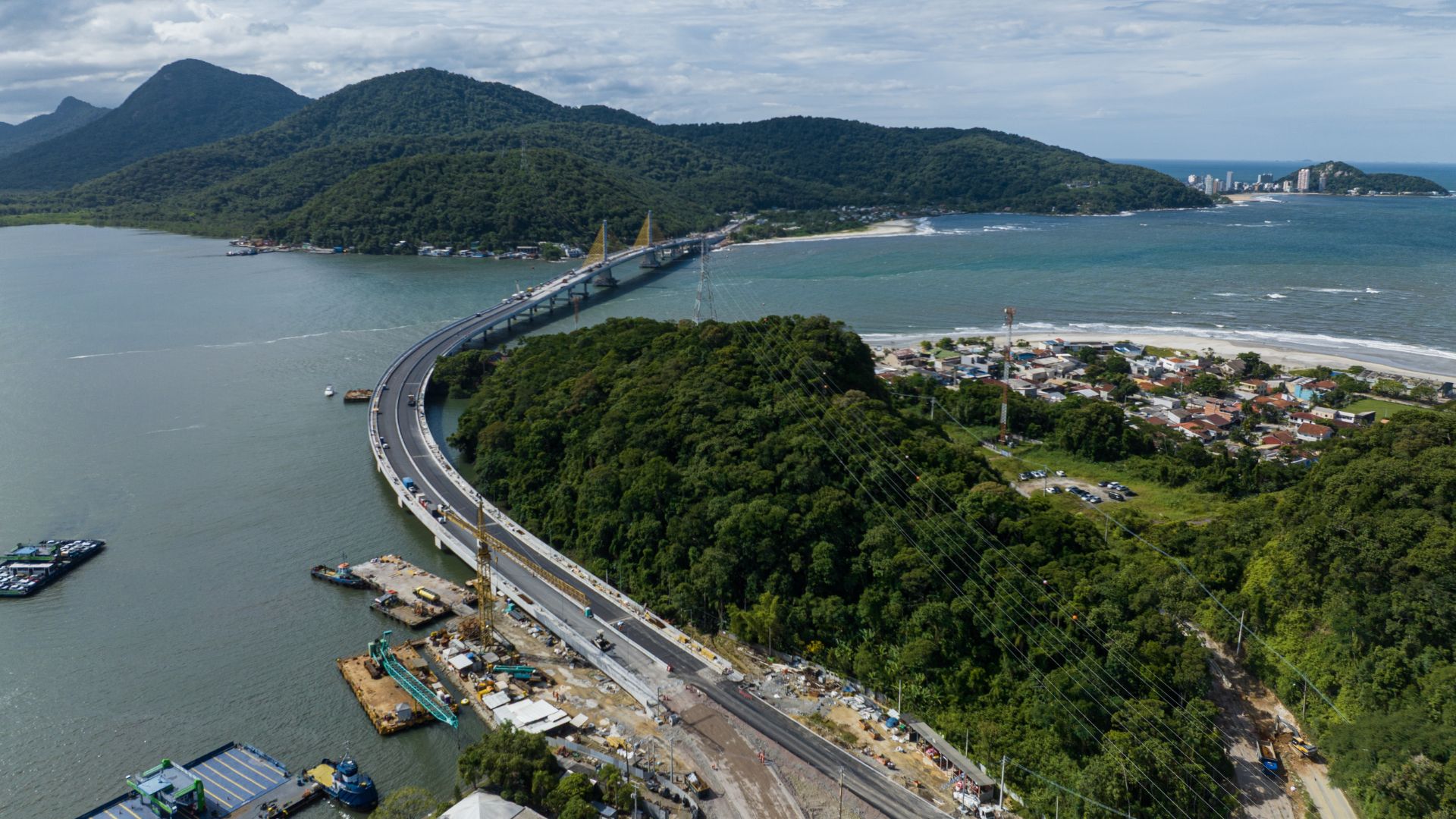
With over 3 km in total length, the mega bridge costing R$ 400 million will be delivered this month after years of waiting, featuring 4 lanes, 211 lighting poles, and ending 50 years of ferryboat crossings on the coast of PR.
-
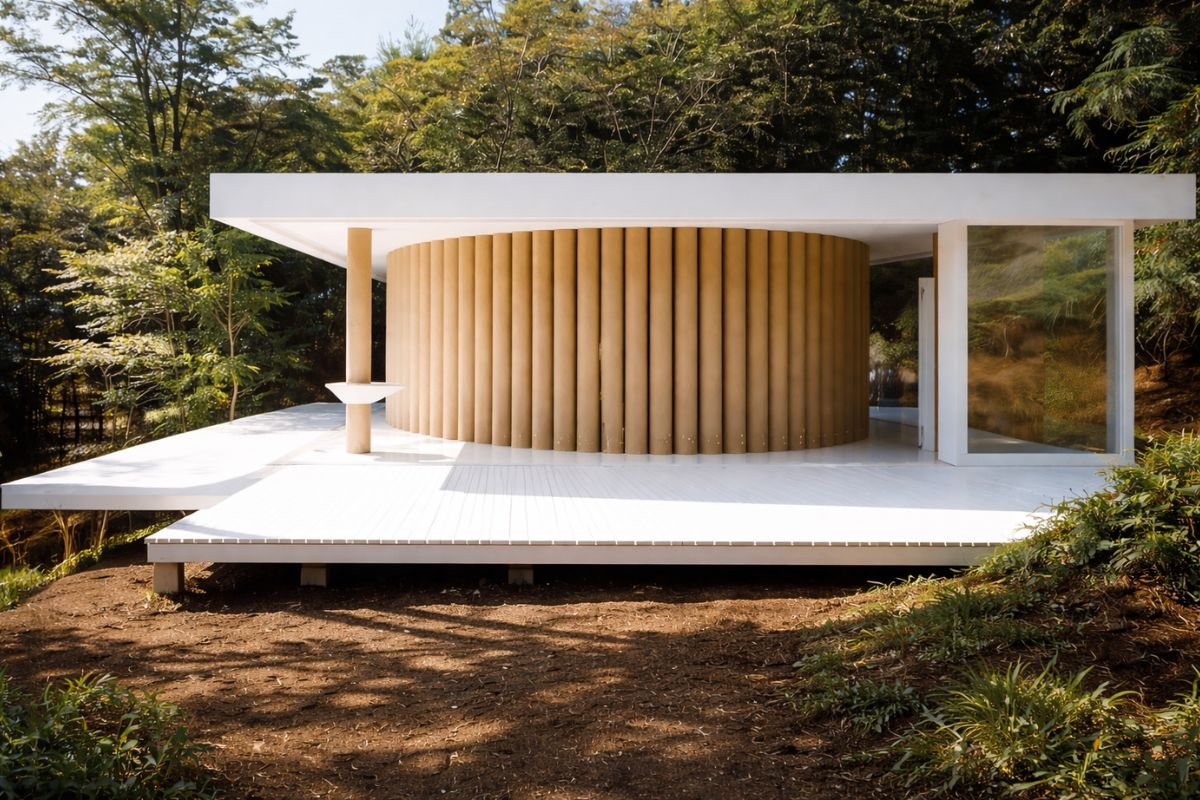
Paper houses that withstand earthquakes, last more than a decade, and cost less than a high-end smartphone: the brilliant invention of a Japanese architect that is changing post-disaster reconstruction around the world.
-
The Portuguese industry reuses broken tiles and waste from its own factory to create new coatings with up to 94% recycled material, produces more than 1,400 tons, and uses only 6% new raw material.

-
Researchers transform fish waste into ultralight material capable of capturing CO₂, technology reuses fishing waste and can help reduce pollution in the construction industry.

The proposed solution was to build a railway, named Udampur Nagar Baramula Rail Link, with 272 km of tracks to integrate the region into the national network. However, the Xenab gorge was in the way and required a railway bridge that was outside any previous standard.
The numbers that explain the size of the challenge

The crossing required a structure capable of connecting two edges separated by 467 m of span, suspended 359 m above the river. The text itself compares this height to 1.2 times the Eiffel Tower above the water, to size the abyss.
The initial forecast already indicated the scale of the undertaking: 5 billion dollars, about 20 years of work, and unprecedented engineering challenges in similar railway projects. From there, the railway bridge ceased to be a “section” and became the heart of the entire connection.
The first battle was reaching the site of the railway bridge
Before steel and concrete, there was the absence of infrastructure. The canyon was isolated, and teams could only reach the area by boat or narrow trails on almost vertical walls. To allow construction, it was necessary to dig 26 km of access roads on the slopes of the Himalayas.
The text describes a young, fractured, and vibration-sensitive rock. Therefore, the blasting solution was controlled, with pre-cutting techniques and rapid stabilization of surfaces, using steel nets and shotcrete after each detonation. This step was crucial for any subsequent assembly of the railway bridge.
The logistics that forced the use of modular steel
With narrow roads and aggressive curves, transporting long ready beams was unfeasible. The solution was smart and practical: to bring the steel in standardized modular plates and assemble everything on-site.
At the edge of the gorge, a precision manufacturing yard was created with cutting, drilling, and assembly. To handle pieces in difficult orientations, the team designed a rotating lever arm system to position entire sections. The railway bridge became a suspended factory on the edge of the void.
Foundations on unstable rock and cement injection under pressure

The text emphasizes that the Himalayas are geologically young and unstable, with high seismic activity and rock marked by fractures. Foundations S40 and S50 needed to anchor a gigantic structure in a terrain that “was trying to sink.”
The strategy was to excavate in layers, continuously analyze, and then inject cement slurry under high pressure to fill microcracks and pores, transforming the fragmented rock into something close to a solid block.
Then, anchoring cables drilled to depth “stitched” the rock mass to the more stable layers. Thus, the base of the railway bridge was treated as part of the structural system.
Wind of 266 km/h and the choice of the compressed arch
The most unpredictable enemy described is the wind. The V-shaped gorge acts as a natural nozzle and accelerates the air in the so-called venturi effect.
Engineers measured gusts of up to 266 km/h, and the text compares this value to a Category 5 hurricane starting at 252 km/h.
Therefore, common solutions for large spans were discarded: cable-stayed bridges and suspension bridges. The flexibility of these structures, acceptable in normal situations, could turn into dangerous resonance under extreme winds. For a railway bridge, the tracks do not tolerate instability.
The indicated viable solution was a compressed steel arch, rigid and capable of transferring forces to the foundations without intermediate pillars touching the river.
How they assembled a steel arch in the air, without support at the bottom of the canyon
The text describes the creation of temporary infrastructure “in the skies.” Two provisional towers were erected and supported a cable crane system.
To cross the abyss for the first time, the chosen method was a helicopter carrying a pilot cable, which became a guide to pull increasingly heavier cables until stretching a main load cable.
The assembly of the arch followed the progressive cantilever: steel modules were hoisted, transported on cables, and welded in place, advancing from both banks towards the center.
To avoid twisting and collapse before closure, temporary retention cables anchored on the slopes limited movements.
The cited tolerance is millimeters to fit the closure in the center. When the arch closed, the railway bridge existed in steel, but still needed to gain final behavior.
Filled arch, launched deck, and the rigidity that trains require

An intuitive section appears next: an empty steel arch would not be ideal for earthquakes. The solution was to pump self-compacting concrete into the structural tubes of the arch, creating a composite system.
On the outside, the steel acts as reinforcement; on the inside, the concrete increases mass and suppresses vibration frequencies, helping against earthquakes and gusts.
For the deck, instead of hoisting segments one by one over the abyss, incremental launching was used. The deck was assembled on land on one side and pushed by hydraulic jacks, meter by meter, until reaching the other bank. Thus, the railway bridge avoided the risk of an unstable partial deck under strong winds.
Sliding tracks to overcome the “silent problem” of temperature


The text points out a less obvious and very critical challenge: the gorge is so narrow that the sun does not illuminate both banks equally.
On a summer day, one side can reach 50°C while the other stays close to zero, creating a difference of over 50°C in the same structure.
In a railway bridge nearly 500 m long, this becomes real movement: expansion and contraction that twist the assembly. To prevent derailment, the solution was to allow the tracks to “follow” the structure.
They rest on guided and pretensioned sliding supports, sliding with the deck when it expands and retracting when it contracts. The railway bridge “breathes” without losing operational geometry.
The first train and the impact beyond the record
The text states that, in the summer of 2024, a train crossed the bridge for the first time after more than two decades since the first topographic work. The symbolic effect is strong: the whistle echoing in a canyon that had never heard anything like it.
In the end, the railway bridge is not just a record. It changes the logistics and the sense of belonging of a region marked by isolation, where closed roads meant lack of medicines, empty markets, and separated families. It is engineering as a direct response to an ancient geographical blockade.
Which part of this railway bridge did you find most unbelievable: the wind of 266 km/h, the arch filled with concrete, the deck launched by hydraulic jacks, or the sliding tracks?






Seja o primeiro a reagir!