





 Portuguese
  English
  Spanish
  5 min of reading
  0 comments


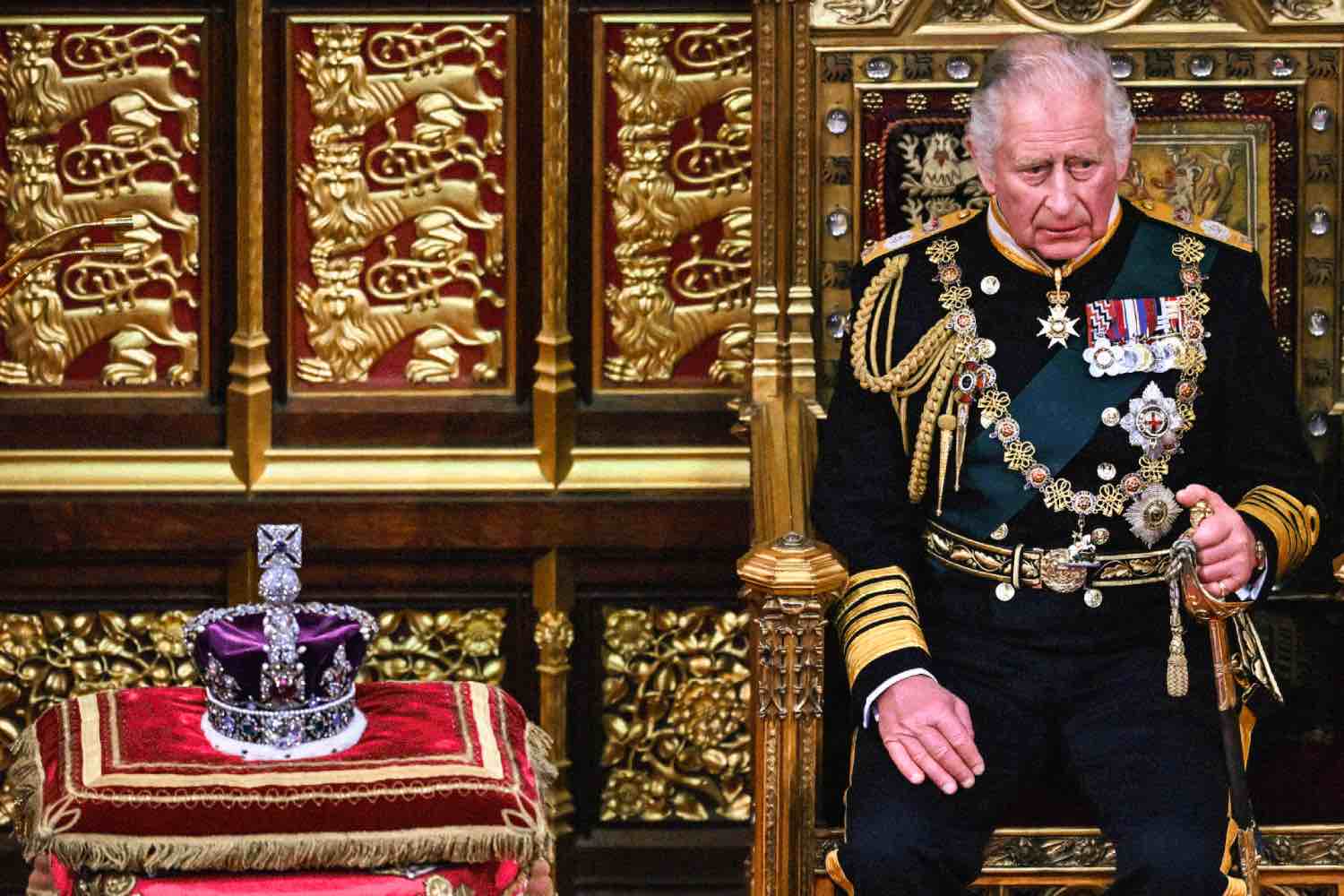
Rumors about the succession to the British throne return to the center of news amid Charles III’s health treatment, as unconfirmed information reignites the debate over costs, the line of succession, and the future of the monarchy.
A report published by the U.S. entertainment press claims that King Charles III is under pressure to abdicate due to treatment for cancer announced by Buckingham Palace in February 2024.
The information, based on unidentified sources, suggests that royal family members are already discussing a potential transition to Prince William.
So far, however, there is no official confirmation of abdication or formal preparations for a new coronation.
-
Chinese researchers have created bamboo drones that fly with the same precision as conventional models and have released the flight control software for free to the entire world in a technology that could revolutionize sustainable aviation.

-
Russia reveals that it is already conducting 95% of all its business with China without using a single dollar; dedollarization has ceased to be a promise and has become a reality in record time, and the West watches helplessly.

-
While Brazilians work more than 44 hours a week, Norwegians leave the office at 3 PM and are now testing a four-day workweek with full pay and no loss of productivity.

-
A legend of Brazilian TV is 75 years old, returned to narrate the World Cup for SBT, and still finds time to manage a farm of over 100 hectares in Rio Grande do Sul where she produces award-winning wines, olive oil, and raises cattle.


Public statements released by the palace indicate that the monarch remains in office, maintains state functions, and has resumed part of his public agenda since 2024.
Charles III’s Health and Cancer Treatment
Charles publicly announced the diagnosis of an unspecified cancer on February 5, 2024, following tests conducted during treatment for benign prostate enlargement.
At the time, Buckingham Palace stated that he would begin a routine of medical care and would stop attending public engagements in person for a period, without interrupting state activities and official meetings.
Months later, in April 2024, the Royal House announced the gradual return of the sovereign to external commitments.
By December 2025, the king himself stated that doctors had decided to reduce treatment starting in 2026, calling the news positive.
So far, there has been no official announcement indicating a recent deterioration that could lead, by itself, to a resignation.
This history contrasts with the thesis of an imminent exit from the throne due to internal pressure.
In March 2024, Reuters reported that there was no sign that Charles was considering stepping down from his position, even during treatment.
Later, when the king needed to be briefly observed in the hospital after side effects, the official communication reiterated that he was recovering and continued to work.
The King’s Abdication and the Royal Family’s Line of Succession
The text that reignited speculation states that family members would advocate for a “renewal” of the monarchy with William on the throne.
This type of assessment frequently appears in coverage of the Royal House, especially during times of concern for the health of more visible members of the institution.
Still, what exists publicly and confirmed is the line of succession: William is first in line to the throne, followed by his children George, Charlotte, and Louis.
The existence of this line, however, does not mean that a coronation is being prepared.
So far, Buckingham Palace has not announced any negotiations for abdication or any stage of transition.
In the current scenario, therefore, the narrative of internal pressure is supported only by reports attributed to anonymous sources.
Also weighing in this context is the fact that Charles waited decades to assume the Crown.
He became king on September 8, 2022, after the death of Elizabeth II, and has since continued to fulfill his institutional role.
Even during periods when he reduced his public agenda, he remained at the forefront of the constitutional duties expected of the position.
New Coronation and Estimated Cost for the United Kingdom
Another central point of the report is the value of a future ceremony.
The publication mentions a budget of US$ 50 million, an amount converted in the original text to about R$ 260 million.
This amount, however, has not been confirmed by official British bodies.
The publicly available data refers to the coronation of Charles and Camilla, held on May 6, 2023.
According to figures released by the British government and reproduced by international agencies, the event cost at least 72 million pounds, including expenses for organization and policing.
The expenditure sparked debate in the United Kingdom amid rising living costs and discussions about the use of public resources for royal ceremonies.
The comparison helps to contextualize the figure mentioned for a potential coronation of William.
Still, there is no public document confirming an official plan with a budget of US$ 50 million.
Without this confirmation, the amount should be treated as an estimate attributed to unidentified sources.
William, Kate Middleton, and the Future of the British Monarchy
If the succession occurs within the expected dynastic line, William will assume the position of king.
Today, he is the direct heir to Charles and frequently appears at the center of discussions about the future of the institution.
The family formed by the Prince and Princess of Wales holds a prominent position in the public image of the monarchy, alongside their children George, Charlotte, and Louis.
Kate Middleton has also faced a delicate period of health.
In January 2025, she reported being in remission after revealing the previous year a diagnosis of cancer.
This context helps explain why the couple is often associated, in British press coverage, with a more discreet public agenda and protection of family life.
Still, attributing to William and Kate a closed plan to cut the costs of a potential coronation in half goes beyond what is officially documented.
Without a palace announcement or publicly disclosed planning, this information cannot be treated as a confirmed fact.
Charles III’s Journey to the Throne
Born on November 14, 1948, Charles was prepared from an early age for the role he would inherit from his mother.
He became king at 73 years old, after spending much of his public life as Prince of Wales.
Throughout this period, he associated his image with environmental causes, agricultural debates, and work with youth through the institution created in 1976, now called The King’s Trust.
His journey also includes university education at Cambridge and service in the British Navy and Air Force.
Over the decades, his personal life has been at the center of public attention, especially during his marriage to Diana, the separation, the divorce, and later, the consolidation of his relationship with Camilla, now queen.
During his reign, Charles has advocated for a more compact monarchy adapted to the 21st century, according to statements and lines of action observed by the British press.
In this environment, rumors about succession tend to gain traction in the news whenever health issues arise involving central members of the royal family.
At the moment, however, the publicly available data does not indicate confirmed abdication, official timeline for a new coronation, or formal definition regarding a potential transition in the British throne.






Seja o primeiro a reagir!