





 Portuguese
  English
  Spanish
  7 min of reading
  0 comments


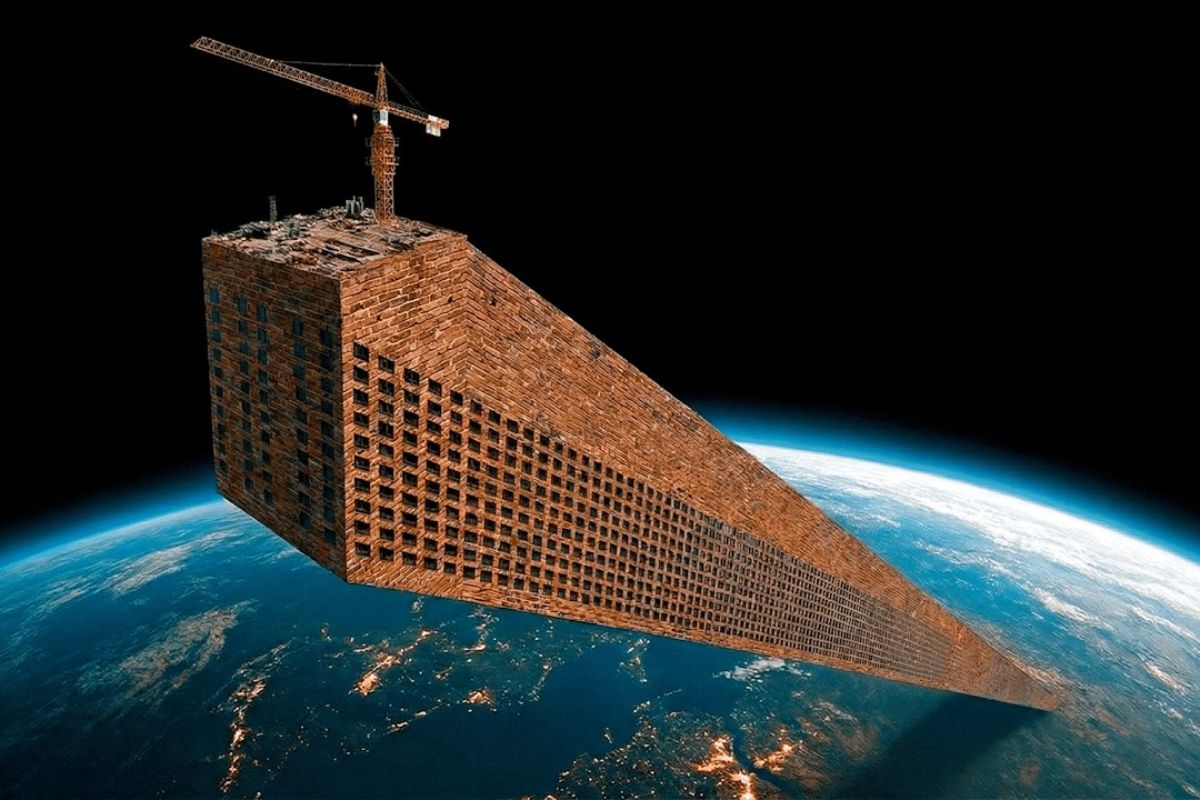
Building Higher and Higher Has Stopped Being Just a Symbol of Power and Has Come to Involve Physics, Materials, Cost, Time, and Even Orbits, on a Journey from the Pyramids of Egypt to the Burj Khalifa, to the Imagined Megatowers for Tokyo and the Space Elevators Designed to Break Earth’s Own Scale.
Building higher has been an ancient obsession of humanity, but today this ambition is no longer measured only by the comparison between towers, churches, and skyscrapers. It now depends on a direct confrontation with the weight of materials, structural resistance, elevator speed, execution cost, and even the physical limits of the planet itself.
When looking at this trajectory in sequence, what appears is not just a race for records. Human height has ceased to be a purely architectural problem and has become a question of extreme engineering. That’s why the discussion doesn’t end at the Burj Khalifa, not even at towers a few kilometers tall, and advances to structures that touch space and attempt to redraw the relationship between Earth and orbit.
From the First Giants to the Modern Vertical Leap
The desire to build upwards has accompanied civilization from very early on. One of the oldest examples is the Tower of Jericho, built about 10,000 years ago in the territory of present-day Palestine, standing 8.5 meters tall.
-
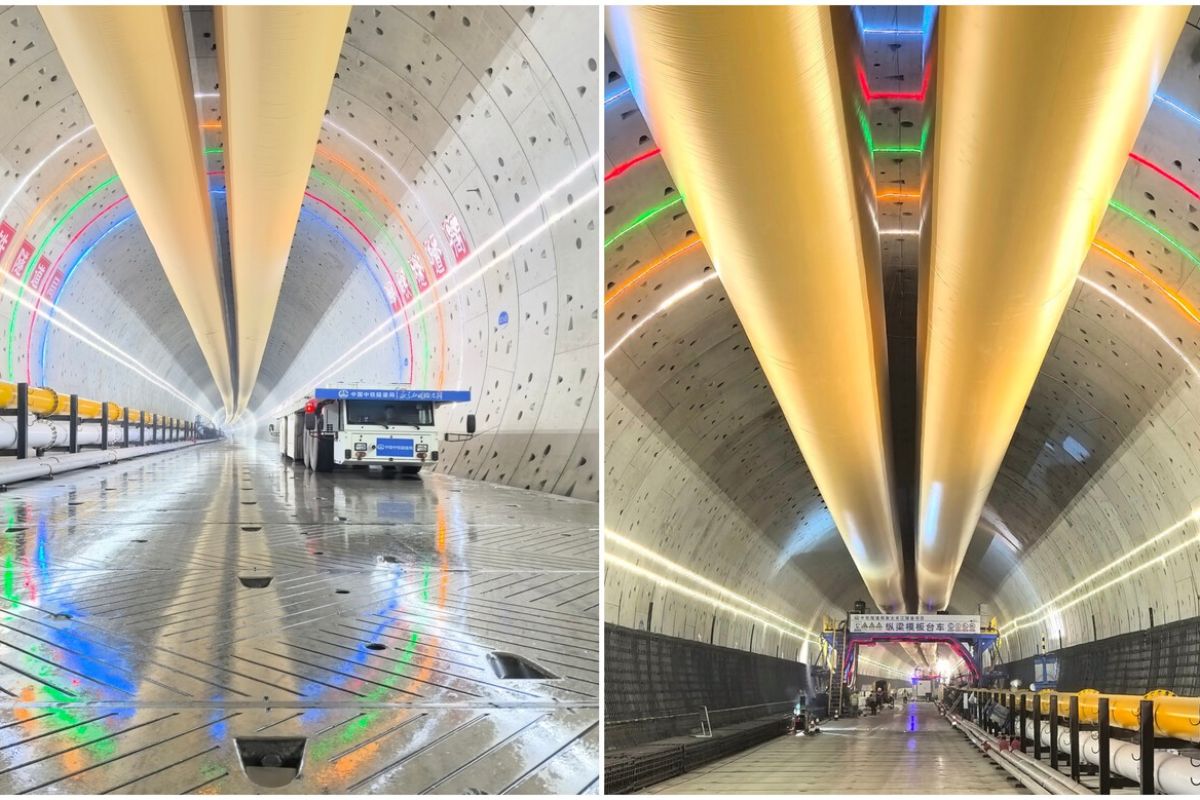
China completes the most critical section under the Yangtze River with the intelligent tunneling machine Linghang, excavating 11.32 continuous kilometers at depths of up to 89 meters and transforming the Chongming-Taicang tunnel into a landmark that redefines the scale of high-speed rail engineering in the 21st century.
-
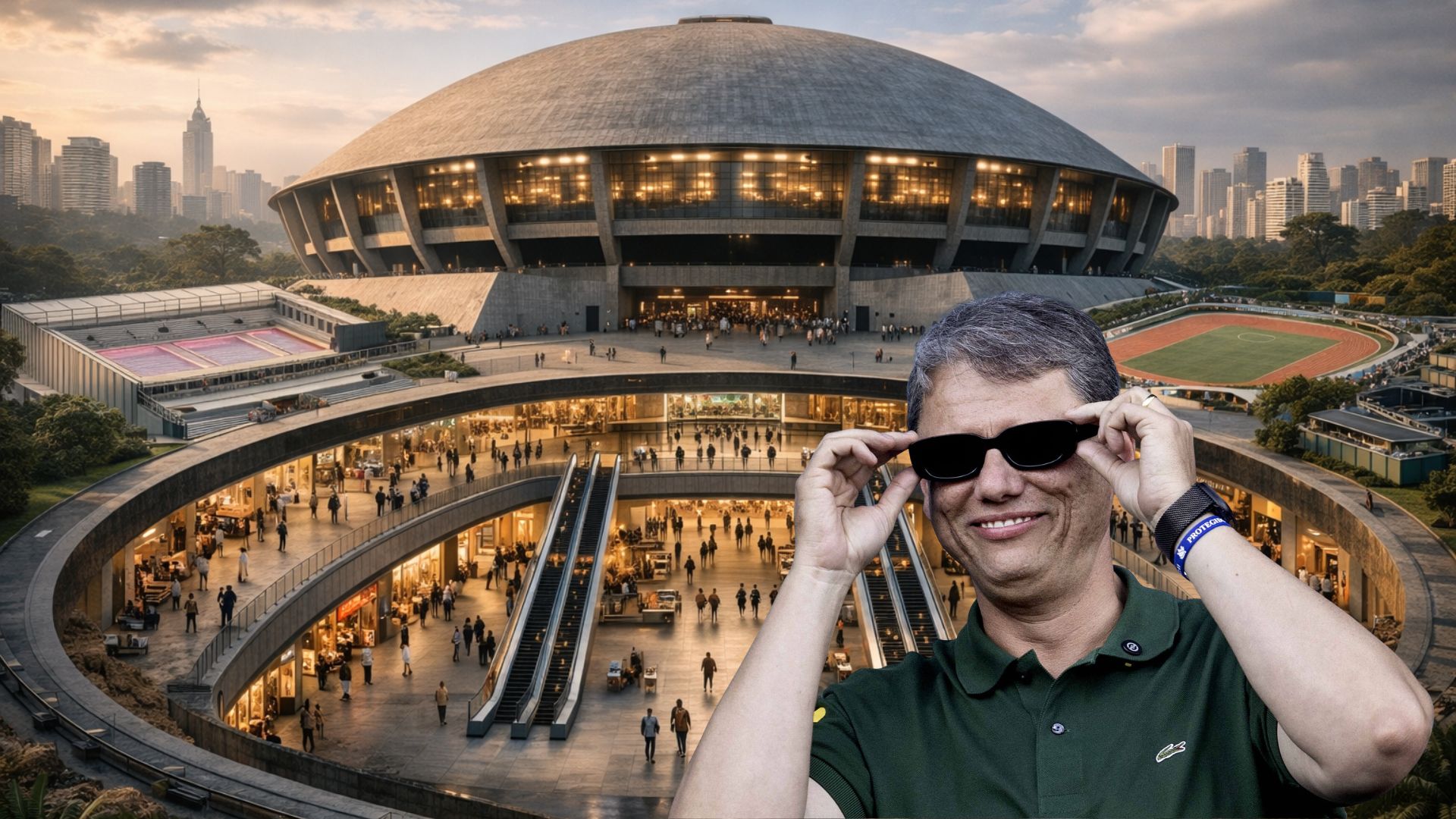
The government of São Paulo surprises South America with a plan to transform the famous Ibirapuera with underground shops, air conditioning, and a 25-year concession in a billion-dollar project that expands the audience, alters a protected area, and provokes an immediate reaction.
-
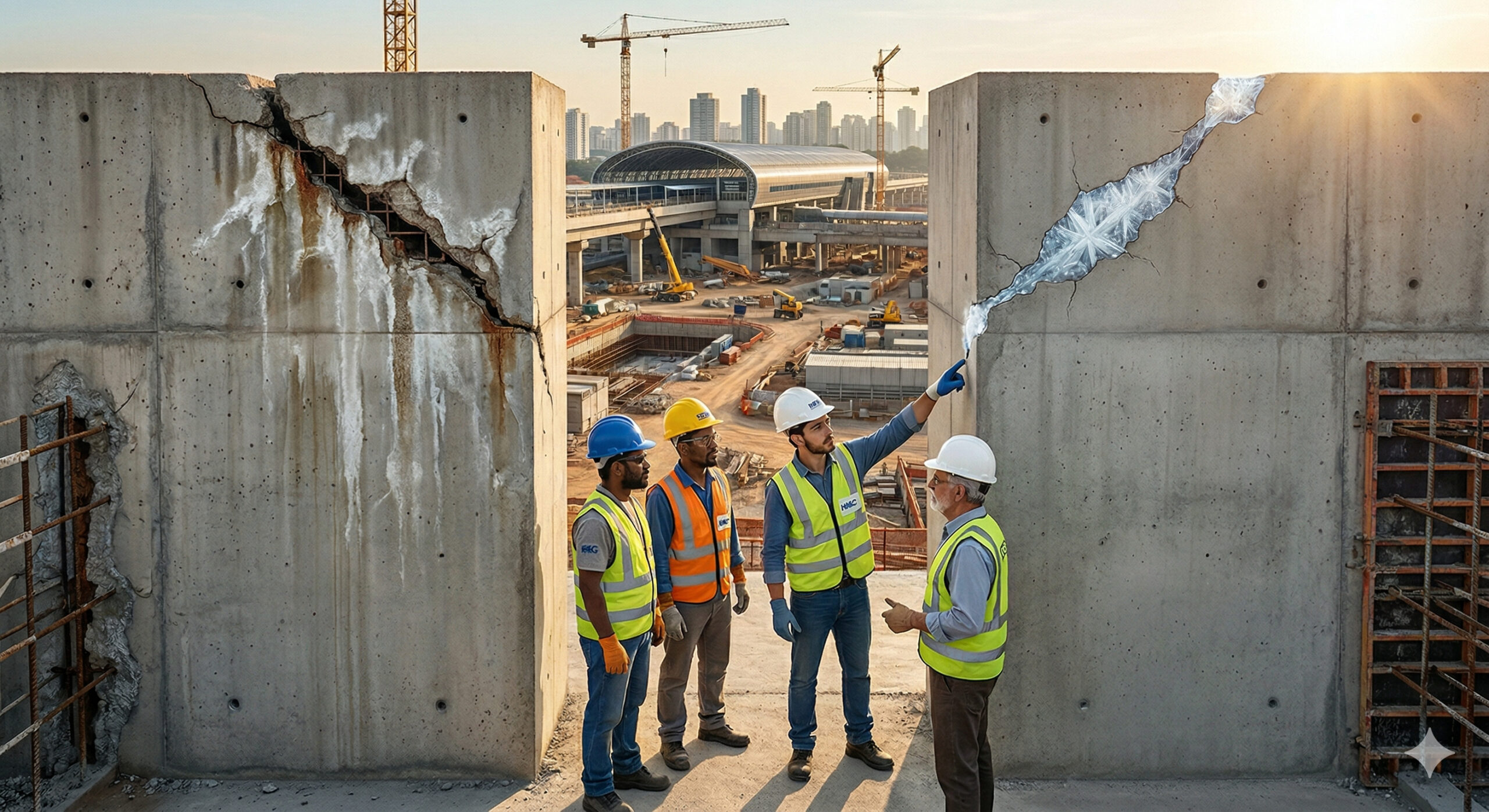
With a lifespan of up to 60 years and a cost up to 30% higher than conventional concrete, self-healing concrete is already being used in Brazil to eliminate leaks, reduce maintenance, and is changing the real cost of construction projects.
-
Engineered wood CLT challenges steel and concrete and promises construction that is up to 2x faster with a lower environmental impact in modern civil engineering.

The truly decisive leap, however, came with the Egyptians and the Great Pyramid of Giza, completed in 2560 BC, reaching 146 meters.
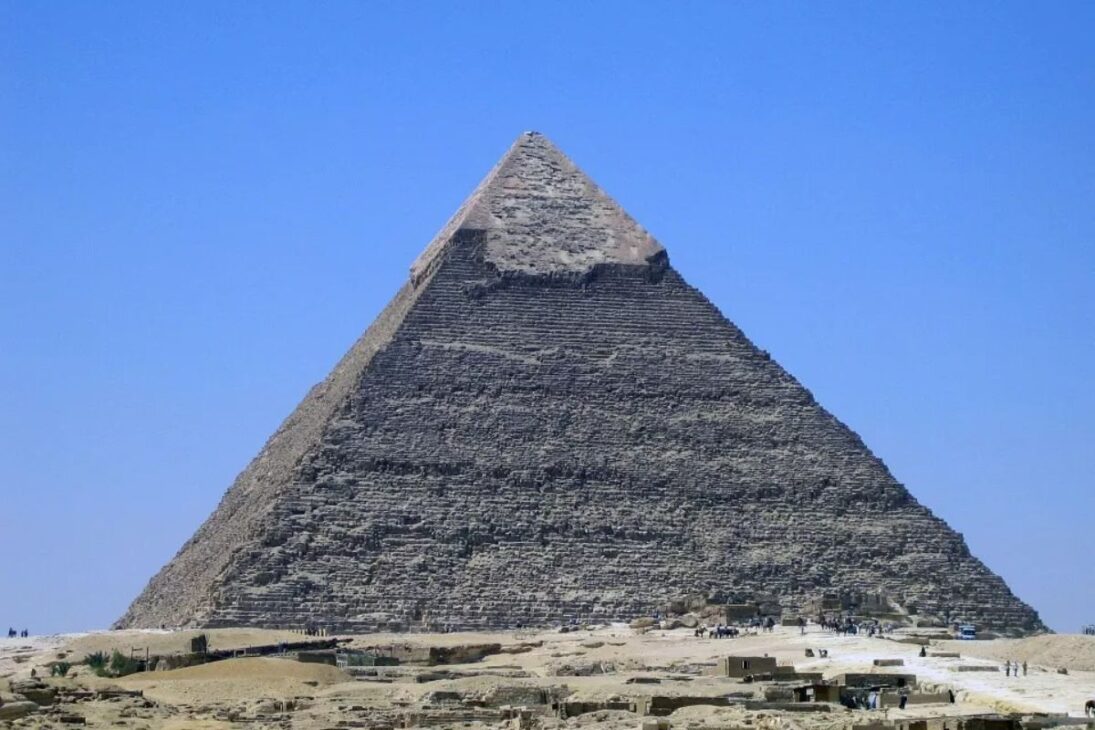
This number helps to understand the scale of the achievement. The pyramid surpassed, for millennia, structures that still impress today.
The Sanctuary of Truth in Thailand, made of wood, is 105 meters tall. The tallest lighthouse in the world, in Saudi Arabia, reaches 133 meters.
The tallest statue in the world, in India, stands at 183 meters. Even in the face of these giants, the Egyptian pyramid continued to seem colossal for a long time.
The record of the Great Pyramid of Giza stood for an impressive 3,871 years, until the construction of Lincoln Cathedral in England, which reached 160 meters.
After that, the title passed through eight churches over 570 years, showing that for centuries, building higher was almost always a religious, political, and symbolic gesture, long before it became an expression of urban density and economic competition.
The change in logic came with the Washington Monument, at 169 meters, and soon after with the Eiffel Tower, which brought height to 300 meters.
From that point on, vertical ambition ceased to be episodic and entered a phase of acceleration. The Empire State Building surpassed the 100-story mark, reaching 381 meters, or 443 meters with the antenna.
Then came even larger structures, like the Ostankino Tower in Moscow, at 540 meters, until reaching the Burj Khalifa, which has held the record since 2009 at 830 meters and 163 floors.
The Burj Khalifa Does Not End the Question
The Burj Khalifa represents the current peak of our ability to build real buildings at a commercial and urban scale, but it hasn’t closed the question. It marked a temporary top.
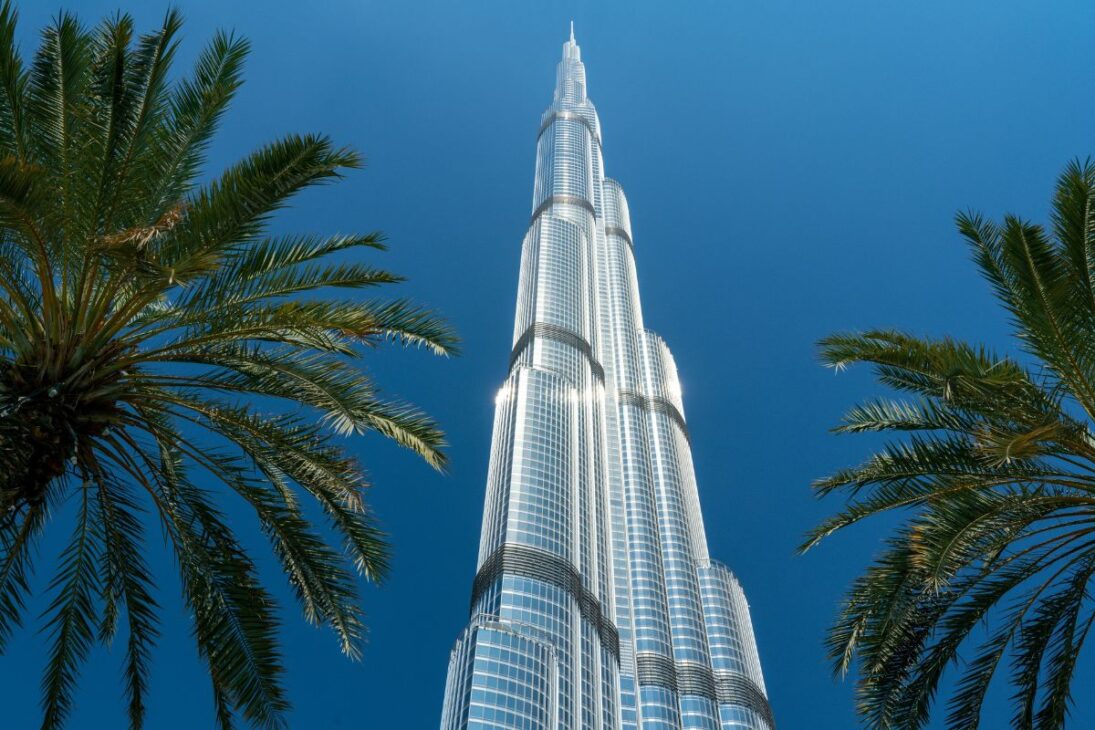
Since its inauguration, dozens of imposing buildings have emerged, and the closest is the Shanghai Tower, at 632 meters, already equipped with 97 elevators, some capable of reaching 76 kilometers per hour.
This fact may seem merely curious, but it reveals a central problem. When a construction rises too high, it cannot depend solely on columns, steel, and concrete.
It must also rely on internal logistics. It’s not enough to build a vertical body; it’s necessary to enable people to circulate within it without turning the building into a slow and unmanageable prison.
At extreme heights, elevators, evacuation, maintenance, and internal distribution weigh as much as the structure itself.
Therefore, the real question has ceased to be merely how high we can raise walls. The problem has become how far we can keep a building functional, safe, and economically sustainable.
The Burj Khalifa is the record holder, but it also serves as a reminder that each additional meter carries a higher price in complexity.
Even so, it does not seem to be the ultimate ceiling of human imagination. There are projects that attempt to advance to 2, 4, and even 10 kilometers, which shifts the debate from practical architecture to frontier engineering.
And this is where Tokyo enters as a laboratory of ambition.
Kilometer-Tall Megatowers and the Clash with Materials
Tokyo appears as one of the most fertile scenarios to imagine the next leap. Not by chance. With a metropolitan area of 37 million inhabitants, larger than the entire population of Peru, the city represents an extreme case of pressure for space.
Instead of expanding only horizontally, several projects have proposed to solve this problem by pushing occupation upwards.
The City Mega-Pyramid was designed to be 2 kilometers tall and capable of housing 1 million people. The X-Seed 4000 was designed to reach 4 kilometers, measuring about 6 kilometers wide and up to 800 floors, also able to accommodate 1 million inhabitants.
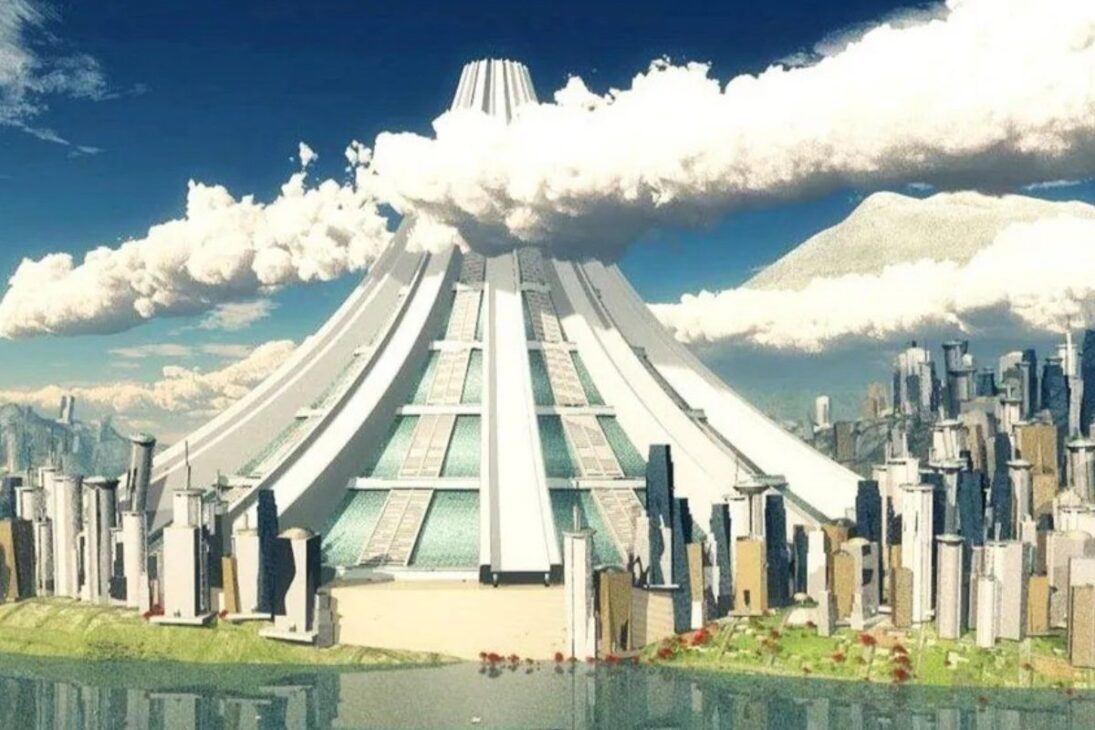
Meanwhile, the Tokyo Tower of Babel was designed to reach 10 kilometers and accommodate about 30 million people, with more than 1,000 floors.
These figures show that building on a kilometer scale completely changes the nature of the building. A tower at 10 kilometers would no longer be just a very tall skyscraper and would rival mountains.
The Tokyo Tower of Babel would surpass Mount Everest in height, as well as require about 150 years of construction and an estimated cost of $22 trillion.
The main obstacle, however, is not just money. It is materials. The City Mega-Pyramid, for example, has already been associated with the use of carbon nanotubes, precisely because a structure this large could not be built today with conventional materials without collapsing under its own weight.
This is where the true earthly limit of human verticality appears: it is not just the will to rise, but the ability to sustain the weight of that ascent.
When Building Stops Being a City and Starts Being Space
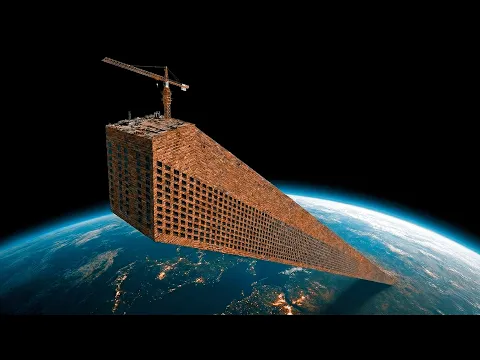

After 10 kilometers, the conversation practically abandons residential buildings and enters the realm of space-related infrastructures.
From there, building no longer means erecting a tower to live or work in, but creating systems capable of launching objects into orbit or transporting people beyond the atmosphere.
Among these concepts are the StarTram Generation 2, reaching 20 kilometers, the Launch Loop, at 80 kilometers, and the orbital ring, designed for around 160 kilometers in altitude.
These structures would no longer serve urban life, but would facilitate a direct connection between the Earth’s surface and nearby space.
The most radical case is the space elevator of 100,000 kilometers. The scale of this project is so large it almost escapes common intuition.
For comparison, the distance between Earth and the Moon is 384,400 kilometers. This elevator would consist of a cable with a counterweight at the end, kept taut by the Earth’s rotation, based on a principle similar to a slingshot’s action.
From this point on, the problem of human height ceases to be local and becomes planetary. It is no longer about where to establish the base, but how the very rotation of the Earth, the tension of the cable, and the balance of the counterweight would keep the system stable.
Building something even higher than that would cease to make sense, as the structure could even reach the Moon and displace it, like a baseball bat.
This is the moment when engineering finds an almost narrative limit. Extreme height stops being just a feat and begins to touch the mechanics of the Earth-Moon system.
In other words, the question of how far we can build collides not only with the resistance of materials but with the very architecture of nearby cosmos.
The Real Limit May Not Be Height, but Function
Throughout history, humanity has evolved from an 8.5-meter tower in Jericho to 146-meter pyramids, churches, monuments, metal towers, skyscrapers over 800 meters tall, and projects that envision entire cities stacked within a few kilometers.
This progress shows that the drive to build upwards has not disappeared. It has only changed in scale and justification.
Previously, the goal was to impress, glorify, or visually dominate the landscape. Today, height also attempts to address overpopulation, lack of space, orbital transport, and energy and logistical ambitions that transcend traditional cities.
But each new leap demands more than daring. It requires new materials, new circulation methods, new energy sources, and new calculations regarding stability.
Perhaps the real limit is not in an absolute number, but in the utility of each structure. We can imagine nearly any height; the challenge is to make it habitable, functional, safe, and economically justifiable. That’s what separates the Burj Khalifa from 10-kilometer towers and, in turn, from space elevators.
In the end, the question of how far we can build is not just about meters. It concerns how far human engineering can transform imagination into matter without losing control over weight, time, cost, and purpose. And perhaps that is precisely why the answer remains open.
In your view, is the future of engineering in megatowers several kilometers high, or will the next real leap indeed be to move away from traditional buildings and start constructing permanent infrastructure to reach space?









-

-

2 pessoas reagiram a isso.