





 Portuguese
  English
  Spanish
  5 min of reading
  0 comments


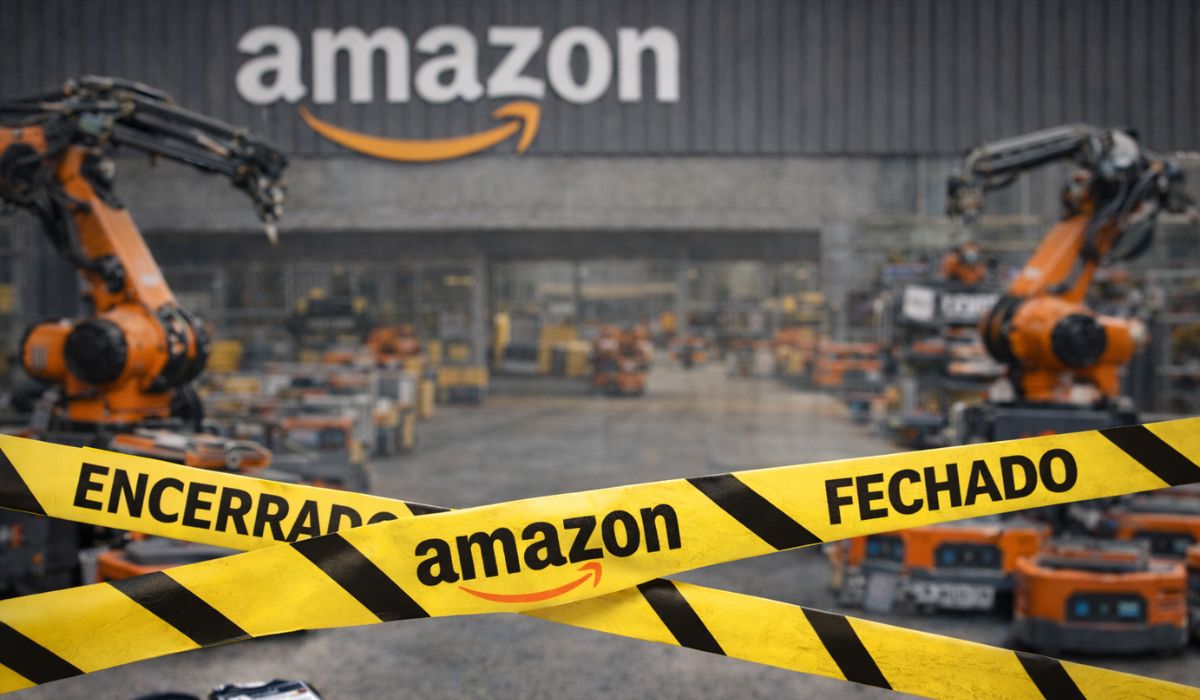
Cuts In A Strategic Area, Archived Projects, And New Investments In Technology Reposition Robotics At The Center Of Amazon’s Decisions Amid An Internal Reorganization That Exposes Changes In How The Company Allocates Resources.
The most recent round of cuts at Amazon affected an area the company itself considers strategic for the future of the business.
The company confirmed the elimination of at least 100 administrative positions in its robotics division, responsible for developing automated systems primarily used in distribution centers.
This measure adds to a series of layoffs in the corporate workforce and occurs at a time when the company is reviewing projects, reducing internal structures, and redirecting investments to artificial intelligence and infrastructure.
-
The largest food company on the planet, JBS, has just opened a 4,000 square meter laboratory in Florianópolis to develop customized proteins that modulate muscle mass gain, immune response, and metabolic performance.

-
After nearly 30 bids and competition among industry giants, a Spanish company purchases one of the largest airports in Brazil for almost R$ 3 billion and takes over the management of Galeão in a concession that will last until 2039.

-
The Federal Revenue Service now automatically cross-references everything you declare with data from banks, credit cards, brokerage firms, and insurance companies, and any discrepancy between your income and your expenses triggers an alert in seconds.

-
Amid global tensions, Brazil blocks the United States’ proposal at the WTO and paves the way for a trade crisis and possible retaliations.


According to information released by Reuters, the layoffs are part of a broader restructuring underway since the end of 2025.
According to Scott Dresser, Vice President of Amazon Robotics, the decision was “difficult, but necessary.”
In a message sent to employees and reported by international media, the executive stated that the robotics area remains a strategic priority, despite the restructuring.
Amazon also classified the layoffs as a relatively small-scale cut within the unit.
Nonetheless, the move drew attention for affecting a sector associated with the company’s technological expansion.
Since October 2025, the company has been implementing successive reductions in its corporate workforce.
The round initiated at the end of last year cut around 14,000 positions.
In January 2026, another 16,000 positions were eliminated.


As a result, the recent total reached approximately 30,000 layoffs, equivalent to nearly 10% of the company’s administrative structure, according to reports published by Reuters.
From the end of 2022 to now, more than 57,000 corporate positions have already been terminated.
Amazon Robotics And Automation In Distribution Centers
The scope of this round is significant because Amazon has made automation one of the pillars of its logistics operation.
The company reports having surpassed the mark of 1 million robots in operation and maintaining an automated network distributed across more than 300 facilities worldwide.
In June 2025, the company announced a new artificial intelligence model to coordinate the movement of its robotic fleet.
According to Amazon itself, the tool was developed to improve the efficiency of these devices’ movement by 10%.
In institutional communications, the company states that these technologies were created to work alongside employees.
Amazon also reports having trained more than 700,000 employees for roles related to technology and advanced operations.
This narrative, however, has coexisted with a backdrop of cuts, priority reassessments, and pressure for operational efficiency.
In practice, the company continues to bet on automation while reducing part of the corporate teams and reevaluating internal projects.
In recent months, this contrast has become more visible.
At the same time it reinforced the message that robots and artificial intelligence should accelerate deliveries and increase warehouse productivity, the company slimmed down part of the structure responsible for developing these solutions.
According to Reuters, the movement indicates an attempt to more rigorously select the projects that will continue to receive funding.
The change comes without the company announcing a rollback in its automation strategy.
Project Blue Jay And Amazon’s Priority Review
The priority review also appeared in the fate of the Blue Jay project.
Announced by Amazon on October 22, 2025, the system was described by the company as a plan to accelerate same-day deliveries within logistics centers.
Installed on the ceilings of warehouses, the equipment combined multiple robotic arms to separate, consolidate, and move packages at high speed.
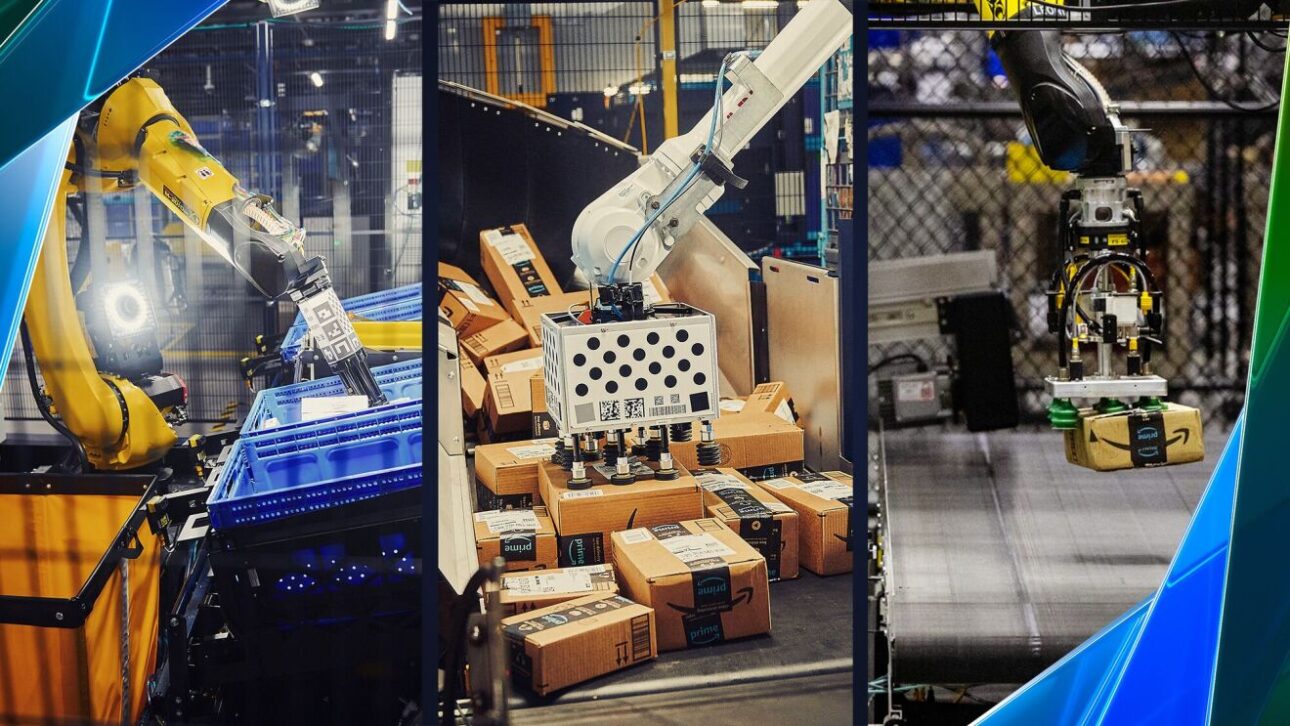
In the announcement, Amazon stated that the technology was being tested in South Carolina.
Months later, however, the project was shelved.
Reports published in early March 2026 indicated that Blue Jay faced practical obstacles, including high manufacturing costs and installation complexity.
The decision to halt the system reinforced the perception, pointed out by international outlets, that the company began applying more restrictive criteria on initiatives with high implementation costs or uncertain operational returns.
Amazon did not provide, in the public communications reviewed, a detailed justification for the project’s termination.
The shelving of Blue Jay, however, did not mean a halt to investments in automation.
Instead, the company continued to announce new systems aimed at large-scale robotics expansion.
An example is Vulcan, unveiled in May 2025 as Amazon’s first robot with “sense of touch.”
According to the company, the equipment can handle approximately three-quarters of the items stored in its distribution centers.
Investments In AI, Cuts, And Employment Impact
Amazon’s automation strategy does not rely on a single project.
The company has maintained that robots, computer vision, and generative artificial intelligence are central components to reducing delivery times, increasing productivity, and lowering operational costs.
In early February 2026, the company projected about US$ 200 billion in capital expenditures over the year.
This amount surpassed the approximately US$ 131 billion recorded in 2025.
According to Reuters, much of this increase is primarily linked to the expansion of infrastructure aimed at artificial intelligence, particularly data centers and computing capacity.
In this context, cuts in corporate areas appear at the same time the company increases spending in what it considers priority areas.
The relationship between automation and employment has also drawn attention in recent months.
In October 2025, internal documents obtained by The New York Times and reported by other outlets indicated that Amazon’s robotics team discussed the goal of automating up to 75% of the company’s operations by 2033.
According to these reports, this advancement could eliminate the need to hire more than 600,000 workers in the United States during this period.
Amazon disputed this interpretation and stated that the documents did not represent the company’s complete strategy.
This history helps explain why the layoffs in the robotics area resonated beyond the affected unit.
The division remains linked to one of the company’s main expansion fronts but began to be affected by the same cost-review logic applied to other administrative sectors.
The company continues to expand its robot base, developing new systems, and aligning its operational strategy with advancements in artificial intelligence.
At the same time, it reduced part of its internal structure and halted projects that, according to media reports, faced scaling or cost difficulties.
As a result, the recent restructuring indicates a shift in resource allocation within Amazon’s technology agenda.
The cuts in the robotics unit occurred alongside the continued investment in automation and AI infrastructure, with no announcement of abandonment of this strategy.






-

-

-

-

6 pessoas reagiram a isso.