





 Portuguese
  English
  Spanish
  5 min of reading
  0 comments



New Procedure Facilitates The Recovery Of Financed Vehicles In Case Of Default. Banks Will Be Able To Act Without The Need For Judicial Actions, After Adaptations In Traffic Departments And Notaries Across The Country.
Starting in July 2025, those financing cars, motorcycles, or trucks should pay extra attention to contracts.
A new regulation allows banks and other financial institutions to reclaim financed vehicles without the need for judicial proceedings in case of default.
The measure results from two recent regulations: the Provision 196/2025 of the National Justice Council (CNJ) and the Resolution 1.018/2025 of the National Traffic Council (Contran), which brought relevant changes to the vehicle financing sector in Brazil.
-
Labor shortages are prompting Portugal, Spain, Germany, and Canada to open up opportunities for foreigners in 2026, with salaries ranging from 920 euros in Portugal to 50,700 euros per year in Germany.

-
The government is considering a temporary subsidy for cooking gas following the spike in oil prices due to the war in Iran and warns about the impact of 20% of imports on the prices paid by families.

-
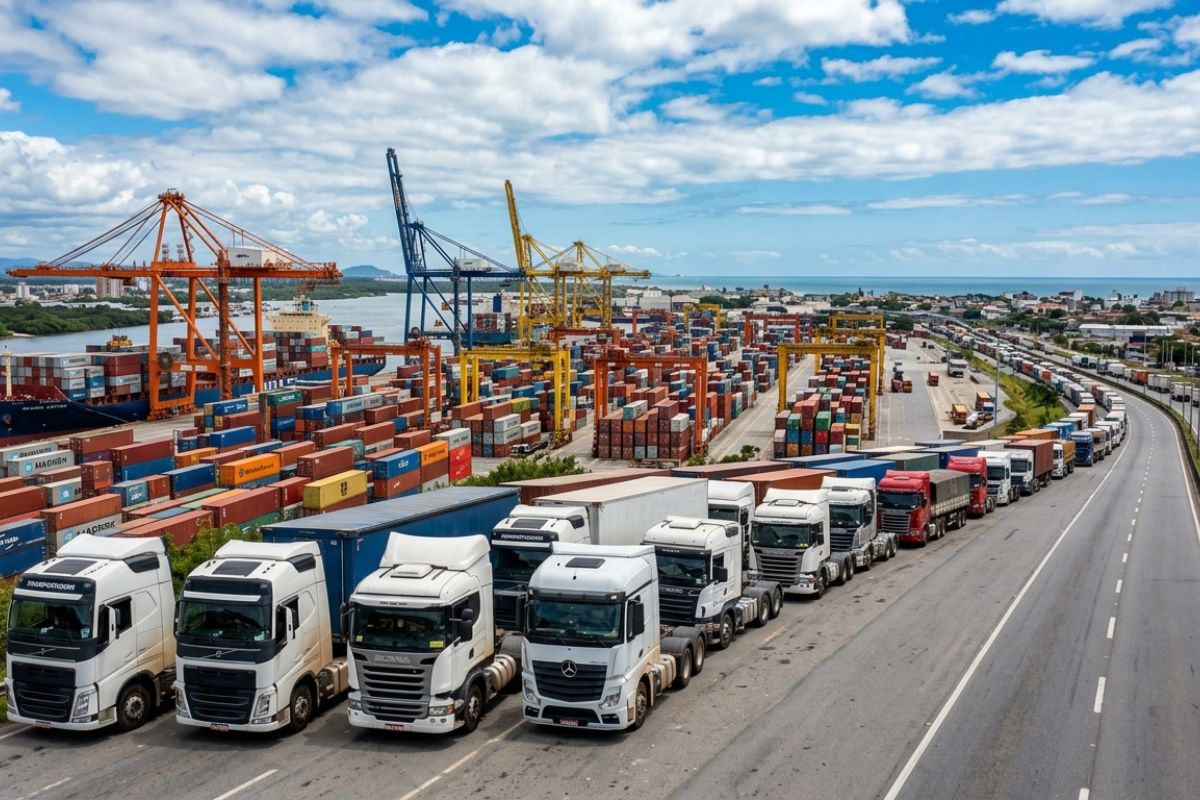
The lack of truck drivers in the country is already halting shipments and threatening deadlines: 88% of transport companies are unable to hire, with an average of eight trucks idle, and the port complex of Itajaí is now feeling the impact.
-
Petrobras is about to transform a forgotten city in the far north of Brazil into the capital of oil: Oiapoque is already feeling the effects even before the first drop of oil comes out from the seabed.


The new procedure waives the requirement for judicial action to recover the financed asset, provided that the provision is clearly stated in the contract signed between the parties.
Default, even if it’s for a single installment, may already be sufficient to initiate the vehicle recovery process.
However, as experts explain, financial institutions, in general, choose to start the recovery only after the delay of two or three installments, assessing the cost-benefit of the operation.
How The Extrajudicial Recovery Of Financed Vehicles Works
The operationalization of the new law requires the adaptation of notary offices for contract registration and State Traffic Departments (Detrans) across the country.
According to lawyers specializing in tax law, state bodies need to issue their own regulations and invest in team training and system modernization to ensure a fully digital and secure process.
For notary offices, the challenge is to ensure agile and efficient electronic communication with financial institutions and Detrans.
With the new rules coming into effect, it is expected that, in the coming months, the extrajudicial recovery of financed vehicles will be available nationwide, although the implementation may occur at different paces depending on the state.
Steps For Extrajudicial Recovery Of The Vehicle
For the extrajudicial recovery of the vehicle to be considered valid, the bank must follow a sequence of steps outlined in the law and in the contract.
First, the debtor is formally notified by an official document containing the vehicle’s data and the amount owed, as well as the deadline to regularize the overdue payments.
If payment is not made within the stipulated timeframe, the financial institution may initiate the process of consolidating the ownership of the asset in its own name.

Next, an administrative restriction is placed in the Renavam (National Register of Motor Vehicles), preventing any transfer of the vehicle.
Only after all these steps can the seizure of the car, motorcycle, or truck be executed, with the support of state traffic authorities or, if necessary, the police.
Impacts For Those Financing Vehicles
For consumers financing vehicles, the changes bring both challenges and opportunities.
According to experts, the time for negotiating debts may become shorter, requiring greater attention and financial discipline on the part of buyers.
The recommendation is to carefully analyze the financing contract before signing, checking for a clause that allows the extrajudicial recovery of the asset and, in case of doubts, seeking professional guidance.
In addition to the risk of losing the vehicle more quickly in case of default, there is the prospect that the ease of recovery reduces the cost of financing in the medium term.
Lawyers point out that by lowering the risk of default for financial institutions, the interest rates and fees for financing tend to become more competitive, indirectly benefiting the end consumer.
What Changes In Financing Contracts
The sector anticipates that, with the adaptation of systems and processes of Detrans and notary offices, the provision for extrajudicial recovery will become standard in almost all vehicle financing contracts in the country.
Nevertheless, experts remind us that the market may create alternative and differentiated offers to attract consumers, including contracts without this clause, although the trend is for extrajudicial recovery to become the rule.
Frequently Asked Questions About The New Law
What Is The Extrajudicial Recovery Of Financed Vehicles?
It is the procedure that allows the bank to recover the asset without needing to go to court, as long as it is provided for in the contract and the legal notification and registration requirements are fulfilled.
When Does The Law Start To Take Effect?
The CNJ and Contran regulations are already in effect, but their effective application depends on the adaptation of Detrans and notary offices, which should occur gradually throughout 2025.
Which Vehicles Are Subject To Extrajudicial Recovery?
All financed vehicles – cars, motorcycles, trucks, and others – as long as the clause is present in the contract.
What Happens If The Consumer Pays The Debt After The Notification?
If payment is made within the deadline provided in the notification, the recovery process is terminated, and the asset is not seized.
Consumer Rights With The New Legislation
According to experts, the procedure guarantees the right to defense for the consumer, as the notification is mandatory, and the debtor has time to regularize the situation.
Seizure only occurs after the completion of all steps, including registering restrictions in Renavam and formally communicating the process.
The new legislation represents a significant change in the balance between banks and consumers, with direct impacts on the dynamics of the financing market.
As the process modernizes, the requirements increase for those wishing to finance vehicles and keep payments up to date.
Have You Carefully Analyzed The Clauses Of Your Financing Contract? How Do You Assess The Impact Of This Change For Those Who Rely On Financing To Acquire Vehicles In Brazil?








Seja o primeiro a reagir!