





 Portuguese
  English
  Spanish
 5 min of reading
  1 comment


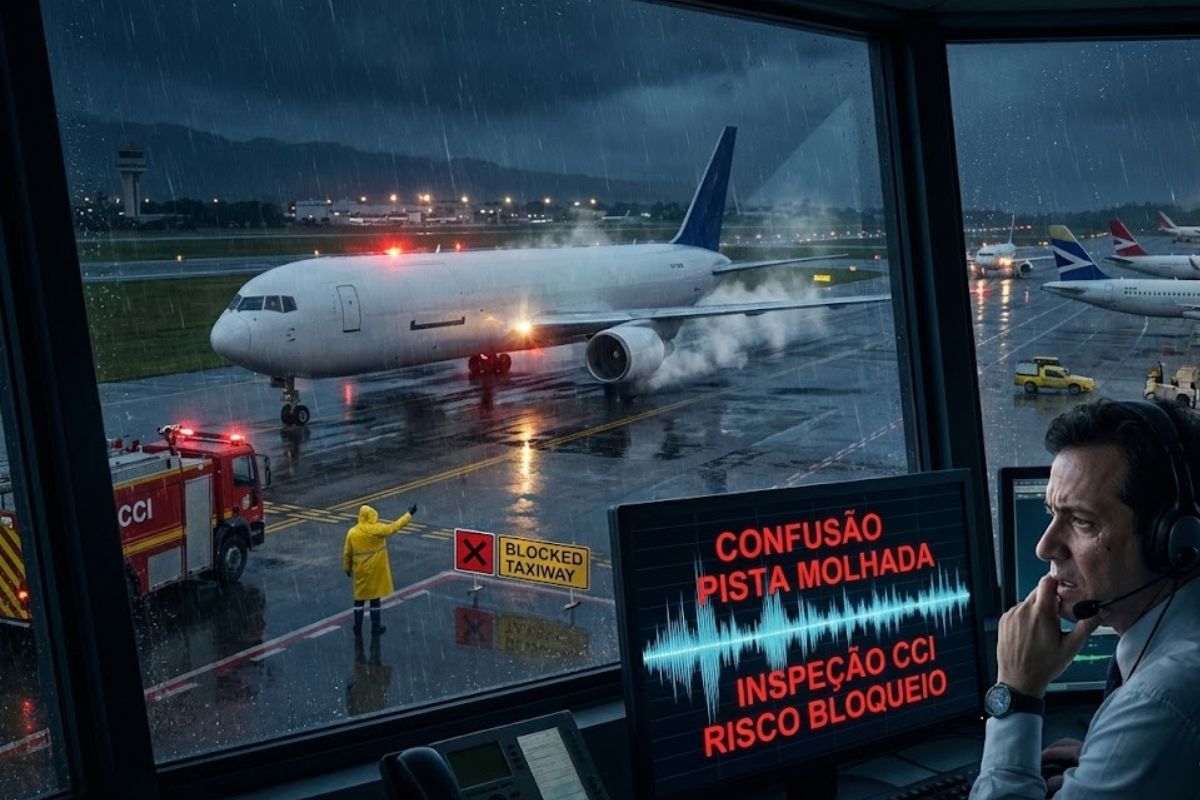

Radio Recording Of First Landing Of Boeing 767 Freighter In Navegantes Shows Wet Runway CCI Inspection Uncertainty About Parking Risk Of Blocking Taxiway Bravo And Pilots Awaiting Release For Taxi And Takeoffs At Santa Catarina Airport Amid Light Rain And Still Unprecedented Operation In The Region
On the day of the first landing of a Boeing 767 freighter in Navegantes, on the coast of Santa Catarina, the audio of the communications between the crew and the tower records a sequence of instructions in English and Portuguese, with light rain, a wet runway, low ceiling, and constant evaluation of braking conditions. Right after the freighter lands, the operation on the runway depends on a complete inspection by the CCI, which needs to confirm whether the pavement remains safe for new landings and takeoffs.
Meanwhile, the movement of the Boeing 767 freighter on the apron raises questions about parking position, the angle at which the aircraft should be aligned, the risk of blocking taxiway Bravo, and the need to wait for authorization from the airport administrator to release traffic in the back. The result is a combination of expectation in the cockpit, extra caution in the tower, and delays for other aircraft that were awaiting taxi and takeoff during that period.
Wet Runway And CCI Inspection After Landing Of Boeing 767 Freighter

Right at the beginning of the recording, the tower informs the Boeing 767 freighter of the headwind, the presence of light rain, the ceiling estimated at about 900 feet, the wet runway, and the braking condition considered good.
-
Chaos On Airplane Could Be Expensive: Proposal Aims To Prevent Disruptive Passengers From Flying For Up To 1 Year In Brazil And Face Fines Of Up To R$17,500

-
Man Arrested After Halting Takeoff of Fire Department Helicopter During Child Rescue in Guaratuba

-
With 37 Tons of Cargo, Over 8,000 km Range, and Ability to Land on Unpaved Runways, the Airbus A400M Demonstrates How Europe Created a Military Giant That Transports Armored Vehicles, Aerially Refuels Fighters, and Operates in Conflict Zones and Humanitarian Missions Worldwide
-
Emergency Landing in Campos Amarais After Bird Strike on Small Plane

The heavy aircraft receives authorization for the threshold, with special attention to the approach and touch under degraded weather conditions, typical of rain with low ceiling in a coastal area.
After landing, the CCI vehicle comes into action to assess the state of the runway.
The controller informs another aircraft that the activation must wait because the firefighting team needs to complete the post-landing inspection of the Boeing 767 freighter.
The runway remains blocked until the CCI completes the inspection and confirms the release, delaying the normal flow of taxiing and takeoffs.
Meanwhile, the tower comments that, in addition to the inspection, it will be necessary to define a different parking position for the freighter, precisely to avoid the heavy aircraft from blocking access to taxiway Bravo.
The decision on where to place the Boeing 767 freighter becomes a central part of the coordination at that moment.
Uncertainty About Parking And Risk Of Blocking Taxiway Bravo
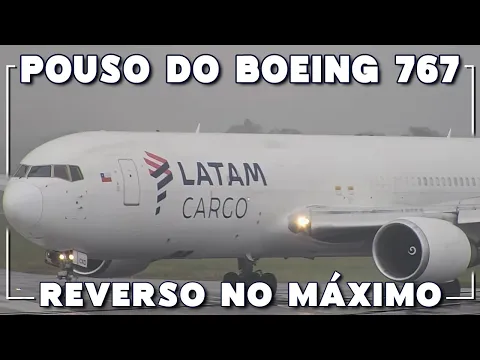

After the Boeing 767 freighter leaves the runway, the conversation turns to the apron.
In English, the controller instructs the crew to follow the instructions of the marshallers positioned ahead, responsible for guiding the aircraft with hand signals.
The instruction mentions the need for a 45-degree angle and the visual reference in relation to the fuel station.
The pilots respond that they understand that they need to park in a certain position and mention the expectation of a pushback car, the vehicle that, in future operations, will help reposition the Boeing 767 freighter for the exit taxi.
On the control side, there are comments that if the freighter stays in the initially imagined position, it may block the entry to taxiway Bravo and hinder the passage of other aircraft following behind.
The controller, in Portuguese, comments to another aircraft that if necessary, it will be possible to release only some passings from the back, but the priority at that moment is to wait for the correct final position of the Boeing 767 freighter and the formal clearance from the airport operator.
The concern is to avoid the freighter from blocking the taxi flow, which could prolong ground delays.
Impact On Taxi And Subsequent Takeoffs At Santa Catarina Airport
While the Boeing 767 freighter is repositioned, other pilots request authorization to start engines and proceed to taxi.
In one of the audio segments, the controller warns that the activation is “at their own risk” and that authorization for taxi may take time, precisely because the situation of the apron still depends on the final position of the freighter and the clearance to access taxiway Bravo.
There are explicit mentions of the need to wait for the assessment of the airport administrator before releasing the passage from the back of the freighter aircraft.
The overall tone is one of caution, but also of resignation with the possibility of “staying here until tomorrow” if the apron coordination doesn’t resolve quickly.
Small jets and other aircraft remain in the operational queue, with startup, taxi, and takeoff conditioned to the outcome of the movement of the Boeing 767 freighter.
In another segment, the tower comments that the “tin can” would already be heading to the correct position, suggesting that the crew has finally managed to align the Boeing 767 freighter according to the revised parking plan.
From there, the controller resumes allowing startups, authorizing taxis, and gradually returning to the normal flow of departures.
Debut Of Boeing 767 Freighter In Navegantes And Lessons In Coordination
Despite the initial confusion, the audio also shows that, even in an unprecedented operation like the first landing of a Boeing 767 freighter at Navegantes Airport, the safety chain remained active.
Wet runway, low ceiling, CCI inspection, braking analysis, and discussions about parking went through multiple filters before any definitive release.
From an operational standpoint, the episode exposes the challenge of receiving a Boeing 767 freighter of large size at an airport with limited apron space, taxiways that can be easily blocked, and the need to reconcile cargo, commercial aviation, and smaller jets in the same flow.
The recording highlights the importance of fine coordination between tower, apron teams, inspection vehicles, and pilots to avoid traffic conflicts and minimize delays on sensitive operational days.
For cargo aviation in Santa Catarina, the arrival of this Boeing 767 freighter marks a significant step in expanding the airport’s logistic capacity, but also reinforces the need for detailed planning for future operations with heavy aircraft.
Each new landing will bring more experience to the local team, reducing the chances of repeating the same level of confusion recorded in the audio.
After hearing the story of the first landing of a Boeing 767 freighter in Navegantes, do you think Brazilian regional airports are prepared to receive more and more large freighter aircraft or is there still a lack of apron structure and coordination for this type of operation?









A segunda pista ainda é fundamental para a expansão do aeroporto de Navegantes, mas a Motiva fecha os olhos para isso. Espero que a ASUR tenha maior comprometimento com isso.