





 Portuguese
  English
  Spanish
  3 min of reading
  0 comments


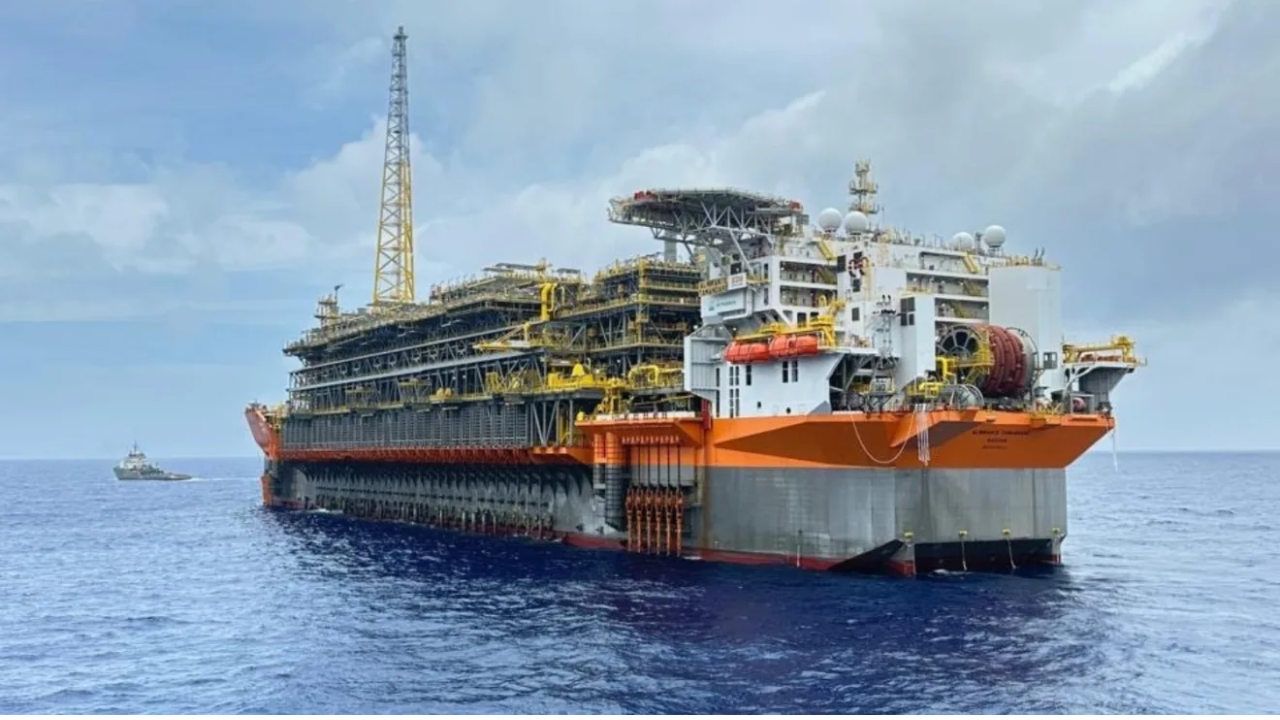
ANP Verdict Analyzing Operations in the Búzios Field Reinforces Companies’ Commitment, Like Petrobras, to Exploration Ethics.
The National Agency of Petroleum, Natural Gas and Biofuels (ANP) took an important step forward for the advancement of exploration in the Brazilian pre-salt by granting approval for the operation of the FPSO Almirante Tamandaré, a unit that will operate in the Búzios field in the Santos Basin, where the exploration consortium is led by Petrobras.
In this agreement, alongside the Brazilian company, there are two Chinese initiatives: CNOOC and CNODC, in addition to Pré-Sal Petróleo (PPSA).
The FPSO Almirante Tamandaré: Capacity and Technology
With an impressive production capacity of up to 225,000 barrels of oil per day and 12 million cubic meters of gas, the FPSO Almirante Tamandaré is considered the largest in Brazil to date.
-
Offshore industrial demand in Macaé skyrockets with the recovery of oil and gas and could grow by up to 396% by 2026 in the Campos Basin.
-
Offshore industrial demand in Macaé surges with the recovery of oil and gas and could grow by up to 396% by 2026 in the Campos Basin.
-
Brazilian giant expands borders in the Southeast: Petrobras confirms new oil discovery in ultra-deep waters in the pre-salt of the Campos Basin.
-
Alert in the global energy market: Severe tropical cyclone hits the coast and disrupts gas production at major plants in Australia, threatening global supply.

Manufactured at the Chinese shipyard CMHI, the vessel arrived in Brazil in October 2024 and underwent rigorous inspections conducted by the ANP, two of which were performed at the construction shipyard and one in the offshore environment, where it is currently located.
The analysis also included a verification of all documentation involved in the operation.
The Almirante Tamandaré integrates production in the Búzios field alongside five other floating units already in operation: the FPSOs P-74, P-75, P-76, P-77, and Almirante Barroso.
The installation of this unit aims to increase production in the field, reinforcing the region’s importance for Brazil’s economy and energy security.
Commitment to Sustainability
In addition to its impressive production capacity, the FPSO Almirante Tamandaré features advanced decarbonization technologies, such as a closed flare system and heat recovery equipment.
These devices aim to optimize energy consumption, reduce greenhouse gas emissions, and contribute to the sustainability of the oil extraction process.
This innovative setup is a direct response to the environmental challenges faced by the oil and gas industry.
Discover the Búzios Field, the Largest Ultra-Deepwater Reserve in the World
With historic and growing production, the Búzios field, officially marked as the largest ultra-deepwater field in the world, is considered one of Petrobras’s greatest assets.
In April 2024, the field reached the incredible milestone of 1 billion barrels of oil equivalent produced since the start of its operations in 2018.
This number highlights the strategic importance of the region for both national and international oil production.
Learn More About ANP, the Agency That Regulates and Supervises the Oil, Natural Gas, and Biofuels Sector
ANP is an agency linked to the Ministry of Mines and Energy (MME) with the mission of regulating, contracting, and supervising activities related to the oil, natural gas, biofuels, and hydrogen industry in Brazil.
It is responsible for regulating a vast array of activities, from oil and gas exploration to the commercialization of fuels in the market, including refining, transportation, distribution, and resale.
The agency also supervises the production of biofuels, such as ethanol and biodiesel, in addition to ensuring the quality of fuels in the market. ANP monitors about 137,000 companies in the sector, ensuring that the regulations are complied with efficiently.
Additionally, the agency is responsible for conducting bids for exploration areas, calculating oil and gas royalties, and developing research and innovation projects in the energy sector.
Its role also includes overseeing activities related to fuel distribution, as well as quality control and competition defense.
With the mission to act “from well to pump,” ANP plays a fundamental role in managing Brazil’s natural resources, ensuring both energy production and the efficient and safe supply of fuels to the end consumer.






Seja o primeiro a reagir!