





 Português
  Inglês
  Espanhol
  4 min de leitura
  5 comentários


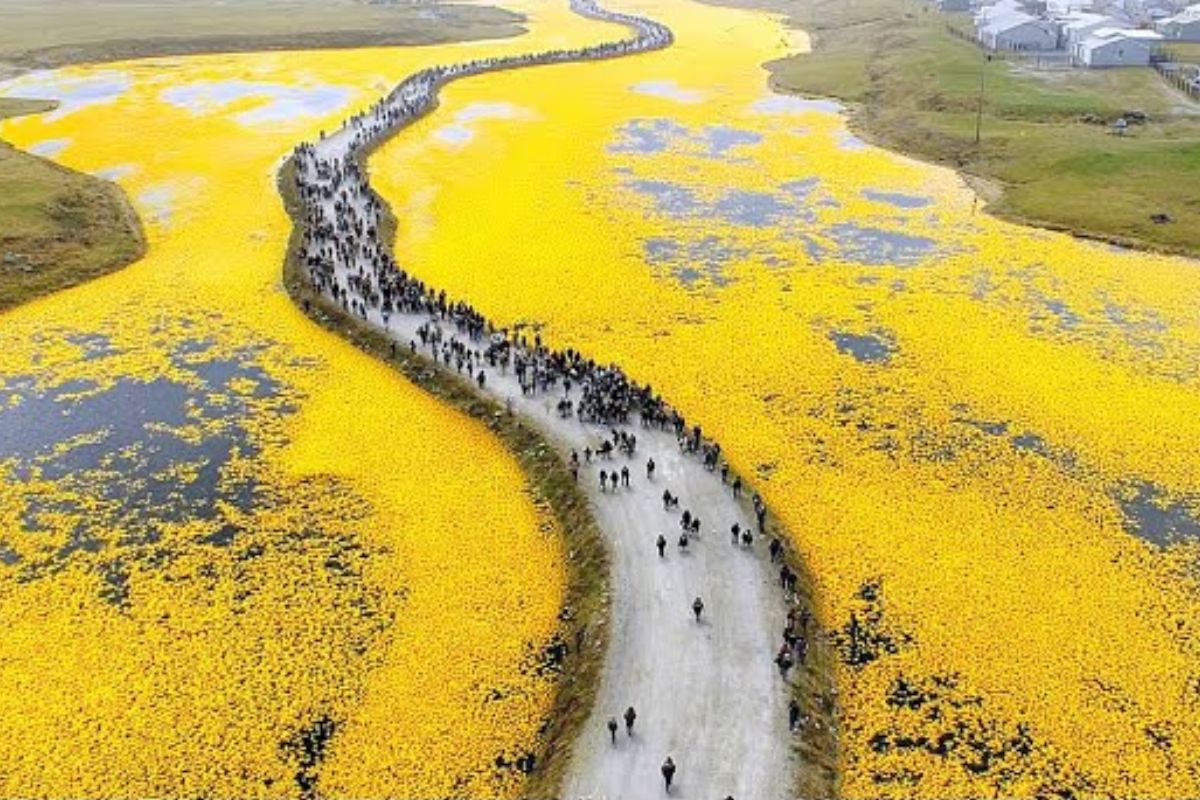


The Plan To Release Frogs To Save Crops Began As Biological Control Against Cane Beetles, Got Out Of Hand, Intoxicated Predators, And Decades Later Led Scientists To Explore Tadpoles That Devour Their Own Frog Eggs.
Australia decided to release frogs to save crops in 1935, when sugarcane plantations were booming and a native beetle was devastating production. The promise seemed perfect: introduce a frog specialized in eating these beetles and restore peace to the fields.
The problem is that the “savior” became an invader. The frog spread, brought the ecosystem to its knees, and proved that a biological solution can turn into a biological disaster, especially when the country lacks predators capable of dealing with the new poison and the speed of reproduction.
The Original Enemy: Cane Beetles And The Rush For A Solution
In the 1930s, the cane beetle plague was described as a problem that farmers couldn’t control.
-
A gigantic freshwater reservoir appears beneath the Great Salt Lake, between 3 and 4 kilometers deep, surprising scientists with an unexpected flow towards the interior of the lake.

-
At over 8,800 meters above sea level, the summit of Mount Everest is made up of rocks that originated at the bottom of an ocean about 500 million years ago and were pushed to the highest point on Earth by the collision of tectonic plates.

-
Japan targets a remote island in the Pacific measuring only 1.51 square kilometers, located 1,900 kilometers from Tokyo, to store nuclear waste for up to 100,000 years, raising alarms at sea.

-
A 1,900-year-old papyrus found in the Judean Desert reveals a crime of the Roman Empire involving fraud, forgery, and a detailed court hearing.


It was in this scenario that scientists proposed releasing frogs to save crops as a “smart” and cheap response: a living predator, working instead of chemicals.
The logic seemed simple. If the beetle destroys the cane, bring in an animal that devours it. But ecosystems are not a bakery account.
The “Hero Frog” That Became A Pest: Absurd Reproduction And Unhindered Poison

The introduced frog, known as the cane toad, showed why nature kept it away from Australia. It was resilient, adaptable, and extremely prolific.
Females can lay up to 30,000 eggs in a single spawning, which makes any control attempts a losing battle.
And there was a decisive factor: poison glands in its skin. Predators attempting to eat the frog died from poisoning.
The result was a domino effect: declines in bird populations, impacts on insects, deaths of animals that mistakenly bit the frog, and a scenario described as an “ecological mess.”
When Crops Change And Plagues Persist: The Country Discovers It Has Lost Control
Over time, sugarcane itself lost the same economic weight described at the beginning of the story. But the frog didn’t. It was already established and growing.
From then on, releasing frogs to save crops was remembered as a warning: you may solve a short-term problem and gain a bigger, more expensive, and much harder one to undo.
Why “Killing Frogs” Did Not Solve: Capturing, Poisoning, And Repeating The Cycle
Several approaches have been attempted over the years, including capture and elimination programs and proposals involving chemicals.
But the reasoning was cruelly simple: you kill hundreds of thousands, but it only takes a small group of females to spawn for the numbers to explode again.
Additionally, the country feared repeating the mistake of creating another imbalance with poisons or a newly introduced predator. Australia learned the hard way that controlling nature with more nature can go very wrong.
The Dark Turn: Tadpoles That Eat Eggs And Cannibalism As A Tool
It was then that the most unlikely idea emerged. Scientists observed that cane toad tadpoles can eat their own cane toad eggs as a competition for food behavior.
In the lab, some tadpoles became known as “Peter Pan,” larger, darker, and with an intense appetite for their own species’ eggs.
In controlled tests, these tadpoles consumed the majority of available eggs in a few days, leaving almost nothing to become a new generation.
The discovery was shocking because it suggested that the worst enemy of the invader could be the invader itself.
Importantly, the account makes it clear that large releases in the field were not carried out. The discussion progressed, but the fear of generating another unexpected consequence remained heavy.
The Unexpected Side Effect: Evolution In Real Time
While researchers studied cannibalism, nature was doing something else: adapting the invader. Over the decades, the frogs at the “front of the invasion” began to show traits of rapid dispersion, such as longer legs and a greater impulse to migrate, with reports of advancement of several kilometers per year.
However, this speed has a cost. Many of these “athlete” frogs die younger, with a higher risk of injury and exhaustion. It’s Darwin accelerated: the species sacrifices longevity for territorial conquest.
Australia Reacts Unintentionally: Predators Learn, Change, And Survive

The account also describes a biological counterstrike: native predators began to learn “how to eat the frog without dying.” Birds and other animals started to avoid the more toxic areas and explore the less dangerous parts.
Some snakes, for instance, were observed with changes that made it difficult to swallow larger frogs. It’s not adaptation from one generation to another over millennia; it’s a visible adjustment in just a few decades.
What This Story Really Teaches
In the beginning, releasing frogs to save crops seemed like a brilliant solution. In the end, it became a classic case of how a simple intervention can open a gigantic, lasting, and costly problem.
And the most uncomfortable detail is the most honest: there is no “perfect control” when the ecosystem collapses. Sometimes, what remains is to study the very mechanisms of the pest, such as tadpole cannibalism, and try to use that without repeating the same mistake of interfering without measuring consequences.
If you were responsible for deciding, would you support releasing frogs to save crops again in another country, knowing what happened in Australia?







Hay que liberar a Australia de los humanos que no son de origen nativo.
Je leído varios artículos de los problemas en los ecosistemas de Australia y otros lugares, la conclusión origen de todos los problemas es la introducción de la especie humana ajena a ese ecosistema.
Así que tal vez deberíamos considerar erradicar a los humanos ….
No, en mi zona padecemos OSO,BUITRES CIERVOS,LOBOS…… Estamos HARTOS de los inútiles que mandan. Destitucion e inhabilitacion para los tontos que deciden esto.
Con gallinas