





 Portuguese
  English
  Spanish
  3 min of reading
  0 comments


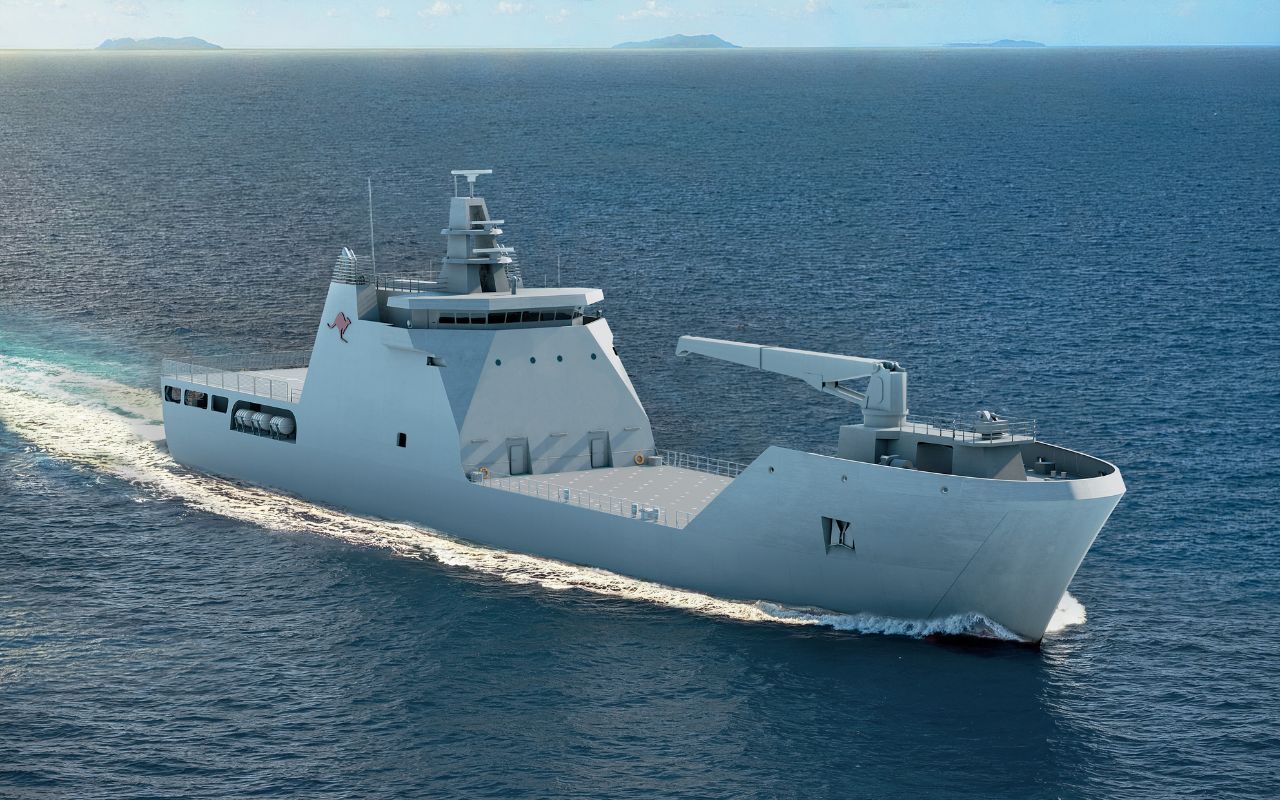
Australia Confirms Contract of US$ 2.8 Billion for Eight Heavy Landing Ships (LCH). Construction in Henderson Starts in 2026, with Deliveries Until 2038.
The ability to transport troops, heavy vehicles, and supplies directly to coastal areas is back at the forefront of Australia’s priorities. The government announced the acquisition of eight ships for heavy landing (Landing Craft Heavy – LCH), in a program estimated at US$ 2.8 billion (approximately A$ 4 billion).
The construction will be carried out by Austal Defence Australia, under the Strategic Shipbuilding Agreement.
The decision comes at a time of strategic adjustments in the Indo-Pacific. In the face of logistical and operational challenges, the country seeks to enhance its flexibility in military and humanitarian missions.
-
The German “steel monster” weighing 55 tons fires up to 10 projectiles per minute at over 40 km and avoids counterattacks on the battlefield by moving quickly to escape enemy attacks; meet the Panzerhaubitze 2000.

-
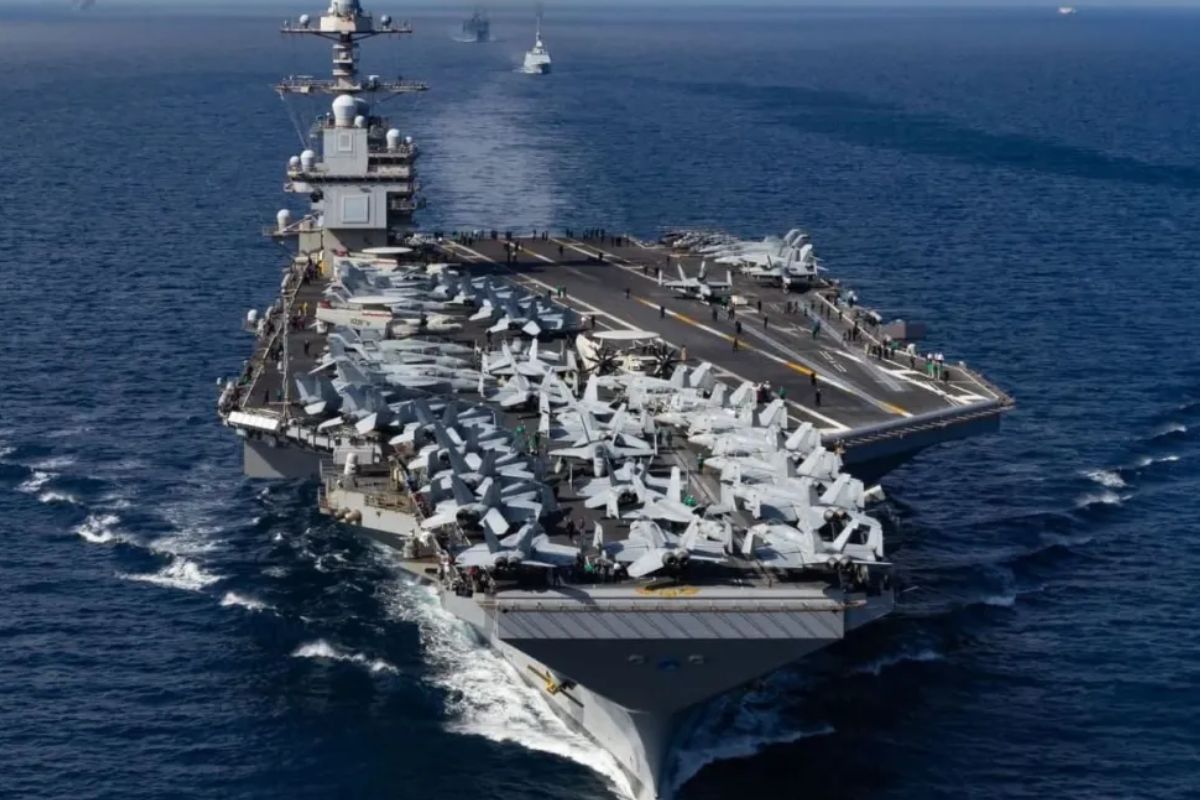
USS Gerald R. Ford, the largest aircraft carrier in the world, returns to sea after a fire in the laundry in the Red Sea; repaired in Crete, it resumes missions of Operation Epic Fury against Iran.
-
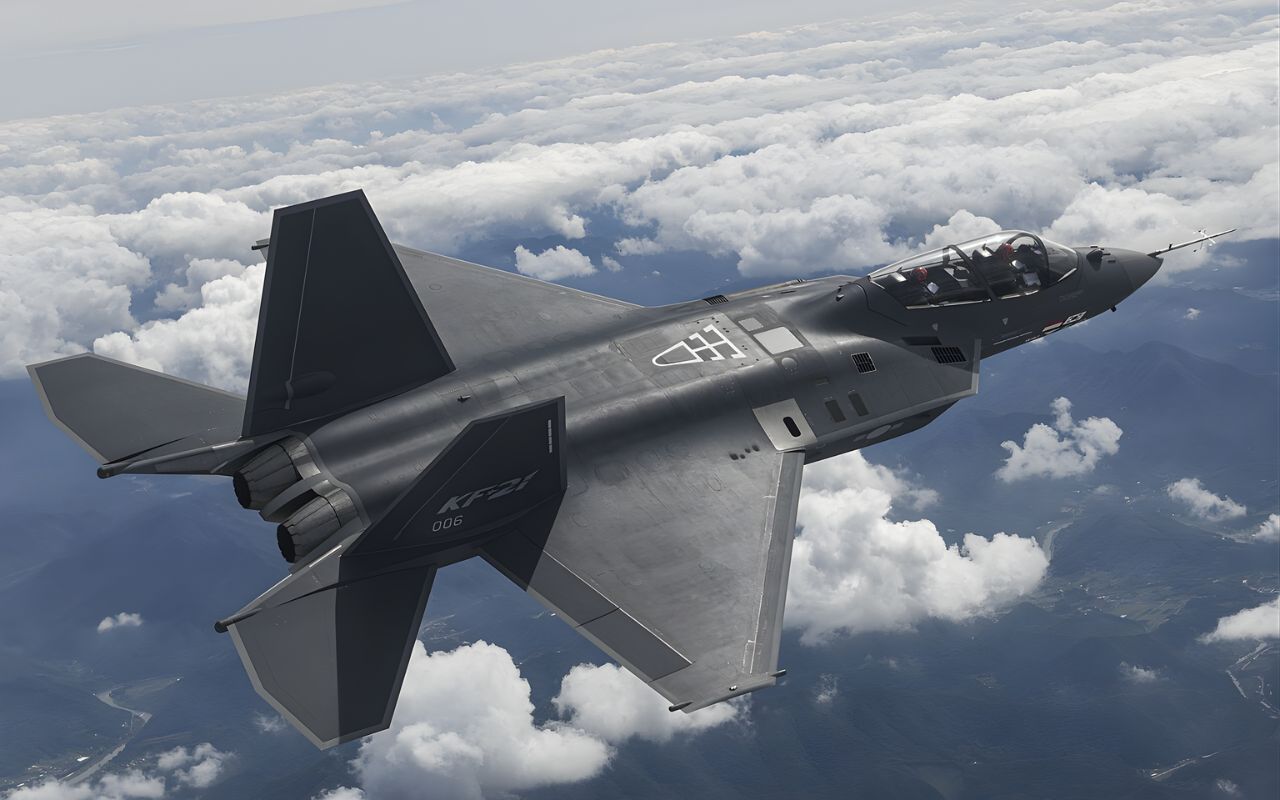
Military power: South Korea’s new KF-21 fighter jet will be a key component in replacing the aging aircraft of the air force, placing the country on the map of air military powers.
-
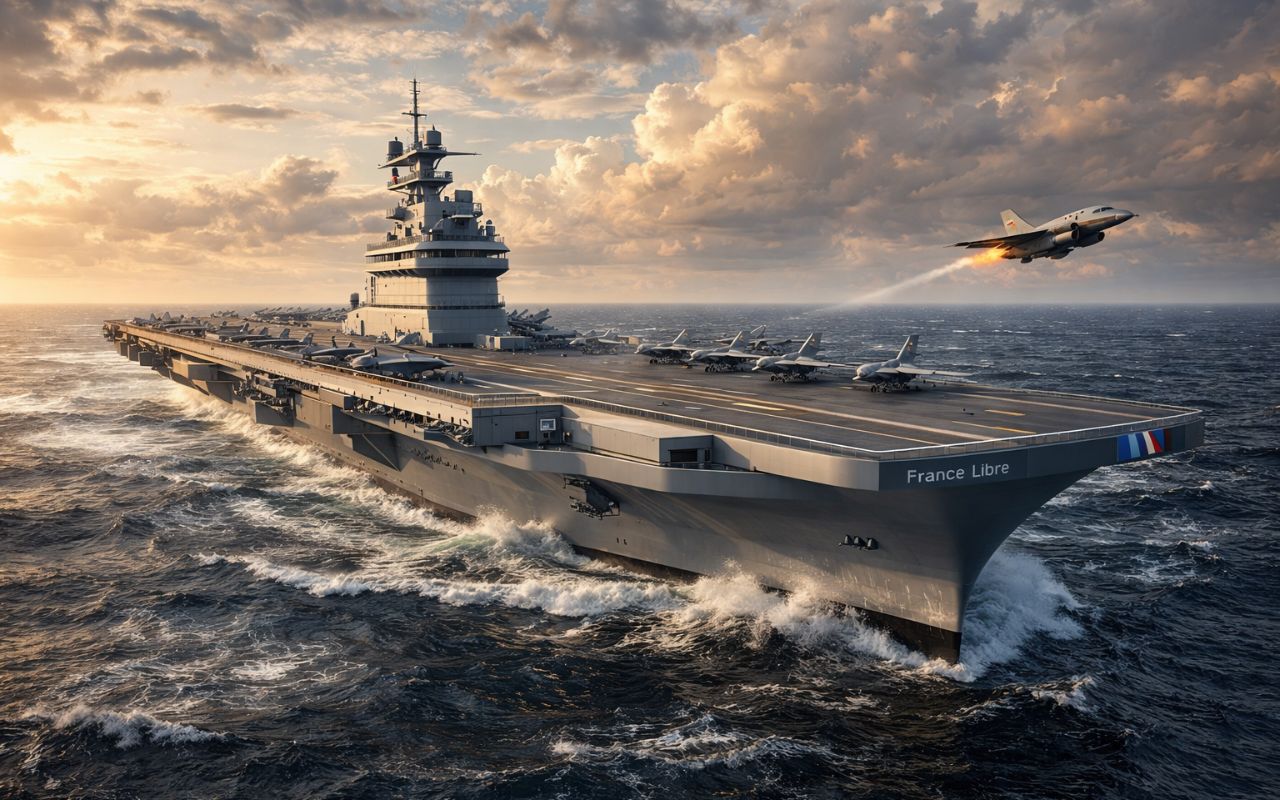
With 310 meters, 80 thousand tons, and capable of operating for 45 years, the new nuclear aircraft carrier France Libre will be the largest in France and will enter service in 2038.
Thus, the new ships will become part of the core of Australia’s amphibious transformation.
Ships Designed to Operate in Multiple Scenarios
Based on the Damen LST100 design, the new ships will be about 100 meters long and will be prepared for direct landing on beaches, in addition to transporting heavy loads.
The versatility of the platform will also allow for humanitarian missions and disaster response operations.
In terms of performance, the range should exceed 4,000 nautical miles. The estimated autonomy is approximately 15 days, ensuring the ships’ prolonged operational capability, even in remote areas.
Each vessel will be able to transport more than 200 military personnel. The load configuration will allow for the boarding of up to six Abrams tanks or nine Redback vehicles.
The flight deck will be compatible with medium helicopters, increasing operational flexibility.
In terms of logistics, each of the ships will have the capacity to carry about 500 tons of military material, including armored vehicles, strategic equipment, and missile systems.
Construction of the Ships Will Strengthen the Australian Shipbuilding Industry
The eight ships will be built in Henderson, Western Australia. The project will utilize the facilities of Austal Defence Australia and the infrastructure of the Common User Facility. Therefore, the program also consolidates itself as a vector for industrial development.
The schedule anticipates the start of construction in 2026. The delivery of the last vessel is scheduled for 2038.
This long-term planning ensures productive continuity and technological maturation.
In addition to the military impact, the economic effects are significant. The expectation is to generate thousands of direct and indirect jobs.
Consequently, the entire supply chain and specialized services are expected to benefit.

Role of the Ships in the Heavy Sealift Strategy
The program aims to restore and expand Australia’s heavy sealift capability. The concept refers to the maritime transport of troops and equipment on a large scale.
Thus, the ships enhance logistics resilience and reduce exclusive dependence on air transport.
Another differentiator is the ability to land in areas without structured ports. This allows for operations in islands, remote regions, and degraded environments.
Therefore, the ships increase the operational versatility of the force.
The vessels will also act as a link between large amphibious ships and ground troops. Consequently, the logistical flow becomes more efficient. The result is greater agility in distributed operations.
Coastal Transformation and Power Projection with Ships
The acquisition aligns with the guidelines of the National Defense Strategy of 2024. The document establishes goals focused on expanding coastal capabilities.
In this context, the heavy landing ships assume a strategic role.
Among the objectives are to project power regionally and sustain forces in contested environments.
Additionally, the aim is to strengthen the protection of northern Australia’s maritime access. Thus, the naval component gains prominence.
Analysts assess that the investment corrects historical gaps in amphibious mobility.
At the same time, it expands the capacity to respond to regional crises and emergencies. Therefore, the new ships represent a structural advancement in Australian defense.
With the program, Australia strengthens its ability to operate in complex scenarios in the Indo-Pacific.
With information from Poder Naval.








Seja o primeiro a reagir!