





 Portuguese
  English
  Spanish
  5 min of reading
  143 comments


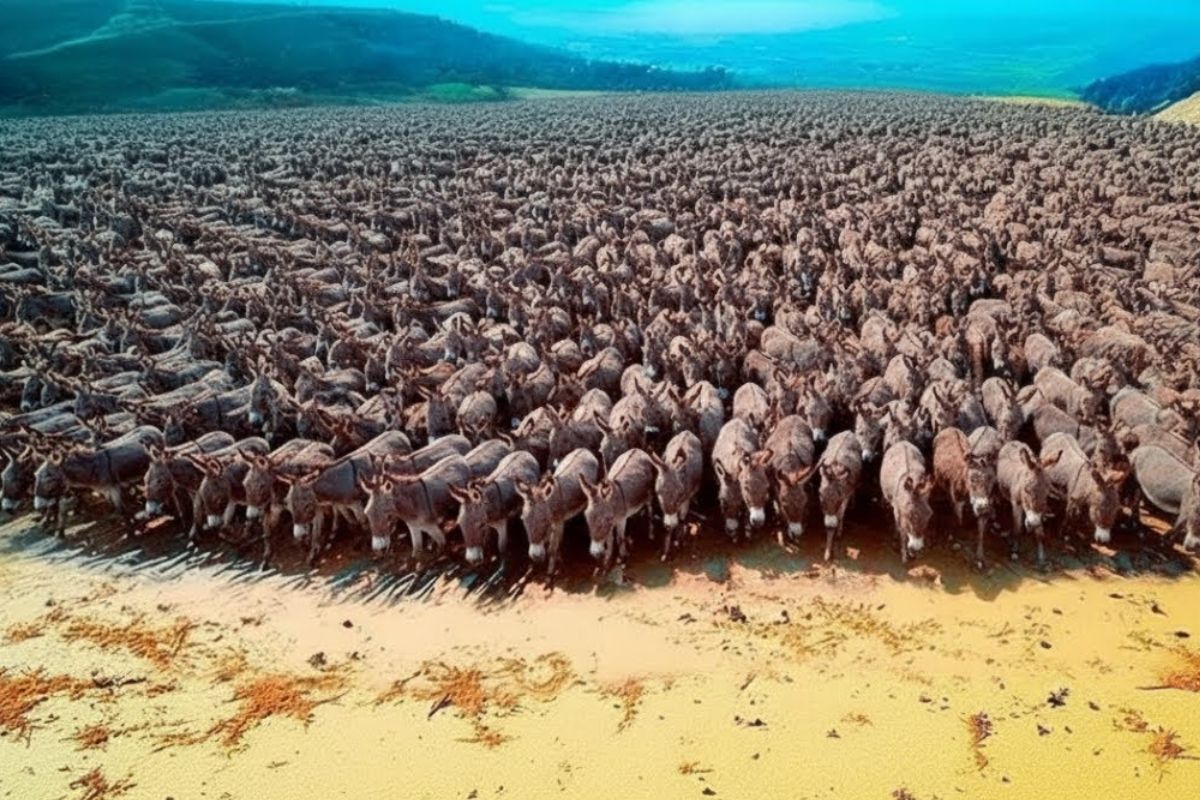


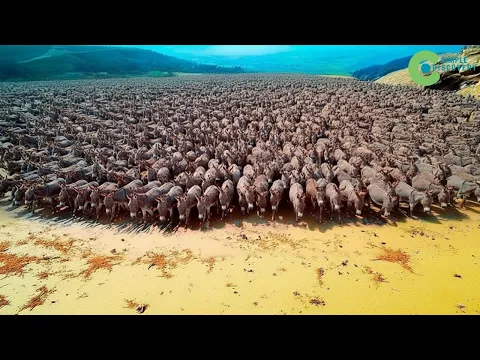
While Australia Spends Millions to Cull Wild Donkeys Seen as Pests, Recent Research Shows These Animals Can Create Water, Recover Soil, and Help Protect Farms When Used with Scientific Control and Environmental Planning.
A country that has been shooting wild donkeys from helicopters for decades to protect fences, springs, and crops. Now, those same wild donkeys are beginning to be seen as unlikely allies in the fight against desertification, helping to bring water back to dry soil and defend farms from dust, fire, and hunger. What changes is not the animal, but the way Australia chooses to coexist with it.
Instead of merely eliminating them, researchers and environmentalists advocate for integrating wild donkeys into ecological restoration projects.
Under control, with the right numbers and in the right places, wild donkeys can create water wells, mix the soil, spread seeds, and transform dead areas into corridors of life for wildlife and agriculture.
-
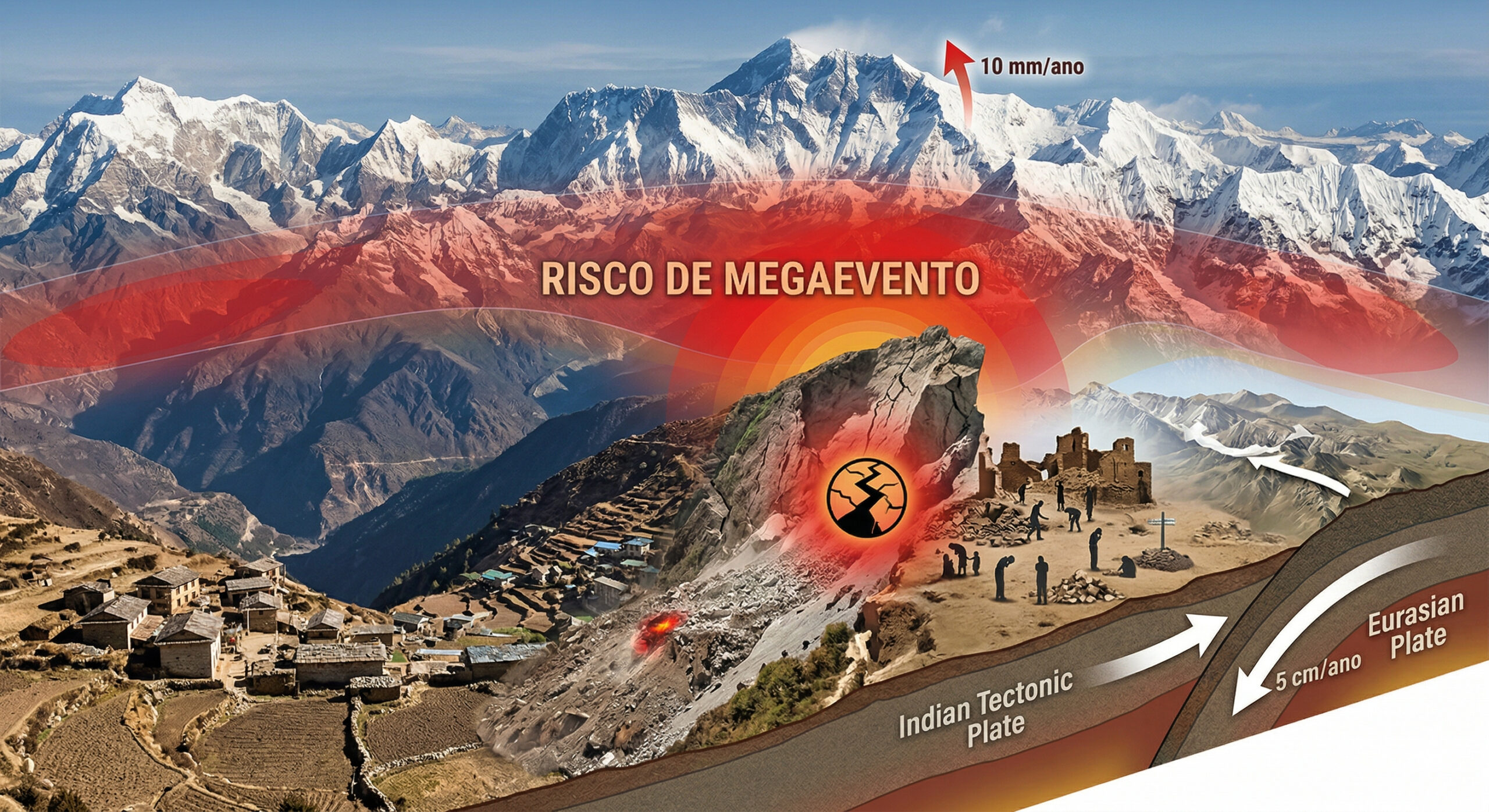
The Himalayas continue to grow to this day, with tectonic plates advancing 5 cm per year, mountains rising up to 10 mm annually, and the 2015 earthquake that killed 9,000 people may have increased the risk of an even larger seismic mega-event.
-
At an altitude of 400 km by astronauts from the International Space Station, Paris transforms at night into a golden mesh so precise that it reveals the outline of the Seine River, avenues, and entire neighborhoods like a luminous map drawn over the Earth.

-
iPhone 17 reaches historic low price with 256 GB, 120 Hz display, and drops to R$ 5,703 on Shopee, featuring A19 chip, dual 48 MP cameras, battery life of up to 30 hours, and advanced AI features.

-
Trip to Mars getting closer: Pulsar Fusion, from the UK, advances with plasma ignition in fusion engine and could drastically reduce space travel time, making crewed missions faster, safer, and economically viable.


From Villains to Key Pieces of the Australian Landscape
For many years, wild donkeys were treated almost solely as enemies. They break fences, compete for water with cattle, and trample the banks of fragile rivers.
In several regions of Australia, the response was simple and brutal: mass culling campaigns to “clean up” the outback.
This model created an endless cycle of conflict. The more wild donkeys were seen as pests, the more was invested in killing them, without stopping to ask if there was another way to harness the strength of these animals in favor of the environment itself.
Gradually, however, field studies began to show another side of the story, revealing that the natural behavior of wild donkeys could be a powerful ecological tool.
How Wild Donkeys Create Water in the Desert

When the drought tightens, wild donkeys do what they have always done in the arid environments they originally came from: they seek water by digging.
With strong hooves and persistent snouts, they dig holes in dry riverbeds and in depressions in the ground until they find moisture hidden beneath the surface.
These holes, which on farms were often seen only as “mess,” actually function as small natural artesian wells.
By digging to drink, wild donkeys end up creating water points that other species also use, from birds and kangaroos to small animals that wouldn’t be able to reach the water table on their own.
In directed management projects, technicians have already observed that, where wild donkeys are kept in planned numbers, these wells become islands of moisture in previously completely dry areas.
The water that rises to the surface infiltrates, nourishes resilient plants, and creates a network of wet spots that help to halt the advance of the desert.
Wild Donkeys as Soil Engineers
The impact of wild donkeys’ hooves goes beyond the search for water. By walking long distances every day, they break the hard crust that forms on the soil surface after years of strong sun and lack of rain. This crust prevents water from penetrating and seeds from germinating.
When wild donkeys roam in defined areas, they open micro-fissures in this hardened “ceiling” of the earth. These subtle marks are entry points for rain, dew, and nutrients, helping the soil to function like a sponge instead of a hot cement slab.
The droppings of wild donkeys also play an important role. Loaded with seeds of native plants and concentrated nutrients, they act as small capsules of fertilizer.
In restored zones with planning, patches of denser vegetation emerge exactly where these animals rest, drink, or feed more frequently.
In this way, wild donkeys leave a trail of livelier soil in their wake.
Protecting Farms with Donkeys Under Scientific Control
For farmers, the fear is understandable. No one wants to see destroyed fences, contested troughs, or overgrazed pastures.
The difference lies in swapping chaos for control. Instead of unmanaged herds, the idea is to work with known and monitored groups of wild donkeys in defined areas of each landscape.
On farms participating in pilot projects, wild donkeys are used in strategic strips of land, away from more sensitive areas, to break hard soil, dig wells, and create water infiltration corridors.
It’s as if the farmer gained a team of biological tractors, powered by grass and instinct, helping to protect the farm from the advancing desert.
Furthermore, wild donkeys tend to follow similar routes throughout the days. This allows technicians to design trails that avoid fragile slopes, delicate springs, and erosion-prone areas.
With well-planned fences and alternative water points, the damage is reduced and the ecological benefit multiplies.
Environmental Planning to Transform Conflict into Partnership

None of this works without planning. Letting wild donkeys loose anywhere, with no population limits, is a sure recipe for problems. What changes is the design of management.
Instead of general extermination, a combination of science, monitoring, and clear goals for each landscape comes into play.
Field teams define how many wild donkeys the region can support without collapsing, which areas need more help to recover the soil, and where the presence of these animals is undesirable.
With this type of environmental control, wild donkeys cease to be automatic villains and become restoration tools used with surgical precision.
In some regions, the plan includes fencing off areas of high ecological value, removing wild donkeys from more sensitive stretches, and concentrating them where the soil is more degraded and needs to be “reopened” to receive water and life.
The focus shifts from “eliminating the species” to “using the natural behavior of the species in favor of the landscape.”
The Future of Wild Donkeys in Australia
The discussion about wild donkeys in Australia is far from over. On one side, there are those who continue to advocate for mass culling as the quickest solution.
On the other side, there is a growing group that sees these animals as a rare opportunity to use their own invasive fauna as allies in desert recovery and protection of farms threatened by drought.
If Australia insists on treating wild donkeys merely as a problem, it will continue to spend money putting out fires without changing the reality of the soil and water.
In the end, the question that remains is simple and direct: do you think Australia should continue culling wild donkeys en masse or use these animals, with scientific control, to save the desert and protect farms?







So what happens to the culled donkeys carcasses, are they left to rot?, I think they should be skinned and the meat and skin sold out to generate revenue and jobs?
I can see that there may be benefits in areas where the soil has been compacted or otherwise degraded, such as on cattle stations, but ‘wilderness’ ?
The donkeys are obviously a good thing regulated.