





 Portuguese
  English
  Spanish
  4 min of reading
  0 comments


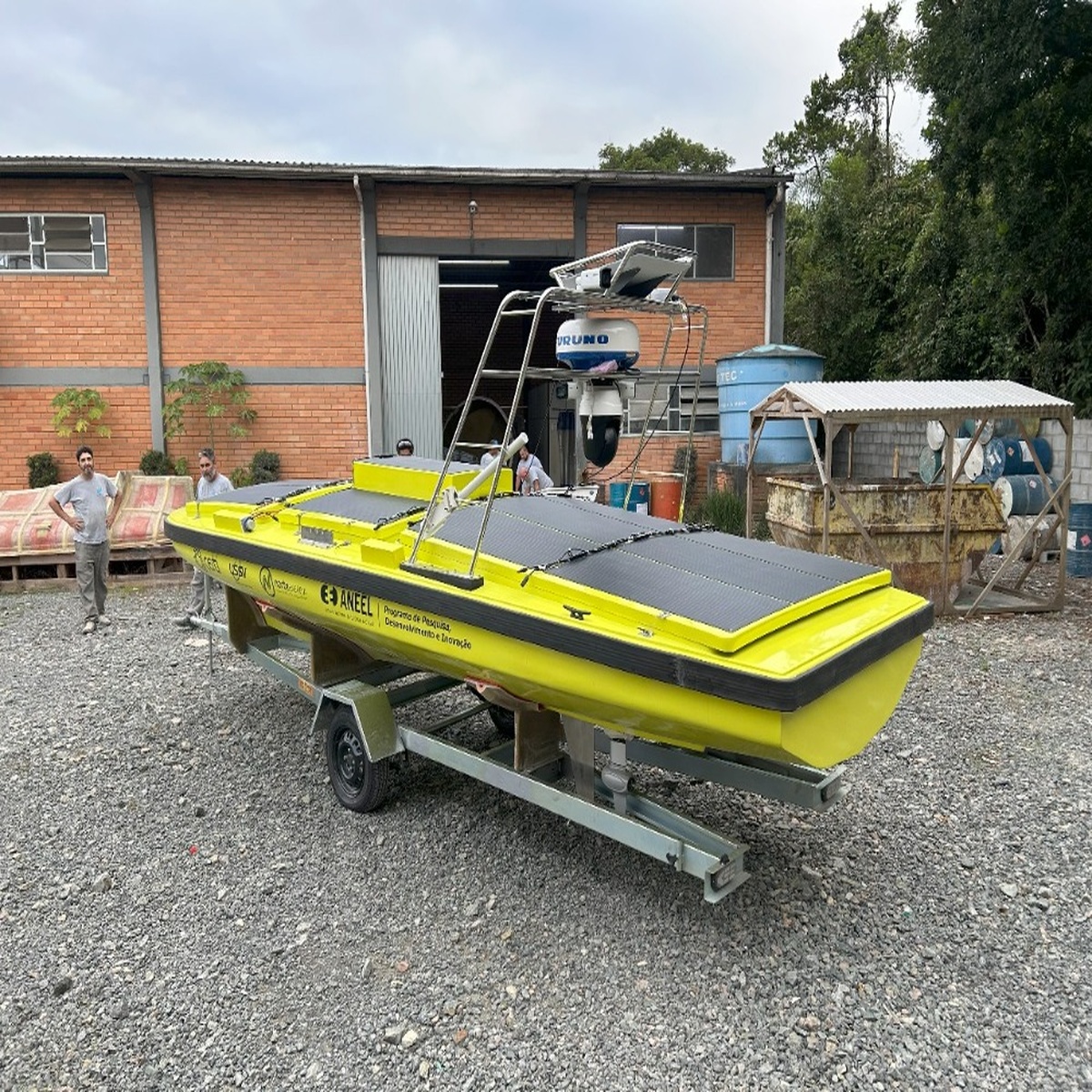
Sustainable Project With Cutting-Edge Technology Promises to Transform Environmental Monitoring in the Belo Monte Dam Region
Starting in the second half of 2025, a new technology will be used to monitor, in real time, the water quality of the Xingu River in Pará. It is a fully autonomous boat, powered by solar energy, that will navigate strategic areas of the Belo Monte hydroelectric plant, collecting and analyzing environmental data with the support of artificial intelligence.
Initiative Funded by Norte Energia Drives Innovation in the Amazon
The vessel was developed through a Research, Development and Innovation (R&D) project by the concessionaire Norte Energia. The company collaborated with the CERTI Foundation, USSV Tecnologia Autônoma, and the CERTI Amazônia Institute (ICA), with regulation from the National Electric Energy Agency (ANEEL). The investment exceeded R$ 4 million. Moreover, the proposal aims to replace conventional and costly environmental monitoring methods that require long-distance travel and field teams in hard-to-reach locations. This way, the operation becomes more efficient, safe, and sustainable.
Smart Navigation With Multiparametric Probes and Pre-Planned Route
The boat is equipped with an attached multiparametric probe, capable of measuring crucial water parameters such as turbidity, temperature, dissolved oxygen, and pH. The team programs the route in advance, ensuring completely autonomous monitoring, even during adverse weather conditions. Artificial intelligence analyzes the collected data, which the system sends via satellite to the platform. This tool, in turn, processes the data immediately, generating forecasts and accurate analyses of water quality, without the need for manual collection or additional laboratory tests.
-
Embrapa’s discovery reveals an unexpected advancement by allowing the production of seedlings from the caatinga using brackish water, opening a new frontier for farmers to face drought more efficiently.
-
6 sources of free fertilizer that you are throwing away every day and can transform your garden without spending anything.

-
With a water crisis on the radar, Sabesp invests in reclaimed water for data centers and transforms sewage treatment into a solution that saves millions of liters and protects public supply.

-
Foresea achieves 100% offshore waste reuse in 2025, eliminates landfill disposal, and consolidates sustainable strategy with 1,500 tons recycled.

Innovation Focused on Sustainability and Clean Energy
The prototype has three lithium batteries, and 12 solar panels of 100W each continuously power these batteries. This eliminates the need for fossil fuels, which are common in vessels operating in the Amazon. Additionally, the vessel’s energy autonomy is 20 hours, allowing it to monitor up to 500 km² of water surface. Therefore, the proposal represents a significant advancement for environmental management in the region, contributing to energy transition and the preservation of natural resources. As highlighted by Roberto Silva, Physical and Biotic Means Manager at Norte Energia, the project combines sustainability, science, and efficiency in the preservation of the water bodies of the Amazon basin.
Technology of the Autonomous Vessel With Artificial Intelligence Reduces Human Risks and Enhances Operational Safety
Another relevant differentiator of the solution is the elimination of human exposure to risks. According to Lorenzo Cardoso de Souza, CEO of USSV Tecnologia Autônoma, the vessel replaces the need to send technical teams to hard-to-reach locations, reducing logistical costs and increasing safety in operations. Thus, it is possible to guarantee continuous and detailed monitoring, without interruptions, which enhances the response capacity in case of changes in water quality. Furthermore, the use of artificial intelligence facilitates data cross-referencing, enhancing rapid decision-making based on evidence.
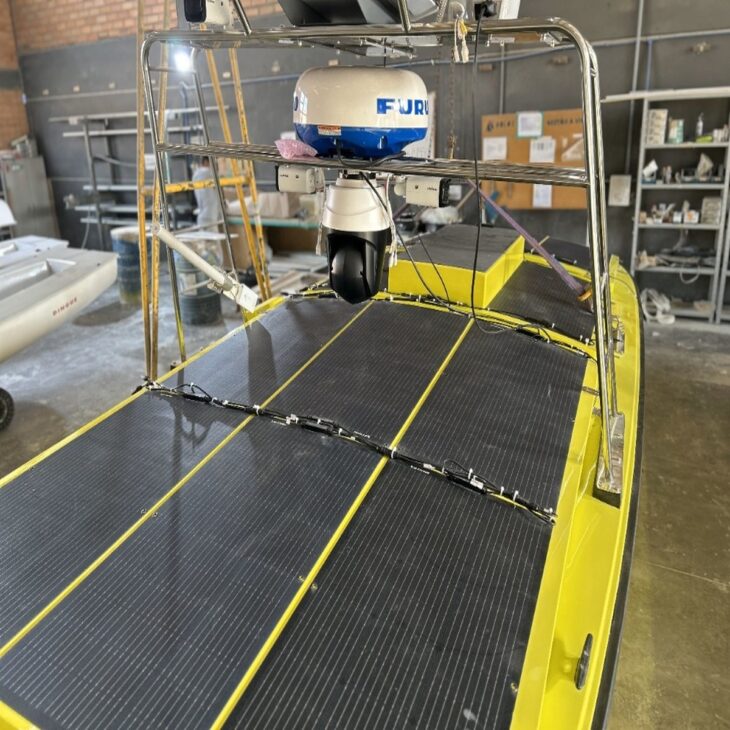
Artificial Intelligence on the Vessel Enhances Data Predictability and Improves Environmental Analyses of the Belo Monte Dam
The project also stands out for using cloud modules, responsible for data storage and processing. This makes the entire structure more integrated, agile, and accessible for the monitoring teams of the dam and regulatory bodies. According to Marcelo Pedroso Curtarelli, project coordinator of the Green Economy Center at CERTI, the processing system allows for predicting critical indicators with greater accuracy. The automated analysis enables operators to make decisions based on real-time data, optimizing the environmental performance of the hydroelectric plant.
Autonomous Vessel With AI Set to Operate in the Second Half of 2025 on the Xingu River
The vessel is currently in the testing phase. The assisted operation is scheduled to begin in the second half of 2025, in the intermediate reservoir of the Belo Monte Dam in Altamira. Moreover, the initiative will allow researchers to test models in other hydroelectric plants located on the major rivers of the Amazon. Thus, it is expected to expand the use of new approaches, which can significantly benefit the region’s energy sector. Additionally, by demonstrating efficiency and positive results, the model may become a national reference in automated environmental monitoring, directly contributing to technological and sustainable advancement in the energy sector.








Seja o primeiro a reagir!