





 Portuguese
  English
  Spanish
  3 min of reading
  0 comments


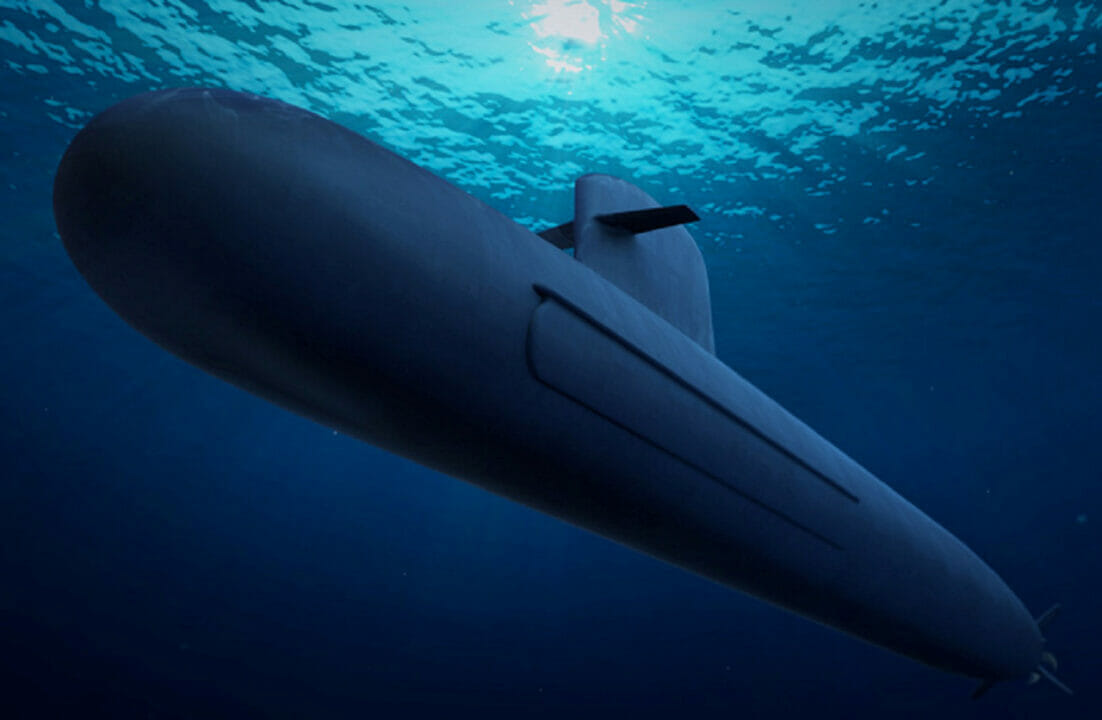
The Brazilian Navy Takes a Strategic Leap with the Construction of the SCPN, Its Nuclear Submarine Capable of Displacing 6 Thousand Tons and Reaching Depths of Up to 350 Meters.
Marking a significant step toward strengthening national defense, the Brazilian Navy has begun the construction of the Conventional Submarine Armed with Nuclear Propulsion (SCPN). The emblematic ceremony of the First Plate Cutting took place at the Naval Complex of Itaguaí, consolidating a historic moment for Brazil’s naval evolution.
Nuclear Submarine Project Is Generating Thousands of Jobs
The event, organized by the General Directorate of Nuclear and Technological Development of the Brazilian Navy, was presided over by Admiral Petronio Augusto Siqueira de Aguiar. The ceremony was attended by civil and military authorities, as well as representatives from the nuclear, academic, and business sectors.
During the event, Rear Admiral (EN) Marcio Ximenes Virgínio da Silva clarified the importance of the Qualification Section, highlighting that, although it is not part of the final submarine, it is essential for the approval of the construction process. This section will allow for evaluating the country’s capability, the only one in the southern hemisphere, to build a nuclear submarine.
-
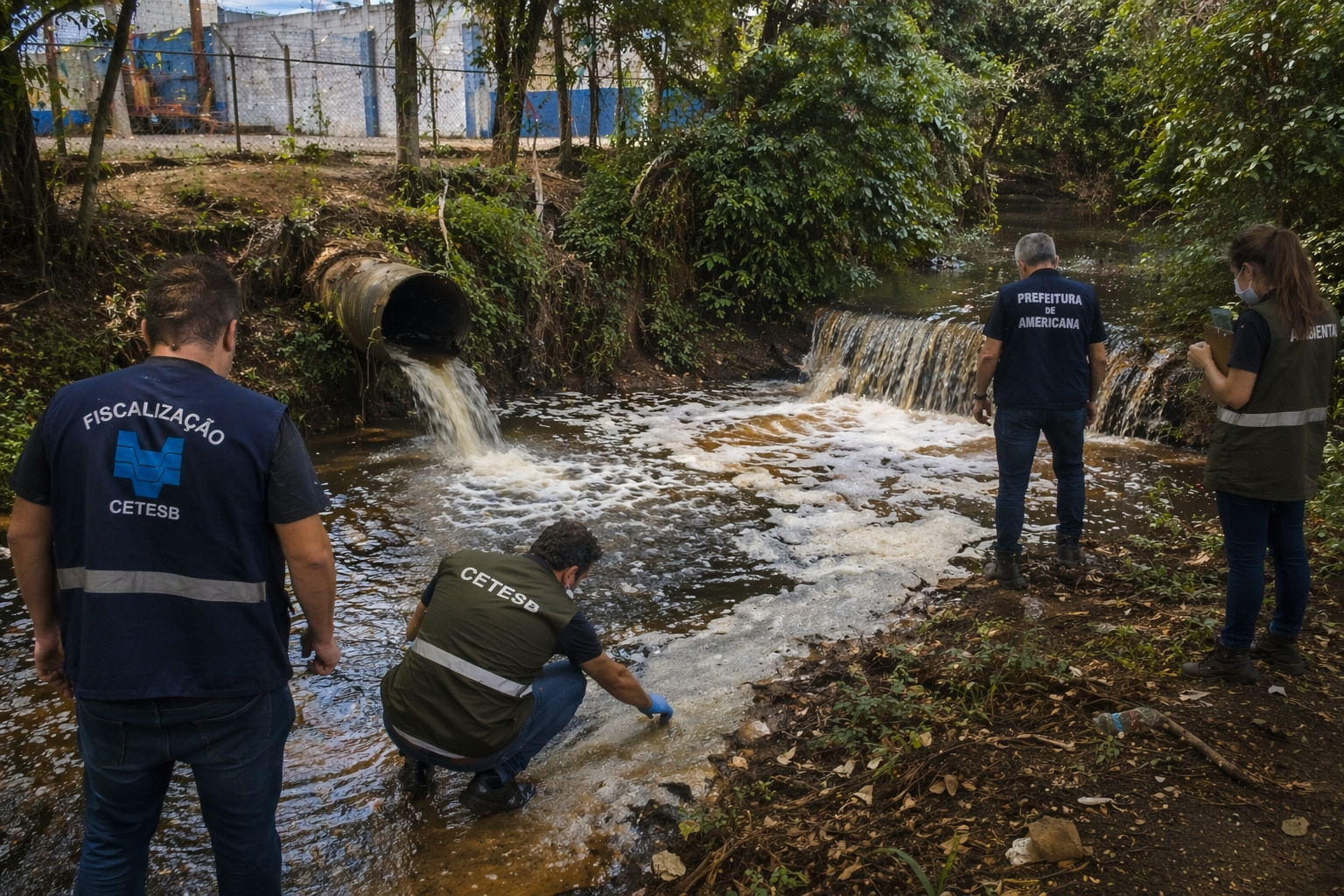
A fine of R$ 115 thousand places Goodyear at the center of an environmental case in Americana after oil and grease appeared in a stream and the company was required to act quickly.
-
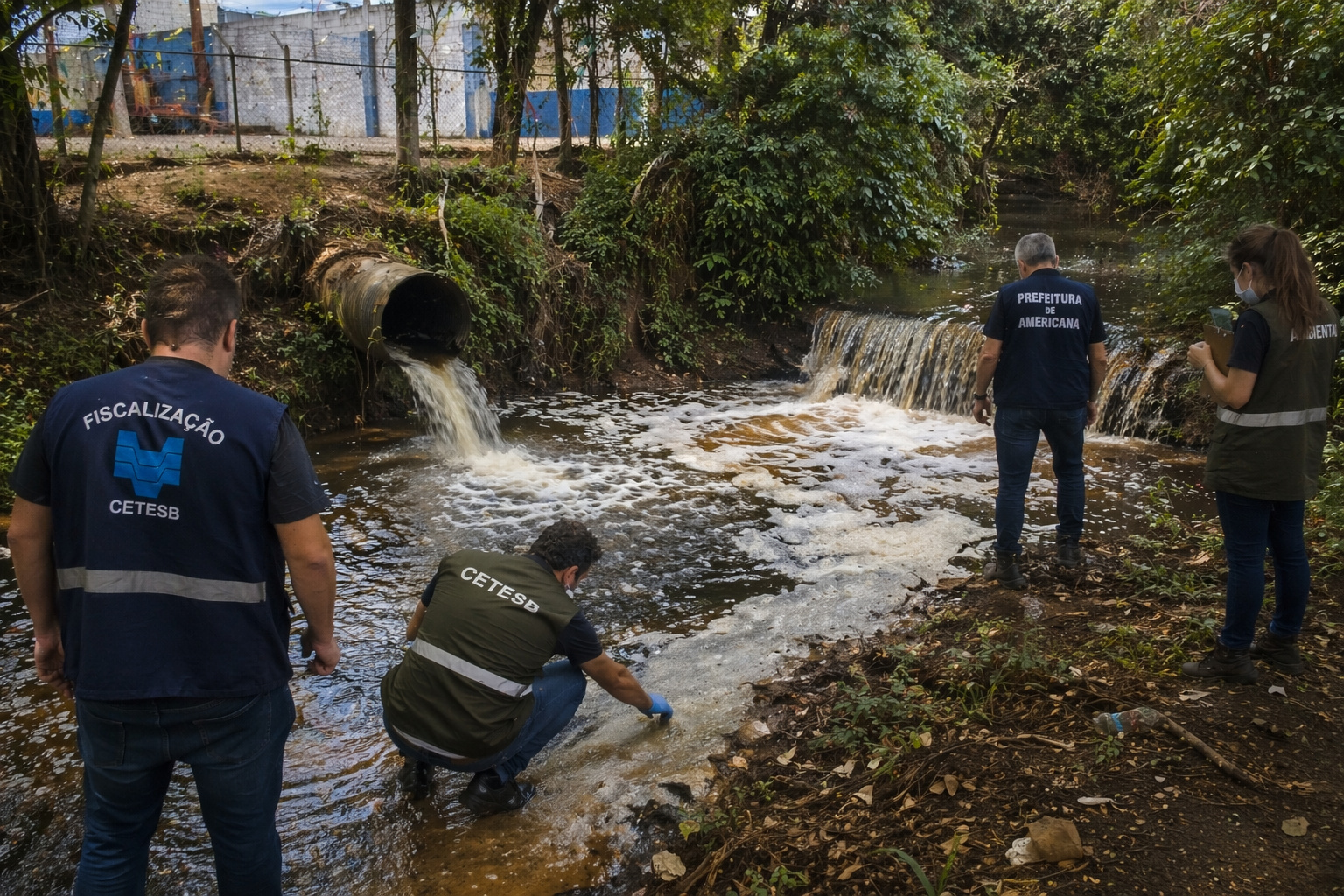
A fine of R$ 115 thousand puts Goodyear at the center of an environmental case in Americana after oil and grease appeared in a stream and the company was forced to act quickly.
-
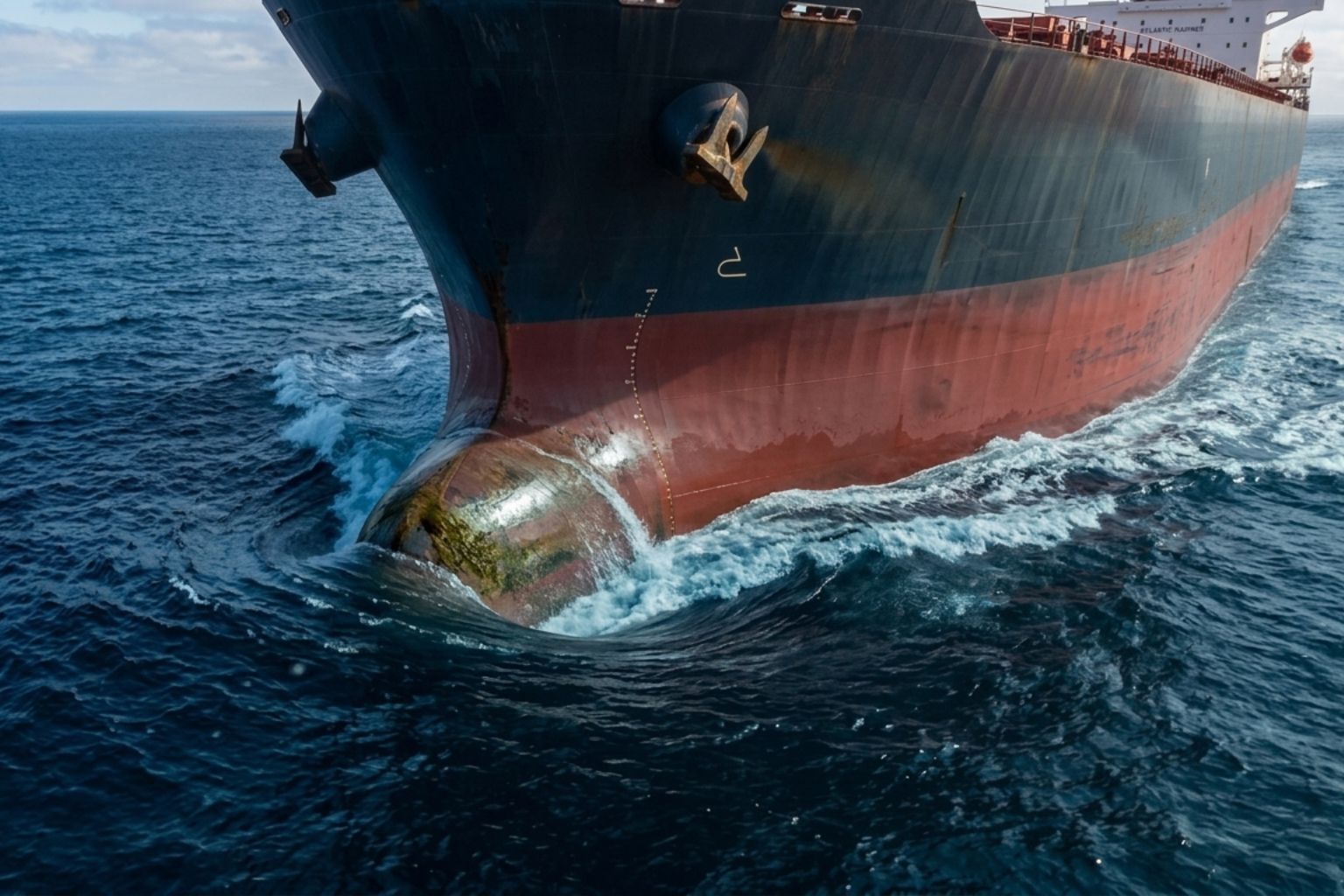
A hidden metal piece in the bow redesigns the water flow, reduces drag, and can save over 10,000 tons of fuel per year; this invisible solution allows giant ships to cut millions in costs without changing engines or routes.
-
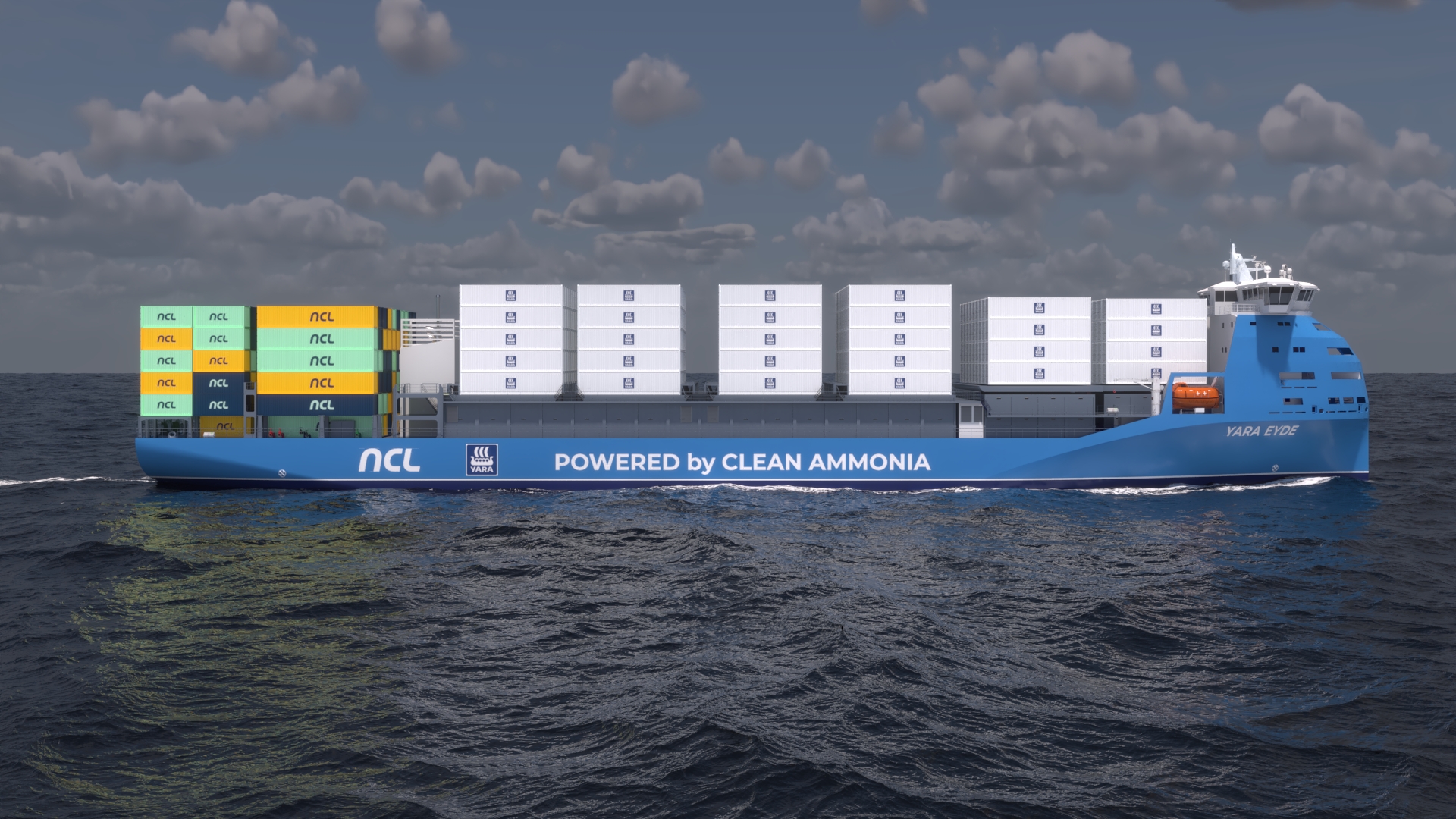
The world’s first container ship powered by renewable ammonia promises to avoid around 11,000 tons of CO₂ per year. The vessel, scheduled to operate in 2026, will connect Norway, Germany, and the Netherlands on one of the shortest and most strategic routes in Europe.
Representation of One of the Most Ambitious Strategic Initiatives of the Brazilian Navy
The SCPN is the cornerstone of the Submarine Development Program and represents one of the most ambitious strategic initiatives of the Brazilian Navy. The program not only enables the country to design and construct advanced submarines but also promotes technology transfer, the nationalization of equipment, and the training of personnel.
Currently, the project employs around 1,500 workers, with the potential to generate up to 24,000 direct jobs and 40,000 indirect jobs in the future. The president of Itaguaí Construções Navais (ICN), Renaud Poyet, expressed pride in being part of this monumental project.
The executive emphasized that the country is elevating its naval technology to the level of global powers such as France, China, the United States, England, and Russia. With the Brazilian Navy in command of this nuclear submarine, Brazil will be well-equipped to protect its vast coastline.
How a Nuclear Submarine Works?


Concluding the ceremony, Admiral Petrônio highlighted the technological leap that the program represents for a country that is sailing toward the achievement of a dream, the Conventional Submarine Armed with Nuclear Propulsion.
This submarine is seen as a legitimate aspiration for a determined country to ensure its sovereignty and protect its wealth and its people. The SCPN project, which began development in 1979, was named Álvaro Alberto, in honor of the former vice-admiral of the Brazilian Navy and Brazilian scientist who passed away in 1976.
He was a professor of chemistry and explosives at the Naval School and advocated that scientific and technological development was closely linked to Brazil’s prosperity.
The nuclear submarine generates energy through the fission of atomic nuclei and does not require oxygen for the diesel combustion. This allows the submersible to have greater navigation autonomy, as it is no longer forced to surface periodically to replenish oxygen. The project indicates that the submarine will be able to maintain autonomy for up to three uninterrupted months.
Vessel Can Dive Up to 350 Meters
The vessel moves faster and covers a larger area compared to traditional models. The Brazilian Navy also indicates that the Brazilian nuclear submarine will be capable of displacing 6 thousand tons, capable of diving up to 350 meters, and may reach speeds of 26 knots.
In this first phase of the nuclear submarine construction, still in testing, the company Itaguaí Construções Navais is set to fabricate a 100-ton section. This construction will be essential for evaluating the technical competence of the company for the project by engineers, technicians, and workers, before the actual submarine production.









Seja o primeiro a reagir!