





 Portuguese
  English
  Spanish
  6 min of reading
  0 comments


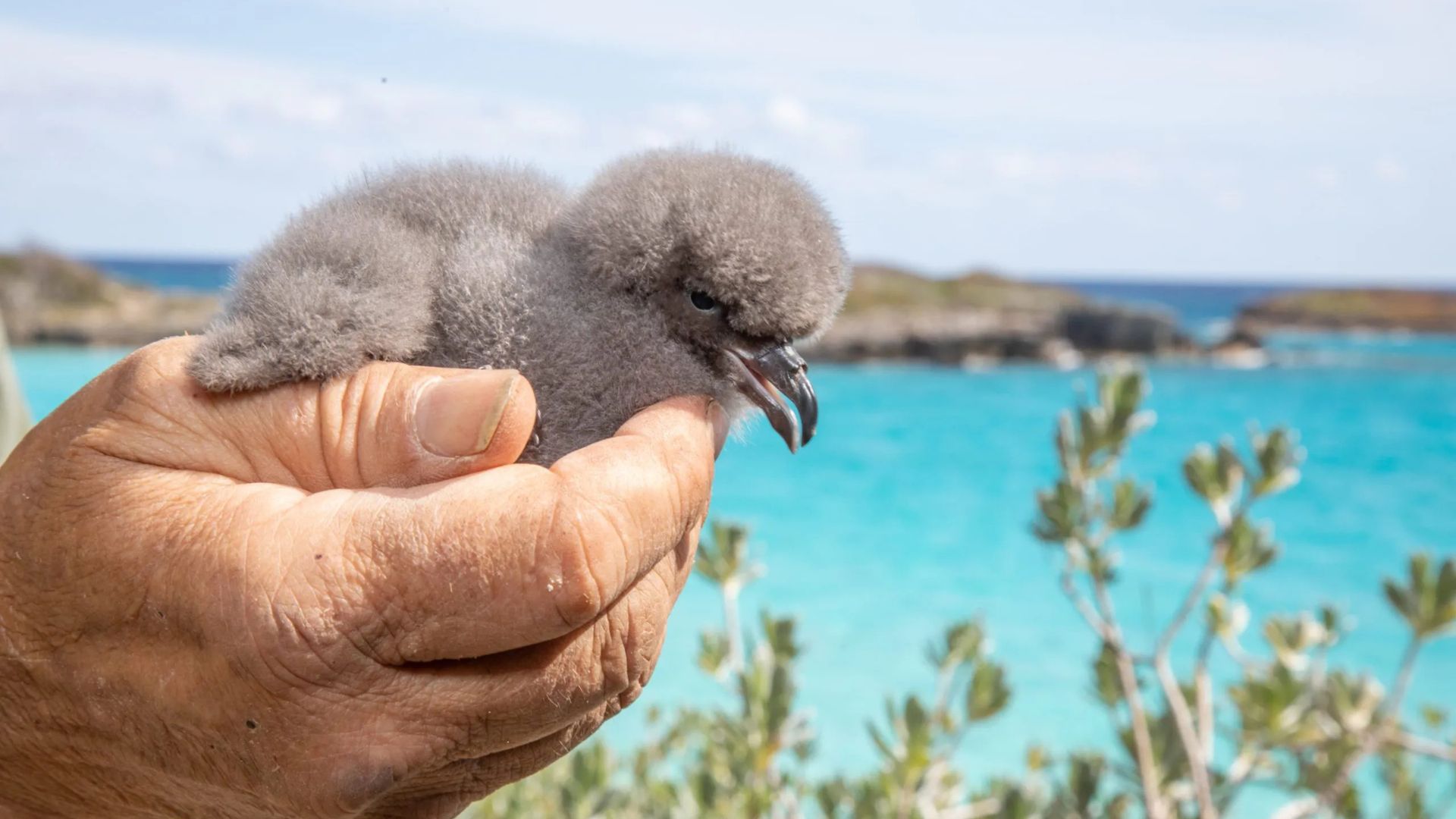
Rare And Discreet Seabird Became A Symbol Of Conservation In Bermuda By Reappearing On Oceanic Reefs, Boosting Actions Against Invasive Species, Nest Protection And Creation Of Safe Colonies With Artificial Burrows And Translocation Of Chicks, Expanding Reproduction In Monitored Areas.
A seabird that spends most of its life in open sea, almost always far from any coast, has become one of the most cited examples of “unlikely return” in species conservation.
Known as cahow or Bermuda Petrel, it was considered extinct for centuries and yet has been recorded again in such restricted conditions that each nest is treated as biological heritage.
The recovery became not just a wish when practical measures began to protect reproduction on oceanic reefs, reduce threats posed by invasive animals, and increase the number of safe sites for the species to reestablish itself.
-
These living root bridges and ladders are over 700 years old and help indigenous people survive in one of the rainiest regions in the world.

-
From sertanejo star to international investor: Ana Castela invests millions in a mansion in the USA, creates a themed accommodation in Orlando, and shows that the “boiadeira” also wants to grow away from the stage.

-
The 10 most stunning motorhomes in the world: a $3 million trailer with a rooftop nightclub and garage for a Ferrari, “palaces on wheels” with Italian marble, private cinema, and five-star hotel luxury for billionaires.

-
Trump wanted to spend $400 million on the White House, but the courts prohibited the million-dollar construction.


Cahow and Bermuda Petrel: Pelagic Bird with Discreet Habits
The cahow is a pelagic bird, adapted for long flights over the North Atlantic, exhibiting discreet habits and being active during nighttime in its colonies.
Due to this behavior, it can exist without being easily observed, especially when its breeding areas are on remote islets that are difficult to access.
Even so, the historical disappearance was not interpreted as a “mystery,” but as a result of direct pressures associated with human occupation and the arrival of introduced predators, a pattern known in oceanic islands with endemic fauna.
Species Considered Extinct and the Reunion on Atlantic Islets
The narrative that turned the Bermuda petrel into a “living ghost” of biology is sustained by an objective chain of facts: the species was widely treated as extinct for almost 300 years, reappeared in very low numbers, and since then has been the target of a continuous management program.


In conservation terms, the central point is not just the rediscovery but the existence of concrete tools to increase reproductive security and reduce risks that previously made any recovery attempt practically unviable.
The reappearance was confirmed when researchers found the species breeding in small islets in the Bermuda archipelago, in an area known to host reefs and limited vegetation strips.
From that moment, the cahow ceased to be a name linked to ancient accounts and began to demand immediate actions to prevent a new disappearance, this time definitive.
The situation was delicate because the number of recorded breeding pairs was very low, and the loss of eggs or chicks in a single season could compromise the viability of the entire population.
Invaders, Introduced Predators and Risks to Eggs and Chicks
The pressure from introduced predators appears as a decisive factor in official descriptions of the cahow’s decline.
Invasive animals, such as rats and other mammals associated with human settlements, are cited as part of the set of threats that led the species to its historical collapse.
In colonies of birds that nest in burrows, vulnerability is amplified, as eggs and chicks are concentrated in cavities and can be easily predated.
The management logic, in this context, becomes twofold: protect what already exists and create conditions for the bird to be able to return to occupy places where its reproduction is safer and less exposed.
Artificial Burrows and Planned Nests to Increase Reproduction
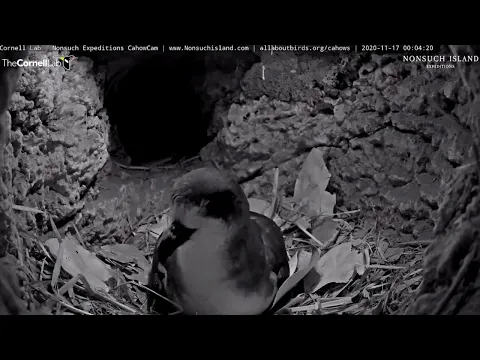
It was at this point that “artificial burrows” gained prominence.
For the Bermuda petrel, the availability of suitable burrows acts as a real bottleneck, as many natural sites do not provide the type of cavity needed or are not sufficiently protected.
By installing artificial nests, conservationists create standardized spaces that can be monitored, maintained, and positioned in selected areas to reduce risks.
In practice, this allows for directing part of the effort to a planned location, rather than relying solely on extremely small islets where any adverse event can have a disproportionate effect.
Translocation of Chicks and the Colony on Nonsuch Island
The next step, adopted in seabird conservation projects, was to take this strategy beyond simple nest building.
A study published in the journal Bird Conservation International described the establishment of a new colony on Nonsuch Island through the translocation of chicks about to fledge.
Between 2004 and 2008, 104 chicks were transferred to artificial burrows, where they were given assisted feeding until it was time to head out to sea.
The same work reports that almost all individuals translocated successfully left the island and that the first returns to the new site were observed from 2008, indicating that the technique helped to “imprint” the breeding destination in an area deemed safer.
Translocation, in this case, is not just about moving individuals from one point to another, but about rebuilding a colony based on nesting behavior and site fidelity, a hallmark of several species of petrels.

Upon returning years later to breed, these animals tend to seek the location associated with the final development period, which makes the method useful for creating new breeding areas.
The practical result is a reduction in dependence on a handful of tiny reefs while increasing the number of available nests and reinforcing the control of surrounding threats.
Population Recovery and Numbers Recorded by Conservation Bases
Advancements are also reflected in numbers compiled by organizations and conservation bases.
The platform NatureServe, which compiles information on population status and trends, shows significant growth over decades, indicating that the population increased from a few breeding pairs at the beginning of recovery to 143 breeding pairs in 2020.
Local management programs, in turn, describe the rescue as a sustained effort that involved direct protection of colonies, habitat management, and measures to reduce risks associated with introduced predators, along with the increase of artificial nests.
This recovery is often described as the “real path” precisely because it does not rely on a single factor.
The rediscovery alone would not prevent another decline if the conditions that led to disappearance continued to be present.

By combining threat control, habitat engineering with artificial burrows, and the formation of a colony in a safer location, the project creates a set of barriers against the recurrence of collapse.
The model also relies on prolonged monitoring, as seabirds may take years to return to land and initiate reproduction, requiring systematic follow-up to measure the effectiveness of management.
Why The Cahow Became A Global Reference In Island Conservation
Another relevant aspect is the way this type of work repositions the role of lesser-known species in public debate.
The cahow does not have the visibility of large endangered mammals, but its story contains elements that attract global attention: an animal considered extinct for centuries, a reunion on Atlantic islets, and a technical response that includes unconventional interventions, such as artificial burrows and translocation of chicks.
This combination creates an immediately appealing narrative while maintaining a verifiable basis in official documents and scientific literature.
In ecological terms, the recovery of the Bermuda petrel also reinforces a pattern observed in island projects: when invasive predators are controlled and habitat is consistently managed, endemic species can emerge from extreme conditions and resume reproduction at more stable levels.
In the case of the cahow, the long-term goal involves consolidating colonies in more protected locations and maintaining biosecurity so that invaders do not reoccupy sensitive areas, a recurring issue in island conservation operations.
The trajectory of the cahow, from historical disappearance to monitored return, has become a reference because it shows how conservation can operate in measurable stages, with interventions that reduce risk, increase nesting locations, and create new colonies that can sustain themselves over time.
By looking at a bird that almost always lives out of human sight and still mobilizes science and protection policies, the case also draws attention to how the fate of entire species may rely on practical details such as a safe burrow and the absence of introduced predators.
What other “ghost” species do you think may still be surviving in some remote refuge, waiting for a real recovery effort?








-

-

-

-

-

-

50 pessoas reagiram a isso.