





 Portuguese
  English
  Spanish
  3 min of reading
  0 comments


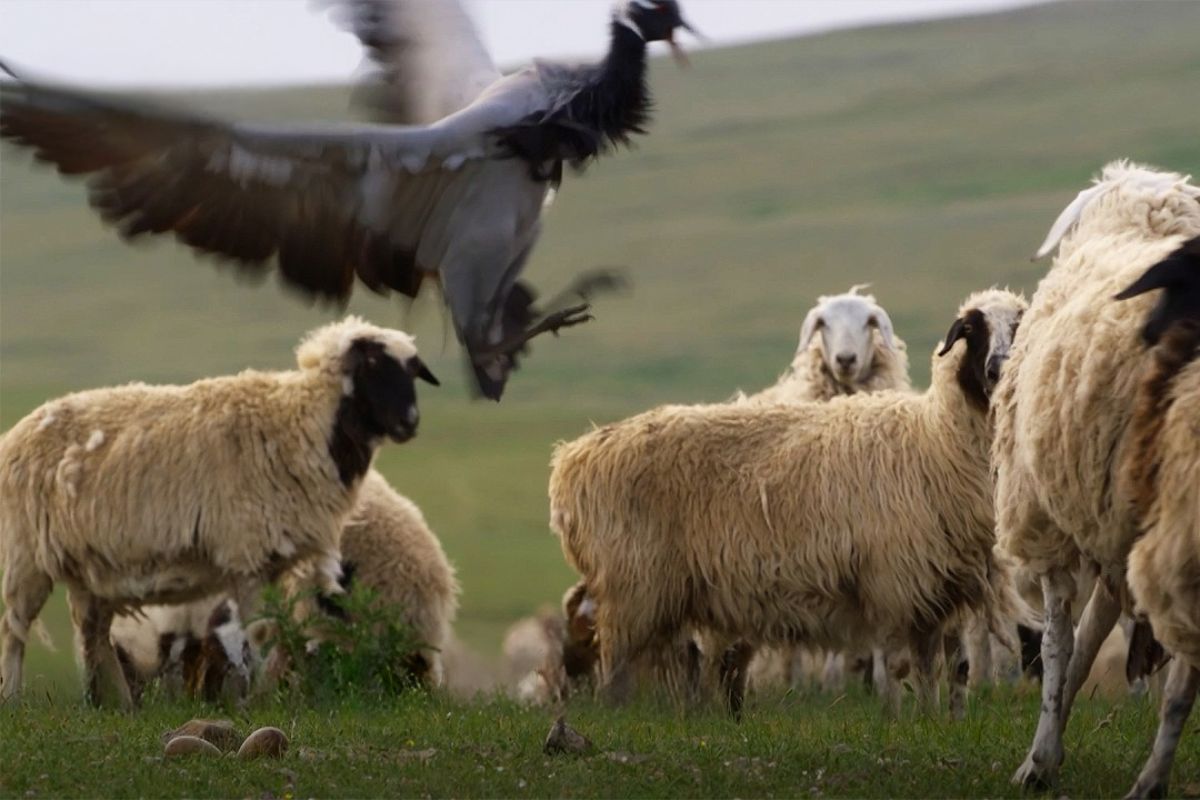
The Protection of the Eggs Depends on Two Attentive Parents: One Stays in the Nest While the Other Seeks Food, But the Risk Increases When Sheep Enter the Area and a Hoof Can Destroy Everything in Seconds. The Bird Reacts with the Crane Kick
The bird trying to protect its nest faces an increasingly common problem in the prairies: domestic herds occupying space and circling too close to eggs and chicks. With the number of domestic animals tripling globally over the last century, there is less safe area for wildlife, and the pressure reaches even the ground of the stork’s nest.
When the sheep approach and don’t “get the hint,” the bird needs to act in conjunction with its partner. The behavior shifts from alert to direct intervention, because a single hoof in the wrong place can mean the complete loss of the brood.
What Was at Stake in the Nest and Why the Storks Were Crucial

Protecting eggs requires strategy and rotation.
-
With a cost per shot close to zero, the DragonFire laser could change naval warfare in 2027 and provide British ships with nearly unlimited defense against drones.

-
A British startup creates tires that generate electricity in electric vehicles when passing over potholes, speed bumps, and cracks.

-
Scientists have created robots made with living cells that have their own nervous system, swim on their own, explore the environment, and self-organize without any genetic engineering, and now they want to do the same with human cells.

-
Students create a solar-powered ambulance that operates without a plug, without fuel, and still keeps medical equipment running in remote areas.


One parent stays with the eggs while the other goes to feed, ensuring that the nest is not exposed.
This arrangement works until the environment changes and an external risk interrupts the routine.
The critical moment arises when the herd enters the nesting territory.
The bird is not dealing with a classic predator but with clumsy, heavy neighbors who can accidentally destroy the nest.
The threat is not intent, it’s mass and movement.
How Sheep Became a Real Threat to the Bird

The pressure begins before the confrontation: there is a growing threat to nearly all the prairies on Earth, associated with the encroachment of domestic animals.
The central piece of data is straightforward: globally, the number of domestic animals has tripled over the last century, reducing space for wild animals.
In practice, this shortens distances and mixes zones.
Sheep begin to share areas near the nests, increasing the chance of an accidental trampling.
A misstep, and the eggs are lost. For a breeding bird, this is not a scare, it is reproductive collapse.
The “Crane Kick” as a Rare Defensive Move

One parent tries to redirect the herd, but the sheep continue advancing, and the situation becomes tenser when the chicks start peeping, signaling that there are vulnerable young ones and immediate risk nearby.
Without an alternative, the couple begins to fight together.
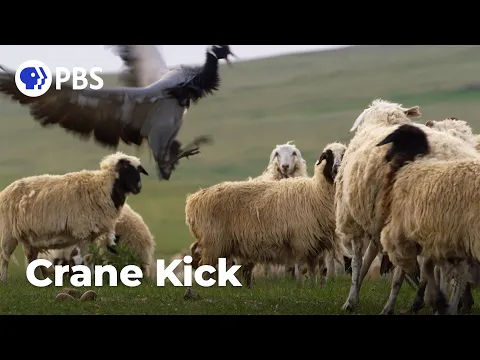
It is at this point that the exceptional behavior emerges: the bird uses the so-called crane kick, a rare move employed to drive the sheep away and create physical distance between the herd and the nest.
The sequence ends with the herd retreating, marking a “job completed” at that moment.
Protection Does Not End with the Herd Far Away

Even after driving the sheep away, the task of the parents is just beginning.
The couple continues to protect their chicks for nearly a year, maintaining constant vigilance and reaction to the environment because the risk can return at any moment.
The logic is simple: the bird won a specific episode, but the structural pressure remains while herds circulate and the prairies become more crowded.
Do you think the bird was more effective by acting as a pair or would the “crane kick” have worked even with just one of the parents defending the nest?








-

-

-

-

-

-

19 pessoas reagiram a isso.