





 Portuguese
  English
  Spanish
  3 min of reading
  13 comments


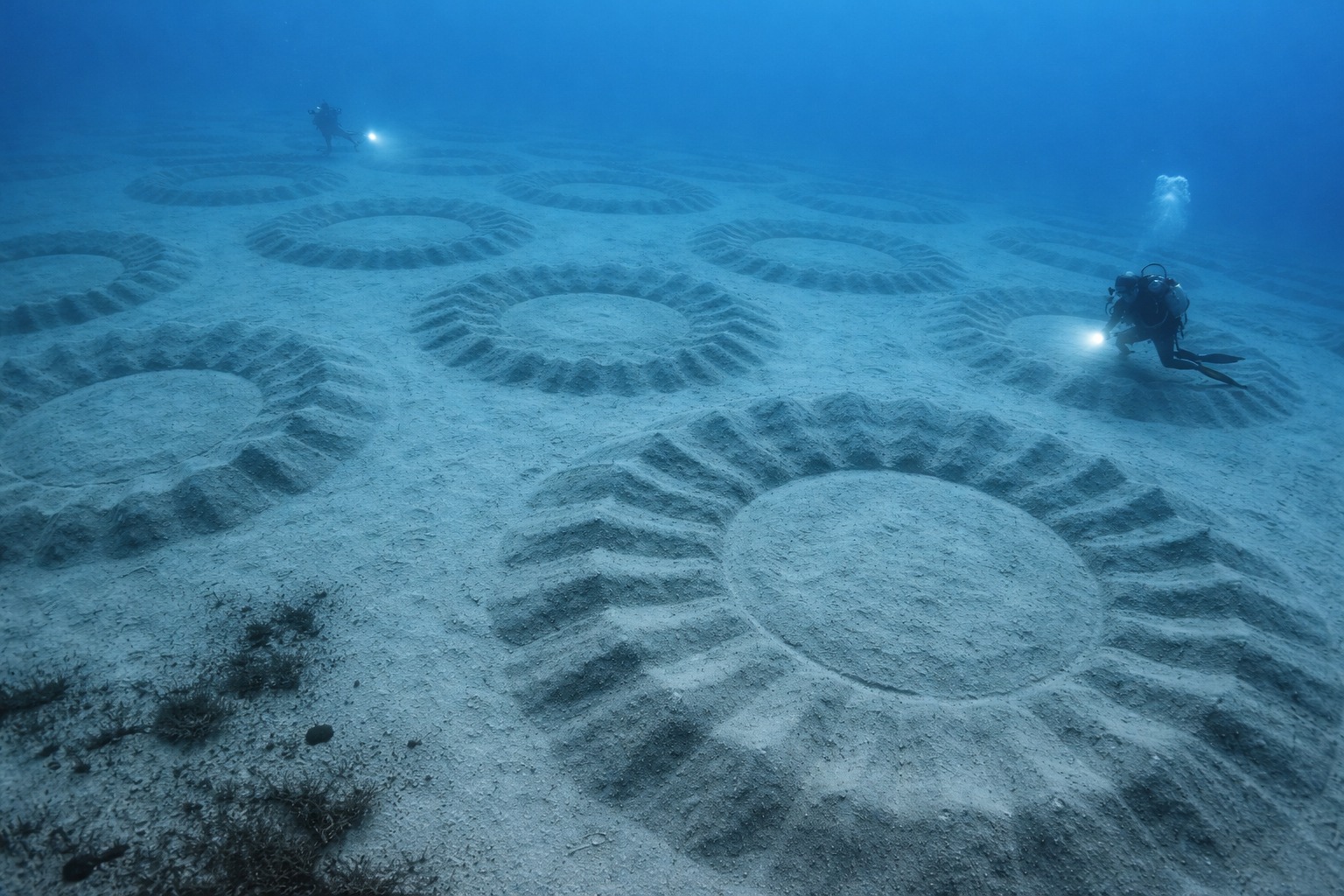


Giant Circles in the Mediterranean Intrigue Scientists After Discovery of 1,400 Perfectly Symmetrical Rings Spread Across 250,000 m² of the Seafloor
The discovery of giant underwater circles on the seafloor of the Mediterranean Sea surprised scientists and divers after the recording of 1,400 symmetrical rings distributed over 250,000 square meters. The formation was mapped by diver Laurent Ballesta’s team using sonar and submersibles.
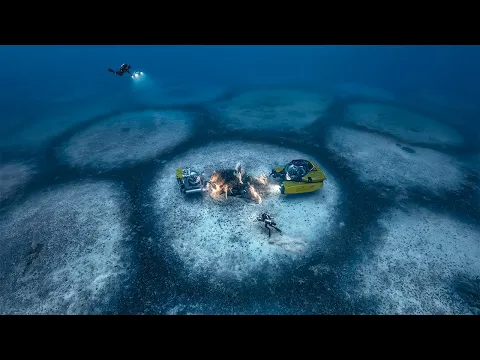

Discovery of Underwater Circles Surprises Explorers
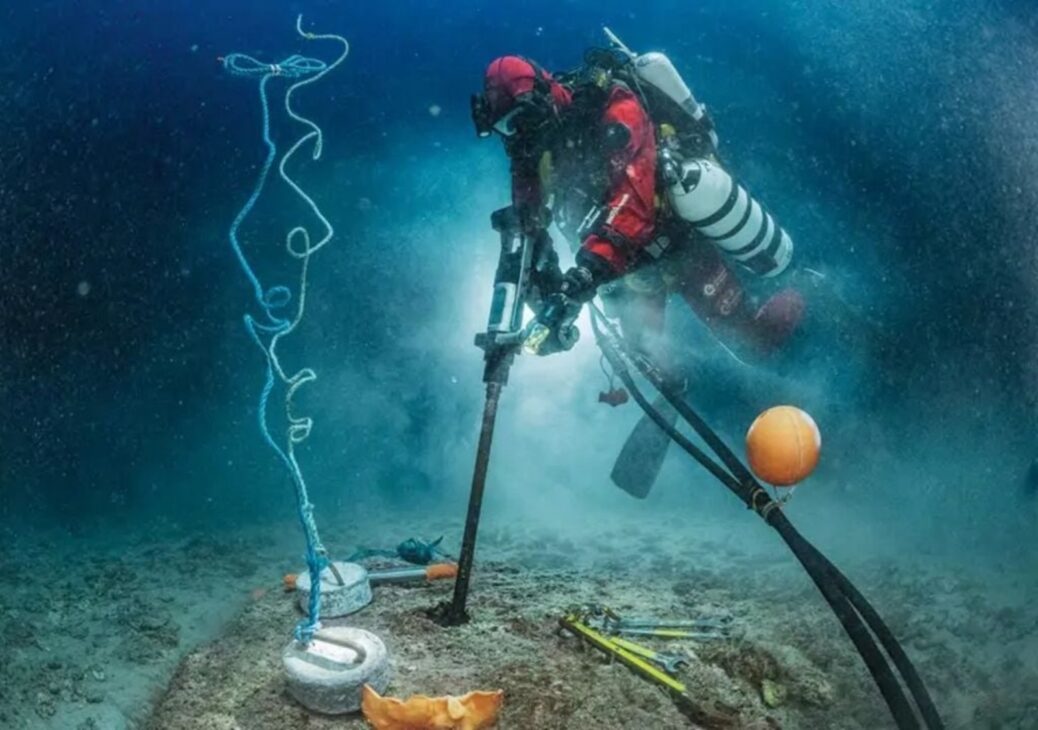
The enormous underwater circles were identified during an expedition led by diver Laurent Ballesta.
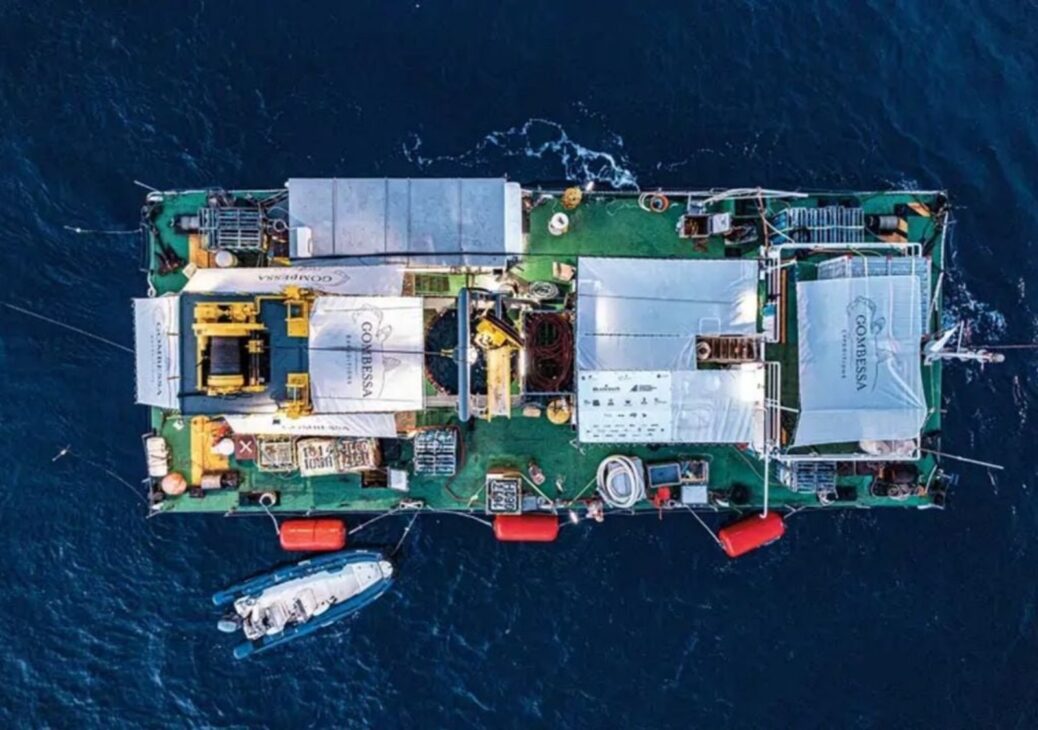
The team used submersibles and sonar equipment to record the structures spread across the sandy bottom of the Mediterranean Sea.
-
An aquatic seed consumed for centuries in Asia is going viral in the West after studies highlighted its antioxidant compounds and potential anti-inflammatory properties. It pops like popcorn, has low fat content, and is already being called the new functional snack.

-
China showcases robot dogs that act in groups like a coordinated pack, make decisions together, and could change the way modern wars operate.

-
The coldest seawater ever recorded in Earth’s history was hidden under extreme ice 717 million years ago and reached an impressive -15°C.
-
China has launched the world’s first floating artificial island, a scientific structure designed to face open seas, test equipment weighing hundreds of tons, and reach depths of 10,000 meters.


In total, about 1,400 rings were cataloged in an area of 250,000 square meters.
The geometric precision of the formations caught immediate attention, as the circles exhibit symmetry that is considered impressive by the researchers involved in the exploration.
The surface of the seafloor shows patterns resembling geometric designs made in the sand.
This precise repetition of shapes is one of the aspects that arouses significant interest among scientists and divers.
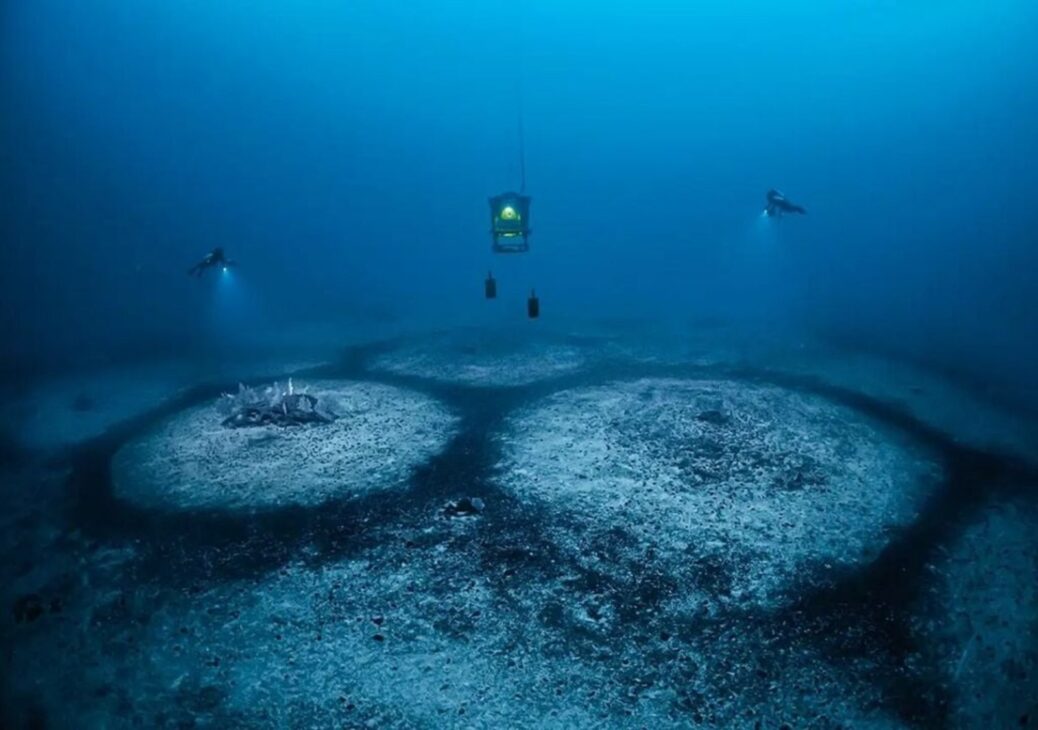
How Researchers Mapped the Underwater Circles
To record the underwater landscape, the team used high-precision sonars capable of revealing the dimensions and distribution of the rings.
The submersibles employed allowed researchers to approach the structures safely during the documentation process.
Before publicly releasing the data, scientists analyzed hours of footage captured at the site.
The aim was to ensure that the observed patterns genuinely corresponded to the formations recorded by the equipment.
This work resulted in a detailed map of the structures identified on the bottom of the Mediterranean.
Hypotheses Discussed for the Origin of the Formations
Researchers are still discussing what may have triggered the emergence of the underwater circles.
One hypothesis considers that ocean currents and constant whirlpools over decades may have shaped the rings on the sandy seafloor.
Another possibility examined involves marine organisms that repeatedly interact with the sediment.
So far, none of the explanations have been definitively confirmed.
The perfection of the circle edges is a factor that keeps the phenomenon in debate among specialists in the field.
Scale and Precision Make Phenomenon Rare
The newspaper Le Parisien highlighted the discovery after examining the material recorded by the team of divers.
According to the publication, not all underwater phenomena have immediate explanations.
The combination of scale and geometric precision places the underwater circles in an uncommon category within ocean exploration.
Discovery May Expand Oceanic Research
The study of the formations may contribute to investigations involving marine biology, geology, and ocean current dynamics.
Depending on future conclusions, the phenomenon may serve as a reference for identifying similar patterns in other seas.
The discovery is already stimulating new expeditions with more advanced technologies to analyze the site.
The precision of the shapes suggests that natural forces may produce surprisingly detailed structures on the seafloor, even though the exact origin remains unknown.
With information from BMC News.







These can also be seen with Google Earth
To me this phenomenon appears similar to symitrical patterns made in the desert by wind
If 1,400 circles are spread over an area of 250m², they can’t be “giant” or “enormous” by any means. 250 sq. M. Is the size of a fairly big house. Now try to fit 1,400 average car tires on that area. I wish you luck. Say the area is 10×25 m. a tire is 55-60cm in diameter. This makes around 18 tires on 10 m and 45 on the 25 m. This gives 810 tires that touch one another! So, tires are by no means giant or enormous, and the circles in the photos are far from touching one another. So someone here got his numbers all wrong. Which leads me to think this whole thing is fake.