





 Portuguese
  English
  Spanish
  3 min of reading
  0 comments


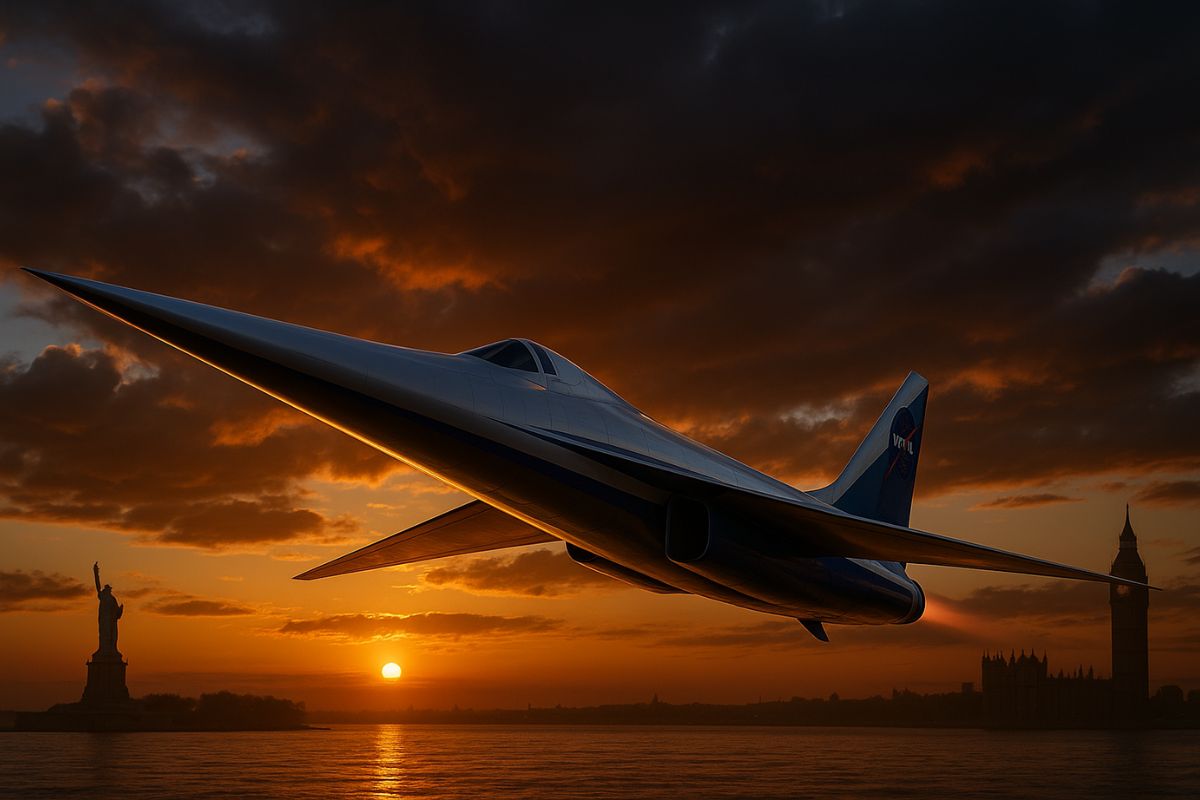
NASA’s X-59 Supersonic Plane, Part of the Quesst Mission, Was Designed to Reduce the Travel Time Between New York and London to Only 3 Hours and 44 Minutes, Eliminating the Deafening Boom That Forbidden Supersonic Flights Over Land in the USA for More Than 50 Years.
The NASA X-59 Supersonic Plane is in the final testing phase and promises to forever change the future of air travel. The aircraft, considered the centerpiece of the Quesst mission, was designed to reach speeds of up to 1,600 km/h, which is nearly double that of a traditional commercial flight. In practice, this could reduce the New York–London route from eight to less than four hours.
More than just speed, the project focuses on solving the biggest problem of supersonic travel: the sonic boom. While the Concorde, retired in 2003, generated noises comparable to explosions, the X-59 is expected to produce only a sound similar to that of a car door closing in the distance. This advancement could reopen the possibility of supersonic flights over populated areas, which have been prohibited in the United States since 1973.
The Secret Lies in the Design of the X-59
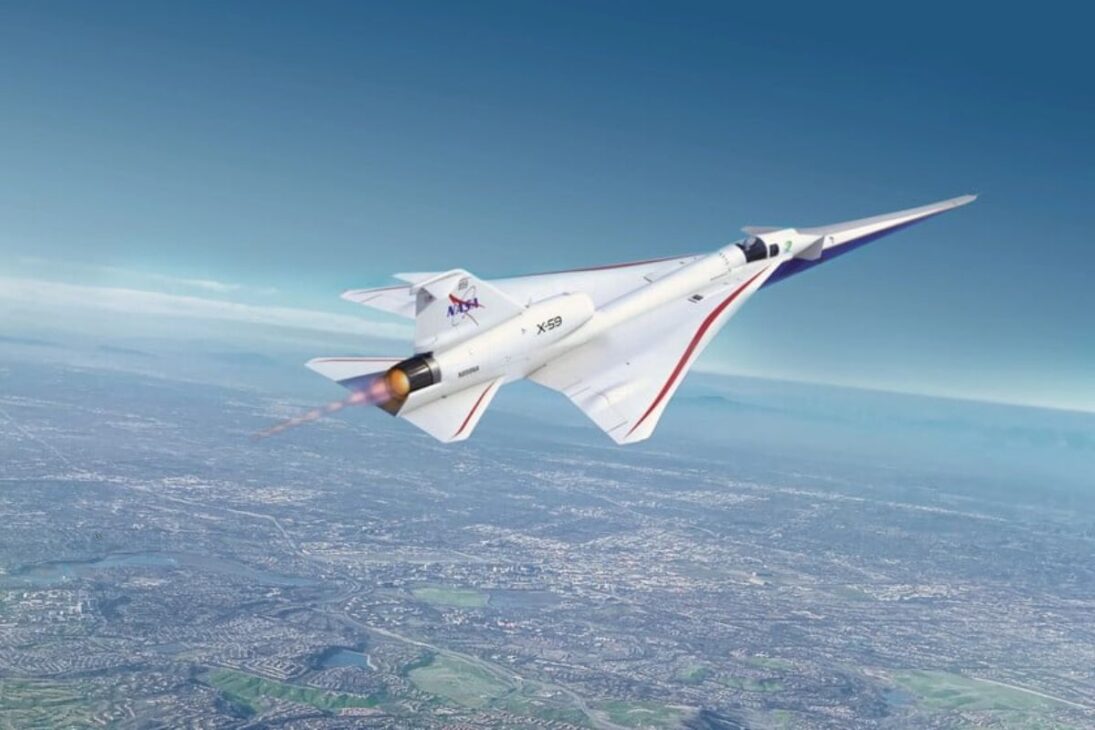
The shape of the NASA X-59 Supersonic Plane is crucial to its performance.
-
In Mexico, a 3,000-year-old Maya site with the dimensions of an entire city may have been built as a colossal map of the cosmos, created to represent the order of the universe and reveal how this people organized space, time, and rituals.

-
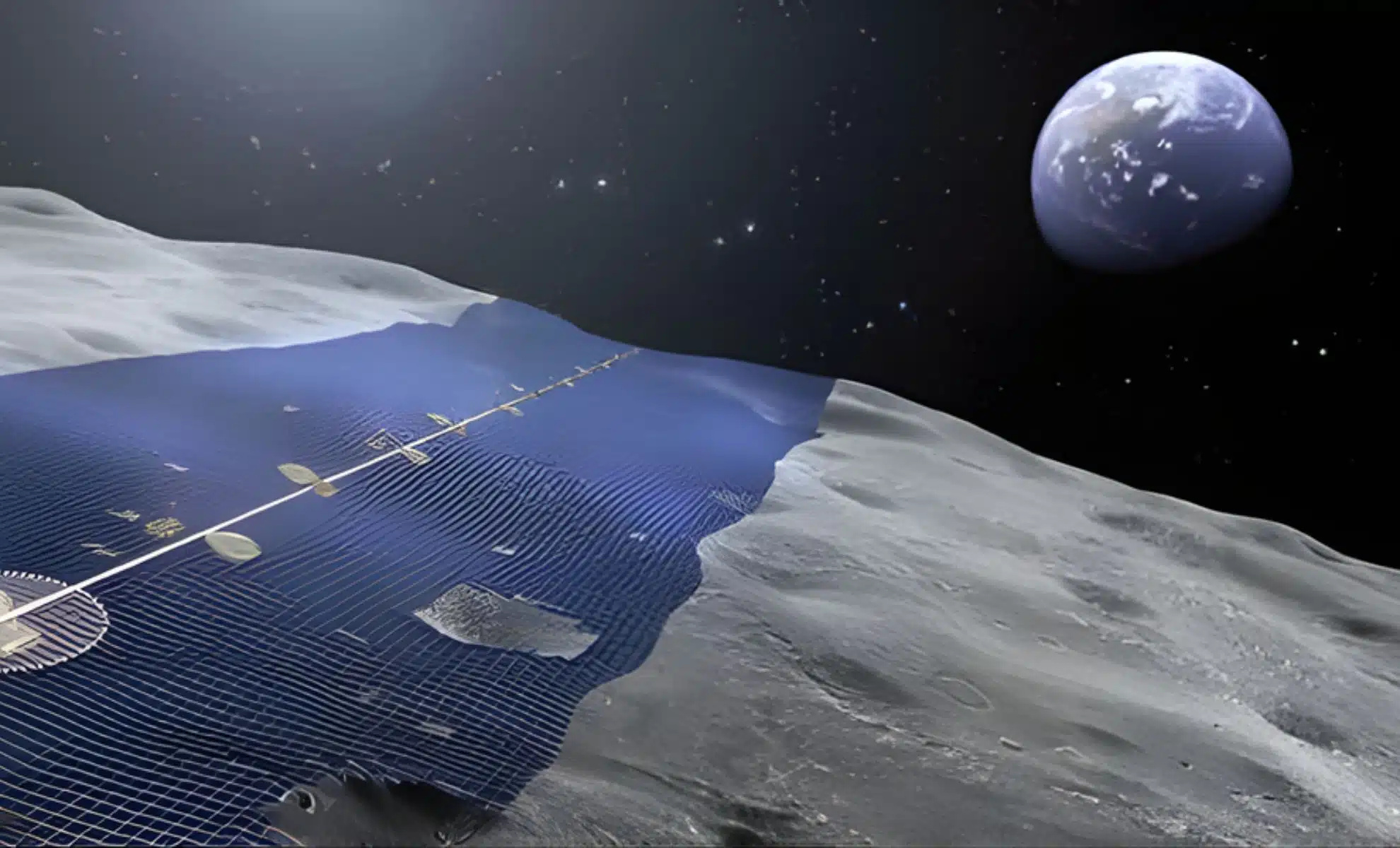
Japan wants to build a solar ring of 10,900 kilometers on the Moon to continuously send energy to Earth.
-
Weighing almost 1 ton, with temperatures of up to 3,000°C, the ability to launch 10,000 fragments within a radius of 1 km, capable of penetrating concrete and melting steel, Turkey’s terrifying bomb emerges as one of the most destructive non-nuclear weapons ever presented.

-
After a submarine disappeared beneath the “Doomsday Glacier,” scientists announce a new monstrous machine capable of operating at 3,000 meters depth to return to the heart of the ice and investigate a threat that could raise sea levels worldwide.


It has a conical, elongated body, and thin, long wings that disperse shock waves into small ripples.
This design prevents sound pressure from accumulating into an explosion, dramatically reducing the noise impact for communities on the ground.
In addition to aerodynamics, NASA conducts rigorous testing on safety and propulsion systems.
In August 2025, the aircraft underwent a hydrazine check, a chemical substance used as a backup system to restart the engine in mid-flight.
These steps ensure that the project advances to its inaugural flight with reliability.
Ground Tests and Inaugural Flight
The first practical tests of the NASA X-59 Supersonic Plane took place in July, when the aircraft rolled at low speed under its own power for the first time.
The next phase will be the much-anticipated inaugural flight, scheduled to occur in California, where the jet is expected to fly at about 386 km/h at low altitude before accelerating towards breaking the sound barrier.
According to NASA, each stage—from taxiing to landing—is meticulously planned to ensure stability and control in varied conditions.
The initial success will be crucial to advancing high-speed tests, which should validate the promise of crossing the Atlantic in just 3h44.
Strategic Impact and Future of Aviation
The NASA X-59 Supersonic Plane is not just a technological gamble, but also a strategic one.
By reducing noise impact, the aircraft may convince regulators to lift historical restrictions and pave the way for a new generation of ultrafast commercial flights.
This could revolutionize international routes, shortening distances between major economic centers and enhancing airlines’ competitiveness.
If successful, NASA’s project could mark the beginning of a new era in aviation, comparable to the introduction of commercial jets in the 1950s.
Private companies are already closely monitoring the results to assess the viability of models derived from the X-59 aimed at passenger transport.
With 30.4 meters in length and a wingspan of 9 meters, the NASA X-59 Supersonic Plane represents a milestone in the quest for faster and more sustainable travel.
By combining speed, aerodynamic innovation, and low noise, the aircraft could redefine the experience of flying on long-distance routes.
And you, do you believe the X-59 will usher in a new era of commercial flights or will it be remembered merely as a technological experiment? Share your opinion in the comments—your insight could help shape the future of aviation.









Seja o primeiro a reagir!