





 Portuguese
  English
  Spanish
  3 min of reading
  0 comments



Meet the B61-12, the Most Powerful Nuclear Bomb of the U.S. Capable of Decimating Underground Shelters, This Weapon of Mass Destruction Is Set to Enter the Military Industry in 2026.
In this article, we will explore a series of bombs, missiles, and torpedoes that have recently been introduced into military operations or are in the development phase. These weapons, each with its unique characteristics, have one thing in common: they were all designed to cause damage on a devastating scale in the battlefield. Among them, the B61-12 stands out as the most powerful nuclear bomb ever developed by the United States, capable of redefining global military power with its unprecedented destructive potential.
U.S. Nuclear Bomb Has a Capacity of 50 Kilotons
The B61-12 is the U.S.’s primary short and medium-range nuclear bomb, in operation since 1968. The 12th version was recently tested and upgraded, making the B61-12 the most powerful nuclear bomb of the U.S.
Even before the first tests with the model, the federation of American scientists calculated that the manufacturing cost of each unit of this bomb would be more expensive than a gold bar of the same weight.
-
Iranian drones and missiles destroyed a 270 million dollar American spy plane in Saudi Arabia, splitting the E-3 Sentry aircraft in half and injuring 12 military personnel in an attack that exposes the vulnerability of U.S. bases in the Persian Gulf.

-
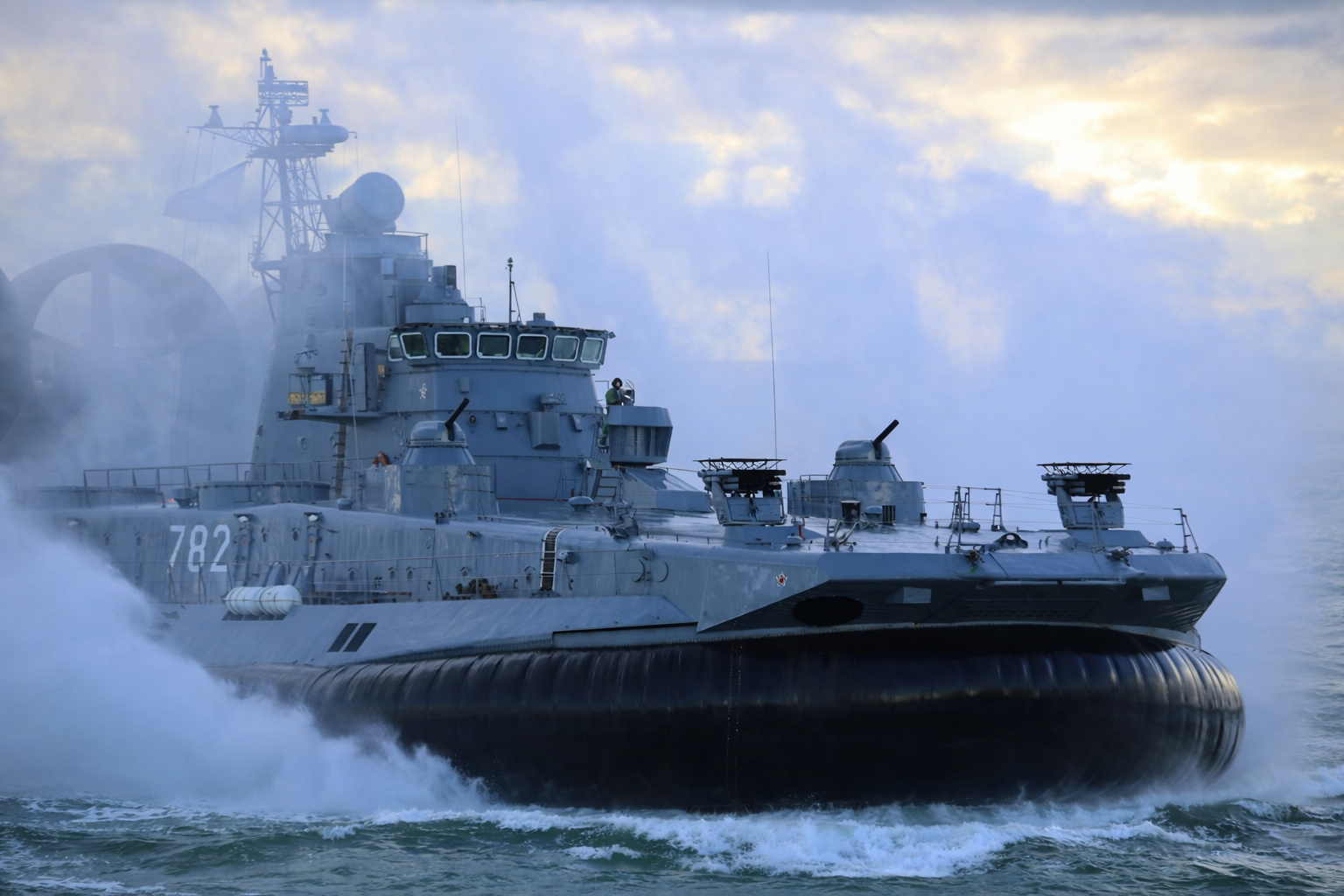
Classified as a “amphibious monster” weighing 555 tons, 57 meters long, and featuring three propellers with a diameter of 5.5 meters, the Zubr is the largest military hovercraft ever built, capable of transporting 3 tanks or 500 soldiers at speeds exceeding 100 km/h over water, ice, and sand, and China has resumed production of it to project power in the South China Sea.
-
The U.S. Army receives the first Black Hawk helicopter that can fly without pilots, be controlled by a tablet, and even land on its own during high-risk missions.

-
With 11,000 tons and sensors capable of hunting submarines at long distances, the Type 055 has become one of the most feared floating arsenals of the Chinese navy.


For this reason, the U.S. nuclear bomb is considered an extremely special bomb. After undergoing a series of field tests, the B61-12 began to be deployed in 2021, with plans to produce 400 to 500 units of this bomb, with yields ranging from 0.3 to 50 kilotons.


The main feature of the most powerful nuclear bomb of the U.S. is its guidance system and controllable tail, which eliminates the need for parachute bombing, allowing the aircraft to avoid flying directly over the target, thus reducing risk. This U.S. glide bomb can be launched from a considerable distance from the target and then glides toward the objective.
When Will the Most Powerful U.S. Bomb Be Ready?
The accuracy of the B61-12 is within 30 meters of the aim point, which is greater compared to the previous model, whose accuracy was within 170 meters, allowing for a reduction in its yield by ¼.
If a 50-kiloton U.S. nuclear bomb is detonated, it is estimated that it could create a crater with a radius of up to 68 meters, making it an extremely precise weapon for destroying underground bunkers.

However, the evolution of this weapon does not stop there, and the United States is already working on the development of the B61 Mod 13 bomb, with a maximum yield of 360 kilotons. Like the B61-12, this is not a completely new bomb, but rather an upgrade of an already existing, more modern and advanced bomb.
This most powerful U.S. nuclear bomb is also a high-precision glide bomb, but with incomparably greater destructive power, so much so that it has already been nicknamed the political bomb. The manufacture of this bomb is expected to begin in 2026 and will be launched from the modern stealth bomber B21 Raider.
Meet the New Hypersonic Missile of the U.S.
The first hypersonic weapon designed specifically to be installed on fifth-generation combat aircraft, called Mako, was developed in a partnership between defense giant Lockheed Martin and the company C.O. Aspire, and was recently presented to the public in April 2024.
Compared to other hypersonic missiles, the new missile stands out for its compact size, measuring only 4 meters in length and 33 centimeters in diameter.
With a total weight of 590 kg, it can carry a payload of up to 59 kg and can reach speeds exceeding Mach 5, equivalent to more than 6,000 km/h. This speed allows for surprise attacks and rapid approaches to the target while simultaneously reducing the likelihood of interception by surface-to-air missiles.










Seja o primeiro a reagir!