





 Portuguese
  English
  Spanish
  4 min of reading
  0 comments


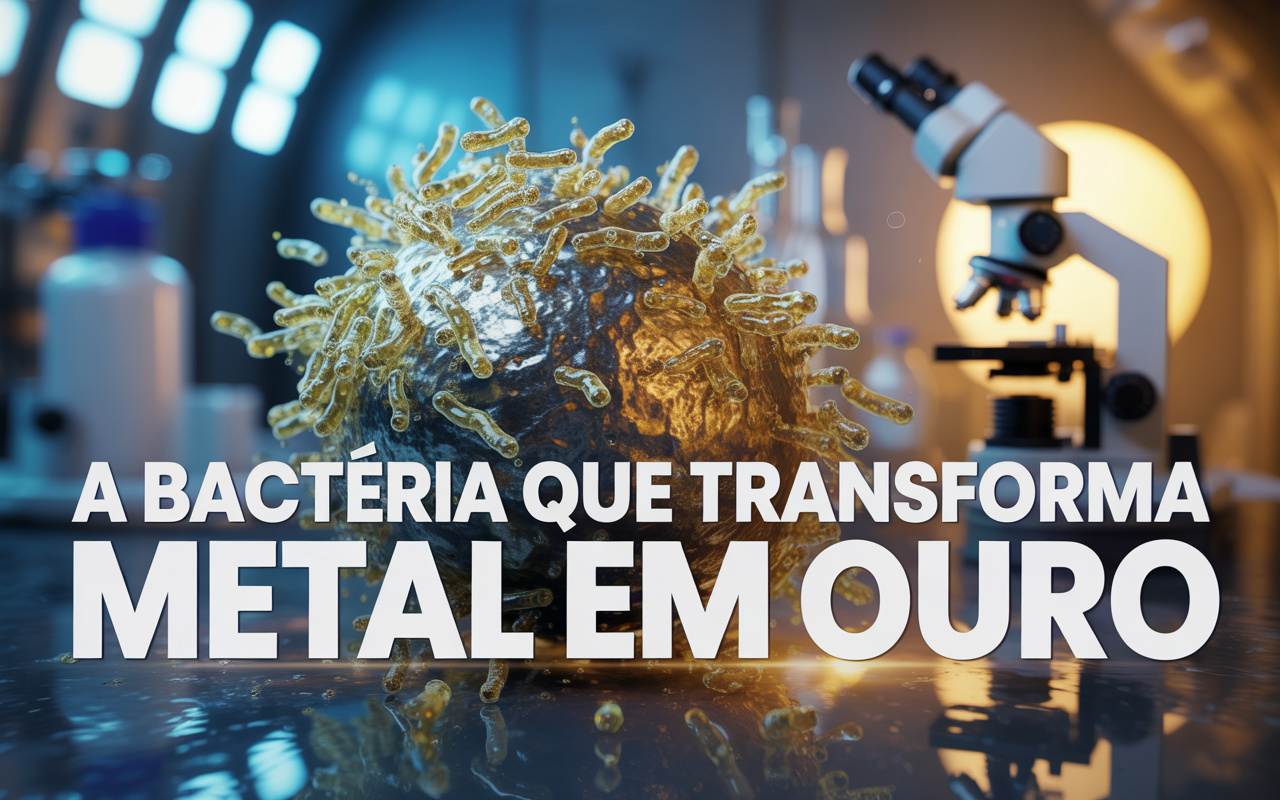
Bacteria Capable of Turning Toxic Gold Compounds into Pure Metallic Gold Surprises Science and Reveals a Rare and Impressive Biological Process.
In extremely hostile environments, where the soil is soaked with heavy metals and toxic substances, there exists a microscopic organism that seems to ignore the rules of traditional biology. The Cupriavidus metallidurans is a bacterium found in mines, industrial waste, and environments where gold appears in its most aggressive form: highly toxic soluble compounds for practically any living being. What sets it apart is precisely its ability to survive there. Instead of dying from intoxication, it triggers biochemical defense mechanisms so specific that they end up generating an unexpected effect: during the process of expelling toxins, it produces pure metallic gold, the same solid gold found in natural nuggets.
This characteristic makes Cupriavidus metallidurans one of the most intriguing species ever studied in relation to metal resistance and biomineralization processes.
The Impressive Process That Transforms Toxins into Metallic Gold
The gold found in mines is not always in metallic form. Most of the time, it appears bound to chemical compounds that can be unstable and toxic. For the bacterium, these compounds pose a direct threat, as gold in the form of Au³⁺ is extremely reactive.
-
Spread across two continents, with 197 parabolic antennas in South Africa, 131,000 2-meter antennas in Australia, and a range of up to 150 km, the SKA begins to “listen” to the Universe on an unprecedented scale and accelerates the search for black holes, primitive galaxies, and nearly invisible radio signals.

-
Goodbye batteries: a new sensor created by Japanese scientists uses sweat as an energy source and points to a promising path for more sustainable devices, with greater autonomy and less need for frequent recharging.

-
The Brazilian Army inaugurated the assembly line for the Guaicurus armored vehicle with a contract for 420 units by 2033, and the same vehicle has already been tested in combat in Afghanistan and Lebanon by European armies.

-
Xiaomi launched a 10-kilogram washing machine for less than R$910.00, so slim that it fits inside a kitchen cabinet with only 15 millimeters of clearance, featuring 24 washing programs and voice control.

Upon detecting the presence of these molecules, the bacterium activates specialized internal systems that neutralize heavy metals. During this process, it reduces gold from its toxic form to Au⁰, which is exactly pure metallic gold. The metal precipitates into microscopic particles that accumulate on the surface of the bacterium, as a byproduct of its effort to stay alive.
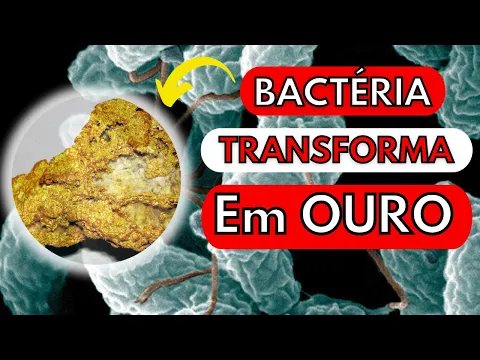

It is a silent and continuous process, occurring cell by cell, that shows how life can create unexpected chemical solutions when put under extreme pressure.
How This Ability Changed the Understanding of Gold in Nature
The existence of Cupriavidus metallidurans has opened up a new interpretation of the formation of certain nuggets found in mines around the world. For decades, geologists believed that all metallic gold was exclusively a consequence of purely geological processes, but microbial action has proven to be an important piece of this puzzle.
The repeated presence of this bacterium in gold-bearing regions indicates that it may have played a discreet yet continuous role in forming small concentrations of native gold over thousands of years. In other words, in some places, nature may have relied on the help of microorganisms to transform toxic compounds into pure gold, molecule by molecule.
This discovery has broadened the understanding of how extreme environments shape the behavior of living beings and how biological processes can influence geology.
From Mine to Laboratory: The Challenge of Reproducing a Natural Phenomenon
Although it is a real and documented phenomenon, reproducing this process on a large scale is extremely difficult. The bacterium does not “create gold from scratch,” nor does it convert other metals into gold. What it does is transform already gold-rich compounds into their metallic form, a very specific step in the metal’s chemistry.
Even in controlled laboratories, the amount generated is minimal and requires precise conditions to occur. There is no practical possibility of exploring this process as a means of commercial mining, but the phenomenon continues to be studied as a reference for purification technologies and metal recovery in contaminated environments.
The research also helps to understand how microorganisms can be used to treat industrial waste and make metallurgical processes more sustainable.
An Organism That Redefines the Limits of Biological Resistance
The relevance of Cupriavidus metallidurans goes beyond gold. Its set of genes, adapted to deal with metals like copper and zinc, allows it to survive in environments lethal to almost all other forms of life. The bacterium is capable of:
• rapidly recognizing toxins
• activating transport proteins that expel dangerous substances
• converting reactive molecules into stable structures
• depositing minerals on its own surface as part of the defense process
This behavior grants the organism the status of a “heavy metal specialist,” something extremely rare in nature.
Gold is merely the most fascinating case of this adaptation.
What This Phenomenon Represents for Science
The existence of an organism capable of producing pure metallic gold on a microscopic scale redefines the boundary between biology and geology. It demonstrates that microorganisms not only survive in extreme environments but also play active roles in processes that shape the very composition of the Earth.
The Cupriavidus metallidurans has become a symbol of how life finds pathways even in the most hostile conditions. And its unique ability to transform toxic compounds into gold will continue to be studied for decades, both for its technological potential and for the impact it has had on understanding the formation of precious metals on the planet.







-

Uma pessoa reagiu a isso.