





 Portuguese
  English
  Spanish
  6 min of reading
  4 comments


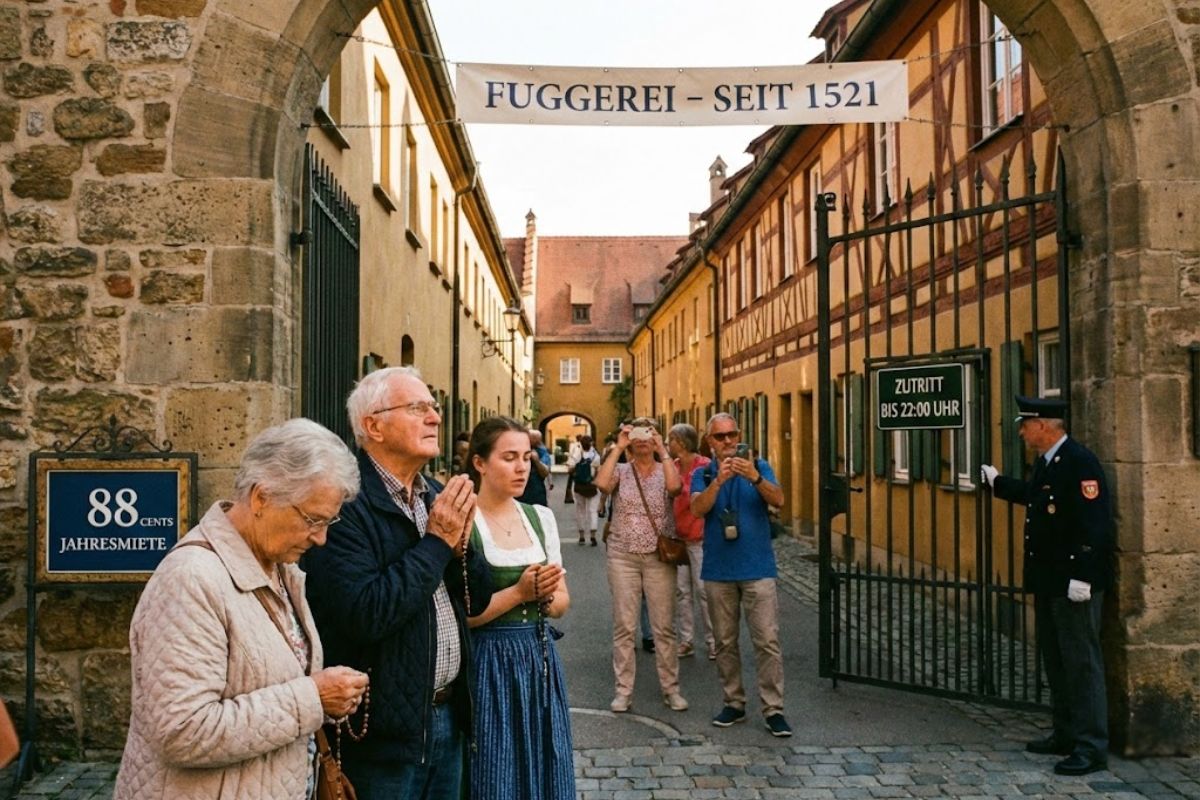


In The Heart Of Augsburg, The German Medieval Neighborhood Fuggerei Keeps Its Symbolic Rent Frozen Since The 16th Century, Houses Catholic Residents In A Tourist Museum Village Managed By A Private Foundation, Imposes Daily Prayer For The Founders And Closes Its Gates At 10 PM To Preserve Tradition And The Peace Of Vulnerable Elderly Catholic Residents
In The Early 16th Century, In 1521, Banker And Merchant Jakob Fugger Created In Augsburg, Bavaria, A German Medieval Neighborhood Designed To House The City’s Poor With Rent Frozen At 1 Florin Per Year. Five Centuries Later, The Fuggerei Remains Active As A Closed Social Complex, Charging Only 88 Cents Euro Per Year And Serving Both As Permanent Housing And A Tourist Museum Village Visited Daily By Thousands Of Visitors.
In 2025, The Routine Of This Walled Neighborhood Displays A Rare Housing Model In Europe: 67 Buildings, Around 150 Catholic Residents, Gates That Close At 10 PM, And Still-Valid Religious Rules, Such As The Obligation To Pray Three Times A Day For The Founder And His Family. The Recent Story Of Angélica Stibi, A Resident Who Fell Into Vulnerability After A Breast Cancer Diagnosis At 55, Illustrates How The Symbolic Rent Of The Fuggerei Became Decisive To Ensure Stable Housing In A Context Of Personal Crisis And Financial Exhaustion.
A German Medieval Neighborhood With Symbolic Rent And Fixed Rules

The Fuggerei Is Officially Presented As The Oldest Social Housing Complex In The World Still Operating Continuously, With About 500 Years Of Uninterrupted Operation.
-
YouTuber creates an excavator equipped with a giant 4.5-meter sword to challenge his brother to a rematch, and the invention quickly goes viral on social media.

-
The U.S. Army surprises the world by presenting the UH-60MX Black Hawk helicopter capable of flying without pilots, controlled by a tablet, featuring the MATRIX system, smart sensors, and full autonomy in real combat and rescue missions.

-
Heineken’s factory in Brazil produces 300 million beer cans in just 4 months, reaches 1 million hectoliters, received R$ 2.5 billion, and is already projecting an annual capacity of 5 million with sustainable technology.

-
Inside an active volcano in Africa, residents use volcanic rocks to build houses in an impressive setting.

Located In Augsburg, Bavaria, The Area Is A Walled German Medieval Neighborhood, Featuring Its Own Internal Streets, A Church, Small Gardens, A Community Café, And A Dense Neighborhood Network.
The Most Striking Element Is The Symbolic Rent: The Annual Amount Has Been Fixed Since The Act Of Foundation In 1521 And Today Corresponds To €0.88 Per Year, Paid In A Merely Formal Sum By The Residents.
In Addition To This Amount, Each Family Incurs Approximately €100 Monthly In Operating Expenses, Covering Costs Of Services And Basic Maintenance.
The Apartments Are Simple But Stable.
Angélica’s, For Example, Is About 60 Square Meters, Has Been Renovated And Modernized, And Includes A Small Backyard, Something Uncommon In Urban Social Housing Programs.
For Many, The Difference Between Paying Market Rent And The Symbolic Rent Of The Fuggerei Is What Separates Remaining In The City From The Risk Of Housing Exclusion.
Catholic Residents, Vulnerability, And Access Criteria

To Live In This German Medieval Neighborhood, Simply Wanting The Address And The Value Of The Symbolic Rent Is Not Enough.
The Fuggerei Maintains Strict Criteria: One Must Be A Resident Of Augsburg, Be In A Proven Economic Vulnerability Situation, And Be A Practicing Catholic.
The Term Catholic Residents Is Not Merely Cultural But A Formal Requirement Of The Model Created By Jakob Fugger, Which Combined Social Assistance And Religiosity.
The Selection Is Conducted By A Team Of Social Workers Linked To The Foundation That Manages The Complex.
One Of Them, Identified As Doris, Conducts Interviews With Candidates, Analyzes History, Income, Family Context, And Adherence To Community Rules.
She Reports That There Is No Mechanical Waiting List: The Decision Takes Into Account Personal Profile And Compatibility With Other Vulnerable Or Elderly Catholic Residents.
The Process Is Lengthy. The Wait Can Extend Up To Six Years Between Application And Actual Move, Depending On Unit Availability And Final Evaluation.
After The Technical Analysis, The Documentation Is Submitted To A Descendant Of The Fugger Family, Who Still Has The Final Word On Who Can Or Cannot Move Into This German Medieval Neighborhood.
The Housing Contracts Are For An Indefinite Period, And Many Beneficiaries, Like Angélica, Express The Intention To Stay There Until The End Of Their Lives.
Gates Closed At 10 PM And Prayer Routine In A Tourist Museum Village
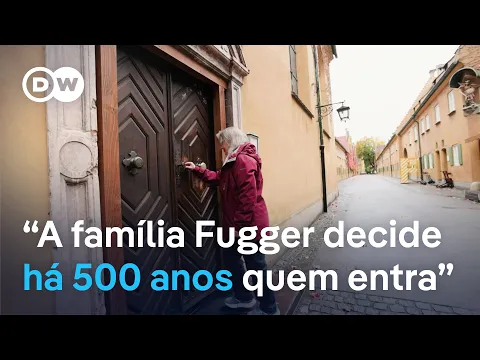

Life At The Fuggerei Combines Partial Confinement Rules With Constant Exposure To The Public.
Every Day, The Gates Of The German Medieval Neighborhood Close At 10 PM, And Movement Becomes Controlled.
Those Who Arrive After This Time Must Ring The Bell For The Night Watchman To Open The Gate, With A Charge Of 50 Cents Euro Before Midnight Or 1 Euro After That Time.
In Addition To The Time Discipline, There Is The More Known Symbolic Requirement: The Catholic Residents Must Pray Three Times A Day For Jakob Fugger And His Family, An Intention Linked To The Founder’s Original Idea Of Helping The Poor While Seeking The Salvation Of His Own Soul.
The Prayers Can Be Made At Home Or In The Small Church Within The Complex. Angélica States That She Often Repeats The Prayers Several Times, Like A Mantra, And Feels That This Practice Is A Way To Give Back The Benefit Received.
The Character Of A Tourist Museum Village Appears In Another Aspect: The Fuggerei Receives About 200,000 Visitors Per Year Who Walk Through The Internal Streets, Observe The Houses, And Visit Specific Areas Designated For The Public.
There Are Reports Of Tourists Who Assume That The Residents Are Actors Or Extras And That The Place Closes At 4 PM, Like A Traditional Museum.
However, In Practice, The Routine Of The Catholic Residents Continues Normally After Visiting Hours, With Closed Doors And Private Domestic Life.
Private Foundation, Tourism, And Financing Of The German Medieval Neighborhood
The Fuggerei Is Not Directly Maintained By The German State. Today, The German Medieval Neighborhood Is Managed By A Private Foundation Linked To The Fugger Family, Responsible For Preserving The Buildings, Enforcing The Selection Rules, And Ensuring The Financial Sustainability Of The Complex.
The Main Sources Of Revenue Are The Timber Trade And The Tourism Of The Tourist Museum Village, Which Charges Admission Fees From Visitors And Organizes Guided Tours.
This Flow Of Resources Allows For The Maintenance Of Restored Properties, Cover Service Costs, And Ensure That The Symbolic Rent Remains Frozen, Without Inflationary Transfers To The Residents.
The Model Reinforces The Idea That The Fuggerei Functions As A Combination Of Historical Heritage, Urban Experiment, And Social Housing Policy.
The Walled Structure, The Traditional Style Houses, And The Church At The Center Consolidate The Profile Of A Tourist Museum Village, But The Presence Of Real Families And The Elderly In Vulnerable Situations Maintains The Social Character Of The Original Project.
Angélica’s Journey And The Community Support Network
The Case Of Angélica Stibi, Interviewed In A Recent Report, Helps To Understand The Concrete Impact Of This German Medieval Neighborhood On The Life Of Those Who Enter Into Economic And Social Risk.
Before Moving To The Fuggerei, She Worked In Restaurants, Frequently Played Sports, And Traveled Regularly.
At 55 Years Old, She Was Diagnosed With Breast Cancer, Entered Long-Term Treatment, And Saw Her Savings Deplete While Official Bodies Discussed Who Would Be Responsible For Her Case.
Without Stable Income And Accumulating Medical Expenses, Angélica Decided To Apply For A Spot As A Catholic Resident Of The Fuggerei.
After About Three Years Of Waiting, She Was Approved And Moved Into The 60 Square Meter Apartment With A Backyard.
She Reports That Upon Receiving The Confirmation, She Felt Immediate Relief, Comparing The Feeling To Losing “Three Kilograms Of Worry” By Leaving Behind The Fear Of Not Being Able To Pay Rent.
Community Life Is Also Structured. Every Thursday At 2 PM, There Is A Collective Coffee, A Space Where Residents Meet, Converse, And Build Support Networks.
Many State That Without This Interaction, They Would Be Isolated In Small Apartments Or In Peripheral Residences.
In The Fuggerei, They Claim To Live “Like A Family”, With Close Ties Between Neighbors And Permanent Monitoring By Social Workers, Who Keep Track Of Health Situations, Conflicts, And Specific Needs.
Commenting On Her Own Experience, Angélica States That She Wishes There Were More Similar Initiatives Like The Fuggerei In Other Cities, Capable Of Offering Dignified Housing For Those Who Worked, Were Honest, And Faced Difficulties.
In Her Assessment, There Are “Too Many Rich And Super Rich” And Few Structures That Combine Heritage, Religion, Private Management And Long-Term Housing Policy As This German Medieval Neighborhood Does.
Confronted With A Model That Blends Faith, Rigid Discipline, Tourism, And Social Protection Through A Nearly Nonexistent Symbolic Rent, Do You Think Experiences Like The Fuggerei Should Be Replicated In Other Cities Or Do They Only Work Within A Very Specific Historical Context Of Germany?







Não entendi: falou que pagavam 88 centavos e depois disse que tinha uma contribuição mensal de 100 euros.
Eu aceitaria numa boa. Daria graças a Deus por ter lugar pra morar. Brasileiras costumam ser chatas e achar tudo errado.
Acredito que no Brasil, essas exigências seriam vistas como uma seita, bem problemática, mas independente disso o modelo mostra como a organização com princípios trás resultados, afinal os moradores moram por desejo próprio no local. Só a moradora Angélica que está meio biruleibe reclamando da existência de muitos ricos e super ricos, no meu ponto de vista eu reclamaria da existência de miséria demais e pobreza de espírito no mundo.
Muito bom morar aí , e pessoa de qualquer país pode morar, eu sou brasileira gostaria de morar em lugar tão poderoso e cheio de paz e no fundo cheio de mantras destinados a quem tem coisas boas para oferecer ao próximo. Estou me candidatando, e aguardando ser chamada. Obrigada pela oportunidade de conhecer uma entidade tão cheia de verdade e de ensinamentos