





 Portuguese
  English
  Spanish
  5 min of reading
  23 comments


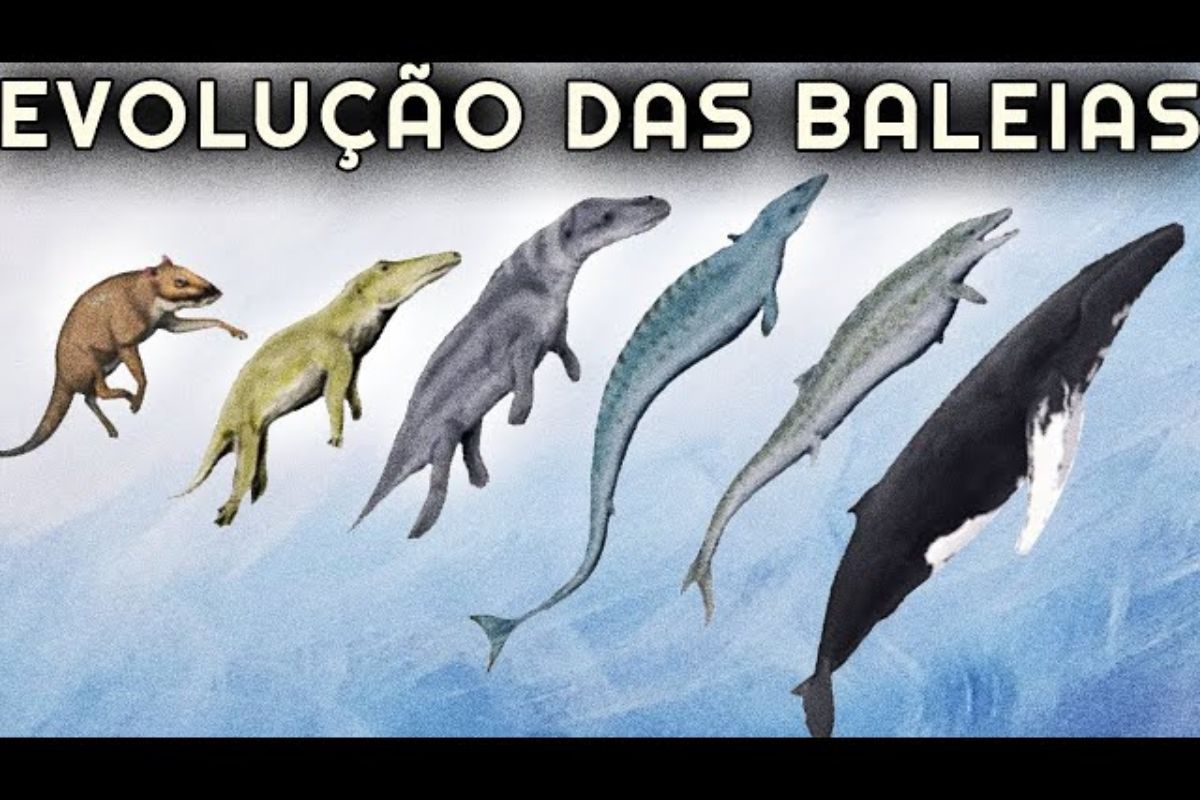


Whales Emerged From Terrestrial Artiodactyl Mammals And, In A Transition Documented By Fossils And Genetics, Migrated From Land To Sea In Just 8 To 10 Million Years, Reorganizing Respiration, Hearing, Locomotion And Body To Dominate The Oceans
Whales represent one of the fastest and best-documented changes in the history of life, moving from hoofed terrestrial ancestors and returning to the marine environment in a short evolutionary span. This trajectory was not regression, but rather adaptive radiation that redesigned, step by step, a terrestrial mammal for a new aquatic world.
The strength of this narrative comes from the convergence of evidence: transitional fossils, comparative morphology, embryology, and genomics tell the same story. Over the course of about 50 million years, successive evolutionary lines show how skull, spine, limbs, ears, and airways were readjusted for efficient swimming, precise underwater hearing, and surface breathing through the spiracle.
Who Were The Ancestors And Why Did Water Become An Evolutionary Destination
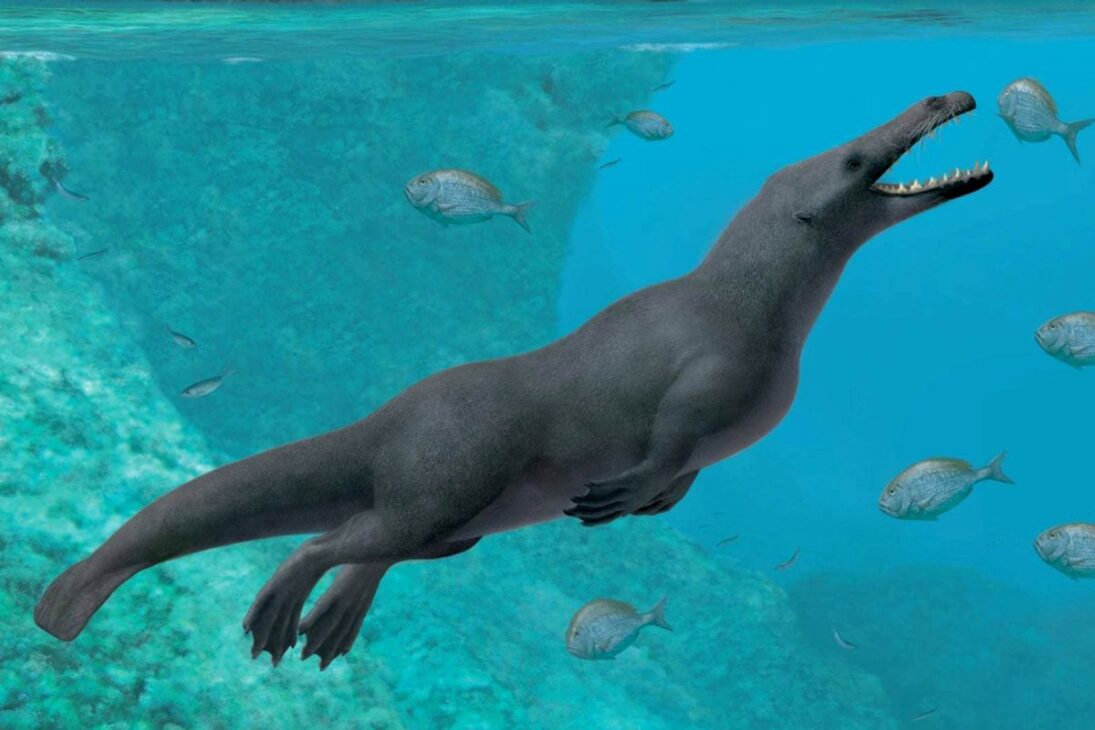
The first indications pointed to similarities in teeth with mesonychids, but molecular data placed whales within Artiodactyla, bringing them closer to hippos and their extinct relatives.
-
The narrowest house in the world is only 63 centimeters wide, but inside it can accommodate a bathroom, kitchen, bedroom, office, and even two staircases.

-
In the middle of the sea, these enormous concrete and steel structures, built by the British Navy to protect strategic maritime routes, look like they came straight out of a Star Wars movie.
-
For years, no one could cross a neighborhood in Tokyo because of the tracks, but an impressive solution changed mobility and completely transformed the local routine.

-
With 15 floors, an unusual building in Curitiba uses concrete, pilasters, and exposed roofs to create the effect of stacked houses.

Fossils in Pakistan and India, featuring the double pully astragalus, solidified the link with even-toed ungulates.
Water offered refuge and new ecological opportunities.
Early forms, such as Indohyus, already exhibited dense bones for wading and an ear bula typical of cetaceans.
The behavior of seeking protection in shallow areas helps explain the first step toward environments where light, sound, and pressure would select for new anatomical solutions.
How Long Did It Take And Where Is This Transition Recorded
From the terrestrial Pakicetus to the fully aquatic Dorudon, the central transition occurred in 8 to 10 million years, a short interval in evolutionary terms.
In fluvial, estuarine, and marine deposits of the Indian subcontinent, pieces of the puzzle emerge that document the march to the sea.
Ambulocetus indicates an amphibious stage, with locomotion on land still possible and swimming powered by hind limbs.
Rodhocetus and other protocetids reveal the relocation of nostrils to the back, a decoupled pelvis, and greater specialization for the sea.
With Basilosaurus and Dorudon, the return to land becomes unfeasible, and life shifts to be fully oceanic.
How The Body Changed: Propulsion, Respiration And Underwater Hearing
Propulsion migrated from the legs to the spine and tail, resulting in vertical beats of the caudal fin.
Forelimbs Became Stabilizing Fins, hiding the pentadactyl anatomy beneath a hydrodynamic shape.
The functional loss of external hind limbs accompanied the gain in swimming efficiency.
Respiration was reorganized with the migration of the nostrils to the top of the skull, forming the spiracle.
In hearing, the dense ear bula and the fat pad in the jaw conduct sound to the middle ear, isolating vibrations from the skull and allowing for acoustic directionality in water.
Thick blubber, fusiform body, and reduced hair complete the adaptation package to cold and drag.
What Transitional Fossils Show Step By Step
Indohyus indicates wading with dense bones and an auditory link to cetaceans.
Pakicetus already possesses the diagnostic bula, still in a fluvial context and with carnivorous habits. Ambulocetus lives in estuaries, alternates between land and water, and swims like a otter.
Rodhocetus exhibits a decoupled pelvis and retreating nostrils.
Basilosaurus and Dorudon seal the point of no return, with vestigial external hind limbs and likely caudal fin providing the main propulsion.
This sequence is not a list of “missing links,” but rather functional organisms in real niches, each with mosaics of ancient and new traits.
Evolution operates through increments, and the fossil record allows us to observe how characteristics arise, persist, are co-opted, or reduced over millions of years.
DNA Confirms The Plot And Explains The Reasons For Losses And Innovations
Genomics reinforces the artiodactyl ancestry and reveals pseudogenization of dispensable terrestrial functions.
Genes Associated With Saliva, Smell, And Melatonin Were Deactivated Or Reduced, Aligning With Aquatic Life And Unique Sleep Routines.
Shedding What Doesn’t Help Saved Energy And Made Room For New Solutions.
At The Same Time, There Was Positive Selection In Pathways Related To Oxygen Storage And Deep Diving, With Adjustments Favoring High Concentrations Of Myoglobin And Reducing Physiological Risks During Submersions.
Developmental Pathways Were Co-opted To Form The Caudal Fin And Remodel Limbs, Demonstrating How Evolution Reuses Genetic Tools Already In Place.
Vestiges That Tell The Story And New Functions That Explain The Present
Modern whales retain vestigial pelvis and bones of the hind limbs without attachment to the spine.
In Some Rare Cases, Atavisms Appear With Reduced External Structures.
These Remnants Show The Terrestrial Origin, But May Have Been Co-opted For Reproductive Functions, Exemplifying Exaptation And Evolutionary Plasticity.
Vestiges Do Not Mean Absolute Uselessness.
They Signify A Change Of Function In Relation To The Past.
Anatomy Preserves Marks Of The Path Taken, While Selection Refines Old Parts For New Purposes In An Opportunistic And Cumulative Process.
Recent Diversification And Emergence Of The Giants
The Division Between Odontocetes And Mysticetes Marks The Consolidation Of Two Paths: Echolocation And Teeth On One Side, Filter-Feeding Baleen On The Other.
From There, The Lineage Experiences New Niches And Feeding Strategies.
The Gigantism Of Mysticetes Is Recent On Geological Scale, Associated With High Ocean Productivity Scenarios And Long Migrations Between Feeding Areas.
Large Bodies Make Displacements More Efficient, Store Energy In Blubber, And Allow For The Exploration Of Seasonally Concentrated Resources, Optimizing Energy Cost And Gain.
Whales Did Not “Regress,” Reinventing A Terrestrial Body For The Sea With Ingenious Solutions Recorded In Fossils, Embryos, And DNA. This Story Shows How Environmental Pressures And Ancestral Limitations Shape Extraordinary Outcomes Without Prior Plans, Only With Accumulated Natural Selection.
Do You Think That The Narrative Of Whales Should Be Taught More Emphatically In Schools To Combat Myths About Evolution? In Your View, Which Evidence Is Most Convincing: Transitional Fossils Visible In Museums, Genetic Marks Of Loss And Innovation, Or Vestigial Traits In The Bodies Of Current Animals? Tell How You Would Explain This Transformation To A Skeptic And What Practical Examples You Would Use To Make The Topic Clearer.





Qual **** eu devo fazer: para ser uma ave ou peixe???? 6 mil anos se passaram e o homem continua sendo homem.
acredito que cada ser vivo desses é uma espécie individual e não fruto de uma evolução , não necessariamente animais parecidos são frutos de evolução e quem controla o processo evolutivo ? dizer que é mero acaso é anti coentífico .
Então seguindo o mesmo principio se a galera q corre na praia avançar 2cm p dentro todo dia em alguns anos teremos sereias, e se jogarmos pessoas de prédios de forma consistente por anos a fio os humanos Irão desenvolver asas e voar correto?