





 Portuguese
  English
  Spanish
  2 min of reading
  1 comment


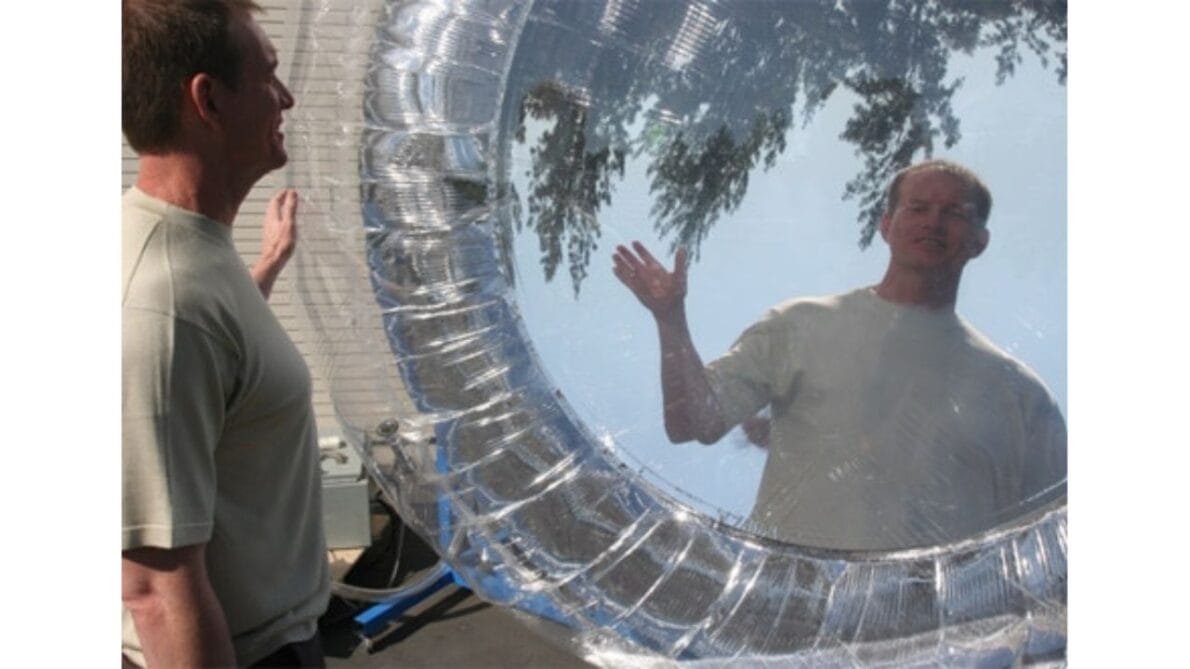

Solar energy is one of the most promising sources of renewable energy, but faces challenges like shading caused by clouds, trees, and buildings. However, photovoltaic balloons emerge as an innovative solution to overcome these obstacles.
Traditional solar panels suffer significant losses in efficiency due to shading. Even a small cloud can reduce energy generation, and on rainy days, production drops drastically.
Cool Earth Solar has developed a revolutionary technology: photovoltaic balloons. These balloons float about 20 km above the ground, where there are no clouds, ensuring continuous and direct exposure to sunlight.
Photovoltaic balloons are kept in the air by cables connected to the ground, which also serve to transmit the energy generated back to the Earth


They use photovoltaic cells to capture sunlight and convert it into electricity. Operating above the clouds, these balloons eliminate shading losses, ensuring maximum efficiency. Sunlight is more intense at 20 km altitude, resulting in energy production five times greater than at ground level.
-
The Sol do Agreste Photovoltaic Complex begins operations in Pernambuco and accelerates the expansion of solar energy in Brazil, directly impacting the reduction of emissions and strengthening the sustainable energy matrix.
-
Renewable energy advances over protected areas in Brazil, and a survey by the Energy Transition Observatory reveals silent impacts that challenge environmental conservation and pressure sensitive traditional territories.

-
Rio Grande do Sul accelerates energy transition: State invests in renewable technologies and consolidates decarbonization strategies and pathways to attract billions in new industrial investments.

-
With 160,000 m² of collectors, an area larger than 20 football fields, Silkeborg, in Denmark, hosts a solar thermal plant that heats 19,500 homes and could become the largest solar heating plant in the world.


They can be installed anywhere, without the need for large land or roof surfaces. Energy production is always predictable, regardless of ground weather conditions.
Each photovoltaic balloon can generate up to 500 watts of energy
The absence of sunlight diffusion through the atmosphere at this altitude significantly increases the yield of solar cells. Currently, the technology is in the experimental phase but already shows great viability. Researchers are working to overcome technical and regulatory challenges, aiming for large-scale commercialization.
Photovoltaic balloons represent a major innovation in the field of solar energy. They not only provide a solution to the shading problem but also enhance energy generation efficiency. With the energy transition underway globally, technologies like this are essential for a more sustainable future.









Certo. E como ficam a circulação de aviões e drones ? Eles vão ter que ficar desviando destes cabos e balões?