





 Portuguese
  English
  Spanish
  4 min of reading
  0 comments


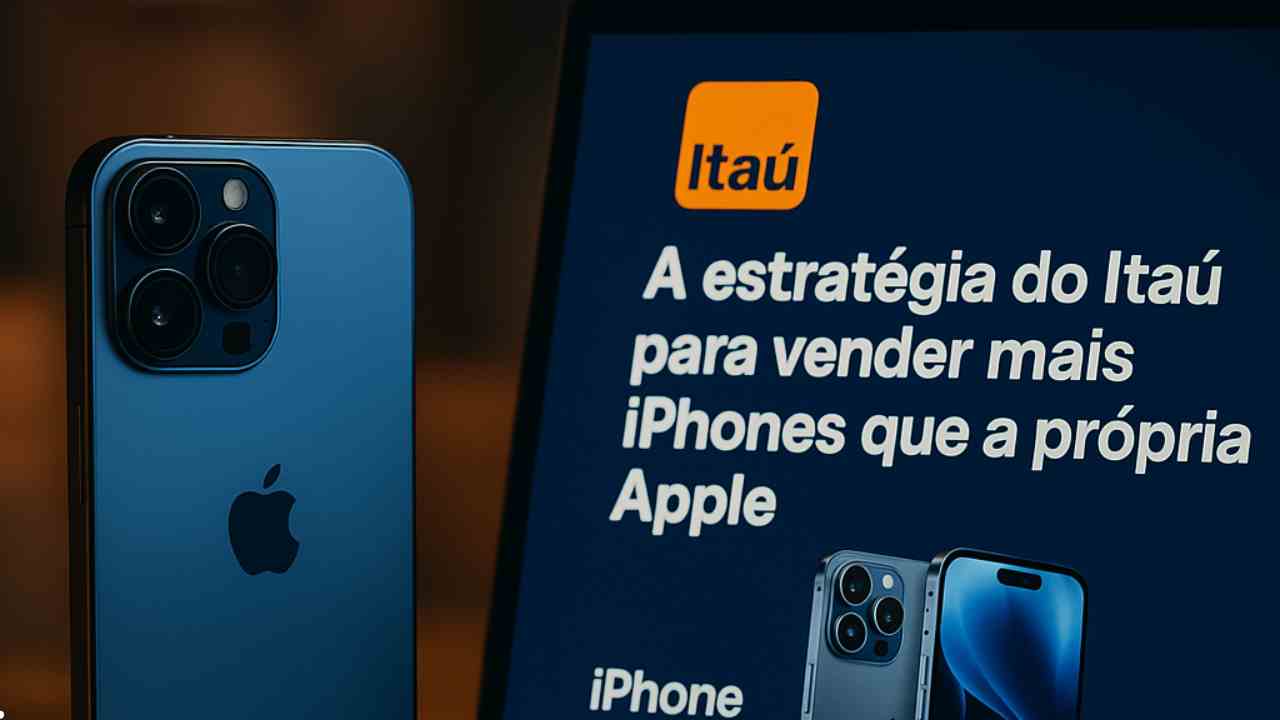
With Long-Term Plans, Valuable Customer Data, and an Approach That Combines Consumption and Loyalty, the Bank’s Strategy Goes Head-to-Head with Apple and Changes the Game in Electronics Retail
Just imagine a bank selling more iPhones than Apple itself. Sounds like an exaggeration? It’s not. The bank’s strategy is so finely tuned that it has placed the institution at the top of the list of largest sellers of the Cupertino giant’s smartphone in Brazil.
While traditional retail companies are still trying to figure out how to compete in this expensive and demanding market, the bank is already reaping the rewards of a smart move, which goes far beyond selling devices.
Apple: A Sales Model That Creates Loyalty and Generates Profit
The bank’s strategy is far from being just an offer of easy installment payments. It is designed to create sustainable and strategic value. The bank offers iPhones with long-term payment plans, in several installments, with conditions that catch the consumer’s attention. At the same time, this approach ensures a steady revenue stream from the interest embedded in the installments.
-
Something is happening around the Earth: Inside the huge explosion of fireballs in 2026

-
A hot air bubble coming from Argentina expands over Brazil, causing thermometers to exceed 38 degrees with a thermal sensation of 40 degrees in late March, affecting 6 states at once.

-
The radish leaf that almost everyone throws away has more polyphenols, flavonoids, and fiber than the consumed root, and a 2025 study showed that the leaf contains compounds that protect the intestine, combat inflammation, and may inhibit the growth of cancer cells.

-
A planet that seemed to defy the laws of physics has intrigued scientists for decades, until the James Webb revealed what is really affecting Saturn’s rotation.


But the real gold lies in customer loyalty. According to the bank’s own data, the average retention of a customer who purchases an iPhone through Itau jumps from 4 to 7 years. This means that with this simple strategy, the bank extends its relationship with the customer, increasing the chances of offering other banking services.
Apple itself, famous for customer loyalty to its brand, has the bank as an ally that further enhances this effect. But at the same time, it competes with the bank in sales. The bank not only delivers a product but creates a relationship ecosystem that goes far beyond the device.
Data: The New Gold of the Financial Sector
If there’s something the bank’s strategy does better than selling iPhones, it’s collecting data. Every purchase made through the bank provides a complete view of the customer’s consumption habits. With this, the bank can cross-reference information, anticipate future needs, and recommend personalized products with surgical precision.
We’re talking about a gold mine for the financial sector. By understanding consumption profiles, the bank can suggest appropriate credit lines, tailored insurance, investments aligned with risk profiles, and even consortia on demand. Apple brings the product appeal; the bank delivers the complete combo of financial solutions.
And it doesn’t stop there. The data also helps the bank reduce delinquency, improve risk analyses, and create highly targeted marketing campaigns. In a market where knowing the customer is everything, the bank is playing at another level.
Numbers That Show the Strength of the Strategy
The results leave no doubt. Just 48 hours after the launch of the iPhone 16, the bank sold 3,500 units. This represents a 40% increase compared to the previous year and a revenue of R$ 27 million in just two days. For comparison, few retailers in Brazil can move this volume in such a short time.
Apple, of course, continues to supply the product and profits from it. But in the game of local distribution, it is the bank that is gaining prominence. The consumer passing through this sales channel is not just acquiring a smartphone but entering into a new type of relationship with the bank.
This cross-selling model, where one product drives another, is already common in retail. But the bank’s strategy shows how this can be even more powerful in the financial sector, with data, loyalty, and service diversification working together.
The Future of Apple Consumption within Banks
If Apple has design and innovation in its DNA, the bank is showing that it also knows how to leverage technology to its advantage. The integration of high-value products into the banking portfolio can be the beginning of a greater trend: banks acting as complete consumption platforms.
And it’s not just about electronics. This same strategy can be adapted for appliances, mobility, travel, and much more. The competitive advantage lies in the ability to offer financing, risk analysis, guarantees, and relationships in the same environment.
It’s a model that transforms the bank into a sophisticated marketplace, with the potential to reshape the way we buy, finance, and relate to brands like Apple.
The bank’s strategy is not just effective – it’s visionary. By combining the desire for consumption with intelligent financial solutions, the bank has created a sales model that benefits all parties involved. The customer leaves with a new iPhone; the bank gains a more engaged and loyal customer.
While Apple continues to be synonymous with desire, the bank consolidates itself as an efficient channel for fulfilling that desire. And in this process, it redefines the role of banks in consumers’ daily lives.
In an increasingly competitive market, understanding how the bank’s strategy connects with the customer journey may be the key for other players who want to be part of this new reality of digital consumption.
Source: thenews







Seja o primeiro a reagir!