





 Portuguese
  English
  Spanish
  8 min of reading
  0 comments


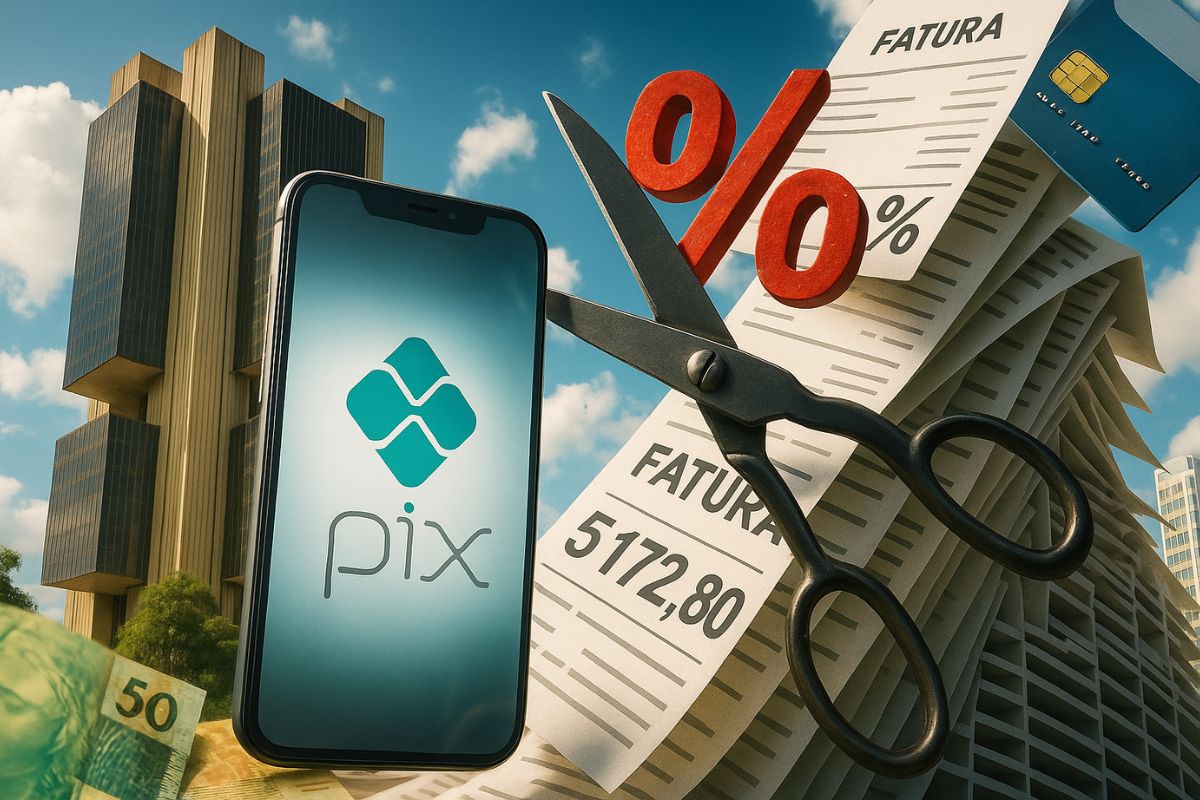
The Central Bank Discusses Measures to Prohibit Rolling Interest on Installment PIX, Establish Transparency Rules for the Offer of This Type of Credit, and Create Barriers to the Accumulation of Debt at a Time When the Over-Indebtedness of Brazilian Families Is Already Considered Critical by Experts and Consumer Protection Agencies.
The installment payment via PIX is already offered today by various financial institutions as a formal line of credit, with interest and charges in case of delay, but without a unique standard of rules, contract formats, and level of transparency. By studying the end of rolling interest on installment PIX, the Central Bank aims to reduce the possibility of this product reproducing the same debt mechanism that marked the trajectory of credit card rolling, with average rates around 15 percent per month, much higher than alternatives such as overdraft and personal loans.
The proposal under evaluation also has a relevant competitive and operational component. By standardizing the rules for installment PIX, the monetary authority wants to facilitate the understanding of the conditions by the population, increase the comparability among offers from different institutions, and stimulate competition for lower rates and clearer contracts. The central objective is to allow installment PIX to consolidate as a credit alternative for millions of Brazilians without replicating the logic of expensive and opaque credit associated with rolling interest on PIX and credit cards.
How Installment PIX Will Work Under the New Regulatory Logic
In practice, installment PIX will continue to be a credit operation in which the buyer contracts financing with a financial institution, usually the one with which they already have a relationship, to split a PIX transaction.
-
Oil surged to $115 a barrel due to the war in the Middle East, and diesel in Brazil has already risen to R$ 7.45 per liter, while the United States…

-
Brazilian city bets on the business environment to generate jobs and attract investments in the energy sector — secretary reveals strategy at Macaé Energy 2026.

-
50 viaducts, 4 tunnels, 28 bridges, and 40 kilometers of bike paths: BR-262 in Espírito Santo will receive 8.6 billion reais for the largest engineering project in the state’s history, inspired by the Immigrant Highway in São Paulo.

-
Brazil produces too much clean energy and doesn’t know what to do with it: over 20% of solar and wind capacity was wasted in 2025 while investors flee and 509 renewable generation projects were abandoned in the last year.


The merchant receives the full value of the sale instantly, while the consumer pays the amount in installments over a defined period in the contract.
The major change is in the way default is handled and in the prohibition of rolling interest on PIX, which is currently the most sensitive component of the debt discussion.
Under the proposed model, if the customer contracts multiple installment PIX transactions and ultimately cannot pay the total amount, the bank would be prohibited from offering new installment PIX transactions to that same customer while there is an outstanding balance.
The intention is to prevent what is called “rolling” credit, that is, to avoid that an unpaid debt be replaced by another credit operation with even more burdensome conditions.
Instead of resorting to rolling interest on PIX to continuously roll over the balance, the regulation intends to require that the conditions for fines, default interest, and late fees are clearly defined from the outset.
End of Rolling, Accumulation of Debt, and Impact on the Consumer
One of the central points of the debate is the so-called “accumulation” of credit, a situation where the consumer, already in default on one operation, continues to be encouraged to contract new lines to keep payments up to date for some time, without solving the structural debt problem.
By preventing institutions from offering new installments via PIX to those who are already in debt in this modality, the Central Bank tries to cut this cycle before it becomes irreversible for family budgets.
The logic is simple: without rolling interest on PIX and without new installments for those already in default, the ability to accumulate successive debts is reduced.
From the consumer’s perspective, the change does not eliminate the risk of over-indebtedness but alters the design of the incentive.
Instead of supporting the continuous rolling of debt through high and opaque interest rates, the regulation aims to require banks to explicitly state all applicable conditions in case of payment delay from the outset.
This includes the interest rate charged, the amount of each installment, the total cost of the operation, and penalties in case of late payment.
The expectation is that, with less room for rolling interest on PIX and more transparent contracts, the consumer will have more elements to decide whether the installment fits into their budget.
Rolling Interest on PIX vs Credit Card Rolling
The backdrop of the discussion is the accumulated experience with credit card rolling, now the most expensive line of credit in the financial system.
When the consumer pays only the minimum amount of the invoice or fails to pay it in full, monthly interest that can exceed 15 percent comes into play, a level well above that of other modalities such as overdraft or personal loans.
This mechanism, over time, turns small debts into practically unmanageable liabilities.
By proposing the end of rolling interest on PIX, the Central Bank aims to prevent the new instrument from repeating the exact same course.
In the case of installment PIX, the idea is that, even in a situation of default, additional charges follow what is agreed upon in the initial contract, without creating a new “layer” of rolling credit.
Banks may charge interest and fines for late payments, but within transparent parameters, previously agreed upon and disclosed to the user before the operation is completed.
Instead of a balance that migrates to a complex rolling credit, the debt in installment PIX would be treated as a contract where all the consequences of default are already described, reducing the margin for surprises and for the uncontrolled escalation of rolling interest on PIX.
Installment PIX as an Alternative for Millions of Brazilians without a Card
Another relevant element on the agenda is the potential of installment PIX to reach a population that today does not have access to credit cards.
Estimates from the monetary authority itself indicate that tens of millions of Brazilians could use installment PIX as a gateway to formal credit, especially for retail purchases and service hiring.
In this context, defining clear limits for rolling interest on PIX and for the form of charging in case of delay becomes a fundamental condition for this expansion not to be accompanied by a new wave of over-indebtedness.
By requiring that apps clearly display the interest rate, the amount of each installment, the total cost of the operation, and the penalties for default, the regulator tries to bring installment PIX closer to a minimum standard of financial education.
The bet is that, faced with more complete information and greater predictability about what happens in case of delay, the user will be able to compare installment PIX with other forms of credit and decide which offers the best balance between cost, term, and risk.
Without rolling interest on PIX and with enhanced transparency, the tool gains potential to expand financial inclusion with a lower likelihood of generating abusive contracts.
Effects for Merchants and Bank Competition
For commerce, the installment PIX model has a structural advantage over credit cards: the sale amount is received upfront, at the time of transaction, without the need to pay interest to banks for anticipating future installments.
In practice, this eliminates a recurring expense from the cash flow of merchants who, under the traditional card model, often need to resort to advances on receivables to finance working capital, incurring additional costs.
With an environment where there are no rolling interest on PIX and the operation is fully settled for the merchant, the trend is to reduce the financial cost of installment sales for commerce.
On the banks’ and fintechs’ side, standardization should intensify the competition for lower interest rates, more suitable terms, and simpler user experiences.
As the merchant receives the full value anyway, the competition shifts to those offering the best conditions to the buyer, rather than relying on commercial arrangements for anticipating receivables.
In this scenario, opaque and expensive instruments, such as rolling interest on PIX, become less defensible from a regulatory and competitive standpoint.
The expectation is that the combination of clear rules, contractual transparency, and prohibition of rolling will pressure the system to offer credit more aligned with the real risk of each customer.
Criticism from Consumer Protection Agencies and Warning About Over-Indebtedness
Even recognizing the regulatory effort, consumer protection organizations have expressed concern about the use of PIX as a platform for offering installment credit.
The central argument is that the system was born as a means of instant, free, and widely accessible payment, responsible for an unprecedented expansion of financial inclusion in the country.
By bringing this tool closer to credit operations with interest and charges, even with the prohibition of rolling interest on PIX, there is a risk of confusing the user and weakening the perception that PIX is, above all, a simple and secure payment instrument.
Organizations also warn that a large part of the population in a state of over-indebtedness is precisely those most sensitive to offers of fast and seemingly uncomplicated credit.
While the final regulation is not published, consumers remain exposed to installment PIX products already available on the market, with varying levels of transparency.
Hence the insistence on the need for robust rules that prevent the return of abusive practices associated with expensive credit and ensure that the prohibition of rolling interest on PIX is accompanied by effective consumer protection and guidance mechanisms.
The Central Bank’s initiative to prohibit rolling interest on PIX installments and establish rules to avoid the accumulation of debt points to an effort to learn from past mistakes, especially from the experience of credit card rolling.
However, the success of this agenda will depend on the precision of the norms, the quality of oversight, and the capacity for communication with the population, which needs to clearly understand that installment PIX is a form of credit, and not just another neutral functionality of the instant payment system.
In a scenario of high over-indebtedness and strong pressure on family income, the line separating financial inclusion from excessive risk is quite thin.
If the combination of greater transparency, restriction on rolling, and control of debt accumulation works, installment PIX may consolidate itself as a relevant alternative for formal credit; otherwise, the country runs the risk of repeating, in a new technological environment, old problems of expensive credit and unclear contracts.
Do you think that the prohibition of rolling interest on installment PIX will really be enough to avoid a new cycle of over-indebtedness, or are there still other measures needed to protect the consumer?










Seja o primeiro a reagir!