





 English
  Francês
  Alemão
  Italiano
  Japonês
  Norueguês
  Portuguese
  Spanish
  4 min of reading


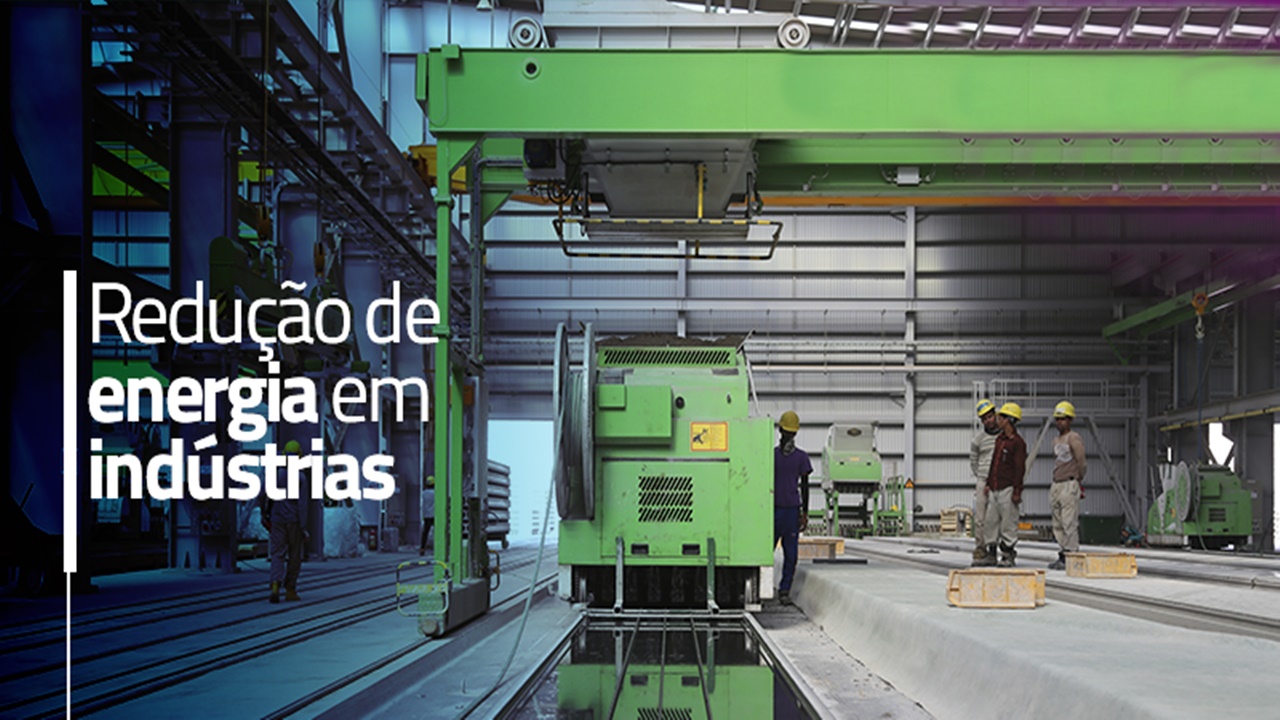
According to Normative No. 414, from the National Electric Energy Agency (Aneel), the fine is applied to companies whose power factor in energy consumption is below 92%
Have you noticed how our lives are “powered” by electricity? In fact, Benjamin Franklin’s invention is practically in everything we do on a daily basis: air conditioners, refrigerators, light bulbs, heaters, showers, computers, cell phone chargers… And with reservoirs low, electricity bills are high. Being a conscious consumer is no longer an option – it is a necessity.
Read Also
- The price of ethanol and gasoline records the smallest increase in the Southeast region and relieves app drivers, taxi drivers, and workers
- Schneider Electric’s Access to Energy Program will empower over 1 million economically and socially vulnerable people in the energy sector worldwide
- Mason, Watchman, Painter, General Services Assistant, Driver, and more PWD professionals with elementary education are summoned for job openings on this day (07/26) by an engineering company
- Multinational offers hundreds of remote job openings for inexperienced candidates from São Paulo, Rio de Janeiro, Minas Gerais, Pernambuco, and Paraíba who wish to enter the technology career
- The powerful Brazilian market in ethanol production becomes a wildcard for the industry during a turning point for vehicle electrification
- Brazil receives the first and largest graphene production factory in South America, capable of producing up to 5000 kg per year, which, along with niobium, will revolutionize the fate of humanity
Brazil Continues Poorly Positioned in the Ranking of Countries That Most Combat Electric Energy Waste
The use of electric energy in Brazil totaled 474,231 GWh in 2020. The volume, according to data from the Monthly Bulletin of the Electric Energy Market, released by the Energy Research Company (EPE), corresponds to a decline of 1.6% compared to energy consumption in 2019. However, even with this saving, Brazil continues poorly positioned in the ranking of countries that most combat waste, as shown by the American Council for an Energy-Efficient Economy. In total, out of 25 countries with the highest electricity consumption, Brazil ranks 20th. And the trophy for the “biggest villain” of energy inefficiency goes to the industrial sector, which demands 30% of the energy produced in the country.
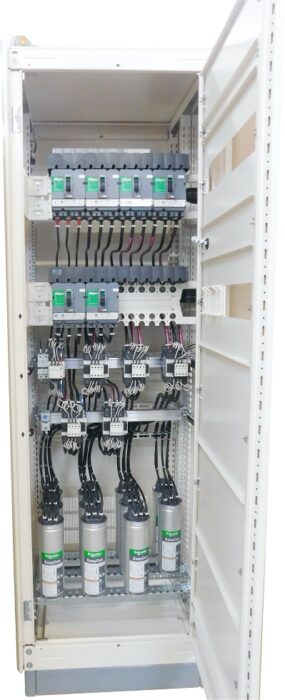
To reverse this reality, the focus is on electric panels, which control the power fluctuations of equipment: capacitor banks, whose goal is to work on energy efficiency. Electrical engineer and CEO of Engerey Electric Panels, Fábio Amaral, explains the operation: “Our energy system consists of active energy, which is used to light a bulb or start a motor, for example, being the most conventional. This energy is responsible for the “work” of the machine, that is, the energy consumed during operation and execution of a task. There is also reactive energy, which is also necessary to magnetize transformers and motors.”
-
In just three hours, a natural stone floor transforms the entrance of the house with an organic effect, immediate drainage, and a sophisticated non-slip finish that doesn’t puddle water, dries quickly, and impresses with the final result.
-
‘Interlocking brick’ made of earth arrives in the construction industry with cost reductions of up to 40% on the project.

-
Espírito Santo will receive the largest engineering project in its history with the duplication of BR 262, which will have 50 viaducts, 28 bridges, and 2-kilometer tunnels cutting through the most challenging mountainous region of the entire state.

-
A project of nearly 9 million reais already has the first kilometer paved in Santa Catarina and promises to completely transform the access between Jaraguá do Sul and Rio dos Cedros in an area where tourism is growing at a rapid pace.


Furthermore, reactive energy is not actually consumed; it circulates between the load and the generating station, overloading the system and causing voltage drops, resulting in accidents and generating fines on the energy bill. Generally speaking, the lower the power factor, the greater the reactive energy, and the higher the power factor, the lower this energy. “Thus, the best way to neutralize this reactive energy is by installing a capacitor bank in the network, thereby altering the load characteristics and increasing the power factor,” emphasizes Amaral.
Energy Savings with the Use of Capacitor Banks Prevents Fines of 30 to 40% on the Bill Due to Excess Reactive Energy
Energy savings through the use of capacitor banks occurs in two aspects: the first and most important relates to the elimination of a fine of 30 to 40% on the bill, which is applied for excess reactive energy and can be up to 30% of the electricity bill (in other words, on a bill of R$10,000.00, the fine can reach R$3,000.00). Second: the industry increases its production, without the need to work overtime or expand its structure. “And there’s also rationing for utilities, which do not have to make new investments during this energy scarcity, using standby energy for other consumers,” comments Amaral.
The cost for the installation of capacitor banks is extremely affordable. The time for it to “pay for itself” is around six to eight months. After that, it’s just profitability. As a rule, companies are unaware of capacitor banks because, generally, the energy bill goes to the administrative sector, which simply places it in the “accounts payable” and processes the payment. In other words: there is no analysis. And, if it is described in the bill as “reactive excess,” it means that the consumer is paying a fine.
According to Normative No. 414, from the National Electric Energy Agency (Aneel), consumers in group A (industry and commerce) are penalized if the power factor [calculated in the relation between active energy and passive energy] is below 92%. The lower the percentage, the higher the consumption of reactive energy in the system.
Installation of a Capacitor Bank
The installation of a capacitor bank works as follows: a technical team visits the plant where the machines are installed and generates a report on energy consumption, with measurements of the real capacitive needs of the company and how the capacitor bank should act in the electrical system of the enterprise. “The capacitor bank is a crucial piece of equipment for the industry. It is important that these electrical panels are certified and meet all necessary standards. This will certainly ensure efficient energy consumption and, of course, good savings on the electricity bill,” concludes the director of Engerey.
To learn more, visit the website www.engerey.com.br










Seja o primeiro a reagir!