





 Portuguese
  English
  Spanish
  6 min of reading
  33 comments


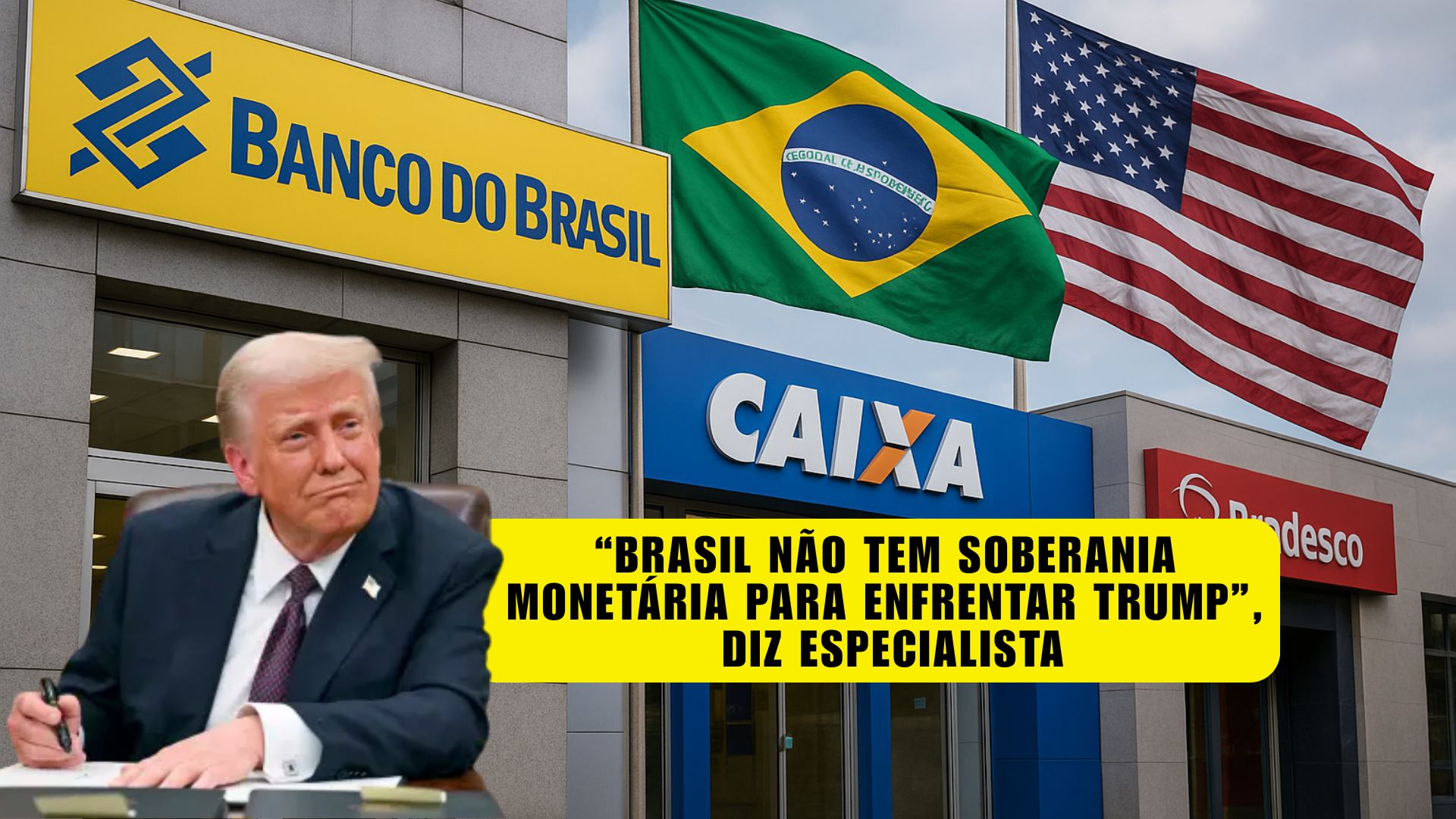


Brazilian Banks Face Dilemma Between Complying With Sanctions Imposed by the United States and Respecting Decisions of the Supreme Federal Court. The Dispute Could Compromise Access to the Dollar, International Transactions, and Salaries of Companies in 2025.
Amid the worsening diplomatic crisis between Brazil and the United States, the largest banks in the country have entered the center of a dispute that mixes finance, law, and geopolitics.
The application of the Magnitsky Act to Minister Alexandre de Moraes has placed institutions such as Banco do Brasil, Itaú, Bradesco, Santander, and BTG Pactual in a conflict: follow the sanctions set by Ofac, the U.S. Treasury, or adhere to the understanding of Minister Flávio Dino of the STF, that foreign laws and decisions only apply in the country after validation by international agreements or by Brazilian courts themselves.
Ultimately, the impasse could affect access to the dollar, foreign trade operations, payroll, and fundraising in 2025. The information was originally published by the newspaper BBC News Brasil.
-
The largest food company on the planet, JBS, has just opened a 4,000 square meter laboratory in Florianópolis to develop customized proteins that modulate muscle mass gain, immune response, and metabolic performance.

-
After nearly 30 bids and competition among industry giants, a Spanish company purchases one of the largest airports in Brazil for almost R$ 3 billion and takes over the management of Galeão in a concession that will last until 2039.

-
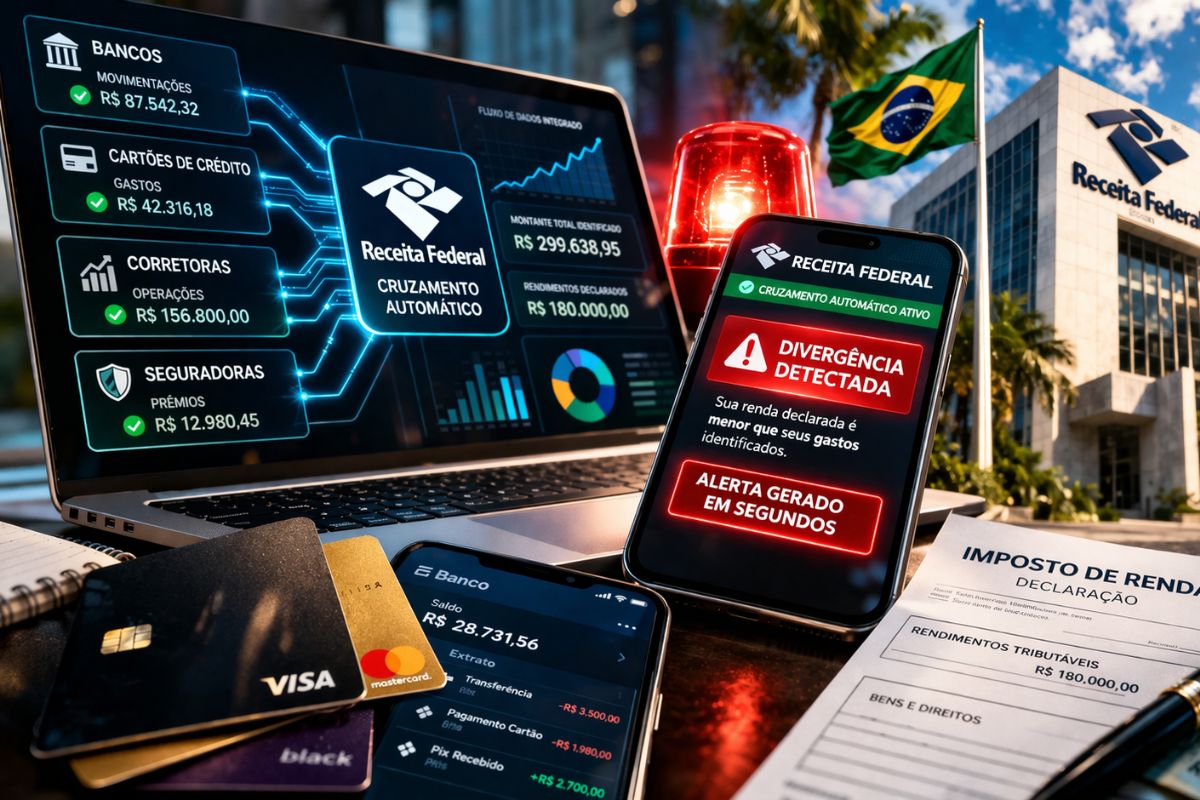
The Federal Revenue Service now automatically cross-references everything you declare with data from banks, credit cards, brokerage firms, and insurance companies, and any discrepancy between your income and your expenses triggers an alert in seconds.
-
Amid global tensions, Brazil blocks the United States’ proposal at the WTO and paves the way for a trade crisis and possible retaliations.

On September 2, at the opening of the trial of former President Jair Bolsonaro in the Supreme Court, five major banks received a letter from the U.S. Treasury Department with questions about how they were applying the Magnitsky Act in the case of Moraes.
The document from Ofac sought to detail compliance measures adopted and verify whether the institutions had created filters to block transactions related to the sanctioned target.
How U.S. Law Affects Banks in Other Countries
Legal expert Camila Villard Duran, a specialist in economic law and monetary market regulation, explained in an interview with BBC News Brasil that the extraterritorial reach of Magnitsky is not established through treaties, but through financial infrastructure.
According to her, “the mechanism is purely financial: any entity that uses the dollar as an international currency and the infrastructure of the American market for international transactions is subject to this law.”
This dependency is significant in Brazil, where banks maintain correspondents in the U.S. or subsidiaries in American territory to settle external transactions.
According to the specialist, Ofac supervises the enforcement of executive orders and can request information, require procedures, and if it finds noncompliance, impose fines.
Monitoring includes cases where the sanctioned individual holds more than 50% of shares in companies, which increases the need for filtering within financial institutions.
Dollar, Swift, and Infrastructure under American Influence
BBC News Brasil also highlighted that Swift, a financial messaging system based in Belgium, is the channel through which payment orders between banks are processed.
Although it is merely the “messenger,” settlements typically pass through the dollar as an intermediary currency.
Furthermore, the Clearing House in New York operates the Chips system, which settles international transactions and is subject to U.S. legislation.
For Brazil, this architecture means that a significant portion of exports, imports, and foreign debt issuances circulates through networks anchored in American norms and supervision.
This mechanism explains why sanctions, even if decided in Washington, can have effects in Rio or São Paulo.
Without smooth access to the dollar and compensation systems, banks face obstacles to pay for imports, receive exports, and refinance debts in hard currency.
The Legal Impasse in Brazil
The decision by Minister Flávio Dino arose from another process but served as an institutional message: foreign decisions only become part of the national legal system through the procedures set forth in the Constitution.
The understanding, forwarded to banks and to Febraban, signals the legal risk of directly applying an American norm in Brazil without internalization.
In practice, institutions find themselves pressured from two sides.
On one hand, they need to comply with Ofac rules to maintain access to international networks.
On the other hand, they deal with the possibility that the STF might question the use of foreign sanctions as a basis for measures in the domestic financial system.
The court, historically, also considers systemic effects of decisions — as occurred in rulings related to economic plans and the Credit Guarantee Fund — which could influence future positions.
Fines, Blockades, and the Political Factor
The letters from Ofac are a stage of supervision.
If the agency considers the responses insufficient, it can impose proportional fines to the transactions — like in cases involving companies with accounts of sanctioned individuals.
In extreme scenarios, there is a possibility to restrict access of banks to the American financial system, a scenario seen as having high impact due to its potential to paralyze international payments.
According to the report by BBC News Brasil, the jurist emphasizes that the geopolitical moment is particular. In her assessment, there is political use of legal instruments, which amplifies uncertainties.
The discussion, thus, is not limited to a technical analysis of risks; it involves reading the context and diplomatic pressures.
Monetary Sovereignty and Dependence on the Dollar
Villard Duran emphasizes that monetary sovereignty is an attribute of states but faces concrete restrictions in the globalized economy.
Countries whose currencies are not widely accepted internationally depend on resources and infrastructure from others to transact abroad.
“Our monetary sovereignty is reduced: the real holds full value within the country, but outside of it, Brazil is subject to the constraints of the global financial system,” she states.
In Brazil’s case, the need to raise and settle in dollars limits the margin for maneuver during external crises.
The vulnerability became more evident after the election of Donald Trump and the escalation of tensions with Brasília.
Pix, Drex, and Building Alternatives
Despite the limitations, the specialist sees domestic advances.
For her, Pix represents a public infrastructure that reinforces the country’s autonomy in internal payments.
“Europe is beginning to advocate for a digital euro for the same reason: ensuring sovereignty without relying on private entities subject to American law,” she told BBC News Brasil, pointing out that Brazil has taken the lead with Pix.
New steps, however, depend on international cooperation.
Initiatives like Drex (digital real) and projects from BIS, such as Nexus, which connects instant payment systems from different countries, indicate paths for cross-border transactions outside traditional private networks.
Regional experiences, such as the Local Currency Payment System with Argentina and Uruguay, are still nascent and require scale and governance.
What Changes for Clients and Companies
In the short term, there are no indications of immediate risk for deposits, credit, and retail operations.
The Central Bank has a recognized history of supervision, and the FGC functions as a cushion in stress events.
In previous crises, such as in 2008 and 2020, Brazil relied on swaps from the Federal Reserve to ease the dollar shortage.
The current question is whether supports of this nature would be repeated in a politically tense environment.
Even with a robust framework, the lack of dollar liquidity in the global market increases costs and restricts operations for companies that import inputs, export goods, or maintain debts in foreign currencies.
The effect could impact salaries paid to workers allocated to dollarized projects, export chains, and fundraising abroad, should access to correspondents and systems under American jurisdiction be reduced.
Strategy to Reduce Risk
In the medium and long term, the task is to reduce exposure to a single financial hub.
This involves expanding multilateral arrangements, diversifying liquidation currencies, and strengthening public payment infrastructures.
The jurist summarizes the challenge: “It is urgent to build a more robust policy, with human and financial resources, to develop alternatives.”
At the same time, contingency solutions in the short term — such as arrangements that avoid the debanking of authorities affected by sanctions — seek to mitigate the shock without paralyzing the system.
With banks pressured by international rules and domestic limits, and a more volatile geopolitical landscape, what should be Brazil’s priority: to safeguard the present with emergency measures or accelerate a financial architecture that reduces dependence on the dollar in the coming years?






Isso poderia acontecer somente com os envolvidos direto com esses bloqueados, pois nós funcionários públicos recebemos pelo banco do Brasil 80%, como faremos? Qual banco seria indicado para que possamos transferir nossas contas? Quem.deve sofrer não somos nós, bloqueiam salários dos juízes, cartões e mesmas coisas a parentes, assim somente eles , não os brasileiros de modo.em.geral.
Mas esse pessoal realmente acha que vai derrubar o dólar e os EUA?
Em primeiro lugar nossas reservas internacionais estão nos EUA em títulos do Tesouro Americano. Imaginem o Trump decidir bloquear esse dinheiro.
Aliás o dinheiro da China também está lá. Isso explica porque ela pulou fora fosse dos delírios do mafioso.
Em segundo lugar , o banco BNP, da Europa, acaba de pagar 9 BILHÕES de dólares de multa, por não ter respeitado as sanções impostas pelos EUA .
Pagou e o governo nem apitou.
Bora de bricks pra acabar com o reinado dos yankes
Os bancos e o Brasil vão quebrar antes. Rsrsrs