





 Portuguese
  English
  Spanish
  4 min of reading
  63 comments


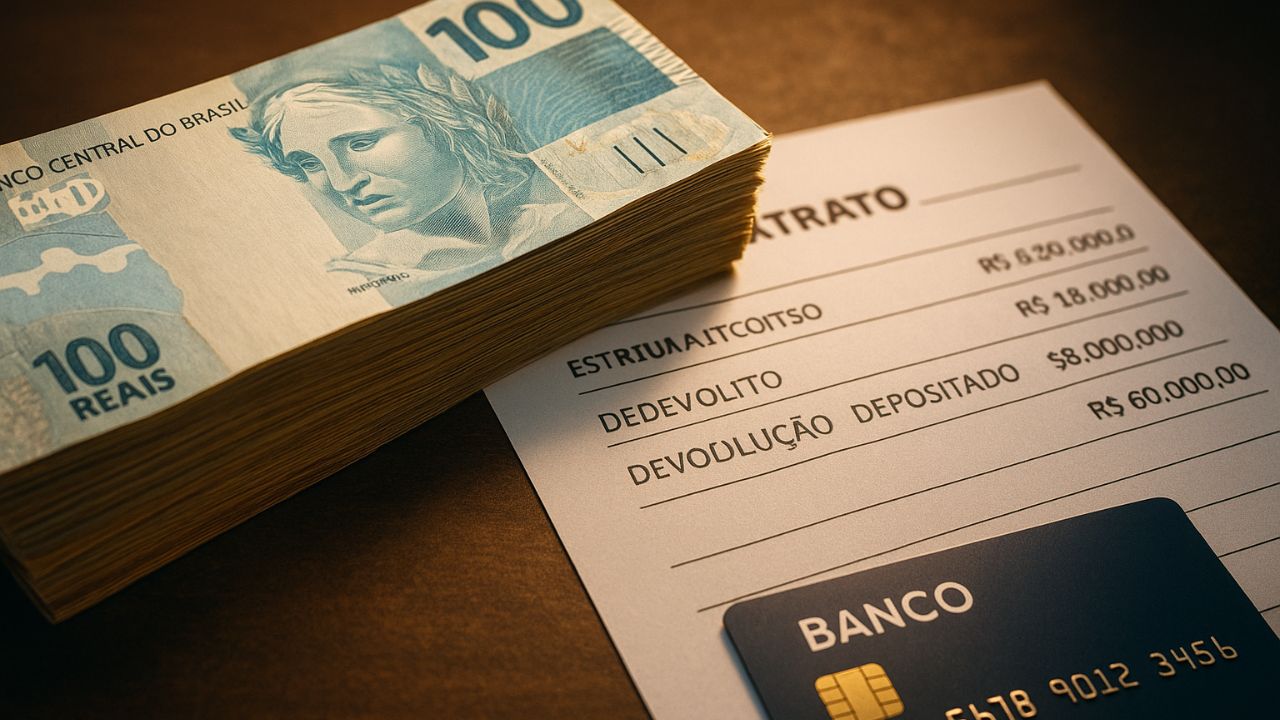


According to Record Goiás, a businessman from Goiás found himself in the middle of a legal battle after the financial institution refused to negotiate and demanded the amount with interest.
A businessman from Goiânia was surprised by a deposit of R$ 18,666,000.00 in his checking account after a bank error in a massive operation. The case, which initially seemed like a stroke of luck, quickly turned into a legal quagmire when the financial institution, besides recovering the amount, refused to make a deal and started demanding the return of the amount with interest, according to the client’s defense.
The episode, detailed in a report by Record Goiás, exposes the complex situation of a client who used part of the money before being notified. The bank’s reaction included filing a police report and an action that led to the seizure of assets, while the businessman claims to have tried to negotiate the return from the very beginning and is now a defendant in a criminal case and the author of a lawsuit for damages against the institution.
The Million-Dollar Error and Immediate Transfers
The starting point of the case was a systemic failure in a large bank, which occurred on December 26 of last year. The operational error affected about 400 customers across Brazil, who received unexpected million-dollar deposits. Among them was Guilherme Moreira, owner of a luxury restaurant in Goiânia, who saw his account jump to over R$ 18.6 million overnight.
-
The noise law will no longer be in effect at 10 PM starting in June with a new rule valid during the 2026 World Cup.

-
The Chamber opens a debate on driver’s licenses at 16 years old as part of a reform that includes around 270 proposals to change the Brazilian Traffic Code and may redesign rules for licensing, enforcement, and circulation in the country.

-
The new Civil Code could revolutionize marriages in Brazil with “express divorce” and changes that could exclude spouses from inheritance.

-
Banco do Brasil sues famous influencer for million-dollar debt and intensifies debate on delinquency, risks of seizure, and direct impact on Gkay’s credibility.


The day after the deposit, before any formal communication from the bank, Guilherme made five transfers that totaled over R$ 1.1 million. Documents exclusively obtained by Record Goiás show that he transferred R$ 150,000 to his father, another R$ 150,000 to his company’s account, R$ 502,000 to a supplier, and purchased a 2014 Porsche valued at R$ 280,000. These transactions became the center of the financial institution’s accusation.
The Bank’s Response and the Police Action
In light of the transfers, the financial institution opted for a tough approach. Instead of just focusing on the administrative recovery of the amount, the bank filed a police report against Guilherme. The police action resulted in a judicial order for the search and seizure of the luxury vehicle, which was subsequently returned to the institution as part of the restitution.
According to the detective in charge of the case, there are indications that the businessman tried to take advantage of the situation. The investigation showed that, the day before the deposit, Guilherme’s account balance was approximately R$ 27,000, a drastically lower amount than the millions he moved. Based on this, the businessman was indicted for crimes that, combined, could result in up to 11 years in prison.
The Defense’s Version: Frustrated Attempt at Negotiation


Guilherme Moreira’s lawyer vehemently contests the narrative of bad faith, stating that his client sought the bank as soon as he noticed the error. The defense presented text messages exchanged with the account manager, in which the businessman makes himself available to negotiate the return of the funds. The main twist in the case, according to the lawyer, was the institution’s inflexible stance.
The major impasse arose because, according to the defense, the bank erred but refused to accept a return agreement, demanding the full corrected amount with interest. “My client, in addition to having his account negatively affected to this day, receiving a series of collections, now had an asset seized in the police operation and is facing the embarrassment of a criminal investigation,” the lawyer stated to Record Goiás. In response, the businessman filed a lawsuit for damages for moral and material damages against the bank.
Legal Consequences: “Finder’s Keepers”?
Although the situation was caused by an internal failure, Brazilian law is clear about the appropriation of undue amounts. The popular saying “finder’s keepers” does not apply to the legal system. Appropriating money that was mistakenly deposited in the account, even if the bank’s error caused it, constitutes an offense. The legal advice is always to seek immediate return to the rightful owner.
The bank’s error at the time was reported in various outlets, and many clients who received the amounts returned them voluntarily, avoiding legal complications. However, Guilherme Moreira’s case serves as a warning about how an operational failure can escalate into a complex legal dispute, with serious financial and criminal consequences for the client involved.
What would you do in this situation? Do you think the bank’s decision to charge interest for its own mistake was correct? Leave your opinion in the comments; we want to know how you view this impasse.









O equívoco do banco envolveu quatro centenas de clientes, outros tomaram a iniciativa de devolver como prever o Código Penal em seu artigo 169, que proclama, “Apropriar-se alguém de coisa alheia vinda ao seu poder por erro, caso fortuito ou força da natureza.” Pena de detenção de 1 mês a 1 ano, ou multa.
Nas relações humanas e contratuais a boa-fé é fundamental.
O cara foi ****, era só fazer um boletim de ocorrência, abria um processo em seguida contra o banco por constrangimento, danos morais, depois entrava em contato com o banco tentando devolver o dinheiro, fazendo isso sempre com testemunha. Não ia ter dor de cabeça kkkkkkk.
Eu jamais usaria o dinheiro. Nunca na minha vida vou ter um montante desses e se cair na minha conta, claramente tem algo errado. Eu devolveria. Não vale o estresse, o desgaste e a vergonha de tentar provar que não fui mau caráter quando, claramente, fui.
Você acertaria em cheio! O artigo 169 do Código Penal tipifica como conduta criminosa: Apropriar-se de coisa alheia vinda ao seu poder por erro, caso fortuito ou força da natureza, e prever pena de detenção de um mês a um ano, ou muta.